
Sign up to save your podcasts
Or



Based on Podcast App listening data
Episode Description: Mosquitoes are responsible for upwards of half of all deaths in human history. Beyond being a simple nuisance, the diseases they spread are a menace to humanity. A decade ago, we thought we’d had them beaten. We didn’t — and they’re winning. Abdul reflects on the simple tradeoff inherent in mosquito containment. Then he interviews New York Times Global Health Reporter Stephanie Nolen about her recent reporting on the resurgence of mosquitoes and the illnesses they spread.
Public health is really cool! Ok … maybe it’s cool to all of us who do it for a living. But to be honest, public health’s got a serious brand problem — a “rizz” gap. Abdul reflects on how the turn toward individualism left us wagging our fingers at people rather than taking on righteous fights. Then he talks to Prof. Jerel Ezell about how to address the public health swag gap.
The truth should speak for itself. The problem is that it just doesn’t speak very loudly — we have to speak for it. Which is why public health has to be a lot smarter about the process of policy change. Abdul reflects on the contrast between publishing and publicizing. Then he speaks with Dr. Shelley Hearne, a co-author on a new book on public health policy engagement about how it's done.
Public health has never been more political than it is today — and unfortunately, that’s often made it partisan, too. Which is what makes the 1500% increase in local public health funding by the state of Indiana — a state with Republicans controlling both houses of the Indiana State Assembly and the governorship — so important. Abdul reflects on the danger of allowing public health to become a partisan issue. Then he sits down with Dr. Judy Monroe, president and CEO of the CDC Foundation, and Dr. Lindsay Weaver, health commissioner for the state of Indiana to learn how th Indiana made it happen.
How worried should you be about B.A.2.86? When is it time to get another COVID shot? Is there any future for Medicare for All? We asked for your most pressing public health questions on Twitter, Facebook, and Discord. From unique COVID situations to the future of healthcare in America, Abdul delivers answers to each and every one of your questions.
Tuberculosis is one of the worst murderers in the history of the world. It remains that way today — even though we have diagnostics and treatments that should have helped to decimate it. The challenge? The greed of the corporations that hold those technologies hostage to fees that low-income people and countries can’t afford. Abdul reflects on the disease of poverty. He interviews bestselling author and YouTuber John Green about his quest to mobilize his platform to hold those corporations accountable.
Dialysis is a medical miracle — vastly extending the lives of people with kidney disease. When it was first discovered, Congress rushed to assure that it was covered by Medicare. And then big business got involved. Abdul reflects on the way that American capitalism disembodies healthcare. Then he speaks with Tom Mueller, author of “How to Make a Killing,” about the excesses of dialysis corporations in America.
COVID was a generation-defining global trauma. Though the virus itself hit seniors hardest, the pandemic may have hit young people longest. Learning loss continues to affect young people today. Abdul reflects on the nature of learning loss and its implications for the future of public health interventions. Then he talks to economist Prof. Thomas Kane about the long term impacts of COVID on learning loss and what parents, teachers, and schools can do to catch up.
Drowning is an epidemic in America. And like so many other public health challenges, it’s what happens when we over-privatize a public good. Abdul reflects on the human right of water. Then he speaks with New York Times journalist Mara Gay, author of a recent series on drowning in America.
We’ve all lived through a pandemic now. But did you know that so much of our pre-pandemic lives was the result of … pandemics? Abdul reflects on the marvel that for so many of us, the risk of dying of an infectious disease is so low — and why we’re at risk of losing that. Then he sits down with Prof. Jon Kennedy, Co-Director of the Center for Public Health and Policy at Queen Mary University in London and author of the new book “Pathogenesis: A History of the World in Eight Plagues.”
From the publisher's feed
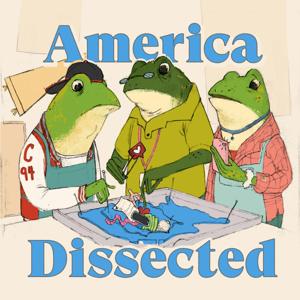
Wellness isn’t just about mindfulness, exercise, or the right skin routine. Science, politics, media, culture, tech — everything around us — interact to shape our health. On America Dissected, Drs.…
Ranked by our users in the last 21 days

7,853 Listeners

3,547 Listeners

14,640 Listeners

88,018 Listeners
24,765 Listeners

25,122 Listeners
8,752 Listeners
4,147 Listeners

6,183 Listeners

9,769 Listeners

12,904 Listeners
7,288 Listeners

16,346 Listeners

7,892 Listeners

5,726 Listeners
12,365 Listeners

89 Listeners
2,314 Listeners

1,760 Listeners