
Sign up to save your podcasts
Or



Based on Podcast App listening data
Too many politicians are too beholden to the healthcare industry to propose any meaningful change. That’s not true of the Chairman of the Senate Health, Education, Labor, and Pensions Committee, Senator Bernie Sanders. Since 2016, his ideas have animated some of the most important changes in healthcare policy. Abdul reflects on the need for big ideas–and why we don’t get them that often. Then he interviews Senator Bernie Sanders on the 32-hour workweek, his Long COVID moonshot, and the price of GLP-1 agonists like Ozempic.
This show would not be possible without the generous support of our sponsors. America Dissected invites you to check them out. This episode was brought to you by:
Marguerite Casey Foundation who invites you to sign up for their book club at caseygrants.org/bookclub
Article who invites you to check out their spring and summer home collection at article.com/AD.
Make sure to use promo code AD at checkout to save $50 off your first purchase of $100 or more.
Trauma is all around us–and the word has come to dominate so much of our conversation about mental health. The common perception of trauma is that it lingers, devastating mental health over time. But what if the more common consequence of trauma was growth? Abdul reflects on the way we think about trauma. Then he interviews Prof. Richard Tedeschi, the psychologist who coined the term “post-traumatic growth” about the phenomenon, why it happens, and how we unlock it.
This show would not be possible without the generous support of our sponsors. America Dissected invites you to check them out. This episode was brought to you by:
Marguerite Casey Foundation who invites you to sign up for their book club at caseygrants.org/bookclub
Millions of Americans go without healthcare every year. Many of them turn to crowdfunding to support their needs. Abdul reflects on what that says about how we think about one another. Then he interviews Prof. Nora Kenworthy, author of the new book “Crowded Out: The True Costs of Crowdfunding Healthcare” about who wins, who loses, and how we build a healthcare system where Americans don’t need to crowdfund.
This show would not be possible without the generous support of our sponsors. America Dissected invites you to check them out. This episode was brought to you by:
Marguerite Casey Foundation who invites you to sign up for their book club at caseygrants.org/bookclub
Article who invites you to check out their spring and summer home collection at article.com/AD. Make sure to use promo code AD at checkout to save $50 off your first purchase of $100 or more.
The H5N1 Bird Flu has been circulating in cows for 5 months, spreading faster and farther than we had previously expected. Abdul reflects on the wake-up call it poses for the public health community. Then he interviews Dr. Kimberly Dodd, a veterinarian and former USDA official, about the risk of spread, whether or not the current regulations are enough to protect humans, and where this goes from here.
This show would not be possible without the generous support of our sponsors. America Dissected invites you to check them out. This episode was brought to you by:
Marguerite Casey Foundation who invites you to sign up for their book club at caseygrants.org/bookclub
Lumen who invites you to unlock your metabolism. Visit go.lumen.me/AD for $100 off at checkout.
The Anti-Diet movement has helped us understand some of the downsides of a perpetual diet culture driven by influencers and advertisers selling us this or that fad. But what happens when the influencers behind that movement get co-opted by corporations too? Abdul reflects on the way that corporate interests too often interfere with sound science and public education. Then he sits down with Sasha Chavkin, Senior Reporter at The Examination and Caitlin Gilbert, Well+Being Data Reporter at The Washington Post to learn about their reporting on food corporations funding the anti-diet movement.
This show would not be possible without the generous support of our sponsors. America Dissected invites you to check them out. This episode was brought to you by:
Marguerite Casey Foundation who invites you to sign up for their book club at caseygrants.org/bookclub
Article who invites you to check out their spring and summer home collection at
article.com/AD. Make sure to use promo code AD at checkout to save $50 off your first purchase of $100 or more.
For so many Americans, pets are members of the family. And our interactions with animals — in our homes, on our farms, and in the wild — shape our health in some important ways. Abdul reflects on what he’s learned about health working in animal welfare. Then he sits down with Melissa Miller, an animal care expert, disaster field responder, trainer, and county animal care and control director to talk about how pets shape our health, how to do our best for our fur babies, and what can go wrong when we fail them.
Public health professionals are people, too. Too often, though, we don’t think about them that way — their needs, their hopes, and aspirations, their individual skills and areas of passion. But if we want a functional public health system, we really should. Abdul reflects on the experience of leading public health teams. Then he speaks with Dr. Brian Castrucci, President and CEO of the de Beaumont Foundation and co-author of a new book, “Building Strategic Skills for Better Health: A Primer for Public Health Professionals,” about how to build a better public health workforce.
Last summer’s blockbuster “Oppenheimer” took home best picture for a stirring portrayal of the man behind the world’s most dangerous weapon. But there’s a part the story left out: the devastation wrought by nuclear weapons testing on communities here in the US. Abdul reflects on the broader fallout of producing weapons of war. Then he talks to Tina Cordova, co-founder and Executive Director of the Tularosa Basin Downwinders Consortium, and Dr. Chanese Forté, a scientist with the Global Security Program of the Union of Concerned Scientists about the testing fallout — and what it spells for the future.
In a time when AI is creating new realities faster than we can make sense of them, we need to imagine possible future scenarios to prepare. Which is why a new novel by Marschall Runge, Dean of the University of Michigan Medical School, is so prescient. In his book “Coded to Kill,” Runge helps us imagine what could go wrong, even if so much can go right. Abdul reflects on the critical role of imagination in science. Then he sits down with Dean Runge to talk about what his book can teach us about how we prepare for a future of artificial intelligence in medicine.
Maternal and child health inequities by race are a blot on our national fabric. But fixing them isn’t about one silver bullet — it’s about systems coming together to do their part. Abdul reflects on the struggle for birthing equity. He interviews Dr. Natalie Hernandez, one of the authors of the “Practical Playbook” on maternal health inequities to understand how sectors can come together to save Black moms and babies.
From the publisher's feed
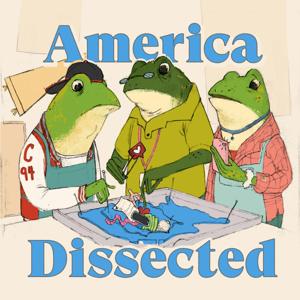
Wellness isn’t just about mindfulness, exercise, or the right skin routine. Science, politics, media, culture, tech — everything around us — interact to shape our health. On America Dissected, Drs.…
Ranked by our users in the last 21 days
7,853 Listeners

3,547 Listeners

14,640 Listeners

88,018 Listeners

24,765 Listeners

25,122 Listeners
8,752 Listeners
4,147 Listeners

6,183 Listeners

9,769 Listeners

12,904 Listeners

7,288 Listeners

16,346 Listeners

7,892 Listeners

5,726 Listeners
12,365 Listeners

89 Listeners
2,314 Listeners
1,760 Listeners