
Sign up to save your podcasts
Or

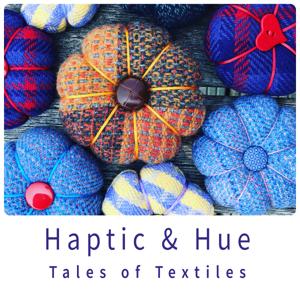

The American cotton feed sack is the stuff of legend. From the 1850s onwards it was skilfully repurposed by women across America into all kinds of garments and household goods. By the late 1930s when it became highly patterned, it's estimated that more than 3 million Americans were wearing feed sack clothing. Out of necessity, it was made into dresses and shirts, quilts and curtains, sheets, mattress covers, pyjamas, and even undergarments.
Today feed sacks are valued by collectors and makers in America, and there is a lively market in them. But these soft cotton sacks have a much wider story to tell us than that. They have played a role in creating one of the world's legendary cricket teams, they have saved a nation from the brink of starvation and in this episode of Haptic & Hue, we tell the incredible story of how a flour sack re-united a family with the something created by the grandmother they lost in in the Holocaust.
For pictures of the feedsacks talked out in this episode and more information about the contributors please go to https://hapticandhue.com/tales-of-textiles-series-6/
 View all episodes
 By Jo Andrews

4.9
301301 ratings
The American cotton feed sack is the stuff of legend. From the 1850s onwards it was skilfully repurposed by women across America into all kinds of garments and household goods. By the late 1930s when it became highly patterned, it's estimated that more than 3 million Americans were wearing feed sack clothing. Out of necessity, it was made into dresses and shirts, quilts and curtains, sheets, mattress covers, pyjamas, and even undergarments.
Today feed sacks are valued by collectors and makers in America, and there is a lively market in them. But these soft cotton sacks have a much wider story to tell us than that. They have played a role in creating one of the world's legendary cricket teams, they have saved a nation from the brink of starvation and in this episode of Haptic & Hue, we tell the incredible story of how a flour sack re-united a family with the something created by the grandmother they lost in in the Holocaust.
For pictures of the feedsacks talked out in this episode and more information about the contributors please go to https://hapticandhue.com/tales-of-textiles-series-6/

90,994 Listeners

38,062 Listeners

43,528 Listeners

3,019 Listeners

736 Listeners

2,868 Listeners
353 Listeners
1,082 Listeners

270 Listeners
1,501 Listeners

3,552 Listeners
224 Listeners
67 Listeners

98 Listeners

547 Listeners