
Sign up to save your podcasts
Or



Send us Fan Mail
No contact gets talked about like a single decision, but we’ve seen it unfold as a long process of loneliness, repeated repair attempts, and a growing need for safety. Therapist Cecily Davis joins me to take a clear, compassionate look at parent-child estrangement between parents and adult children and what’s actually happening underneath the labels people argue about online.
We dig into differentiation, the developmental work of becoming your own person outside the family system, and why “outgrowing” a role can create major conflict at home. We talk about how parents often experience their adult child’s boundaries as rejection or an attack, how culture and generational expectations shape that reaction, and why intergenerational trauma can keep families stuck until someone decides to feel the pain instead of passing it on.
We also address the stigma aimed at therapy and therapists. Ethical trauma-informed therapy and attachment-based therapy aren’t about pushing someone to cut ties. They’re about building agency, helping clients identify needs and values, and supporting healthier relationships when possible. We explore why boundaries are often protection rather than punishment, what repair can look like when a parent does their own work, and why healing doesn’t have to mean all-or-nothing closeness or distance.
If you’re an adult child considering limited contact, a parent trying to understand what went wrong, or a clinician supporting families through high emotion, this conversation offers language that’s practical and human. Subscribe, share this with someone navigating estrangement, and leave a review so more people can find support.
To learn more about Cecily and the works she does, you can find her at the following:
LinkedIn: Cecily Davis, LPC
Facebook: Cecily Davis, LPC
Psychology Today: Psychology Today Profile
Online @: Cecily Davis, LPC - DavisMentalHealth
Thank you for tuning into And Still WE Rise! If you would like to learn more about me or the work our practice is doing, feel free to follow us on Instagram at:
@atltherapygirl and @risetherapycenter
Or check us out at www.risetherapycenter.com
Disclaimer: And Still We Rise is meant to provide perspective and meaningful conversations around mental health topics. It is not meant to provide specific therapeutic advise to individuals. If anything in these podcasts resonates, ASWR recommends consulting with your individual therapist or seeking a referral from your primary care physician.
Send us Fan Mail
Silence can feel like a threat when you have trained yourself to move fast, stay busy, and never stop thinking. We sit down with Sara Kassam, a DBT-certified therapist and group fitness leader, to unpack why “being present with yourself” is so often uncomfortable, and why that discomfort is not proof you are doing it wrong. A lot of us are not afraid of being alone, we are afraid of what our thoughts will say when the noise finally drops.
We dig into how hustle culture, constant productivity, and even popular self-help habits can become subtle avoidance. Sara shares how perfectionism and low self-worth can turn self-improvement into a reassurance loop that keeps you chasing “better” instead of practicing self-acceptance. We also talk about the real role of decompression and dissociation after mentally demanding days, especially for therapists and other helping professionals, and how to tell when scrolling is a short reset versus something that starts disrupting sleep, work, and daily functioning.
Then we get practical: mindfulness does not have to mean sitting still with your eyes closed. We explore everyday mindfulness skills you can use right away, including nature walks, breath awareness during workouts, and small “science experiment” practices that build tolerance for presence without forcing your mind to stop. We also separate solitude from loneliness, and why learning to be with yourself can strengthen relationships and even help kids develop creativity through boredom and imaginative play.
Subscribe, share this with someone who is tired of overthinking, and leave a review if the conversation helps you build a calmer relationship with your own mind.
Want to learn more about Sara? You can find her at:
https://www.risetherapycenter.com/sara
IG: seenbysarak and Email: [email protected]
Thank you for tuning into And Still WE Rise! If you would like to learn more about me or the work our practice is doing, feel free to follow us on Instagram at:
@atltherapygirl and @risetherapycenter
Or check us out at www.risetherapycenter.com
Disclaimer: And Still We Rise is meant to provide perspective and meaningful conversations around mental health topics. It is not meant to provide specific therapeutic advise to individuals. If anything in these podcasts resonates, ASWR recommends consulting with your individual therapist or seeking a referral from your primary care physician.
Send us Fan Mail
Picking a therapist can feel like a high-stakes decision, especially when it is your child and you are handing them off behind a closed door. We sit down with Becca Buice, a therapist at Rise Therapy Center who works with children, teens, and adults, to talk about what “therapist fit” really means and why the therapeutic relationship is often the biggest predictor of change. If you have ever thought, “therapy didn’t work for us,” this conversation offers a different possibility: maybe the match was wrong.
We walk through how to get clear on your goals before you schedule, how a therapist’s specialties and modalities matter (CBT, trauma-focused CBT, play therapy, and creative approaches), and why developmental fit is crucial when you are seeking child therapy for anxiety or emotional regulation. We also share concrete ways to research providers using websites, Psychology Today profiles, videos, and even social media so you can hear a therapist’s voice and get a feel for their style. For kids, previewing the office and seeing a friendly face ahead of time can lower anxiety and make the first visit feel less intimidating.
We also name the real-world barriers that shape access to counseling, including transportation, scheduling, affordability, and not knowing what options exist. You will hear why it is okay to ask questions, request flexibility like virtual therapy when appropriate, and even ask for referrals if a provider is not the best fit. If you want therapy to feel safer, more effective, and more sustainable for your family, this is your roadmap.
Subscribe for more conversations like this, share this episode with someone searching for a therapist, and leave a review if it helps. What is the number one thing you need to feel confident before booking a first session?
To learn more about Becca, you can find her here:
Thank you for tuning into And Still WE Rise! If you would like to learn more about me or the work our practice is doing, feel free to follow us on Instagram at:
@atltherapygirl and @risetherapycenter
Or check us out at www.risetherapycenter.com
Disclaimer: And Still We Rise is meant to provide perspective and meaningful conversations around mental health topics. It is not meant to provide specific therapeutic advise to individuals. If anything in these podcasts resonates, ASWR recommends consulting with your individual therapist or seeking a referral from your primary care physician.
Send us Fan Mail
Therapy can feel mysterious until you name the real engine behind change: the relationship. We dig into why people walk away saying “Something felt off” even when the therapist has solid training, and what you should actually be looking for when you sit down across from a counselor. For us, it keeps coming back to being seen and heard by someone who feels like a real person. When you do not have to mask, you can finally bring the unfiltered truth into the room and start working with it instead of running from it.
We also get practical about how to find the right therapist. We talk about reading bios with intention, choosing someone who truly specializes in what you want to work on, and why picking based on surface-level comfort can backfire when heavy disclosure shows up. We explore what it feels like when a therapist gets overwhelmed or resistant, and why that moment can accidentally reinforce shame. From there, we shift to your role as the client: radical honesty, naming when you feel judged, asking your therapist direct questions, and remembering that fit can change with seasons of life.
Finally, we break down what makes progress stick: what happens between sessions. Homework, journaling, observation, reading, and real-world practice turn therapy from a weekly conversation into a real healing process. We also separate coping skills from root healing, explain why it can get worse before it gets better, and share the stat that about two-thirds of people who seek therapy improve. If you want a clearer way to judge whether therapy is working, and how to increase the odds that it will, press play, then subscribe, share this with a friend, and leave a review.
You can check out Allison at:
https://www.risetherapycenter.com/allison
IG and TikTok: @yourmentalhealth_ally
Thank you for tuning into And Still WE Rise! If you would like to learn more about me or the work our practice is doing, feel free to follow us on Instagram at:
@atltherapygirl and @risetherapycenter
Or check us out at www.risetherapycenter.com
Disclaimer: And Still We Rise is meant to provide perspective and meaningful conversations around mental health topics. It is not meant to provide specific therapeutic advise to individuals. If anything in these podcasts resonates, ASWR recommends consulting with your individual therapist or seeking a referral from your primary care physician.
Send us Fan Mail
Therapy is everywhere right now, but the most important question is easy to miss: does talking about our past actually change how we live in the present? We open the season by getting specific about what neuroscience is revealing about healing, including how therapy can help rewire the brain and regulate the nervous system, not just name old wounds. If you’ve ever been told you’re stuck with a “chemical imbalance” or doomed to repeat your family patterns, this conversation offers a more accurate and more hopeful frame.
We unpack neuroplasticity in plain language and connect it to the real work of change: building new beliefs and responses that can finally compete with the ones installed early in life. We also talk about why therapy concepts have gone mainstream, how words like trauma, boundaries, attachment, and burnout now show up in influencer feeds, and why insight alone is not the finish line. The goal is integration, where a new thought or emotion is practiced enough to become your nervous system’s new default, the same way driving goes from terrifying to automatic with time and support.
One of the most compelling takeaways is relational: research suggests the therapeutic relationship itself may be a biological mechanism for change. We dig into why the quality of connection, safety, and attunement between therapist and client can predict outcomes, and how that can make healing more efficient and sustainable in a world of high costs and insurance red tape. Subscribe, share this with someone who’s ready for a more grounded view of healing, and leave a review with your biggest question about neuroplasticity and change.
Thank you for tuning into And Still WE Rise! If you would like to learn more about me or the work our practice is doing, feel free to follow us on Instagram at:
@atltherapygirl and @risetherapycenter
Or check us out at www.risetherapycenter.com
Disclaimer: And Still We Rise is meant to provide perspective and meaningful conversations around mental health topics. It is not meant to provide specific therapeutic advise to individuals. If anything in these podcasts resonates, ASWR recommends consulting with your individual therapist or seeking a referral from your primary care physician.
Send us Fan Mail
If receiving a compliment makes you scramble for an excuse, or accepting help feels like losing control, there’s a good chance you’re not “too independent” you’re underreceiving. Cristine Seidell sits down with therapist Kaylee Finlay to unpack why so many capable, caring people become the dependable helper in every room, then quietly feel lonely, unseen, and sometimes resentful about it.
We dig into the overgiver identity and where it often starts: family systems with emotionally immature parents, low emotional attunement, and a childhood role that rewards being outward-focused. When your needs don’t get mirrored, being seen can feel unfamiliar, and your body can interpret unfamiliar as unsafe. That’s how deflecting compliments, minimizing achievements, and fearing that you “take up too much space” become automatic. We also name hyperindependence for what it is in many relationships: a protective strategy that avoids vulnerability by staying in control, even when connection is what you want most.
Then we get practical. Kaylee shares therapy tools that build your capacity to receive, including compassionate curiosity, gently slowing down when you want to move away from vulnerability, and asking the surprisingly hard question: “What would feel good to receive right now?” We also explore how overgiving can block reciprocity and how creating space is sometimes the most loving act you can offer your partner, friends, and yourself. If you’ve been carrying the heavy burden of grievance and bitterness, this conversation offers a clearer path back to belonging. Subscribe, share with a fellow overgiver, and leave a review with the one thing you’re practicing receiving this week.
To learn more about Kaylee and her work, you can find her at:
https://www.risetherapycenter.com/kaylee
and @brighterskiescounseling on Instagram
Thank you for tuning into And Still WE Rise! If you would like to learn more about me or the work our practice is doing, feel free to follow us on Instagram at:
@atltherapygirl and @risetherapycenter
Or check us out at www.risetherapycenter.com
Disclaimer: And Still We Rise is meant to provide perspective and meaningful conversations around mental health topics. It is not meant to provide specific therapeutic advise to individuals. If anything in these podcasts resonates, ASWR recommends consulting with your individual therapist or seeking a referral from your primary care physician.
Send us Fan Mail
You can understand your anxiety perfectly and still feel like nothing changes. That “stuck in therapy” feeling often shows up in the most introspective people, the ones who can name the trigger, explain the childhood pattern, and describe their coping skills in detail, yet still repeat the same reactions in real time. We unpack why insight alone can keep you spinning, and how the missing link is often the body’s ability to actually feel and tolerate what is happening.
Therapist Madison Reed joins me to explore what separates reflection from regulation. We talk about why coping skills sometimes backfire when the goal is to get rid of discomfort fast, and how that intention can turn skills into avoidance. We also dig into helplessness, the emotion that pushes so many of us into control mode, and we contrast two common stuck styles: the internalizer who tries to fix everything through analysis and the externalizer who wants the solution to live in other people’s behavior.
From brainspotting to simple daily check-ins, we share practical ways to build emotional tolerance and create real integration between thoughts and feelings. If you have ever felt frustrated that therapy “should” be working by now, this conversation offers a grounded path forward with nervous system language, relationship patterns, and realistic next steps. Subscribe, share this with a friend who feels stuck, and leave a review with the biggest insight you are taking into your week.
Thank you for tuning into And Still WE Rise! If you would like to learn more about me or the work our practice is doing, feel free to follow us on Instagram at:
@atltherapygirl and @risetherapycenter
Or check us out at www.risetherapycenter.com
Disclaimer: And Still We Rise is meant to provide perspective and meaningful conversations around mental health topics. It is not meant to provide specific therapeutic advise to individuals. If anything in these podcasts resonates, ASWR recommends consulting with your individual therapist or seeking a referral from your primary care physician.
Send us Fan Mail
A last-minute request to speak on local news should’ve been easy for me. I’ve spent decades studying childhood development, attachment, parenting, and teen mental health. Instead, my body slammed the brakes: panic, tight chest, throat closing, tears. That moment opened a door I couldn’t ignore, not into credentials or confidence, but into the deeper question of why being seen can still feel unsafe.
I unpack what a somatic trigger really is, and why visibility hits differently when the audience didn’t “opt in.” We move from inner child basics to the inner teenager, where identity, belonging, and self-exploration are supposed to be protected, not punished. When acceptance becomes conditional, visibility turns into a threat, and adulthood can bring that fear back the second we step into authority, leadership, or public expertise.
I also share the personal roots of my own visibility wound, including growing up in a rigid religious family system where deviation came with judgment and rejection. Then I talk through what helped me come back to the present, including grounding, EFT tapping, and a reparenting mindset that says: I’m allowed to take up space, and I don’t have to be perfect to be accepted.
If you’ve ever felt your nervous system revolt right when you’re about to be seen, heard, promoted, or publicly known, this will resonate. Subscribe to And Still We Rise, share this with someone who’s learning to be visible, and leave a review so more people can find this healing work.
Thank you for tuning into And Still WE Rise! If you would like to learn more about me or the work our practice is doing, feel free to follow us on Instagram at:
@atltherapygirl and @risetherapycenter
Or check us out at www.risetherapycenter.com
Disclaimer: And Still We Rise is meant to provide perspective and meaningful conversations around mental health topics. It is not meant to provide specific therapeutic advise to individuals. If anything in these podcasts resonates, ASWR recommends consulting with your individual therapist or seeking a referral from your primary care physician.
Send us Fan Mail
The anxious avoidant trap can feel like love at first because it’s intense, familiar, and weirdly predictable. Then you blink and you’re stuck in the same loop: one person reaches for closeness, the other pulls away, and both walk away feeling unseen. We sit down with associate professional counselor Mariana Bohn to unpack why that push pull dynamic happens and what it’s really protecting underneath.
We get practical about the difference between anxious attachment and avoidant attachment, including what each person is trying to secure: reassurance versus reliability, closeness versus independence. We also zoom in on nervous system regulation and the somatic signs that your body is sounding the alarm, even if your face is “cool.” Racing heart, spiraling thoughts, urgency, shutdown, and that impulse to text 20 times or disappear for a week are not character flaws. They’re learned survival strategies tied to attachment wounds and early relationship experiences.
From there, we challenge the chemistry myth. Not every spark is a green flag, and calm is not the same as boring. We talk about what secure attachment can feel like in real life, how internal narratives like “I’m too much” or “I’m all alone” drive conflict, and why change takes practice in a safe relationship, often with a therapist who understands attachment and can help you build new patterns through neuroplasticity.
If you’ve been chasing, running, or calling it passion while you’re exhausted, this one will land. Subscribe, share it with a friend who needs it, and leave a review so more people can find these conversations.
To learn more about the work Mariana does at Rise Therapy Center, check her out at:
https://www.risetherapycenter.com/mariana
Thank you for tuning into And Still WE Rise! If you would like to learn more about me or the work our practice is doing, feel free to follow us on Instagram at:
@atltherapygirl and @risetherapycenter
Or check us out at www.risetherapycenter.com
Disclaimer: And Still We Rise is meant to provide perspective and meaningful conversations around mental health topics. It is not meant to provide specific therapeutic advise to individuals. If anything in these podcasts resonates, ASWR recommends consulting with your individual therapist or seeking a referral from your primary care physician.
Send us Fan Mail
Your child’s “just playing” is doing something huge: building a safer nervous system, a stronger attachment bond, and better emotional regulation. We sit down with senior clinical therapist Lauren Buice to translate play therapy concepts into real-life parenting you can actually use at home. We talk about play as a child’s first language and why child-led play is so different from typical games where adults correct, teach, and steer. When kids lead within safe boundaries, they feel secure enough to learn and connect, and that changes everything from behavior to trust.
We dig into the science in plain English: dopamine that supports motivation and joy, oxytocin that strengthens bonding, and mirror neurons that help kids absorb our tone, facial expressions, and emotional cues. We also unpack a core truth for parents and caregivers: kids cannot learn when they feel unsafe. Play is one of the fastest ways to signal safety, which is why it often reduces power struggles and helps kids practice perspective taking and flexibility without another lecture.
We get practical about what happens when play goes sideways. We share how to set simple agreements, hold boundaries without shaming, and repair quickly so the relationship stays bigger than the correction. We also cover why many adults feel awkward playing and how humor can soften everyone’s stress response, lower cortisol, and even improve transitions like getting out the door or putting shoes on.
If you want parenting strategies that support connection, co-regulation, and healthier child development, hit play. Then subscribe, share this with a parent friend, and leave a review so more families can find the episode.
To learn more about Lauren and the work she does, you can find her at:
https://www.risetherapycenter.com/lauren
Thank you for tuning into And Still WE Rise! If you would like to learn more about me or the work our practice is doing, feel free to follow us on Instagram at:
@atltherapygirl and @risetherapycenter
Or check us out at www.risetherapycenter.com
Disclaimer: And Still We Rise is meant to provide perspective and meaningful conversations around mental health topics. It is not meant to provide specific therapeutic advise to individuals. If anything in these podcasts resonates, ASWR recommends consulting with your individual therapist or seeking a referral from your primary care physician.
From the publisher's feed
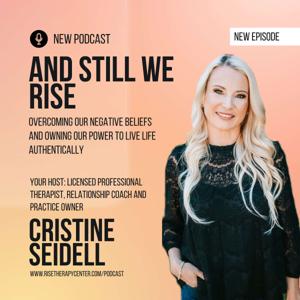
The "And Still We Rise" Podcast (formally known as The Ego Project), is hosted by mental health therapist and group practice owner, Cristine Seidell. It is a space where look deeper into our…