
Sign up to save your podcasts
Or

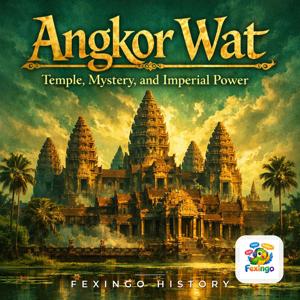


We often think of Angkor Wat as a temple, but it was the heart of a massive hydraulic city. In this episode, Lucas and Luna explore how the Khmer Empire engineered the Tonle Sap river system to survive seasonal floods and feed millions. We look at the baray reservoirs, the Li D A R canal networks, and the delicate balance between water management and imperial power. This wasn't just about irrigation; it was about controlling life itself in Southeast Asia's wettest season.
#AngkorWat #KhmerEmpire #HydraulicEngineering #TonleSap #Baray #LiDAR #SoutheastAsiaHistory #DamianEvans #WaterManagement #Archaeology #Cambodia #AncientCities #IrrigationSystems #MonsoonClimate #UrbanPlanning #MedievalHistory #FexingoHistory #History
Keep every episode free: buymeacoffee.com/fexingo
For decades, historians believed Angkor Wat was primarily a royal funerary temple for Suryavarman II, built to secure his divine status in the afterlife. But recent archaeological discoveries challenge this singular narrative. In this episode, we explore how the monument functioned as a living urban center and economic hub long after its original patron’s death. We look at the role of the brahmin priests who maintained rituals, the artisans who kept the carvings fresh, and the local communities that inhabited the surrounding moat and causeways. By examining the shift from Vaishnavite state cults to Theravada Buddhism in the 12th and 13th centuries, we uncover how ordinary people adapted sacred spaces for their own needs. From the erosion of sandstone by rainwater to the repurposing of devata statues, this episode reveals Angkor Wat not as a static tomb, but as a dynamic landscape where power, faith, and daily life intersected across centuries.
#AngkorWat #SuryavarmanII #KhmerEmpire #SoutheastAsiaHistory #Archaeology #TempleLife #BrahminPriests #TheravadaBuddhism #SandstoneErosion #DevataStatues #MonasticCommunity #ReligiousShift #PreAongKor #HistoricalUrbanism #SacredLandscape #FexingoHistory #HistoryPodcast #AncientCivilizations
Keep every episode free: buymeacoffee.com/fexingo
While we have spent the last dozen episodes dissecting Suryavarman II’s military campaigns, religious devotion to Vishnu, and the astronomical precision of Angkor Wat’s alignments, we have largely overlooked the people who sustained the empire’s daily life and spiritual economy. This episode shifts focus to the royal women of the Khmer court, examining figures like Jayarajadevi and her complex relationship with King Harshavarman III. Through epigraphic evidence from inscriptions at Banteay Srei and Ta Prohm, we uncover how queens wielded political influence, managed vast temple endowments, and navigated the treacherous waters of succession after the fall of Suryavarman II. We explore the concept of devata as both divine embodiment and political symbol, revealing that the stability of Yasodharapura relied as much on female patronage and administrative skill as it did on male conquests.
#Jayarajadevi #HarshavarmanIII #SuryavarmanII #AngkorWat #KhmerEmpire #RoyalWomen #BanteaySrei #TaProhm #Yasodharapura #Devata #Apsara #Vaishnavism #Mahayana #Epigraphy #SoutheastAsiaHistory #TemplePatronage #FexingoHistory #History
Keep every episode free: buymeacoffee.com/fexingo
While previous episodes have focused on Suryavarman II’s military campaigns, religious devotion, and the architectural symbolism of Angkor Wat as a cosmic mountain, Episode 272 shifts the lens to the invisible machinery that made it all possible: the labor force. We explore the logistical nightmare of quarrying, transporting, and carving millions of tons of sandstone and laterite in the 12th century. Lucas and Luna discuss the controversial estimates of worker numbers, the role of corvée labor versus paid artisans, and the sheer physical toll on the people behind the stone. We examine recent archaeological findings from the Angkor region that reveal where these workers lived, what they ate, and how the empire managed such a massive workforce without modern technology. This episode moves beyond the kings and gods to ask a fundamental question: who actually built Angkor, and at what human cost? We look at the evidence from inscriptions, settlement patterns, and skeletal remains to piece together the daily reality of the Khmer construction sites.
#AngkorWat #KhmerEmpire #SuryavarmanII #StoneQuarrying #CorvéeLabor #Archaeology #SoutheastAsiaHistory #Angkor #Sandstone #Laterite #MedievalEngineering #LaborHistory #FexingoHistory #History #Cambodia #TempleConstruction #HistoricalArchaeology #AncientInfrastructure
Keep every episode free: buymeacoffee.com/fexingo
While earlier episodes explored the religious symbolism and military campaigns of Suryavarman II, this episode examines the invisible infrastructure that made Angkor possible. We dive into the Khmer Empire’s mastery of hydraulic engineering—the barays, moats, and canal networks that turned the tropical landscape into a productive agricultural engine. Lucas and Luna trace how these water systems were not just for irrigation but were central to political power and urban planning. We look at recent archaeological discoveries using LiDAR to map the city’s extent, revealing a sprawling metropolis dependent on complex water management. The conversation also touches on the environmental limits of this system and how shifts in monsoon patterns may have contributed to the empire’s eventual decline, offering a fresh perspective on Angkor as a technological achievement rather than just a spiritual monument.
#AngkorWat #KhmerEmpire #HydraulicEngineering #SuryavarmanII #LiDAR #SoutheastAsiaHistory #Archaeology #WaterManagement #Baray #Monsoon #UrbanPlanning #TempleCity #EnvironmentalHistory #FexingoHistory #HistoryPodcast #AncientTech #Cambodia #DamianEvans #History
Keep every episode free: buymeacoffee.com/fexingo
We step away from the king’s war campaigns and stone reliefs to explore the spiritual backbone of Angkor Wat. This episode examines the rise of the Mahavihara monastic order, led by figures like Saranankara Samani, who transformed Khmer spirituality through strict adherence to the Pali Canon. We look at how these forest-dwelling monks, or Aranya practitioners, challenged royal authority and reshaped the empire’s religious landscape. Through the lens of laterite shrines and secluded meditation sites, we uncover how a shift toward Theravada Buddhism influenced everything from daily rituals to imperial legitimacy. You will hear about the tension between grand state cults and humble asceticism, and why the silence of the forest became as powerful as the noise of the court.
#AngkorWat #KhmerEmpire #SaranankaraSamani #Mahavihara #PaliCanon #Aranya #TheravadaBuddhism #SoutheastAsiaHistory #MonasticLife #ForestMonks #ReligiousReform #LateriteShrines #MedievalCambodia #BuddhistHistory #SpiritualPower #RoyalPatronage #FexingoHistory #History
Keep every episode free: buymeacoffee.com/fexingo
We often picture the Khmer Empire through its kings—Suryavarman II’s wars or Jayavarman VII’s hospitals—but Angkor’s political landscape was equally shaped by royal women. This episode explores the lives of queens like Jayarajadevi, who wielded influence as regents, temple patrons, and diplomatic bridges between competing factions. We examine how these women navigated a court where devaraja cults demanded divine male authority, yet where female lineage could legitimize succession. Through inscriptions, reliefs, and the chronicles of Zhou Daguan, we uncover how queens managed vast estates, commissioned shrines to Vishnu and Shiva, and sometimes even led military campaigns in their husband’s absence. Their stories reveal a sophisticated system of gendered power that sustained the empire’s stability long after the stone carvers finished their work.
#AngkorWat #KhmerEmpire #Jayarajadevi #RoyalWomen #SoutheastAsiaHistory #DevarajaCult #TemplePatronage #ZhouDaguan #Vishnu #Shiva #Regency #KhmerArchitecture #InspectionStones #RoyalLineage #FemalePower #HistoryPodcast #FexingoHistory #AncientCambodia
Keep every episode free: buymeacoffee.com/fexingo
Most histories of Angkor Wat focus on the kings and priests, but this episode reveals the massive, often overlooked workforce that built it. We explore the lives of the artisans, engineers, and conscripted laborers who shaped the temple’s five towers and intricate bas-reliefs. Lucas and Luna discuss the social hierarchy at work, the role of the Devata and Apsara carvers, and how the hydraulic empire relied on a disciplined population to manage the barays and transport sandstone from Phnom Kulen. From the Brahmin priests overseeing rituals to the uncounted thousands moving stone, we uncover the human cost behind the spiritual architecture of Suryavarman II.
#AngkorWat #KhmerEmpire #SuryavarmanII #SoutheastAsiaHistory #Archaeology #TempleConstruction #KhmerArt #BasRelief #Devata #Apsara #PhnomKulen #Sandstone #Laterite #Baray #HydraulicEmpire #LaborHistory #Conscription #FexingoHistory #History
Keep every episode free: buymeacoffee.com/fexingo
While Angkor Wat is renowned for its architecture and bas-reliefs, this episode explores the sophisticated astronomical knowledge embedded in its design. We examine how Khmer engineers aligned the temple complex with solar and lunar events, reflecting a deep understanding of celestial mechanics. Lucas and Luna discuss the role of brahmin priests and astronomers in determining construction dates and ritual calendars. The conversation touches on the integration of Vedic cosmology with practical engineering, using tools like gnomons and water clocks to track time. We also look at recent archaeological findings that suggest a broader network of observatories across the Khmer Empire. By analyzing inscriptions and structural alignments, we uncover how astronomy was not just spiritual but essential for agriculture and imperial administration. This episode moves beyond the visual grandeur to reveal the intellectual rigor behind Angkor Wat’s creation.
#AngkorWat #KhmerEmpire #Astronomy #SuryavarmanII #CelestialMechanics #VedicCosmology #Archaeoastronomy #SoutheastAsiaHistory #TempleArchitecture #BrahminPriests #SolarAlignment #LunarCalendar #Gnomon #WaterClocks #ImperialAdministration #HistoricalEngineering #History #FexingoHistory #PodcastEpisode
Keep every episode free: buymeacoffee.com/fexingo
While Angkor Wat is famous for its towering spires and military bas-reliefs, we explore the human infrastructure that made it possible. Lucas and Luna discuss the role of the devata and apsara not just as divine figures, but as reflections of the royal household and the thousands of artisans who lived in the shadow of the temple. We look at the inscriptions from the reign of Suryavarman II that reveal a complex society of skilled craftsmen, priests, and laborers whose daily lives were recorded in stone. This episode moves beyond the myth of the devaraja to examine the practical reality of maintaining a hydraulic empire, including the management of water systems like the baray and the economic networks that brought sandstone from Phnom Kulen. By focusing on the 'silent stones' of the artisans and the administrative details found in Khmer epigraphy, we uncover how imperial power was sustained through meticulous record-keeping and social organization rather than just divine right.
#AngkorWat #SuryavarmanII #KhmerEmpire #Devata #Apsara #BasRelief #PhnomKulen #Sandstone #HydraulicEmpire #Baray #Devaraja #Vaishnavism #KhmerArchitecture #SoutheastAsiaHistory #TempleConstruction #ArtisansOfAngkor #FexingoHistory #History
Keep every episode free: buymeacoffee.com/fexingo
From the publisher's feed