
Sign up to save your podcasts
Or

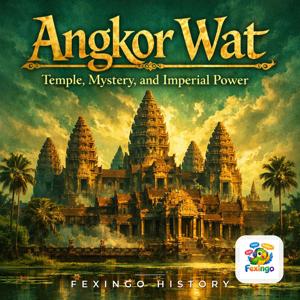


While most Angkor episodes focus on kings, battles, or hydraulic engineering, this conversation shifts attention to the silent sentinels lining the causeways: the stone lions. We explore how these sculpted guardians were not merely decorative but integral to the imperial security apparatus of Suryavarman II’s reign. Lucas traces the evolution of the lion motif from early Hindu symbolism to a standardized state tool, examining how their placement along the main access routes served as both psychological deterrents and markers of sacred space. Luna probes the logistical reality behind these massive sculptures—quarrying, transport, and the specialized guilds responsible for their maintenance. Together, they discuss the archaeological evidence of gilded bronzes that once crowned these stones, revealing a layer of imperial opulence that has long since vanished into the jungle floor. The episode also touches on the political tension between the military elite and the Brahmin priesthood, using the lions as a lens to understand who held power within the temple complex itself.
#SuryavarmanII #AngkorWat #StoneLions #KhmerEmpire #ImperialGuard #SoutheastAsiaHistory #KhmerArt #TempleArchitecture #MonumentalSculpture #SiemReap #CambodianHistory #HinduSymbolism #NagaBridge #BasRelief #FexingoHistory #HistoryPodcast #Archaeology #HeritageConservation
Keep every episode free: buymeacoffee.com/fexingo
We often think of Angkor as a place of sacred geometry and divine kingship, but beneath the stone carvings lay a sophisticated military machine. In this episode, we explore the Khmer empire’s approach to siege warfare, specifically the use of traction trebuchets and mangonels during the chaotic decades following the Champa invasions. We look at the archaeological evidence from the East Mebon and the inscriptions detailing the movement of war elephants and engineering corps. Lucas and Luna discuss how King Jayavarman VII didn't just rebuild temples; he rebuilt the army's logistical capacity using the vast water networks of the barays to transport troops and supplies. We also examine the controversial theory that internal decay, rather than external invasion, led to the eventual abandonment of the city, focusing on the role of the royal engineers and the strain placed on the populace by constant construction and mobilization.
#KhmerEmpire #AngkorWat #SiegeWarfare #Trebuchet #JayavarmanVII #Mangonel #EastMebon #Baray #TonleSap #ChampaInvasion #MedievalCambodia #MilitaryHistory #Archaeology #WaterManagement #WarElephants #EngineeringHistory #FexingoHistory #History
Keep every episode free: buymeacoffee.com/fexingo
While Angkor is famous for its stone towers, the city’s survival depended on a complex hydraulic system that engineers treated as sacred geometry. In this episode, we explore how Jayavarman VII and his successors managed the Tonle Sap river’s seasonal floods using massive canals and reservoirs known as barays. We look at the recent LiDAR discoveries by Damian Evans and the International Research Center on Heritage in Risk Areas (LiDAR) that revealed the city was not just a temple complex but a sprawling urban grid of water channels. We also examine the political power held by those who controlled the water supply, turning engineering into an act of divine rule.
#AngkorWat #KhmerEmpire #HydraulicCity #JayavarmanVII #TonleSap #Baray #DamianEvans #LiDAR #WaterEngineering #SoutheastAsiaHistory #Archaeology #MekongRiver #SreySanthor #UrbanPlanning #Devaraja #FexingoHistory #History #Cambodia
Keep every episode free: buymeacoffee.com/fexingo
We step away from the soaring stone towers and royal inscriptions to look down at what made Angkor possible: its water. In this episode, we explore the hydraulic city of the Khmer Empire, focusing on the massive barays like the West Baray and the intricate network of canals that connected them to the Tonle Sap. We examine how modern LiDAR technology has revealed a sprawling urban grid hidden beneath the jungle canopy, challenging old assumptions about population density. Lucas walks us through the engineering feats required to manage seasonal floods and droughts, while Luna asks how these systems supported daily life and agriculture. We also discuss the eventual collapse of this infrastructure, suggesting that the very complexity designed to sustain the empire may have contributed to its vulnerability during climate shifts in the late 13th and early 14th centuries.
#AngkorWat #KhmerEmpire #HydraulicCity #TonleSap #LiDAR #DamianEvans #WestBaray #SuryavarmanII #JayavarmanVII #CambodiaHistory #Archaeology #WaterManagement #SEAsianHistory #UrbanPlanning #ClimateChange #MedievalEngineering #FexingoHistory #History
Keep every episode free: buymeacoffee.com/fexingo
While Angkor Wat’s stone towers and bas-reliefs dominate the popular imagination, the true engine of the Khmer Empire was its invisible infrastructure: a vast, complex network of canals, moats, and reservoirs known as barays. This episode explores how King Jayavarman II established the devaraja cult to control water, transforming the flooded forests of the Tonle Sap basin into an agricultural powerhouse capable of supporting hundreds of thousands of people. We examine the archaeological evidence for this hydraulic city, including recent LiDAR surveys that reveal urban sprawl far beyond the temple walls, and investigate the theory that climate change and infrastructure failure contributed to the city’s eventual decline. Through the eyes of researchers like Damian Evans and Charles Higham, we uncover how water management was not just engineering but divine politics, shaping the daily lives, social hierarchy, and ultimate fate of medieval Southeast Asia.
#AngkorWat #KhmerEmpire #JayavarmanII #HydraulicCity #TonleSap #LiDAR #DamianEvans #CharlesHigham #devaraja #baray #SoutheastAsiaHistory #Archaeology #ClimateChange #MedievalCambodia #WaterManagement #UrbanPlanning #FexingoHistory #History
Keep every episode free: buymeacoffee.com/fexingo
While the kings of Angkor built stone cities, a parallel civilization thrived in the surrounding forests through the monastic order known as the sangha. This episode explores how Buddhist monks became the empire’s true administrators, tax collectors, and diplomats during the twilight of the Khmer Empire. We examine the role of the Mahavihara tradition, the influence of Sri Lankan monks like Saranankara Samani, and the complex relationship between royal patronage and religious autonomy. From the preservation of Pali texts to the management of vast forest estates, we uncover how the sangha maintained social order when imperial power fractured. The story moves beyond bas-reliefs and barays to look at the silent, scholarly network that kept the Khmer identity alive through centuries of political upheaval, Champa raids, and ecological change.
#AngkorWat #KhmerEmpire #BuddhistMonks #SanghaHistory #SoutheastAsiaHistory #MahayanaVsTheravada #JayavarmanVII #PaliCanon #ForestNuns #MedievalCambodia #ReligiousAdministration #SriLankaConnections #SarankaraSamani #KhmerArchitecture #MonasticLife #AncientTaxation #FexingoHistory #History
Keep every episode free: buymeacoffee.com/fexingo
While we have explored the spiritual geometry and hydraulic engineering of Angkor Wat, this episode uncovers the ecological cost of its construction. Lucas and Luna examine how the Khmer Empire’s reliance on timber for the massive corbelled arches, palace structures, and fuel for kilns producing laterite and sandstone tools led to widespread deforestation. We look at pollen core data from the Tonle Sap basin that reveals a stark shift in vegetation during the reign of Suryavarman II and Jayavarman VII. The conversation traces how the demand for charcoal to smelt iron for weapons and agricultural tools accelerated soil erosion, which silted up the barays and canals. This environmental strain didn't happen overnight but was a slow, structural pressure that compounded with political instability. By focusing on the physical materials—wood, charcoal, and soil—we see how an empire built on stone ultimately consumed the forest around it, leaving behind a landscape that historians are still trying to reconcile with the grandeur of the temples.
#AngkorWat #KhmerEmpire #Deforestation #SuryavarmanII #JayavarmanVII #TonleSap #EnvironmentalHistory #SoutheastAsiaHistory #PollenAnalysis #CorbelledArch #Laterite #Sandstone #Baray #CharcoalProduction #SoilErosion #IronSmelting #FexingoHistory #HistoryPodcast
Keep every episode free: buymeacoffee.com/fexingo
While earlier episodes have explored the engineering, politics, and lost colors of Angkor Wat, this episode turns to the temple’s most famous sculptural program: the Churning of the Ocean of Milk. We examine how King Suryavarman II used this specific Hindu myth not just as decoration, but as a political manifesto asserting his divine right to rule. Lucas walks us through the bas-reliefs’ intricate details—the naga serpents, the devas and asuras, and the central figure of Vishnu—explaining why this scene was carved on the west wall, facing the setting sun and the king’s tomb. Luna asks sharp questions about the symbolism of death and rebirth in Khmer cosmology, helping us understand how a royal mortuary temple became a cosmic map. We also look at recent epigraphic discoveries that challenge traditional readings of the temple’s dedication, suggesting a more complex narrative of imperial power than previously thought. This is a deep dive into the intersection of art, theology, and statecraft in 12th-century Southeast Asia.
#AngkorWat #SuryavarmanII #ChurningOfTheOceanOfMilk #KhmerEmpire #BasRelief #Vishnu #MountMeru #Naga #Deva #Asura #Apsara #Vaishnavism #SoutheastAsiaHistory #HinduMythology #RoyalTomb #Paramavishnuloka #FexingoHistory #History
Keep every episode free: buymeacoffee.com/fexingo
We often assume the fall of Suryavarman II marked the end of Angkor’s golden age, but the story actually accelerates under his successor, Harshavarman III. This episode explores how a king who inherited a fractured empire managed to stabilize it through sheer administrative grit rather than military conquest. We look at the political maneuvering involving the powerful Brahmin priests and the mysterious Queen Jayarajadevi, whose influence may have secured the throne against rival claimants. You’ll hear about the construction of the Phimeanakas temple complex as a statement of continuity, and why recent archaeological findings suggest the city didn't shrink immediately after 1150. Instead, it shifted focus from outward expansion to internal consolidation, laying the groundwork for Jayavarman VII’s later reforms. Join us as we uncover the quiet strength of a ruler often overshadowed by the giants who came before and after him.
#HarshavarmanIII #Jayarajadevi #AngkorWat #KhmerEmpire #SuryavarmanII #Phimeanakas #SoutheastAsianHistory #Devaraja #Vaishnavism #AngkorArchaeology #MedievalCambodia #RoyalBrahmins #TempleConstruction #PoliticalSuccession #FexingoHistory #HistoryPodcast #AncientCivilizations #HistoricalAnalysis
Keep every episode free: buymeacoffee.com/fexingo
While Jayavarman VII dominates Angkor’s history as a warrior king and builder, the political vacuum left by his predecessor Suryavarman II created a chaotic power struggle that reshaped the empire. This episode explores the brief but pivotal reign of King Harshavarman III and, more significantly, the role of Queen Jayarajadevi, who may have wielded actual power during the transition between dynasties. We examine the fragmented inscriptions from this era, including K. 382 and K. 590, which hint at military rebellions and foreign invasions from Champa and Srivijaya. Lucas and Luna discuss how the absence of clear succession laws led to internal coups, why Jayavarman VII eventually seized control not just through force but by positioning himself as a savior of Buddhist dharma, and how modern archaeologists are piecing together this turbulent decade using stone inscriptions rather than temple bas-reliefs.
#Jayarajadevi #HarshavarmanIII #SuryavarmanII #JayavarmanVII #KhmerEmpire #AngkorWat #CambodianHistory #SoutheastAsiaHistory #MedievalCambodia #KhmerKings #Inscriptions #K.382 #ChampaInvasion #Srivijaya #SuccessionCrisis #Dharmashastra #FexingoHistory #HistoryPodcast #AncientHistory
Keep every episode free: buymeacoffee.com/fexingo
From the publisher's feed