
Sign up to save your podcasts
Or

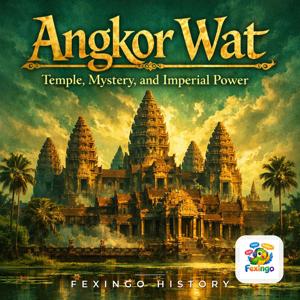


We explore the mathematical and astronomical intent behind Angkor Wat’s design, moving beyond myth to look at the precision of its construction. Lucas and Luna discuss how the temple’s five towers align with Mount Meru in Hindu cosmology, but also function as a massive solar calendar. We examine the equinox alignments that cast specific shadows across the causeway, the role of Brahmin priests in calculating these dates, and the integration of the solar-lunar calendar into royal legitimacy. You will hear about the specific angles of the stairways, the orientation of the main entrance toward the west, and how ancient Khmer engineers used simple tools like sighting sticks and water levels to achieve such accuracy. This episode reveals that Angkor Wat was not just a spiritual center, but a sophisticated machine for measuring time and asserting cosmic order under Suryavarman II.
#AngkorWat #SuryavarmanII #KhmerEmpire #HinduCosmology #MountMeru #SolarCalendar #EquinoxAlignment #BrahminPriests #CambodianHistory #AncientAstronomy #SacredGeometry #StoneTemple #SoutheastAsiaHistory #Vishnu #Devaraja #Archaeoastronomy #FexingoHistory #History
Keep every episode free: buymeacoffee.com/fexingo
We step away from the stone quarries and waterworks to explore the invisible architecture of the Khmer Empire: its calendar. For centuries, kings like Suryavarman II and Jayavarman VII didn't just rule land; they ruled time itself. This episode examines how the Khmer solar-lunar calendar dictated everything from rice planting to royal coronations. We look at the role of the Brahmin priests who calculated auspicious days, the specific astronomical observations made from temple towers, and how the alignment of Angkor Wat with the equinox served as a massive, permanent clock face. We also discuss the controversy surrounding the 'lost' intercalary months and how these calculations reinforced the king’s divine status as the center of cosmic order. By understanding how the Khmer measured their years, we see that their power was as much about precision and prediction as it was about military might.
#AngkorWat #KhmerEmpire #SoutheastAsiaHistory #SuryavarmanII #JayavarmanVII #KhmerCalendar #AstronomyAncient #BrahminPriests #EquinoxAlignment #TempleArchitecture #CosmicOrder #Devaraja #Vishnu #SolarLunar #Intercalation #FexingoHistory #HistoryPodcast #AncientCivilizations
Keep every episode free: buymeacoffee.com/fexingo
In this episode, we look past the grandeur of Angkor Wat’s construction to examine the violent political collapse that followed King Suryavarman II. While earlier episodes covered the temple’s astronomical alignments and labor systems, here Lucas and Luna explore the mysterious death of the king in battle against Champa forces around 1150 CE. We analyze the conflicting accounts from Zhou Daguan and later inscriptions to understand how a powerful Vaishnavite monarch died on campaign, leaving his successor to inherit an empire on the brink. The conversation delves into the military logistics of the Khmer-Champa wars, the role of the naga bridges in imperial transport, and the theological shift toward Mahayana Buddhism under Jayavarman VII as a response to this instability. Listeners will discover why the very monument built to glorify Suryavarman became a symbol of a dynasty’s fragility, and how the loss of royal legitimacy reshaped Southeast Asian power dynamics for centuries.
#SuryavarmanII #KhmerEmpire #Champa #AngkorWat #JayavarmanVII #ZhouDaguan #SoutheastAsiaHistory #Vaishnavism #MahayanaBuddhism #Devaraja #NagaBridge #BattleOf1150 #FexingoHistory #AncientMilitary #IndochinaHistory #TempleConstruction #RoyalSuccession #History
Keep every episode free: buymeacoffee.com/fexingo
We explore the profound symbolism of the naga, the seven-headed serpent, in Angkor Wat’s architecture and mythology. While earlier episodes covered the temple’s astronomical alignments and labor forces, this episode focuses on the spiritual bridge between earth and heaven that the naga represents. We discuss how King Suryavarman II used these mythical creatures to legitimize his rule as a god-king, linking the earthly realm to Mount Meru. You will hear about the specific architectural placements of the naga balustrades along causeways and moats, and how they served as protective guardians for pilgrims. We also examine the Churning of the Ocean of Milk bas-relief, where the naga Vasuki plays a central role in the cosmic myth. This narrative reveals how stone serpents were not just decorative elements but essential components of Khmer imperial theology and cosmological order.
#AngkorWat #NagaSerpent #KhmerEmpire #SuryavarmanII #MountMeru #ChurningOfTheOcean #BasReliefs #SoutheastAsianHistory #HinduMythology #Devata #Vishnu #TempleArchitecture #AncientCambodia #SpiritualGuardians #Cosmology #FexingoHistory #HistoryPodcast #Archaeology
Keep every episode free: buymeacoffee.com/fexingo
While Suryavarman II built Angkor Wat as a monument to Vishnu and divine kingship, the next great ruler, Jayavarman VII, transformed the Khmer Empire into a humanitarian state. This episode explores how a traumatic war with Champa reshaped his rule, leading to the construction of massive hospitals called arogyasala and an unprecedented network of rest houses. We look at the shift from Vaishnavism to Mahayana Buddhism, the architectural brilliance of the Bayon temple with its serene stone faces, and the logistical marvels that sustained his empire. Through inscriptions like the Preah Khan stela, we uncover the personal grief behind his public works and the complex political landscape of 12th-century Southeast Asia.
#JayavarmanVII #BayonTemple #Arogyasala #MahayanaBuddhism #KhmerEmpire #ChampaWar #PreahKhan #TaProhm #SoutheastAsianHistory #StoneFaces #MedievalCambodia #RoyalHospital #ZhouDaguan #AngkorThom #LeProsle #HistoricalArchitecture #FexingoHistory #History
Keep every episode free: buymeacoffee.com/fexingo
While most visitors to Angkor Wat focus on its towering lotus spires and astronomical alignments, the true heart of the temple lies in its intricate bas-reliefs. This episode explores the massive narrative frieze depicting the Churning of the Ocean of Milk, a mythological event that served as both religious doctrine and imperial propaganda for King Suryavarman II. We examine how the Khmer Empire used this specific story to legitimize the king’s divine status, linking his reign to the cosmic balance between order and chaos. By analyzing the thousands of carved figures—devas, asuras, nagas, and apsaras—we uncover the sophisticated political messaging embedded in the stone. Lucas and Luna discuss the artistic choices made by the master sculptors, the logistical feat of carving these scenes into hard sandstone, and what the positioning of the gods reveals about the hierarchy of the Khmer court. This is not just a religious monument; it is a carefully curated statement of power, designed to be read by the elite and witnessed by the empire itself.
#SuryavarmanII #AngkorWat #ChurningOfTheOceanOfMilk #KhmerEmpire #BasRelief #MountMeru #Devaraja #Devatas #Apsaras #Naga #Vaishnavism #SandstoneCarving #SoutheastAsiaHistory #AncientArchitecture #MythologyInStone #ImperialPropaganda #FexingoHistory #History
Keep every episode free: buymeacoffee.com/fexingo
While Angkor Wat is renowned for its serene apsaras and intricate bas-reliefs, the empire that built it relied on a formidable military machine to defend its wealth. This episode explores the organization, weaponry, and tactics of the Khmer standing army under Suryavarman II. We examine the evidence from stone carvings and Chinese accounts to understand how these soldiers fought in the dense jungles of Southeast Asia. From the use of crossbows to the strategic deployment of war elephants, we uncover the brutal reality behind the temple’s peaceful facade. Join us as we strip away the myth of the passive monk-king to reveal the iron-clad warriors who secured the Khmer Empire’s golden age.
#SuryavarmanII #KhmerEmpire #AngkorWat #KhmerArmy #SoutheastAsianHistory #WarElephants #CrossbowHistory #BasRelief #MilitaryTactics #12thCentury #ChampaWar #ZhouDaguan #StoneCarving #AncientWeapons #JungleWarfare #FexingoHistory #HistoryPodcast #Archaeology
Keep every episode free: buymeacoffee.com/fexingo
While most histories of the Khmer Empire focus on stone temples and irrigation canals, they also commanded the seas. This episode explores the naval power that allowed Suryavarman II to launch his famous campaign against Champa in 1145 CE. We examine how a land-based empire built a fleet capable of transporting thousands of troops upriver and along the coast, using war elephants mounted on barges and massive wooden hulls. Lucas and Luna discuss the archaeological evidence for these ships, the logistical nightmare of maintaining a navy in a tropical monsoon climate, and how maritime dominance was just as crucial to Angkor's imperial ambitions as its religious monuments. From the design of the prows shaped like nagas to the strategic use of the Mekong and Tonle Sap rivers, we uncover the hidden dimension of Khmer military might that few listeners know about.
#AngkorWat #KhmerEmpire #SuryavarmanII #ChampaWar #SoutheastAsianHistory #AncientNavy #MaritimeHistory #WarElephants #MekongRiver #TonleSap #MilitaryLogistics #WoodenShips #NagaProw #IndochinaHistory #12thCentury #ImperialPower #HistoryPodcast #FexingoHistory
Keep every episode free: buymeacoffee.com/fexingo
In 1177, Champa ships sailed up the Tonle Sap river and sacked Angkor, leaving the Khmer Empire in ruins. This episode explores the dramatic recovery led by Jayavarman VII, who rose from exile to rebuild the capital on a new scale. We examine the strategic decision to build Angkor Thom and the Bayon temple, focusing on the unique architecture that blends Hindu cosmology with Mahayana Buddhist devotion. Lucas and Luna discuss the military reforms, the massive labor force required for reconstruction, and how this period shifted the empire’s spiritual center toward the concept of the 'God-King' as a compassionate healer rather than just a divine conqueror. We also look at the diplomatic tensions with Đại Việt and the internal politics that allowed Jayavarman VII to consolidate power after decades of instability.
#JayavarmanVII #AngkorThom #BayonTemple #ChampaInvasion #KhmerEmpire #TonleSap #MahayanaBuddhism #SoutheastAsianHistory #MedievalCambodia #MonsoonWarfare #NagaBridge #LipidArtifacts #ZhouDaguan #ImperialRecovery #StoneArchitecture #FexingoHistory #AncientEngineering #History
Keep every episode free: buymeacoffee.com/fexingo
While we have explored the stone, water, and labor of Angkor Wat, few episodes have examined what happened inside its vaults. This conversation turns to the Khmer Empire’s immense wealth, specifically the gold mined from Srey Santhor and the administrative machinery that managed it. Lucas and Luna discuss the role of the royal treasurers, the inscriptions detailing tribute flows from conquered Champa and Sri Vijaya, and how this economic power underwrote the temple’s construction. We look at the K. 235 inscription, which records the transfer of goldsmiths and artisans, revealing a state economy far more sophisticated than simple subsistence agriculture. The episode also touches on the eventual depletion of these resources and the shifting political landscape that followed Suryavarman II’s death, offering a materialist counterpoint to the spiritual narratives often told about the site.
#KhmerEmpire #SuryavarmanII #AngkorWatHistory #SoutheastAsianHistory #MedievalEconomics #GoldMining #SreySanthor #RoyalTreasurer #K235Inscription #ChampaWar #Srivijaya #TempleEconomy #MonsoonAgriculture #IndianOceanTrade #AncientTreasury #FexingoHistory #HistoryPodcast #AngkorThom
Keep every episode free: buymeacoffee.com/fexingo
From the publisher's feed