
Sign up to save your podcasts
Or

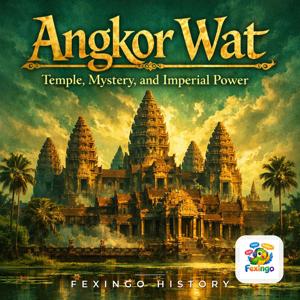


In Episode 212, Lucas and Luna dig into the human engine that built Angkor Wat: the corvée labor system. While Suryavarman II's sandstone temples loom large in the historical imagination, this episode turns to the people who quarried, hauled, and carved. We trace the system's roots in Khmer society and its ties to rice surpluses, monsoon rhythms, and the devaraja cult. We meet the officials who tallied workers by the hundred, the families who toiled dry-season months, and the little-known inscription K. 254 that records a labor draft. Plus, the moral cost: how divine kingship blurred the line between sacred duty and forced service. Fresh angle, no bas-reliefs — just the scaffolding of an empire.
#AngkorWat #Corvée #KhmerEmpire #SuryavarmanII #Devaraja #K254 #LaborHistory #SoutheastAsia #MountMeru #RiceSurplus #Monsoon #StoneQuarry #PhnomKulen #KhmerInscriptions #AncientLabor #ImperialPower #History #FexingoHistory
Keep every episode free: buymeacoffee.com/fexingo
In this episode of Fexingo History, Lucas and Luna climb Angkor Wat's famously steep staircases — and discover they're more than just a workout. Built under Suryavarman II in the 12th century, these stairways encode a cosmic geography: the higher you ascend, the closer you get to the realm of the gods. We explore how the temple's verticality mirrors Mount Meru, the center of the Hindu universe, and how the climb was a ritual act, not just a functional route. Along the way, we meet the temple's guardian lions, the naga balustrades, and the mysterious 'stairway to heaven' that leads to the central sanctuary. We also unpack a recent controversy: the installation of handrails and staircases for modern tourists — a practical fix that some argue erases the original experience. And we ponder the meaning of ascent in a world where the divine was literally above you. So put on your metaphorical climbing shoes, and join us for a journey up the cosmic ladder.
#AngkorWat #SuryavarmanII #MountMeru #HinduCosmology #KhmerEmpire #Stairways #TempleArchitecture #SacredGeography #Angkor #Cambodia #UNESCO #APSARA #AncientEngineering #ReligiousRitual #CosmicMountain #History #FexingoHistory #Podcast
Keep every episode free: buymeacoffee.com/fexingo
Who built Angkor Wat, and where did the 5 million tons of sandstone come from? In Episode 210, Lucas and Luna follow the trail from the Phnom Kulen quarries to the temple's walls, meeting the invisible workforce of masons, carvers, and boatmen who hauled 400-kilogram blocks across Cambodia. They weigh the evidence for conscription versus paid labor, examine the surprisingly narrow quarry source at Kulen, and marvel at the logistics of a construction project that consumed more stone than the Great Pyramid. With a nod to the French archaeologist Etienne Aymonier's early surveys and the modern photogrammetry that has mapped the quarries, this episode peels back the stone to reveal the human hands behind the cosmic blueprint — and asks what their toil says about the Khmer Empire's power.
#AngkorWat #PhnomKulen #KhmerEmpire #SandstoneQuarries #SuryavarmanII #EtienneAymonier #EFEO #APSARA #AngkorArchaeology #SoutheastAsia #MedievalEngineering #ConstructionHistory #StoneMasonry #WorldHeritage #Archaeology #History #FexingoHistory #BuildingTheEmpire
Keep every episode free: buymeacoffee.com/fexingo
In this episode, Lucas and Luna explore the astronomical sophistication behind Angkor Wat's design. We meet the Khmer court astronomers and priests who aligned the temple to the solstices and equinoxes, and we look at the instruments they used — from gnomons to water clocks. We discuss the role of the devaraja cult in legitimizing Suryavarman II's rule, and how the temple's western orientation and tower layout encoded a cosmic map. We also touch on the 2018 NASA-funded study that used satellite imaging to map the temple's hidden structures, and the ongoing controversy over whether Angkor Wat was a tomb or a temple.
#AngkorWat #KhmerEmpire #Astronomy #SuryavarmanII #Devaraja #MountMeru #Solstice #Equinox #NASA #SatelliteImaging #Temple #Cosmology #Hinduism #Vishnu #SoutheastAsia #History #FexingoHistory #AncientMysteries
Keep every episode free: buymeacoffee.com/fexingo
In this episode, Lucas and Luna explore the reign of Suryavarman II, the king who built Angkor Wat. They discuss how he came to power, his military campaigns against Champa and Đại Việt, and his diplomatic missions to China. The episode also examines the temple as a funerary monument, the role of the devaraja cult, and the king's sudden death during a failed invasion. Through inscriptions and Chinese court records, they piece together a portrait of a ruler who shaped an empire and left a stone legacy that still towers over Cambodia.
#SuryavarmanII #AngkorWat #KhmerEmpire #Champa #DaiViet #Devaraja #MountMeru #Paramavishnuloka #Vaishnavism #Cambodia #SoutheastAsia #MedievalHistory #Hinduism #TempleArchitecture #ImperialPower #History #FexingoHistory #Angkor
Keep every episode free: buymeacoffee.com/fexingo
In the third century CE, the Roman Empire nearly tore itself apart. While emperors rose and fell in Rome, a general named Postumus carved out a rival state in Gaul, Britain, and Spain. For nearly fifteen years, the so-called Gallic Empire minted its own coins, fielded its own armies, and even built its own capital. This episode tells the story of that breakaway realm—how Postumus took power, why his rule was remembered as a golden age, and how his successors struggled to hold it together until Aurelian finally reunited the empire in 274 CE. Along the way, we meet the shadowy usurpers Victorinus and Tetricus, the "Thirty Tyrants" of the Historia Augusta, and the Gallic emperor who modeled his court on Rome itself. It's a saga of ambition, betrayal, and the strange resilience of an empire that refused to stay broken.
#GallicEmpire #Postumus #Aurelian #RomanEmpire #ThirdCenturyCrisis #Tetricus #Victorinus #Cologne #HistoriaAugusta #Usurpers #RomanCoins #Trier #AncientHistory #RomanBritain #RomanGaul #BreakawayEmpire #FexingoHistory #History
Keep every episode free: buymeacoffee.com/fexingo
Before Angkor Wat rose from the jungle, a warrior king named Jayavarman II forged the Khmer Empire. He crowned himself devaraja atop Phnom Kulen, declared independence from Java, and built a capital at Hariharalaya that would seed the greatest temple city on Earth. This episode digs into the shadowy early years of Khmer power: the contested history of Jayavarman's origins, the meaning of the devaraja cult, and how his successors—Indravarman I, Yasovarman I, and Suryavarman II—turned a mountain-top ritual into the architectural language of Angkor. We explore the Sdok Kak Thom inscription, the lost temple of Bakong, and the transition from Hindu mountain-temples to the cosmic plan of Angkor Wat. If you've ever wondered how a single coronation changed the course of Southeast Asian history, this is the story.
#KhmerEmpire #JayavarmanII #Devaraja #PhnomKulen #Hariharalaya #AngkorWat #SdokKakThom #IndravarmanI #Bakong #YasovarmanI #SuryavarmanII #Cambodia #SoutheastAsia #Hinduism #Archaeology #History #FexingoHistory #TempleArchitecture
Keep every episode free: buymeacoffee.com/fexingo
In this episode of Fexingo History, Lucas and Luna explore the enigmatic apsaras of Angkor Wat—the celestial dancers carved into sandstone over 900 years ago. Discover how these figures blend natural grace with divine power, their roots in Hindu and Buddhist mythology, and the tiny details—like their unique hairstyles, jewelry, and the famous 'apsara with a smile'—that make each one distinct. Learn about the French archaeologist George Coedès and his groundbreaking analysis of apsara carvings, and how these stone dancers influenced the Royal Ballet of Cambodia. The conversation also touches on the temple's bas-reliefs, the Churning of the Ocean of Milk, and the ongoing conservation efforts by the APSARA Authority. Whether you're a history buff or a curious traveler, this episode offers a fresh perspective on one of the world's most iconic architectural wonders.
#AngkorWat #Apsaras #KhmerEmpire #SuryavarmanII #GeorgeCoedes #RoyalBalletOfCambodia #MountMeru #HinduMythology #BuddhistArt #ChurningOfTheOceanOfMilk #EFEO #APSARAAuthority #Cambodia #SoutheastAsia #AncientArchitecture #History #FexingoHistory #Podcast
Keep every episode free: buymeacoffee.com/fexingo
In this episode of Fexingo History, Lucas and Luna explore the enigmatic vaulted corridors of Angkor Wat — the narrow, dark passages that wind through the temple's galleries. Unlike the vast open courtyards and towering spires, these corridors are a shadowy labyrinth built during the reign of Suryavarman II in the 12th century. Lucas explains how the corbelled arches, a hallmark of Khmer engineering, allowed the temple to support massive stone roofs without mortar, creating spaces that feel both intimate and eerie. The hosts discuss the possible functions of these corridors: were they processional routes for rituals, storehouses for sacred texts, or even makeshift fortifications during the empire's decline? They also touch on the recent research by the EFEO and APSARA Authority, which used photogrammetry to map these narrow passages and uncover hidden inscriptions and carved devatas that have gone unnoticed for centuries. Along the way, Lucas shares the legend of a French explorer who reportedly got lost in the corridors for hours, adding a touch of mystery to the stone walls. The episode concludes with a reflection on how these overlooked spaces reveal the everyday life and spiritual practices of the Khmer Empire, reminding us that even the most famous temples hold secrets in their shadows.
#AngkorWat #KhmerEmpire #SuryavarmanII #CorbelledArch #EFEO #APSARAAuthority #Photogrammetry #Cambodia #SoutheastAsia #TempleArchitecture #AncientEngineering #HiddenSpaces #Devata #MountMeru #ZhouDaguan #Archaeology #History #FexingoHistory
Keep every episode free: buymeacoffee.com/fexingo
In this episode, Lucas and Luna explore the role of dance and music at Angkor Wat, moving beyond the famous stone reliefs to the living tradition of court performance. They discuss how Suryavarman II's reign elevated the apsaras from decorative motifs to central figures in Khmer ritual and politics, examining the intricate choreography mirrored in the bas-reliefs and the possible influence of Indian Natyashastra. The conversation touches on the famous scene of the Churning of the Ocean of Milk and how dance was used to reinforce the king's divine status, linking later Cambodian classical ballet to its Angkorian roots. Along the way, they consider the practicalities of staging performances in the temple complex, the training of dancers, and the subtle ways movement on stone tells stories that text alone cannot. The episode also touches on the legacy of Queen Indradevi and her role in shaping court culture under Jayavarman VII, showing how dance evolved across dynasties. A brief, heartfelt moment about listener support is woven into the middle, reminding us why these stories matter.
#AngkorWat #KhmerEmpire #ApsaraDance #SuryavarmanII #CambodianHistory #Natyashastra #Indradevi #JayavarmanVII #ClassicalBallet #TempleDance #SoutheastAsia #AncientHistory #MountMeru #ChurningMilkOcean #KhmerCulture #HistoryPodcast #FexingoHistory #AncientArt
Keep every episode free: buymeacoffee.com/fexingo
From the publisher's feed