
Sign up to save your podcasts
Or

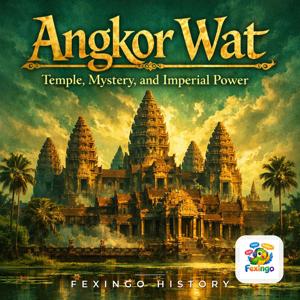


Before the towers and bas-reliefs, Angkor Wat was defined by a vast moat, a body of water that was both a feat of engineering and a symbol of cosmic order. In this episode, Lucas and Luna explore how the moat was built, how it served as a defensive and hydrological system, and how it mirrored the mythical oceans surrounding Mount Meru. Drawing on inscriptions like K. 380 and the accounts of Zhou Daguan, they trace the moat's role in the Khmer Empire's power, its links to the barays, and its surprising afterlife in the rituals of Theravada Buddhism. With a little help from modern archaeology, they uncover the practical and spiritual functions of this watery ring, from managing monsoon floods to setting the stage for the temple's famous westward orientation. A story of water, stone, and empire, this episode reveals why the moat was Angkor Wat's first and last line of defense—and its most sacred boundary.
#AngkorWat #KhmerEmpire #Moat #HydraulicEngineering #MountMeru #SuryavarmanII #ZhouDaguan #K380Inscription #Baray #Cosmology #AncientEngineering #SoutheastAsia #Archaeology #Angkor #History #FexingoHistory #AncientCivilizations #WaterManagement
Keep every episode free: buymeacoffee.com/fexingo
Lucas and Luna explore why Angkor Wat famously faces west, a break from Khmer tradition, and what that reveals about Suryavarman II's cosmic ambitions and his battle for legitimacy. They decode the temple's reversed iconography, the mystery of its unfinished bas-reliefs, and the clues that point to a solar cult, a funerary monument, or a king trying to outshine his rivals. From the sacred orders of Vaishnavism to the shadow of Champa, this episode untangles the celestial logic and political theatre behind one of the world's most iconic temples. The conversation also touches on the forgotten stories of the temple's artisans and the quiet revolution of temple orientation in the Angkorian world.
#AngkorWat #SuryavarmanII #KhmerEmpire #Vaishnavism #TempleOrientation #MountMeru #Champa #BasReliefs #KhmerArt #CambodiaHistory #SoutheastAsia #Devaraja #Kurukshetra #Ramayana #SolarDeity #Surya #HinduCosmology #FexingoHistory
Keep every episode free: buymeacoffee.com/fexingo
For episode 200, Lucas and Luna dive into the most iconic bas-relief at Angkor Wat: the Churning of the Ocean of Milk. They unravel the Hindu myth of devas and asuras pulling a serpent to churn the cosmic ocean, and how this scene was more than decoration—it was a political statement. Suryavarman II placed himself at the center, linking his reign to eternal order. The conversation explores the relief's details, the lost central figures, and its lasting influence on later temples and even modern branding in Cambodia. A rich episode that connects myth, art, and imperial power.
#AngkorWat #ChurningOfTheOceanOfMilk #HinduMythology #SuryavarmanII #KhmerEmpire #BasRelief #MountMeru #Vishnu #Devas #Asuras #Naga #CambodiaHistory #SoutheastAsia #AncientArchitecture #ReligiousArt #ImperialPower #History #FexingoHistory
Keep every episode free: buymeacoffee.com/fexingo
In this episode of Fexingo History, Lucas and Luna explore the naga bridges of Angkor, the monumental causeways that led to Angkor Thom and other temple complexes. They discuss the symbolism of the nāga, the serpent deity, in Hindu and Buddhist cosmology, focusing on the Churning of the Ocean of Milk and how it was represented in stone. The episode covers the famous causeways at Angkor Wat, Angkor Thom, and Preah Khan, their alignment with the cardinal directions, and the roles they played in royal processions and daily life. Lucas explains the technical aspects of construction, including the use of sandstone and laterite, and the challenges of restoration, particularly with the recent discovery of original naga heads. The episode aims to illuminate a familiar feature of Angkor that is often overlooked, revealing its deep religious and political significance.
#Angkor #KhmerEmpire #Naga #AngkorThom #AngkorWat #ChurningOfTheOceanOfMilk #MountMeru #Devaraja #Hinduism #Buddhism #SoutheastAsia #Cambodia #Archaeology #Restoration #Symbolism #History #FexingoHistory #TempleArchitecture
Keep every episode free: buymeacoffee.com/fexingo
Long before Angkor Wat rose from the forest, another mountain-temple crowned the Khmer capital of Hariharalaya. The Bakong, built by King Indravarman I in 881 CE, is often called Angkor's first true temple-mountain — a stepped pyramid of sandstone and laterite that set the cosmic blueprint for everything that followed. In this episode, Lucas and Luna explore how the Bakong's five tiers mirrored Mount Meru, how its central sanctuary was consecrated to the god-king, and why the temple's later transformations — from Hindu to Buddhist, from royal shrine to working monastery — make it a living palimpsest of Khmer faith. They trace Indravarman's rise, the symbolic power of his royal consecration, and the evidence that the Bakong's construction techniques directly inspired the builders of Angkor Wat. With details drawn from inscriptions and modern archaeology, this conversation reveals a site that is both a masterpiece in its own right and a crucial key to understanding the empire's greatest monument. A visit to Bakong today offers a quieter, more intimate sense of Angkor's beginnings.
#AngkorWat #Bakong #IndravarmanI #Hariharalaya #KhmerEmpire #TempleMountain #MountMeru #SoutheastAsianHistory #CambodianHistory #Angkor #SiemReap #UNESCO #Hinduism #Buddhism #Archaeology #History #FexingoHistory
Keep every episode free: buymeacoffee.com/fexingo
In the shadow of Angkor Wat's towering spires, a vast stone narrative unfolds. This episode zooms in on the Western Gallery's bas-reliefs, where the Ramayana springs to life in stone. While the famous Churning of the Ocean of Milk and the Battle of Kurukshetra often steal the spotlight, this quieter gallery depicts the epic duel between Rama and Ravana, the demon king of Lanka. We explore how Suryavarman II, the temple's builder, wove his own identity into this divine story, presenting himself as a righteous king battling the forces of chaos. Along the way, we meet the artisan-sculptors who carved these scenes, the French scholars who decoded the inscriptions, and the unanswered questions that still hover over the gallery's meaning. Why did the king choose this episode? What does it tell us about Khmer kingship? And how does the gallery's condition reveal centuries of neglect before modern restoration? This is a story of art, power, and faith, carved in sandstone and still whispering after nine hundred years.
#AngkorWat #Ramayana #KhmerEmpire #SuryavarmanII #BasReliefs #Hinduism #Cambodia #SoutheastAsia #EpicPoetry #AncientArt #Kingship #Temple #Mythology #Archaeology #Restoration #History #FexingoHistory #LucasAndLuna
Keep every episode free: buymeacoffee.com/fexingo
This episode of Fexingo History turns to the quietest records of Angkor Wat: the cartouches — small inscribed frames that name the figures in the temple's vast bas-reliefs. While the great battles and celestial churnings have long been studied, many of these labels were chiseled out in antiquity, leaving only ghostly outlines where names once stood. Lucas and Luna explore what the cartouches reveal about Khmer literacy, court ritual, and the deliberate erasure of memory — possibly tied to religious shifts or dynastic politics after Suryavarman II's death. They discuss specific examples, like the Churning of the Ocean of Milk and the Battle of Kurukshetra, the work of scholars such as George Coedès and the EFEO, and what later inscriptions and Chinese accounts from Zhou Daguan tell us about who could read these sacred texts. The episode also considers how modern imaging technology might recover these lost names, and what that would mean for our understanding of Angkor's imperial project. A thoughtful look at the power of names and the silences left in stone.
#AngkorWat #Cartouches #KhmerEmpire #SuryavarmanII #BasReliefs #EFEO #GeorgeCoedes #ZhouDaguan #Epigraphy #Sanskrit #Vishnu #ChurningOfTheOcean #Kurukshetra #Archaeology #SoutheastAsia #History #FexingoHistory #LostNames
Keep every episode free: buymeacoffee.com/fexingo
This episode of Fexingo History turns its gaze upward to the 3,000 apsaras carved into the walls of Angkor Wat. These celestial dancers, frozen in stone for nearly nine centuries, are more than decoration—they are a window into Khmer cosmology, court culture, and the divine pretensions of Suryavarman II. Join Lucas and Luna as they explore the origins of the apsara in Hindu myth, the meticulous details of their dress and dance poses, the famous 'apsara with a smile', and the thousands of unique hairstyles that still puzzle scholars. They also discuss the 1920s restoration efforts by the EFEO, the threat of looting, and the modern revival of apsara dance at the Royal Ballet of Cambodia. A rich episode for anyone curious about how art, religion, and power intertwined at Angkor.
#Apsara #AngkorWat #SuryavarmanII #KhmerEmpire #HinduMythology #CelestialDancers #EFEO #RoyalBalletOfCambodia #BasRelief #Angkor #KhmerArt #SoutheastAsia #History #FexingoHistory #Cambodia #MountMeru #Vishnu #StoneCarving
Keep every episode free: buymeacoffee.com/fexingo
In this episode, Lucas and Luna explore the bas-reliefs of Angkor Wat's southern gallery, focusing on the Battle of Kurukshetra from the Mahabharata. They discuss how the Khmer Empire under Suryavarman II used epic Hindu narrative to legitimize his reign, the intricate stone carvings of warriors and chariots, and the contrast with the temple's other panels. The conversation touches on the devaraja cult, the Churning of the Ocean of Milk, and the practical choices made by Khmer architects to fit vast scenes onto gallery walls. Along the way, they reflect on what these bas-reliefs reveal about Angkor's cosmopolitan connections to India.
#AngkorWat #KhmerEmpire #BasReliefs #Mahabharata #Kurukshetra #SuryavarmanII #Devaraja #Hinduism #Vishnu #StoneCarving #SoutheastAsia #Cambodia #TempleArt #EpicNarrative #Cosmology #History #FexingoHistory
Keep every episode free: buymeacoffee.com/fexingo
In 1923, the French writer André Malraux — later France's minister of culture — traveled to the remote temple of Banteay Srei and tried to haul away several of its carved devatas. His arrest, trial, and eventual conviction made international headlines and changed the course of Angkorian archaeology. This episode unpacks Malraux's motives, the unlikely court case, and the aftermath: how an act of looting pushed French authorities to create the Angkor Conservation Office and develop the anastylosis technique that later restored Banteay Srei stone by stone. We also explore the temple's unique history — built not by a king but by a brahmin, Yajnavaraha, who served Rajendravarman II — and why its pink sandstone carvings were considered too delicate to protect. Along the way, Lucas and Luna consider the shifting ethics of cultural heritage and what a thief's legacy teaches us about who gets to write history.
#BanteaySrei #AndréMalraux #AngkorLooting #Anastylosis #KhmerEmpire #AngkorWat #Yajnavaraha #RajendravarmanII #EFEO #CambodiaHistory #CulturalHeritage #ArtHistory #Archaeology #FrenchColonialism #History #FexingoHistory #SoutheastAsia #TempleLooting
Keep every episode free: buymeacoffee.com/fexingo
From the publisher's feed