
Sign up to save your podcasts
Or

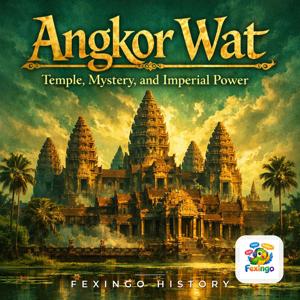


Angkor Wat is famous for its thousands of celestial dancers carved into sandstone, the apsaras who adorn nearly every wall and pillar. But these figures are more than decoration — they were a cosmic assertion of Khmer royal power. In this episode, Lucas and Luna explore the origins of the apsara motif in Hindu mythology, the evolution of devata and apsara reliefs across Angkorian temples, and the astonishing technical skill of the Khmer sculptors who created them. They discuss the work of the German Apsara Conservation Project, which has spent decades cleaning and preserving these fragile masterpieces, and the controversial restoration debates surrounding chemical vs. mechanical cleaning methods. Along the way, they reveal how the apsaras' hairstyles, jewelry, and hand gestures encode information about 12th-century Khmer court culture, and how Queen Indradevi may have directly influenced the depiction of female figures at Angkor Wat. Finally, they consider what the apsaras mean today — as symbols of Cambodian national identity, as tourist attractions, and as fragile survivors of time, war, and weather.
#AngkorWat #Apsara #KhmerEmpire #Cambodia #Devata #SuryavarmanII #Indradevi #GermanApsaraConservationProject #HinduMythology #MountMeru #StoneCarving #Conservation #SoutheastAsianArt #12thCentury #TempleArt #LucasAndLuna #FexingoHistory #History
Keep every episode free: buymeacoffee.com/fexingo
Episode 162 of Fexingo History peels back the stone curtain of Angkor Wat to examine one of its most vital documents: the K. 380 inscription. Lucas and Luna explore how this 12th-century Sanskrit stele, discovered at the temple, records Suryavarman II's coronation, his construction of Angkor Wat, and the intricate relationship between Khmer kings and Brahmins. They discuss the inscription's mention of the devaraja cult, the role of the sage Divakarapandita, and what the stone tells us about the temple's original name — Paramavishnuloka, or 'the abode of Vishnu.' The episode also touches on the challenges of epigraphy, the work of scholars like George Coedès, and how K. 380 contradicts later legends about Angkor's founding. Specific terms like 'yajna,' 'homa,' 'Vrah Kamraten An,' and 'Sdok Kak Thom' are woven into the conversation, giving listeners a concrete sense of the primary source that anchors our understanding of Angkor's golden age.
#AngkorWat #K380 #SuryavarmanII #KhmerEmpire #SanskritInscriptions #Devaraja #Divakarapandita #Paramavishnuloka #GeorgeCoedes #Epigraphy #CambodiaHistory #12thCentury #AngkorEpigraphy #SdokKakThom #Hinduism #SoutheastAsia #History #FexingoHistory
Keep every episode free: buymeacoffee.com/fexingo
How did the Khmer Empire move over 10 million stone blocks from the Kulen Hills to Angkor Wat? This episode explores the sandstone quarries of Phnom Kulen, the canals and roads that formed a 50-kilometer stone highway, and the logistics that made the temple possible. Lucas and Luna discuss the geology of the region, the engineering of the transport system, and the labor organization required to build one of the world's largest religious monuments. They also touch on the role of the Tonlé Sap lake and the seasonal flooding that aided the movement of these massive blocks. Based on research by Estara Uchida and the Greater Angkor Project, this episode reveals the hidden infrastructure behind Angkor's stone masterpiece.
#AngkorWat #KhmerEmpire #SandstoneQuarries #PhnomKulen #StoneTransport #AncientEngineering #GreaterAngkorProject #EstaraUchida #SuryavarmanII #TonléSap #History #FexingoHistory #Archaeology #Logistics #WorldHeritage #Cambodia #AncientTechnology #CivilEngineering
Keep every episode free: buymeacoffee.com/fexingo
In 1431, the Ayutthaya kingdom under King Borommarachathirat II sacked Angkor Wat, ending centuries of Khmer dominance. This episode follows the siege, the looting of treasures, and the aftermath—why the Khmer court abandoned Angkor for Phnom Penh. We explore the role of Theravada Buddhism, the decline of the devaraja cult, and how the temple survived as a Buddhist monastery. Drawing on Chinese accounts, Thai chronicles, and archaeological evidence, we untangle the event that turned a living capital into a ghost city.
#AngkorWat #1431Sack #Ayutthaya #BorommarachathiratII #ChaoSamPhraya #PhnomPenh #KhmerEmpire #TheravadaBuddhism #Devaraja #Yasodharapura #SoutheastAsianHistory #ThaiHistory #CambodianHistory #HistoricalSiege #TempleLooting #AngkorDecline #FexingoHistory #History
Keep every episode free: buymeacoffee.com/fexingo
When Jayavarman VII ascended the Khmer throne after decades of Cham invasions, he brought more than military might—he brought a queen who would reshape Angkor's spiritual and intellectual life. This episode of Fexingo History explores Indradevi, the polymath queen consort of Angkor's greatest builder. A scholar of Buddhist scripture, a teacher of queens, and a poet who composed Sanskrit verses praising her husband's merit, Indradevi was far more than a passive royal ornament. We examine her role as a female intellectual in a patriarchal court, her authorship of inscriptions that shaped Khmer historical memory, and her influence on Jayavarman VII's Mahayana Buddhist state. Drawing on the Preah Khan stele and the work of epigraphers like George Coedès and Peter Sharrock, we uncover how Indradevi used language, religion, and patronage to cement a dynasty. For listeners who know Angkor Wat's stone goddesses and cosmic battles, this is the story of the living woman who helped build an empire of faith.
#Indradevi #JayavarmanVII #Angkor #KhmerEmpire #MahayanaBuddhism #PreahKhan #Sanskrit #GeorgeCoedès #PeterSharrock #QueenConsort #12thCentury #SoutheastAsia #Cambodia #Epigraphy #BuddhistStudies #WomenInHistory #History #FexingoHistory
Keep every episode free: buymeacoffee.com/fexingo
When the Thai army sacked Angkor in 1431, the great temple city was abandoned—but not forgotten. In this episode, Lucas and Luna explore what happened to Angkor Wat in the centuries after its fall. They trace the shifting fortunes of the site from a forgotten jungle shrine to a Buddhist pilgrimage destination, its rediscovery by French naturalist Henri Mouhot in 1860, and the long debate over whether Mouhot really 'discovered' it. They discuss the role of Theravada monks who kept the temple alive, the first Western visitors who documented it, the controversial restoration work by the École française d'Extrême-Orient, and the modern challenges of conservation—from tourism pressure to the German Apsara Conservation Project's work on the bas-reliefs. Along the way, they touch on the temple's transformation from a Hindu sanctuary to a Buddhist wat, the meaning of its name, and how Angkor Wat became a symbol of Cambodian national identity. This is the story of a monument that outlived its builders, its gods, and its empire—and still stands.
#AngkorWat #Cambodia #KhmerEmpire #HenriMouhot #FrenchColonialism #TheravadaBuddhism #TempleConservation #GermanApsaraConservationProject #EcoleFrancaiseDExtremeOrient #PostAngkor #SoutheastAsianHistory #WorldHeritage #AngkorArchaeology #BuddhistPilgrimage #TempleRediscovery #HistoricalConservation #History #FexingoHistory
Keep every episode free: buymeacoffee.com/fexingo
In 1431, the great Khmer Empire met its end not in a single battle, but in a slow unraveling. This episode explores the final century of Angkor, focusing on the Ayutthaya siege that brought down the city. We examine the shifting regional dynamics: the rise of the Siamese kingdom under King Borommarachathirat II, the Khmer court's internal decay, and the environmental strain on Angkor's water management system. Listeners will learn about the role of Theravada Buddhism in undermining the devaraja cult, the abandonment of Yasodharapura for Phnom Penh, and the controversial question of whether Angkor was truly 'lost' or simply receded into the jungle. Featuring insights from the chronicles of Ayutthaya, the work of historians Michael Vickery and Claude Jacques, and recent archaeological finds from the Greater Angkor Project.
#AngkorWat #KhmerEmpire #Ayutthaya #FallOfAngkor #BorommarachathiratII #SiameseHistory #1431 #TheravadaBuddhism #DevarajaCult #Yasodharapura #PhnomPenh #GreaterAngkorProject #MichaelVickery #ClaudeJacques #MedievalSoutheastAsia #History #FexingoHistory #SackOfAngkor
Keep every episode free: buymeacoffee.com/fexingo
This episode of Fexingo History takes you to the foot of Phnom Kulen, the sacred mountain where the builders of Angkor Wat quarried millions of blocks of sandstone. Lucas and Luna trace the 50-kilometer journey of these enormous stones, from the quarry beds to the temple moat. They explore the engineering behind the transport: the canals, the wooden rollers, the seasonal timing that turned a dry-season project into a wet-season miracle. Along the way, they meet the crews who carved the blocks, the river pilots who guided the barges, and the surveyors who matched each stone to its place in the cosmic plan. New research by Dr. Estara Uchida and the Greater Angkor Project reveals how the Khmer empire organized a workforce without iron tools, yet moved eight million tons of stone. This is a story of logistics, labor, and landscape—how mountains became temples.
#AngkorWat #PhnomKulen #SandstoneQuarries #KhmerEmpire #SuryavarmanII #GreaterAngkorProject #EstaraUchida #StoneTransport #CanalSystem #TonleSap #MekongRiver #MountMeru #Logistics #SoutheastAsia #History #FexingoHistory #Devata #Architecture
Keep every episode free: buymeacoffee.com/fexingo
Before Angkor Wat rose, the Khmers transformed a landscape. Luca and Luna explore the canals, reservoirs, and moats that turned a seasonal floodplain into the heart of an empire. They discuss the West Baray, the Indratataka, and the hydraulic system that sustained Angkor for centuries. How did Jayavarman II and his successors tame water? What role did the Tonlé Sap play? And why did the system eventually fail? This episode draws on insights from the Greater Angkor Project and the latest LiDAR surveys to reveal the hidden infrastructure of Khmer power.
#AngkorWat #KhmerEmpire #HydraulicEngineering #WestBaray #Indratataka #TonleSap #GreaterAngkorProject #LiDAR #JayavarmanII #SuryavarmanII #Angkor #WaterManagement #SoutheastAsianHistory #AncientEngineering #Podcast #History #FexingoHistory #Archaeology
Keep every episode free: buymeacoffee.com/fexingo
In 1145, Khmer king Suryavarman II launched a massive invasion of Champa, besieging the Cham capital Vijaya and shattering decades of uneasy peace. This episode reconstructs the campaign from fragmentary inscriptions, Chinese chronicles, and the Cham perspective. We follow the Khmer army up the Mekong and across the passes, examine the naval battle on the Tonlé Sap, and ask why Suryavarman — builder of Angkor Wat — risked everything on conquest. What did he gain, and what did he lose? With insights from the stele of Po Nagar and the Song Shi, we explore how this war reshaped Southeast Asia and left its mark on the temples of Angkor.
#SuryavarmanII #Champa #Vijaya #AngkorWat #KhmerEmpire #SiegeOfVijaya1145 #ChamWars #TonleSap #Mekong #PoNagar #SongShi #JayaHarivarmanI #KhmerMilitary #NavalBattle #SoutheastAsianHistory #MedievalWarfare #Archaeology #FexingoHistory
Keep every episode free: buymeacoffee.com/fexingo
From the publisher's feed