
Sign up to save your podcasts
Or

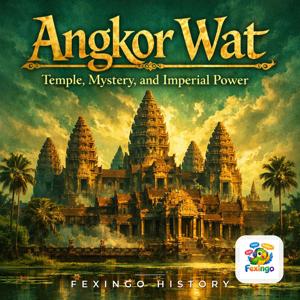


Step into the heat of a lost foundry. This episode of our Angkor Wat series turns away from stone and water to focus on Angkor's bronze-working tradition — a craft that produced colossal statues, intricate ritual vessels, and a nine-metre-tall Vishnu cast in multiple sections and lost to looters in the 20th century. We follow a 1930s French archaeologist to a riverside temple in Koh Ker where the pieces of that giant Vishnu were discovered, then reconstruct how Khmer smiths used the lost-wax method, tin trade routes from the Malay world, and socketed armatures to create hollow-cast bronzes that astonished early visitors. Along the way we meet a living metalworking community in rural Cambodia whose techniques may echo those of the Angkor period, and we look at a fragmentary inscription from Prasat Sikhoraphum that hints at guilds of master casters. No prior episodes required, but if you've listened to our earlier shows on quarrying and labour, this fills in another layer of Angkor's industrial sophistication.
#AngkorWat #KhmerBronze #SuryavarmanII #KohKer #LostWaxCasting #Vishnu #CambodianArt #Metallurgy #GeorgeGroslier #PrasatSikhoraphum #AngkorPeriod #SoutheastAsia #KhmerEmpire #BronzeStatuary #ArtHistory #AncientTechnology #History #FexingoHistory
Keep every episode free: buymeacoffee.com/fexingo
Deep within Angkor Wat's central galleries, hidden from casual view, lie the only surviving stone library of the Khmer Empire. In this episode, Lucas and Luna explore the function and fate of these mysterious structures. Built during Suryavarman II's reign in the 12th century, the libraries housed sacred palm-leaf manuscripts on astronomy, medicine, and Buddhist and Hindu scriptures. Unlike royal archives, they were open to scholars and pilgrims. The hosts discuss what the libraries reveal about Khmer literacy, the role of the devaraja cult in preserving knowledge, and how the libraries were abandoned after the empire's decline. They also examine the 13th-century Chinese emissary Zhou Daguan's brief mention of the libraries, and the challenges modern archaeologists face in recovering what was lost to humidity and insects. Keywords: Angkor Wat, Khmer library, palm-leaf manuscripts, Zhou Daguan, Suryavarman II, devaraja.
#AngkorWat #KhmerLibrary #PalmLeafManuscripts #SuryavarmanII #ZhouDaguan #Devaraja #KhmerEmpire #12thCentury #Cambodia #SoutheastAsianHistory #Archaeology #Manuscripts #BuddhistScriptures #HinduScriptures #StoneLibrary #FexingoHistory #History #AncientLibraries
Keep every episode free: buymeacoffee.com/fexingo
In this episode, Lucas and Luna explore the mystery of the 'Smiling Devata' at Angkor Wat—a single sandstone goddess carved with a serene, enigmatic smile that sets her apart from the thousands of other devata figures adorning the temple. They delve into who she might have been: a portrait of a queen, a priestess, or a divine ideal. The discussion covers the work of scholars like Trudy Jacobsen and Mitch Hendrickson, the role of devata as celestial guardians and mirrors of Khmer society, and the ongoing debate over whether these carvings represent real women or purely mythical beings. The hosts also touch on the broader context of Angkor Wat's iconography under Suryavarman II and the devaraja cult, while tying the smile to Cambodian cultural memory. A warm, conversation-driven episode that combines art history, archaeology, and human curiosity.
#AngkorWat #Devata #SmilingDevata #SuryavarmanII #KhmerEmpire #CambodianHistory #HinduIconography #TrudyJacobsen #MitchHendrickson #BasRelief #Apsara #Devaraja #MountMeru #12thCentury #Archaeology #SoutheastAsianArt #FexingoHistory #History
Keep every episode free: buymeacoffee.com/fexingo
In this episode, Lucas and Luna explore the coronation of Suryavarman II, the king who built Angkor Wat. They dive into the intricate rituals of consecration—yajnas, homa ceremonies, and the role of the Brahmin priest Divakarapandita—that transformed a prince into a divine ruler. The episode examines the devaraja cult, the political significance of Mount Meru symbolism, and how Suryavarman II manipulated religious orthodoxy to legitimize his usurpation. Drawing on the K. 380 stele and comparisons with the Sdok Kak Thom inscription, they uncover how Khmer kingship fused Hindu cosmology with political necessity. A fresh angle on Angkor's power structure, focusing on the ceremony itself rather than the temple construction.
#SuryavarmanII #AngkorWat #DevarajaCult #KhmerEmpire #HinduRitual #K380Stele #Divakarapandita #SdokKakThom #Coronation #MountMeru #Yajna #HomaCeremony #Paramavishnuloka #AngkorHistory #SoutheastAsia #HistoryPodcast #FexingoHistory #KhmerCivilization
Keep every episode free: buymeacoffee.com/fexingo
In this episode, Lucas and Luna explore the enigmatic devata — the divine female figures carved into the walls of Angkor Wat. These aren't just decorative; they are guardians, cosmic dancers, and perhaps portraits of real women from the 12th century. Lucas explains how more than 1,800 devata appear on the temple's walls, each with unique hairstyles, jewelry, and costumes. He discusses the work of scholar Trudy Jacobsen, who argues that the devata reflect the fashion and politics of Suryavarman II's court. They also touch on how later kings, like Jayavarman VII, modified some devata into images of bodhisattvas, blending Hindu and Buddhist iconography. The conversation reveals how these stone goddesses offer clues about Khmer identity — from royal patronage to cultural fusion with Champa and China. The episode connects the devata to the central theme of Angkor Wat as a microcosm of the universe, where female divinity upholds cosmic order.
#Devata #AngkorWat #SuryavarmanII #TrudyJacobsen #KhmerArt #HinduIconography #BuddhistConvergence #JayavarmanVII #12thCentury #StoneCarving #CosmicOrder #MountMeru #FashionHistory #Champa #Paramavishnuloka #History #FexingoHistory #SoutheastAsianArt
Keep every episode free: buymeacoffee.com/fexingo
Angkor Wat is famous for its apsara carvings — celestial dancers frozen in stone. But there's another class of female figure that far outnumbers them: the devata. Carved by the thousands into the temple's walls, pillars, and inner sanctums, these goddess-like figures have watched over Angkor for nine centuries. In this episode of Fexingo History, Lucas and Luna explore who the devata really were. Were they guardians, consorts of the gods, or portraits of real women from Suryavarman II's court? We trace their evolution from early Khmer art to the masterpieces of Angkor Wat, discuss the theories of scholars like Trudy Jacobsen and Mitch Hendrickson, and examine the one devata who stands apart — the so-called 'Smiling Devata' of the northern library. Along the way, we consider a tantalizing possibility: could some of these figures represent the king's own wives and concubines, immortalized in stone? And what do their hairstyles, jewellery, and gestures reveal about Khmer courtly life in the 12th century? This episode brings you face to face with the silent women of Angkor.
#AngkorWat #Devata #KhmerEmpire #SuryavarmanII #Apsara #Cambodia #HinduArt #TempleSculpture #TrudyJacobsen #MitchHendrickson #12thCentury #SoutheastAsianArt #StoneCarving #SmilingDevata #Paramavishnuloka #AngkorArchaeology #History #FexingoHistory
Keep every episode free: buymeacoffee.com/fexingo
In this episode, Lucas and Luna explore the untold story of the thousands of anonymous workers who built Angkor Wat. More than a monument to Suryavarman II's divine kingship, the temple complex required a vast labor force of stonecutters, sculptors, and engineers. Drawing on inscriptions like K. 380 and Zhou Daguan's travelogue, they discuss how workers were organized, fed, and housed, and what life might have been like for the artisans who carved the apsaras and bas-reliefs. The hosts also touch on the logistics of quarrying sandstone from Phnom Kulen, transporting it via canals and oxcarts, and the role of the devaraja cult in mobilizing labor. They examine recent archaeological findings from the Greater Angkor Project that challenge the assumption of forced labor, suggesting a more complex system of corvée and temple endowments. The episode sheds light on the human cost behind Angkor's grandeur, honoring the builders whose names were never recorded.
#AngkorWat #KhmerEmpire #SuryavarmanII #K.380 #PhnomKulen #ZhouDaguan #GreaterAngkorProject #Devaraja #Carvings #Apsara #BasRelief #LaborHistory #SoutheastAsianHistory #Archaeology #MedievalHistory #StoneMasonry #FexingoHistory #History
Keep every episode free: buymeacoffee.com/fexingo
Lucas and Luna explore the military campaigns of Suryavarman II, the builder of Angkor Wat, focusing on his naval expeditions against the Cham kingdom of Vijaya in the 12th century. Drawing on Chinese Song Dynasty records, Cham inscriptions, and Khmer reliefs, they examine the Khmer fleet's construction, the role of the Tonlé Sap and Mekong rivers in logistics, and the strategic miscalculations that led to Suryavarman's ultimate failure. The episode also considers how these wars strained the empire's resources, setting the stage for later conflicts under Jayavarman VII. A nuanced look at imperial ambition on water.
#SuryavarmanII #Champa #Vijaya #KhmerEmpire #AngkorWat #NavalHistory #SoutheastAsianHistory #SongDynasty #TonleSap #Mekong #12thCentury #MilitaryCampaigns #ImperialAmbition #CoastalRaids #KhmerNavy #JayaIndravarmanIV #History #FexingoHistory
Keep every episode free: buymeacoffee.com/fexingo
This episode of Fexingo History explores the thousands of apsara carvings that adorn the walls of Angkor Wat. Lucas and Luna discuss who these celestial dancers were, how they were depicted, their religious significance, and the controversies surrounding their interpretation. They also touch on the work of scholars like Trudy Jacobsen and the recent efforts to preserve these delicate bas-reliefs. The conversation brings to life the artistry and spiritual worldview of the Khmer Empire under Suryavarman II, offering a fresh perspective on one of the world's most famous temple complexes.
#AngkorWat #Apsara #KhmerEmpire #SuryavarmanII #Cambodia #HinduMythology #BasRelief #TempleArt #Devata #TrudyJacobsen #MountMeru #Paramavishnuloka #SoutheastAsianArt #Archaeology #CulturalHeritage #FexingoHistory #History #Podcast
Keep every episode free: buymeacoffee.com/fexingo
This episode explores the mystery of Queen Indradevi, wife of Suryavarman II, and her role in the construction and consecration of Angkor Wat. Based on Sanskrit inscriptions—especially the K. 380 stele—and Chinese records like the Song Shi, we piece together how a queen from a powerful lineage may have been the driving force behind the temple's cosmic design. We look at the evidence for her political influence, her sponsorship of the devaraja cult, and how her story challenges the standard narrative of Angkor as a purely male-dominated empire. The episode also touches on the broader role of royal women in the Khmer Empire, the symbolism of Angkor Wat's alignment to the summer solstice, and what the queen's titles—such as 'paramavishnuloka'—actually meant in practice. No prior knowledge needed, but listeners of earlier episodes will find fresh context here.
#AngkorWat #QueenIndradevi #SuryavarmanII #K380 #Devaraja #Paramavishnuloka #SongShi #KhmerEmpire #SanskritInscriptions #Divakarapandita #MountMeru #CambodiaHistory #SoutheastAsia #RoyalWomen #SolsticeAlignment #Angkor #History #FexingoHistory
Keep every episode free: buymeacoffee.com/fexingo
From the publisher's feed