
Sign up to save your podcasts
Or

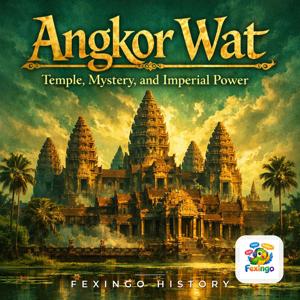


In this episode, Lucas and Luna explore the often-overlooked period after Angkor's peak: the 15th century decline and the rise of Ayutthaya. They discuss the siege of Angkor by the Thai kingdom of Ayutthaya in 1431, the exodus of Khmer elites to the south, and the gradual abandonment of the temple city. The conversation covers the role of Theravada Buddhism, the shift of power to Phnom Penh, and the legacy of Angkor as a symbol of Cambodian identity. Specific names like Borommaracha II, the Thai king, and Ponhea Yat, the last Khmer king to rule from Angkor, are examined. The episode also touches on the environmental and economic factors—siltation of the baray, disruption of trade routes—that contributed to the decline. Lucas and Luna frame this as a story of transformation rather than collapse, drawing on recent scholarship by Michael Vickery and others to challenge the narrative of a 'dark age'.
#AngkorWat #KhmerEmpire #Ayutthaya #BorommarachaII #PonheaYat #TheravadaBuddhism #CambodiaHistory #PhnomPenh #SoutheastAsia #MichaelVickery #AngkorDecline #ThaiMigration #1431Siege #Baray #TonleSap #History #FexingoHistory #TempleCity
Keep every episode free: buymeacoffee.com/fexingo
In this episode, Lucas and Luna explore the incredible logistics behind Angkor Wat's construction: the quarrying and transport of massive sandstone blocks from Phnom Kulen, 50 kilometres away. They discuss how recent LiDAR and archaeological surveys, led by Damian Evans and the Greater Angkor Project, have revealed a vast network of canals and roads used to move the stone. The episode also examines the social and political organization required for such a feat, including the labour force, the role of the devaraja, and how Suryavarman II's vision of Mount Meru was realized through this monumental engineering. Listeners will learn about the specific quarries, the types of sandstone used, and the challenges of transportation, as well as how this infrastructure connected to Angkor's broader hydraulic system.
#AngkorWat #SuryavarmanII #PhnomKulen #KhmerEmpire #SandstoneQuarry #DamianEvans #LiDAR #GreaterAngkorProject #Devaraja #MountMeru #Paramavishnuloka #CanalSystem #KhmerArchitecture #AngkorArchaeology #SoutheastAsia #History #FexingoHistory #Logistics
Keep every episode free: buymeacoffee.com/fexingo
How did the builders of Angkor Wat move over a million tonnes of sandstone blocks from the holy mountain of Phnom Kulen, 50 kilometres away? This episode follows the recently discovered quarry sites, the stone-carved inscriptions left by labour gangs, and the elaborate canal and road network used to transport the giant blocks. We explore the logistics of the 12th-century construction boom under Suryavarman II, the role of elephant labour, and the political symbolism of hauling Mount Meru itself to the capital. Lucas and Luna discuss the 2013 lidar surveys that revealed the lost quarries, the inscribed 'graffiti' left by ancient stonecutters, and what these logistical choices tell us about the power of the Khmer empire at its peak.
#AngkorWat #PhnomKulen #SuryavarmanII #KhmerEmpire #SandstoneQuarry #AncientEngineering #LidarArchaeology #MountMeru #StoneTransport #CambodianHistory #FexingoHistory #SoutheastAsianHistory #MedievalLogistics #ElephantLabour #QuarryInscriptions #AngkorWatConstruction #Paramavishnuloka #History
Keep every episode free: buymeacoffee.com/fexingo
Episode 130 takes you to the western causeway of Angkor Wat, where a forgotten bas-relief panel depicts the Gate of the Dead — a battle between gods and demons that mirrors the temple's cosmic design. Lucas and Luna explore how Suryavarman II used this imagery to legitimize his rule, the symbolic geography of the temple as Mount Meru, and the rare depiction of the asuras (demons) as defenders of the threshold. They discuss the 12th-century religious synthesis of Vishnu worship and devaraja cult, the meaning of the naga balustrade, and how the gate's alignment with the setting sun echoed funerary rites for the king. Drawing on the K. 380 stele and Zhou Daguan's account, they reveal a temple that was not just a monument but a stage for cosmic kingship — where every stone and carving reinforced the god-king's place in the universe. A fresh angle on Angkor Wat's most overlooked entrance.
#AngkorWat #SuryavarmanII #GateOfTheDead #Asura #Devaraja #MountMeru #BasRelief #K380Stele #ZhouDaguan #KhmerEmpire #12thCentury #Hinduism #Vishnu #Cambodia #CosmicKingship #History #FexingoHistory #SoutheastAsia
Keep every episode free: buymeacoffee.com/fexingo
Episode 129 of our Angkor Wat series dives into the temple's massive moat — a 200-meter-wide, 5.4-kilometer-long water barrier that was far more than a defensive ditch. Lucas and Luna explore how the moat mirrored the cosmic ocean of Hindu mythology, separated the sacred from the profane, and served as a critical element of Angkor's hydraulic network. They discuss the moat's construction under Suryavarman II in the 12th century, its alignment with the temple's west-facing orientation, and its role in the temple's eventual abandonment and rediscovery. Drawing on inscriptions (K. 380), Chinese envoy Zhou Daguan's 13th-century observations, and modern LiDAR surveys by the Greater Angkor Project, the episode reveals how the moat functioned as both a physical and symbolic boundary — protecting the temple while connecting it to the baray reservoirs and the Tonlé Sap floodplain. The conversation also touches on the moat's later life: its use for agriculture, its lotus blooms, and its significance to local Theravada Buddhist communities who saw it as a sacred water source. This episode offers a fresh, focused look at a defining but often overlooked feature of one of the world's great architectural wonders.
#AngkorWat #KhmerEmpire #SuryavarmanII #AngkorMoat #K380 #ZhouDaguan #HydraulicCity #GreaterAngkorProject #TonleSap #CosmicOcean #MountMeru #LiDAR #Cambodia #SoutheastAsianHistory #HinduArchitecture #TempleMoat #History #FexingoHistory
Keep every episode free: buymeacoffee.com/fexingo
In 1177, a Cham fleet sailed up the Mekong and Tonlé Sap, sacked the Khmer capital Yasodharapura, and killed the king. But how did they navigate a river system the Khmer considered their own? And why did the Cham succeed where others failed? This episode follows the Cham invasion of 1177—a turning point that broke the Khmer navy's dominance, ended Suryavarman II's dynasty, and set the stage for Jayavarman VII's revenge. We trace the invasion from the Cham port of Vijaya, up the river, past the defenses, into the heart of Angkor. We also explore the role of Chinese shipbuilding techniques, the monsoon timings, and the mysterious disappearance of the Khmer fleet. Who was the Cham commander? Why did the Khmer leave their capital vulnerable? And how did this single naval raid reshape Southeast Asian history? Join Lucas and Luna for the untold story of the year Angkor burned.
#AngkorWat #ChamInvasion1177 #KhmerEmpire #SuryavarmanII #JayavarmanVII #NavalHistory #SoutheastAsia #Vijaya #TonléSap #MekongRiver #Champa #MedievalWarfare #CambodiaHistory #MilitaryHistory #History #FexingoHistory #AsianHistory #AncientFleet
Keep every episode free: buymeacoffee.com/fexingo
In Episode 127 of Fexingo History, Lucas and Luna explore the famous bas-relief of the Churning of the Ocean of Milk at Angkor Wat. They discuss the Hindu myth, its depiction on the temple walls, the symbolism of the devas and asuras churning Mount Mandara, and how Suryavarman II used this cosmic scene to legitimize his rule. The episode also touches on the relief's condition, its interpretation by scholars, and its place in Khmer art. Specific details include the figures of Vishnu as Kurma, the serpent Vasuki, the apsaras, and the lost stele K. 380.
#AngkorWat #ChurningOfTheOceanOfMilk #SamudraManthan #SuryavarmanII #KhmerEmpire #HinduMythology #BasRelief #MountMandara #Vishnu #Kurma #Vasuki #Apsaras #Devata #K380 #Paramavishnuloka #Cambodia #SoutheastAsianArt #FexingoHistory
Keep every episode free: buymeacoffee.com/fexingo
After centuries as the heart of the Khmer Empire, Angkor Wat was gradually abandoned. But it never truly died. This episode explores what happened after the capital moved south in the 15th century—how the temple remained a pilgrimage site for Theravada Buddhists, how it was cared for by monks, and how it became a symbol of national identity for Cambodia. We look at the early European visitors, the eventual 'rediscovery' by Henri Mouhot in the 19th century, and the myths that grew around the temple's abandonment. We also discuss the ongoing restoration efforts and the challenges of preserving Angkor Wat today, from looting to tourism to climate change. Featuring the voices of Zhou Daguan, the Buddha footprints, and the silent sandstone walls.
#AngkorWat #KhmerEmpire #SuryavarmanII #Theravada #HenriMouhot #ZhouDaguan #Cambodia #Buddhism #Abandonment #Restoration #UNESCO #SiemReap #Devata #BasRelief #MountMeru #Looting #History #FexingoHistory
Keep every episode free: buymeacoffee.com/fexingo
The West Baray is one of the largest hand-cut reservoirs ever built, stretching eight kilometers long and two kilometers wide. In this episode, Lucas and Luna dive into the engineering and purpose behind Suryavarman II's monumental water work, built around 1050 CE. They explore how it was fed by the Stung Siem Reap river, lined with laterite, and filled millions of cubic meters of water — all without modern tools. The West Baray anchored the vast hydraulic network of Angkor, regulating water for rice cultivation in the wet and dry seasons. Lucas unpacks the debate among archaeologists: was it purely irrigation, or did it have symbolic and religious functions tied to the devaraja cult? They discuss the recent LiDAR surveys that revealed the baray's hidden sluice gates and canal systems, and how it connected to the East Baray and the great temples. The episode also touches on the collapse of the hydraulic system around the 14th century, possibly due to siltation and climate shifts. Finally, they reflect on the baray today — still holding water, home to a temple island, and a testament to Khmer engineering genius.
#AngkorWat #WestBaray #SuryavarmanII #KhmerEmpire #HydraulicEngineering #LiDAR #DamianEvans #TonleSap #StungSiemReap #devaraja #SdokKakThom #GreaterAngkorProject #Irrigation #SoutheastAsianHistory #AncientEngineering #FexingoHistory #History #Archaeology
Keep every episode free: buymeacoffee.com/fexingo
The K. 380 stele is the only contemporary inscription that mentions Angkor Wat's consecration, but it's full of gaps and mysteries. Lucas and Luna explore what this sandstone document actually says—and doesn't say—about the temple's founding. They examine the stele's discovery, its missing sections, and the debate over whether it records the temple's dedication or a later event. They also discuss the role of the priest Divakarapandita, the king's posthumous name Paramavishnuloka, and the stele's mention of gold, land, and ritual offerings. The conversation touches on the challenges of interpreting incomplete texts and how the stele shapes—and limits—our understanding of Angkor Wat's original purpose. No previous episode has focused solely on this inscription as a physical object and textual puzzle.
#AngkorWat #K380Stele #Inscription #SuryavarmanII #Paramavishnuloka #Divakarapandita #KhmerEmpire #SoutheastAsianHistory #Epigraphy #GeorgeCoedes #MountMeru #Devaraja #Angkor #TempleDedication #12thCentury #SandstoneStele #History #FexingoHistory
Keep every episode free: buymeacoffee.com/fexingo
From the publisher's feed