
Sign up to save your podcasts
Or

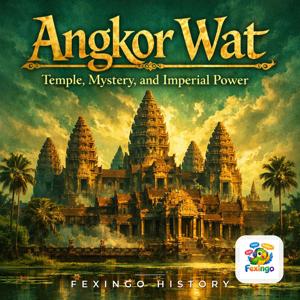


For centuries, historians wondered how Angkor supported a population estimated at a million people within a 1,000-square-kilometer urban complex. The answer lies in a vast, engineered rice landscape. This episode follows the rice cycle from the Tonlé Sap's annual flood pulse through the intricate canal networks and baray reservoirs that allowed three harvests a year. We explore the floating rice varieties that grew with the rising water, the role of royal decrees recorded on stone stelae like K. 254 and K. 263, and the corvée labor system that kept the canals clear. New LiDAR data from the Greater Angkor Project reveals a sprawling grid of rice fields, homestead ponds, and feeder channels that extended far beyond the temple walls. We also touch on the collapse — how the 14th-century shift to a more variable monsoon may have strained the system beyond its capacity. Featuring the work of archaeologist Damian Evans and the medieval Chinese envoy Zhou Daguan, who described Khmer rice cultivation in his 1296 account.
#AngkorWat #KhmerEmpire #RiceAgriculture #TonleSap #GreaterAngkorProject #LiDAR #ZhouDaguan #SuryavarmanII #K254 #K263 #FloatingRice #Baray #CanalSystem #Drought #Collapse #DamianEvans #History #FexingoHistory
Keep every episode free: buymeacoffee.com/fexingo
In 1128, Suryavarman II, the builder of Angkor Wat, launched a massive invasion of Dai Viet (northern Vietnam) that ended in disaster. This episode explores the geopolitical ambitions behind the campaign, the Khmer navy's march to the Gulf of Tonkin, the elephant cavalry that got bogged down in mountain passes, and the Vietnamese defense under Ly Cong Binh. We look at the Song Chinese diplomatic records that mention the war, the famous Cham-Khmer alliance that never quite held, and how this defeat may have diverted resources from Angkor Wat's construction. Drawing on the Dai Viet su ky toan thu and Song shi, we reconstruct a little-known chapter in Southeast Asian history that reveals Angkor's imperial reach—and its limits.
#SuryavarmanII #DaiViet #AngkorWat #KhmerEmpire #LyDynasty #LyCongBinh #Champa #SongChina #1128 #12thCentury #SoutheastAsia #MilitaryHistory #ElephantWarfare #Tonkin #SongShi #DaiVietSuKyToanThu #ImperialAmbition #FexingoHistory
Keep every episode free: buymeacoffee.com/fexingo
In this episode of Fexingo History, Lucas and Luna dive into the spectacular bas-reliefs of Angkor Wat, focusing on the famous 'Churning of the Ocean of Milk' panel. They explore how this single stone carving — spanning 49 meters — tells a cosmic story of gods and demons collaborating to churn the primordial ocean for the elixir of immortality. Lucas explains the Hindu mythology behind the scene, the artistic techniques used by Khmer sculptors, and how the relief functioned as both religious instruction and political propaganda for Suryavarman II. The conversation also touches on other bas-reliefs along the temple's galleries, including battles with the Chams and scenes from the Ramayana. Luna asks about the preservation of these carvings and what they reveal about Khmer society. Together, they uncover how these stone narratives were meant to be 'read' by pilgrims walking the cloisters, reinforcing the king's divine mandate and connecting Angkor Wat to the cosmos. No stone is left unturned in this exploration of Angkor's greatest storytelling achievement.
#AngkorWat #BasRelief #ChurningOfTheOceanOfMilk #SuryavarmanII #HinduMythology #KhmerArt #SamudraManthan #MountMeru #Vishnu #Ramayana #Mahabharata #Champa #Apsara #Devata #StoneCarving #SoutheastAsianHistory #FexingoHistory #History
Keep every episode free: buymeacoffee.com/fexingo
We often marvel at Angkor Wat's towering spires and intricate bas-reliefs, but who actually carved them? In this episode, Lucas and Luna explore the lives of the anonymous stone carvers and laborers who built the temple complex. Drawing on inscriptions like K. 380, the Chinese account of Zhou Daguan, and recent archaeological findings from the Greater Angkor Project, they discuss the organization of labor, the specialized skills required, the tools used (iron chisels, hammers, pulleys), and the possible social status of these artisans. They also touch on the logistics of feeding and housing thousands of workers, the role of slaves and corvée labor, and the religious motivations that drove such monumental effort. The conversation sheds light on a little-known aspect of Angkorian society: the human hands behind the divine architecture.
#AngkorWat #KhmerEmpire #StoneCarvers #Artisans #LaborHistory #SuryavarmanII #ZhouDaguan #K380 #GreaterAngkorProject #Archaelogy #MedievalHistory #SoutheastAsia #AncientTechnology #CorveeLabor #BasRelief #Sandstone #FexingoHistory #History
Keep every episode free: buymeacoffee.com/fexingo
Between his 1113 coronation and the dedication of Angkor Wat in 1150, Suryavarman II — the king who built the world's largest religious monument — left almost no trace in the historical record. This episode pieces together the puzzle of his missing decade: the military campaigns against Champa and Đại Việt, the diplomatic gifts to China, the construction pause on the temple itself, and the quiet evidence of a king who may have been more warrior than builder. We examine the Cham inscriptions that name him, the Chinese court records that note his tribute missions, and the architectural clues embedded in Angkor Wat's own walls. What was Suryavarman II doing during the twenty years it took to raise his monument? And why did he choose to be remembered as a god rather than a conqueror?
#SuryavarmanII #AngkorWat #MissingYears #LostDecade #Champa #DaiViet #SongDynasty #KhmerEmpire #Paramavishnuloka #PhnomRung #PrasatPreahVihear #WarElephants #Devapada #AngkorWatConstruction #History #SoutheastAsianHistory #FexingoHistory #MedievalAsia
Keep every episode free: buymeacoffee.com/fexingo
Angkor Wat is famous for its temples and rice fields, but did you know the Khmer Empire also ruled the waves? In this episode, Lucas and Luna explore the forgotten naval power of Angkor: from Suryavarman II's fleet that raided Champa and Dai Viet, to the war boats that transported armies across Tonlé Sap, to the deep-sea ships that traded with China, India, and the Malay world. Discover the bas-relief carvings of multi-decked warships at Angkor Wat, the strategic naval bases at the mouths of the Mekong, and the crucial role of the navy in maintaining the empire's far-flung tributary network. We also examine the decline of Khmer seapower after the 13th century, when shifting trade routes and Theravada Buddhism turned Angkor's gaze inland. This is the maritime side of an empire you thought you knew.
#AngkorWat #KhmerEmpire #SuryavarmanII #NavalHistory #TonleSap #MekongDelta #Champa #DaiViet #IndianOceanTrade #JayavarmanVII #BasReliefs #WarBoats #MaritimeArchaeology #SoutheastAsiaHistory #FexingoHistory #History #AncientNavy #KhmerNavy
Keep every episode free: buymeacoffee.com/fexingo
In 1296, a Chinese diplomat named Zhou Daguan spent nearly a year in Angkor and wrote 'The Customs of Cambodia' — the only surviving first-hand account of daily life in the Khmer Empire at its zenith. This episode explores what Zhou saw: the grandeur of Angkor Wat after a century of Theravada Buddhist transformation, the bustling markets of Yasodharapura, the royal processions, the slave trade, and the peculiar customs he documented, from tattooing to eating raw fish. We also examine the limits of his account — what he missed, what he misunderstood, and how modern archaeology is both confirming and complicating his observations. Zhou's text is a vital but flawed window into a world that would soon fade into jungle.
#ZhouDaguan #TheCustomsofCambodia #AngkorWat #Yasodharapura #KhmerEmpire #AngkorThom #TheravadaBuddhism #JayavarmanVIII #IndravarmanIII #ChineseDiplomacy #YuanDynasty #KublaiKhan #SiemReap #MedievalTravelWriting #SoutheastAsianHistory #Archaeology #History #FexingoHistory
Keep every episode free: buymeacoffee.com/fexingo
When Suryavarman II marched to war, he didn't just lead men — he commanded a mobile fortress of war elephants. This episode of Fexingo History's Angkor series dives into the Khmer Empire's elephant corps: how they were captured in the Cardamom Mountains, trained over years, armored for battle, and deployed as shock cavalry against Champa and Đại Việt. Lucas and Luna explore the logistics of moving hundreds of elephants across the Tonlé Sap floodplain, the specialized vocabulary of elephant warfare (gaja, kumkuma, phrais), and the bas-reliefs at Angkor Wat that depict these beasts trampling enemy lines. They also examine the 1177 Cham invasion that exploited the absence of the elephant corps, and the later decline of elephant warfare as Theravada Buddhism changed Khmer society. Along the way, they touch on the Airavata — the three-headed elephant god of Indra — and how Hindu cosmology shaped the very real business of war. A story of power, prestige, and the living tanks of Southeast Asia.
#AngkorWat #WarElephants #SuryavarmanII #KhmerEmpire #ElephantWarfare #Airavata #CardamomMountains #Champa #ĐạiViệt #TonléSap #AngkorBasReliefs #Indra #Gaja #MilitaryHistory #SoutheastAsia #AncientWarfare #History #FexingoHistory
Keep every episode free: buymeacoffee.com/fexingo
When the Khmer Empire collapsed in the 15th century, Angkor Wat didn't disappear. It was never truly abandoned. In this episode, Lucas and Luna explore the temple's second life — as a Buddhist pilgrimage site, a Theravada monastery, and a symbol of Cambodian identity. They trace the shift from Hindu to Buddhist worship, the arrival of Portuguese and Spanish missionaries in the 16th century, and King Ang Chan's restoration efforts. They also unpack the contested story of a Portuguese friar who may have been the first European to record the temple in 1586. Along the way, they consider how Angkor Wat's afterlife challenges the myth of a 'lost city' swallowed by the jungle. Drawing on the accounts of Zhou Daguan, the writings of early European visitors, and modern scholarship by Ashley Thompson and Michael Coe, this episode reveals a temple that was never truly lost — it was simply transformed.
#AngkorWat #KhmerEmpire #Cambodia #TheravadaBuddhism #AngChan #PortugueseMissionaries #AntonioDeMadalena #ZhouDaguan #AshleyThompson #MichaelCoe #SoutheastAsia #ReligiousTransition #HistoricalMyths #TempleAfterlife #Pilgrimage #LostCityMyth #History #FexingoHistory
Keep every episode free: buymeacoffee.com/fexingo
Before Angkor Wat was a temple, it was a sacred mountain on earth. In 1150 CE, King Suryavarman II consecrated his mausoleum with a Brahmanical fire ritual that fused Vaishnavite theology with imperial power. Lucas and Luna explore the lost dedication ceremony — the homa fires, the hidden foundation deposits, and the royal guru Divakarapandita who orchestrated the temple's transition from construction to cosmic axis. They discuss the debated date from the K. 380 stele, the role of the yajna (sacrificial rite) in Khmer kingship, and what the archaeological evidence of buried gold leaves and ritual pots reveals about the event. No prior episode has focused on the consecration itself — only on the building. This episode steps inside the moment Angkor Wat became Mount Meru.
#AngkorWat #SuryavarmanII #Divakarapandita #KhmerEmpire #HinduConsecration #HomaFireRitual #K380Stele #FoundationDeposits #Vaishnavism #MountMeru #Yajna #Archaeology #APSARA #GreaterAngkorProject #Cambodia #12thCentury #History #FexingoHistory
Keep every episode free: buymeacoffee.com/fexingo
From the publisher's feed