
Sign up to save your podcasts
Or

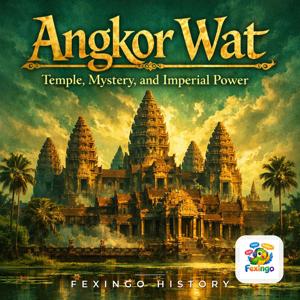


Suryavarman II built Angkor Wat, but he didn't rule in a vacuum. Who were his ancestors, and how did they clear the path for his monumental reign? In this episode, Lucas and Luna trace the Varman dynasty from its obscure origins in the 8th century through the Khmer Empire's bloody rise. They explore Jayavarman II's mountain-temple ritual that invented the devaraja cult, the civil wars under Yasovarman I, and the diplomatic marriages that stabilized the throne. Along the way, they examine how Suryavarman II's own grandfather, Harshavarman III, lost the throne to a usurper, setting the stage for a young prince who would reclaim his birthright and build a temple to Vishnu that survives a thousand years. No other Fexingo episode has focused purely on the dynasty's genealogical twists and the political calculus that made Angkor Wat possible.
#SuryavarmanII #VarmanDynasty #KhmerEmpire #AngkorWat #JayavarmanII #Devaraja #Cambodia #SoutheastAsia #MedievalHistory #RoyalLineage #HarshavarmanIII #YasovarmanI #Kambuja #MountMeru #PhnomKulen #ImperialCults #History #FexingoHistory
Keep every episode free: buymeacoffee.com/fexingo
Lucas and Luna explore the dramatic aftermath of the Cham sack of Angkor in 1177. They follow King Jayavarman VII's rise from exile, his lightning naval counterattack against Champa, and the unprecedented building frenzy that followed: Angkor Thom, the Bayon's serene stone faces, Ta Prohm, Preah Khan, and a network of hospitals and rest houses across the empire. Lucas explains the king's shift from Hinduism to Mahayana Buddhism, the integration of the Bodhisattva Avalokiteshvara into Khmer kingship, and how Jayavarman VII's colossal monuments—driven by an ideology of national healing—may have pushed the Khmer economy to its breaking point. The episode also touches on the king's posthumous curse: his Buddhist temples were later 'Hinduized' by his successors, and his face towers may represent an unprecedented fusion of royal and divine identity. A focused look at one of Angkor's most ambitious and controversial rulers.
#JayavarmanVII #AngkorThom #Bayon #ChamInvasion #MahayanaBuddhism #Avalokiteshvara #TaProhm #PreahKhan #KhmerEmpire #AngkorWat #12thCentury #SoutheastAsia #Cambodia #JayaIndravarmanIV #Bodhisattva #History #FexingoHistory #Kingship
Keep every episode free: buymeacoffee.com/fexingo
In the 13th century, the Khmer Empire faced a perfect storm: a shift from Hinduism to Theravada Buddhism undermined the devaraja cult that had sustained Angkor's kings; the Siamese kingdom of Sukhothai launched devastating raids; and the over-engineered water system that powered Angkor's rice fields began to fail. In this episode, Lucas and Luna explore how these forces converged to bring down an empire. They discuss the reign of Jayavarman VIII, who smashed Buddhist images and restored Shaivism in a desperate bid to reverse the tide; the role of the Thai king Ram Khamhaeng and the Sukhothai invasions; and the hydraulic collapse theory advanced by the Greater Angkor Project, which suggests that deforestation and siltation made the barays unreliable. The episode also examines the pivot to maritime trade under Indravarman II, the rise of Ayutthaya, and the slow abandonment of Angkor as a political center—ending not with a bang but with a long, quiet century of decline.
#KhmerEmpire #AngkorWat #JayavarmanVIII #TheravadaBuddhism #Devaraja #Sukhothai #RamKhamhaeng #Ayutthaya #GreaterAngkorProject #HydraulicCollapse #IndravarmanII #SiemReap #TonleSap #13thCentury #SoutheastAsianHistory #Collapse #History #FexingoHistory
Keep every episode free: buymeacoffee.com/fexingo
In this episode of the Fexingo History podcast, Lucas and Luna return to Angkor Wat to explore one of its most stunning features: the bas-reliefs of the outer gallery. They focus on the famous 'Churning of the Ocean of Milk' panel, a 49-meter-long stone carving that tells the Hindu creation myth of devas and asuras churning the cosmic ocean to obtain the elixir of immortality. Lucas explains the symbolism of the churning, with Mount Mandara as the churning rod and the serpent Vasuki as the rope, and how the Khmer king Suryavarman II linked himself to Vishnu, who appears at the center of the panel. They discuss the historical context: the relief was likely carved in the mid-12th century, during the construction of the temple, and it reinforces the devaraja cult that legitimized the king's divine rule. Lucas also describes the other bas-reliefs in the gallery, including scenes of the Mahabharata war and the royal procession of Suryavarman II, which offer a rare glimpse of Khmer court life. The episode touches on the reliefs' condition: some have suffered from weathering and looting, but conservation efforts by the World Monuments Fund and APSARA Authority are underway. Lucas and Luna reflect on how these carvings were not just decoration but a statement of cosmic and political order, meant to impress both gods and human visitors.
#AngkorWat #KhmerEmpire #ChurningOfTheOceanOfMilk #SuryavarmanII #Vishnu #BasRelief #Cambodia #HinduMythology #MountMeru #Devaraja #WorldMonumentsFund #APSARA #12thCentury #SoutheastAsianArt #TempleCarving #History #FexingoHistory #Epic
Keep every episode free: buymeacoffee.com/fexingo
The five iconic towers of Angkor Wat are instantly recognizable—but what if the central spire was never finished? In this episode, Lucas and Luna explore the mystery of the missing pinnacle atop Angkor Wat's central sanctuary. They examine the unfinished sandstone blocks, the sudden halt in construction after Suryavarman II's death in 1150 CE, and the competing theories: was it a deliberate design choice reflecting Mount Meru's unattainable peak, or a rushed abandonment due to political crisis? The hosts weigh evidence from inscriptions like K. 380, compare with other incomplete Khmer temples such as Beng Mealea and Preah Khan, and consider the role of the Cham invasion of 1177. They also discuss modern restoration efforts by the École française d'Extrême-Orient and the debates among archaeologists about whether to complete the spire or preserve the ruin as a historical document. A deep dive into one of Angkor Wat's most enduring architectural puzzles.
#AngkorWat #SuryavarmanII #KhmerEmpire #MountMeru #Paramavishnuloka #K380 #BengMealea #PreahKhan #ChamInvasion1177 #EFEO #AngkorWatSpire #UnfinishedTemple #SoutheastAsianArchitecture #HinduTemple #ArchaeologicalMystery #CambodiaHistory #History #FexingoHistory
Keep every episode free: buymeacoffee.com/fexingo
In this episode, Lucas and Luna explore a lesser-known facet of Suryavarman II's reign: his ambitious naval expeditions and diplomatic outreach to the Chola Empire of southern India. While Angkor Wat is his enduring monument, Suryavarman also sought to expand Khmer influence across the seas. We discuss the 12th-century geopolitical landscape, the Cham and Đại Việt threats, and the evidence for Khmer-Chola contacts, including a possible marriage alliance and shared temple architectural motifs. Lucas explains how the Cholas under Kulothunga Chola I were a maritime superpower, and how Suryavarman's envoys likely reached the Coromandel Coast. We also examine the limited but telling inscriptions, such as the mention of a 'king of Kamboja' in Chola records, and the theory that Khmer warships raided the Malay Peninsula. The episode connects these naval ambitions to the resources and labor that built Angkor Wat, questioning whether the temple's construction was partly funded by overseas trade. Finally, we reflect on how Suryavarman's death in 1150 left these maritime projects unfinished, contributing to the Cham invasion that nearly destroyed Angkor in 1177.
#SuryavarmanII #CholaEmpire #NavalHistory #AngkorWat #KulothungaI #KhmerEmpire #CoromandelCoast #MalayPeninsula #ĐạiViệt #Champa #MaritimeHistory #SoutheastAsia #12thCentury #Diplomacy #TradeRoutes #Epigraphy #TempleConstruction #FexingoHistory
Keep every episode free: buymeacoffee.com/fexingo
In this episode, Lucas and Luna explore the mysterious death of Suryavarman II, the builder of Angkor Wat, and the political chaos that followed. They examine the contested accounts of his demise—whether he died in battle against the Cham or from illness—and how the vacuum of power led to the devastating Cham invasion of 1177. Using inscriptions like K. 380 and Chinese records, they piece together the succession crisis, the rise of Tribhuvanadityavarman, and the naval assault on Yasodharapura that saw the city sacked. The episode also touches on the religious shift from Vaishnavism back to state Shaivism and the eventual rise of Jayavarman VII. Along the way, Lucas shares a behind-the-scenes look at how listener support funds the show's deep research into Southeast Asian history.
#SuryavarmanII #AngkorWat #ChamInvasion1177 #KhmerEmpire #Yasodharapura #Tribhuvanadityavarman #JayaIndravarmanIV #TonleSap #Vaishnavism #Shaivism #K380 #ZhouDaguan #SoutheastAsia #MedievalHistory #Cambodia #Angkor #FexingoHistory #History
Keep every episode free: buymeacoffee.com/fexingo
While Angkor Wat's perfectly carved sandstone survives, the nearby temple of Ta Prohm tells a different story — one where nature slowly reclaims stone. In this episode, Lucas and Luna explore why Ta Prohm was left unrestored, the symbiotic relationship between silk-cotton trees and Khmer masonry, and how the temple's famous 'Tomb Raider' roots became a symbol of the delicate balance between preservation and decay. They discuss the temple's original identity as a Mahayana Buddhist monastery founded by Jayavarman VII for his mother, its 12,640 inhabitants, and the 18 high priests who once served there. They also touch on the ethical debates among archaeologists: should the trees stay or go? With specific references to the Greater Angkor Project and the work of the École française d'Extrême-Orient, this episode offers a nuanced look at a site that captures the imagination precisely because it remains, in part, untamed.
#TaProhm #AngkorWat #JayavarmanVII #KhmerEmpire #TombRaider #Archaeology #Preservation #SilkCottonTrees #SpungTrees #ÉcoleFrançaisedExtrêmeOrient #GreaterAngkorProject #MahayanaBuddhism #12thCentury #SiemReap #Cambodia #WorldHeritage #FexingoHistory #History
Keep every episode free: buymeacoffee.com/fexingo
In 1296, a Chinese diplomat named Zhou Daguan spent a year in Angkor and wrote the only firsthand account of the Khmer Empire at its peak. His book, 'The Customs of Cambodia,' describes everything from the king's daily procession to the bustling markets, the practice of Theravada Buddhism, and the wealth of the city. But Zhou Daguan was not the only Chinese visitor. In the 15th century, Ming dynasty envoys recorded the declining empire, noting the shift of the capital to Phnom Penh and the rise of Ayutthaya. This episode explores what these Chinese sources reveal about Angkor's daily life, religion, and eventual abandonment. Lucas and Luna discuss how Zhou Daguan's observations align with archaeological findings, the mystery of his lost tomb, and how later Ming accounts provide a bridge between Angkor's glory and its post-Angkor period. They also touch on the controversial question of whether Angkor was truly 'abandoned' or simply transformed.
#ZhouDaguan #CustomsOfCambodia #AngkorWat #KhmerEmpire #MingDynasty #TheravadaBuddhism #AngkorThom #PhnomPenh #Ayutthaya #ChineseDiplomacy #13thCentury #14thCentury #15thCentury #SoutheastAsianHistory #CambodiaHistory #Archaeology #History #FexingoHistory
Keep every episode free: buymeacoffee.com/fexingo
After the fall of Angkor in 1431, the Khmer Empire didn't just vanish. This episode traces the pivotal reign of Ponhea Yat (1405–1467), the last king of Angkor, who moved the capital south to Phnom Penh after the Siamese sack. We explore the forgotten century of Chaktomuk, the Four-Faced River city, and the gradual shift from stone temples to wooden palaces. Lucas and Luna discuss the legend of the 'lost city,' the real reasons for abandonment—water management failure, trade route shifts, and Theravada Buddhist reforms—and how the jungle swallowed Angkor until Henri Mouhot's 1860 'rediscovery.' Along the way, we touch on the Ayutthaya Kingdom's rise, the role of Chinese Ming dynasty records, and what modern archaeology tells us about the so-called 'collapse.' A fresh angle on what happened when the gods left the temple.
#PonheaYat #KhmerEmpire #AngkorWat #PhnomPenh #Chaktomuk #AyutthayaKingdom #HenriMouhot #TheravadaBuddhism #SoutheastAsianHistory #PostAngkorPeriod #15thCentury #MingDynasty #ZhouDaguan #LiDARArchaeology #WaterManagement #CambodiaHistory #History #FexingoHistory
Keep every episode free: buymeacoffee.com/fexingo
From the publisher's feed