
Sign up to save your podcasts
Or

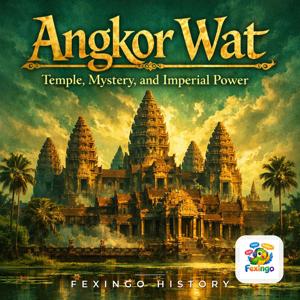


This episode turns away from kings and battles to focus on something often overlooked in Angkor Wat's grand narrative: the animals. Lucas and Luna explore the temple's astonishing bas-relief menagerie—from elephants and monkeys to mythical nagas and the mysterious 'galapagos' of Southeast Asia. They discuss how the Khmer Empire's vast trade networks brought exotic species into the visual vocabulary of the temple, and what the presence of a creature like the 'galapagos' (or at least a very large tortoise) tells us about Angkor's connections with the Indian Ocean world. Along the way, they touch on the symbolism of animals in Hindu cosmology, the reality of elephant logging in ancient Cambodia, and the possibility that some carvings depict species now extinct or locally vanished. A fresh lens on an old wonder.
#AngkorWat #KhmerEmpire #BasReliefs #Galapagos #SuryavarmanII #HinduMythology #IndianOceanTrade #ZhouDaguan #Elephants #Nagas #CambodiaHistory #MythicalCreatures #SoutheastAsianArt #Archaeology #LostSpecies #Tortoises #History #FexingoHistory
Keep every episode free: buymeacoffee.com/fexingo
Angkor Wat's moat is one of the largest man-made hydraulic features of the ancient world, but its significance goes far beyond defense or drainage. This episode explores how the 5.5-kilometer-long, 190-meter-wide moat was engineered as a cosmic ocean, representing Mount Meru's surrounding waters in Hindu cosmology. We discuss the staggering volume of earth moved — over 1.5 million cubic meters — the labor organization under Suryavarman II, and the moat's role in water management, symbolizing the king's control over nature. Comparisons are drawn with other Khmer barays and the moats of Angkor Thom. The episode also touches on recent hydrological research by the Greater Angkor Project, revealing how the moat interacted with the Siem Reap River and the Tonlé Sap flood pulse. Finally, we examine the controversy over whether the moat was primarily ritual or practical, and how its maintenance declined after the 13th century, contributing to Angkor's eventual abandonment.
#AngkorWat #SuryavarmanII #KhmerEmpire #Moat #CosmicOcean #MountMeru #HinduCosmology #GreaterAngkorProject #TonleSap #WaterManagement #HydraulicEngineering #SiemReap #Baray #AngkorThom #Cambodia #SoutheastAsia #History #FexingoHistory
Keep every episode free: buymeacoffee.com/fexingo
Lucas and Luna explore the vast hydraulic network that sustained Angkor for centuries. They trace the construction of the Indratataka and Yasodharatataka barays, the role of the Siem Reap River in water management, and how climate shifts and infrastructure decay contributed to Angkor's decline. Along the way, they debunk the 'hydraulic city' myth and discuss recent LiDAR findings. The episode ties the practical need for water control to the divine symbolism of the barays as earthly oceans around Mount Meru. A natural companion to earlier episodes on temple construction and royal power, this episode illuminates the unseen backbone of the Khmer Empire.
#AngkorWat #KhmerEmpire #Baray #HydraulicCity #SiemReap #Indratataka #Yasodharatataka #JayavarmanII #YasovarmanI #SuryavarmanII #LiDAR #GreaterAngkorProject #WaterManagement #ClimateChange #SoutheastAsianHistory #Archaeology #History #FexingoHistory
Keep every episode free: buymeacoffee.com/fexingo
Long before Angkor Wat's towers rose above the Cambodian jungle, an army of workers faced an impossible logistical puzzle: how to move millions of sandstone blocks from a remote quarry 50 kilometers away. In this episode, Lucas and Luna trace the journey from the Phnom Kulen plateau to the temple site, exploring the hydraulic canals, oxcart paths, and floating rafts that made it possible. They discuss how recent LiDAR surveys from the Greater Angkor Project have revealed a vast network of waterways designed not just for irrigation but for heavy transport. They also examine the controversy over whether the Khmer used elephants, rollers, or waterborne barges to shift the multi-ton blocks — and what the Sanskrit inscription K. 380 tells us about the workforce behind the world's largest religious monument. A story of ancient engineering, imperial ambition, and the invisible labor that built a wonder.
#AngkorWat #SandstoneQuarry #PhnomKulen #GreaterAngkorProject #LiDAR #KhmerEmpire #SuryavarmanII #K380 #AncientEngineering #HydraulicEngineering #StoneTransport #CambodiaHistory #SoutheastAsia #Archaeology #TempleConstruction #History #FexingoHistory #Podcast
Keep every episode free: buymeacoffee.com/fexingo
Before Suryavarman II crowned Angkor Wat, another king reshaped the Khmer capital in the 10th century. Rajendravarman II returned the court to Angkor after decades in Koh Ker, restoring the royal lineage and commissioning the temple-mountain Pre Rup. This episode follows his reign from 944 to 968 CE—his military campaigns against Champa, his patronage of Sanskrit literature, and the administrative reforms documented in the Sdok Kak Thom inscription. We also explore the Baksei Chamkrong temple, built as a shrine to his parents, and the role of the Brahmin priest Yajnavaraha. Lucas and Luna uncover the foundations upon which Suryavarman II later built his great temple.
#RajendravarmanII #AngkorWat #KhmerEmpire #PreRup #BakseiChamkrong #SdokKakThom #KohKer #Champa #Yajnavaraha #Cambodia #SoutheastAsianHistory #TempleMountain #Devaraja #10thCentury #Angkor #KhmerArchitecture #History #FexingoHistory
Keep every episode free: buymeacoffee.com/fexingo
In this episode, Lucas and Luna delve into the K. 380 stele, the only surviving inscription from Suryavarman II's reign that directly names Angkor Wat's founder. Discovered in the 20th century at the temple of Phnom Sampov near Battambang, this sandstone slab records the king's death, his posthumous name Paramavishnuloka, and a cryptic reference to his involvement in a revolt against the Chola Empire. Lucas unpacks the stele's political context — including Suryavarman's alliance with the Tambralinga kingdom and a failed naval campaign against the Cholas in 1066 CE — and explains why this inscription is a rare window into Angkor's imperial ambitions. He also explores the stele's mention of a royal guru named Divakarapandita, who may have advised the king on temple construction. The episode contrasts the K. 380's dry administrative language with the grand bas-reliefs of Angkor Wat, highlighting how historians piece together royal chronicles from fragmentary stone records. Luna asks about the stele's condition and what it reveals about Khmer statecraft. The conversation closes with a reflection on how one stone's survival shapes our understanding of an entire empire.
#SuryavarmanII #AngkorWat #K380Stele #KhmerEmpire #PhnomSampov #Paramavishnuloka #Divakarapandita #CholaEmpire #Tambralinga #Hinduism #Inscriptions #Epigraphy #SoutheastAsianHistory #Cambodia #Battambang #Angkor #FexingoHistory #History
Keep every episode free: buymeacoffee.com/fexingo
Before he built Angkor Wat, Suryavarman II had to claim the throne — and that meant orchestrating a royal coronation steeped in Khmer mandala symbolism. This episode walks through the coronation ceremony itself: the consecration by Brahmins, the oath of loyalty from vassal kings, the ritual circumambulation of Mount Meru, and the official taking of the posthumous name Paramavishnuloka. We dig into the political tightrope Suryavarman walked — he wasn't the direct heir, and he needed to consolidate power fast. We also look at the 11th-century precedent of Jayavarman VI's coronation as a model, and discuss how the ceremony literally re-created the cosmic order, with Suryavarman as the devaraja anchoring the universe. The episode draws on inscriptions like K. 380 and K. 298, and on comparative studies of Khmer coronation rites. Along the way, we touch on the role of the royal guru, the consecration of the sacred sword, and the water libation that symbolised the king's union with the goddess Earth. A fresh angle in the Angkor Wat series: the ritual engine that powered the empire before a single stone was laid.
#AngkorWat #SuryavarmanII #KhmerEmpire #devaraja #ParamaVishnuloka #Coronation #Mandala #K380 #K298 #JayavarmanVI #MountMeru #Brahmin #RoyalGuru #SacredSword #WaterLibation #FexingoHistory #History #SoutheastAsia
Keep every episode free: buymeacoffee.com/fexingo
Long before Angkor Wat rose from the Cambodian forest, a subtle legal revolution was underway. This episode explores how the Vinaya — the Buddhist monastic code — traveled from ancient India through Southeast Asian trade networks, landed at the Khmer court, and began reshaping everything from royal succession to temple architecture. We follow the 5th-century monk Buddhaghosa compiling the Pali Vinaya, trace its journey to the Khmer capital via Mon and Dvaravati intermediaries, and land at the 10th-century decree of Rajendravarman II — recorded on the K. 282 stele — that mandated Vinaya training for all royal scribes. We also examine the little-known 'Vinaya Gate' at Angkor Wat's eastern causeway, a ceremonial entrance where the king symbolically submitted to monastic law before entering the temple. This is the story of how a set of rules for monks became the imperial backbone of a Hindu-Buddhist empire.
#AngkorWat #Vinaya #BuddhistLaw #KhmerEmpire #RajendravarmanII #Buddhaghosa #PaliCanon #K282Stele #MonasticLaw #Theravada #HinduBuddhist #SoutheastAsia #TempleArchitecture #VinayaGate #Dvaravati #Cambodia #History #FexingoHistory
Keep every episode free: buymeacoffee.com/fexingo
Episode 95 of Fexingo History turns to the thousands of apsara carvings that cover Angkor Wat's walls—not just decorative dancers but celestial beings with deep religious and political meaning. Lucas and Luna explore how Suryavarman II's builders used these figures to project divine authority, connecting the temple to Hindu cosmology and the devaraja cult. They discuss the different styles of apsaras, from the smiling 'devas' to the more serene 'devatas,' and how later kings like Jayavarman VII adapted the tradition. The episode also covers the restoration challenges faced by the APSARA Authority and the recent discoveries using photogrammetry to document these fragile masterpieces. A fresh angle on a familiar icon, this episode reveals how art, power, and faith intertwined at Angkor.
#AngkorWat #Apsaras #SuryavarmanII #devaraja #KhmerEmpire #HinduCosmology #MountMeru #APSARAAuthority #Photogrammetry #JayavarmanVII #Devas #Devatas #CambodianHeritage #AngkorArt #SoutheastAsianHistory #FexingoHistory #History #AncientArchitecture
Keep every episode free: buymeacoffee.com/fexingo
After the Cham sack of Angkor in 1177, the Khmer Empire faced its greatest crisis. But from the ashes rose Jayavarman VII, a prince in his fifties who led a counterattack, drove out the invaders, and launched the most ambitious building program in Cambodian history. This episode traces the life of Jayavarman VII from his youth at the court of Suryavarman II to his exile, his return, and his transformation into a Mahayana Buddhist monarch. We explore the meaning behind his massive constructions: the temple-mountain of Bayon with its serene faces, the sprawling hospital temples, and the rest houses along the empire's highways. We also examine the controversies: Did his piety drain the treasury? Did his shift from Hinduism to Buddhism destabilize the devaraja cult? And what does the famous inscription at Ta Prohm, which records the temple's enormous staff of 12,640 people, tell us about the scale of his vision? Drawing on recent archaeological work and the inscriptions of Jayavarman VII's reign, we paint a portrait of a king who saw himself as a bodhisattva, building a 'city of victory' that would last for eternity.
#JayavarmanVII #AngkorThom #Bayon #KhmerEmpire #MahayanaBuddhism #TaProhm #PreahKhan #ChamInvasion #1177 #Devaraja #Bodhisattva #CambodianHistory #SoutheastAsianHistory #FexingoHistory #HistoryPodcast #MedievalHistory #AngkorWat #Archaeology
Keep every episode free: buymeacoffee.com/fexingo
From the publisher's feed