
Sign up to save your podcasts
Or

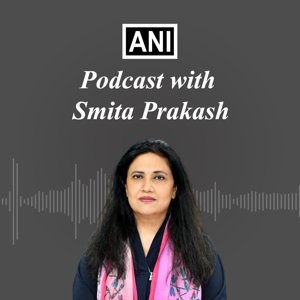
By Asian News International (ANI)


4.7
9090 ratings


The podcast currently has 451 episodes available.
The most played episodes among Podcast App listeners.
Air Marshal Jeetendra Mishra is a former fighter pilot who served in the Indian Air Force for more than 39 years. In January 2025, he took charge of the Western Air Command, one of the IAF’s most important operational commands. Just months later, he led the command during Operation Sindoor. In this edition of the ANI Podcast with Smita Prakash, Air Marshal Mishra explains how India blinded Pakistan during Operation Sindoor and achieved air superiority, gaining the ability to strike anywhere inside Pakistan. He also speaks about the operational freedom given to the Indian Air Force and the role of women pilots in striking terror hubs in Pakistan. The conversation also covers drones, indigenous weapons and whether India is ready for Operation Sindoor 2.0. 00:00 – Introduction 01:36 – IAF’s Planning for Op Sindoor 06:16 – IAF’s Precision Strikes 11:37 – Op Sindoor’s Target Selection 17:21 – Women Pilots in Op Sindoor 21:25 – Mental Makeup of IAF Pilots 28:09 – Decision-Making Behind Op Sindoor 32:44 – Psyche of Pakistan’s Military 39:00 – IAF’s 314-km S-400 Strike 45:42 – Blinding Pakistan’s Air Defences 54:30 – PM Modi’s Adampur Visit 58:27 – IAF’s Core Team for Op Sindoor 1:03:48 – BrahMos 1:08:06 – Drone Warfare 1:18:37 – Operation Safed Sagar 1:29:58 – Pakistan’s Attempts to Find S-400 1:29:58 – Narrative Warfare 1:42:26 – Track 2 Diplomacy

Samrat Choudhary is the first BJP leader to serve as the Chief Minister of Bihar. In this episode of the ANI Podcast with Smita Prakash, he speaks about the Bankipur election result, Prashant Kishor, migration and jobs in the state. He also discusses the alcohol ban, reservation, infrastructure, the revival of sugar mills, and what his government plans to do next. 00:00 – Introduction 00:36 – Bihar Floods 4:08 – Water Treaty with Bangladesh 11:05 – Women’s Employment Scheme 17:23 – Jobs in Bihar 23:31 – Bihar’s Education System 27:29 – Skill Development 31:48 – Migration 35:50 – Alcohol Ban 36:50 – NDA Alliance 43:00 – BJP’s Bankipur Defeat 50:15 – Reservation 53:40 – Road and Bridge Collapses
Mandakini is an actress best known for her role in Raj Kapoor’s iconic film Ram Teri Ganga Maili. In this episode of the ANI Podcast with Smita Prakash, she discusses working with Raj Kapoor and Rajiv Kapoor, her controversial scenes and how she got her screen name. She also addresses her rumoured links with Dawood Ibrahim, the gunshot controversy and why she eventually quit films. 0:00 – Introduction 0:51 – Story Behind 'Ram Teri Ganga Maili' 9:53 – Working With Raj Kapoor 11:04 – From Yasmeen to Mandakini 12:41 – Working With Rajiv Kapoor 14:02 – Controversial Scenes 18:16 – Raj Kapoor’s Vision 21:53 – Bollywood: Then vs Now 25:16 – Rumoured Links to Dawood 28:07 – Performing Live Shows Abroad 31:48 – Gunshot Controversy 35:17 – Why Mandakini Quit Films
Manu Joseph is a journalist, columnist, novelist and screenwriter known for his sharp and often provocative observations on Indian society. He is the author of 'Why the Poor Don’t Kill Us' and the creator of the Netflix series 'Decoupled'. In this episode of the ANI Podcast with Smita Prakash, he discusses India’s broken cities, the jobs crisis facing Gen Z, and the decline of civic sense. He also speaks about Noida versus Gurugram, Vijay’s rise in Tamil Nadu politics, freedom of expression, privilege, merit and why India “looks so poor”. 0:00 – Introduction 1:13 – Life in Gurugram 2:33 – Village–City Divide 3:55 – Civic Order vs Social Order 5:47 – Why India Looks So Poor 6:57 – Swanky Airports and Broken Cities 10:51 – India’s Obsession With Useless Issues 14:24 – Leaving Gurugram 18:22 – Bengaluru Has Become a Hellhole 19:36 – Why Indian Cities Are Unliveable 22:30 – Is Goa India’s Most Cosmopolitan Place? 29:30 – What’s Wrong With Kerala? 33:42 – Kerala’s Healthcare 35:58 – Kerala Mothers 40:06 – Indian Parents and Education 47:19 – North India vs South India 52:51 – Servility, Saluting and Class in India 55:10 – How Indians Treat Salespeople 55:48 – How Indians Treat Waiters 1:02:59 – Why the Poor Don’t Kill Us 1:03:22 – The Attention-Span Crisis 1:08:35 – Cockroach Janata Party 1:13:11 – Why Gen Z Is Screwed by Equality 1:13:52 – India’s Employability Crisis 1:26:53 – Unemployment Among Educated Women 1:31:54 – Exam Leaks and Student Protests 1:35:42 – Freedom of Expression in India 1:40:25 – “Vijay Was My Classmate” 1:42:57 – Mani Ratnam and Tamil Cinema 1:44:45 – Vijay’s Political Rise 1:55:13 – Caste and Public Toilets 1:59:46 – Manu Joseph’s Stand-Up Film 2:04:48 – Left-Wing vs Right-Wing Politics 2:09:11 – Why Ancient History Is Unreliable 2:12:43 – Leaving Journalism and Writing Fiction 2:15:50 – His Take on ‘Godi Media’
Lobsang Sangay served as the democratically elected Sikyong, or President of the Central Tibetan Administration, from 2011 to 2021. He became its top political leader after the Dalai Lama gave up his political authority. Born in 1968, Sangay grew up in a Tibetan refugee settlement near Darjeeling, India. He studied at Delhi University and Harvard Law School before becoming an American citizen. In this ANI Podcast with Smita Prakash, Sangay discusses the Nepal–Tibet floods and questions why China failed to issue a timely warning that could have saved hundreds of lives. He also alleges that Beijing censored videos and controlled the information coming out of Tibet. Sangay also speaks about Xi Jinping’s health, the purges within the PLA, China’s plans for Tibet, the Dalai Lama’s succession and the risk of China weaponising water. 0:00 – Introduction 1:34 – Tibet–Nepal Flash Floods 2:24 – Internet Shutdown in Tibet 4:17 – Could China Have Warned Nepal? 6:51 – Why China Is Hiding the Truth 9:02 – The Real Death Toll in Tibet 10:58 – China Blocks Journalists and Scientists 12:18 – Melting Glaciers and 2030 Warning 15:06 – Dams, Earthquakes and AI Data Centres 23:51 – Nepal’s Rescue Efforts 28:12 – China’s Information-Control Playbook 30:16 – International Water-Sharing Laws 34:38 – China’s Mega-Dam on Brahmaputra 36:52 – India–China Ties and Tibet 39:17 – China’s Claims Over Arunachal 43:15 – Purge of PLA Generals 46:00 – Xi Jinping’s Health 48:23 – Xi Jinping’s Succession Problem 52:12 – China’s Ethnic Unity Law 56:12 – Chinese Police Station 58:31 – Dalai Lama’s Succession 1:02:32 – Will There Be Two Dalai Lamas? 1:12:17 – Chinese Pressure on Nepal 1:14:59 – Tibet’s Future 1:22:29 – Nepal Rejects Foreign Rescue Teams 1:25:27 – The Human and Economic Cost 1:27:05 – Conclusion
The podcast currently has 451 episodes available.

7,635 Listeners
23 Listeners

142 Listeners

157 Listeners

650 Listeners

55 Listeners
65 Listeners

2,554 Listeners

288 Listeners

36 Listeners

32 Listeners

14 Listeners

20 Listeners

10 Listeners

36 Listeners