
Sign up to save your podcasts
Or

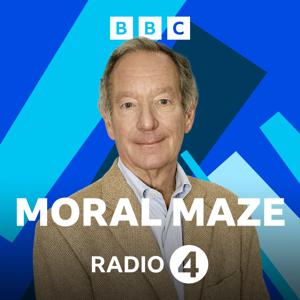

The Animal Welfare (Sentience) Bill, currently working its way through Parliament, would for the first time formally recognise that animals have the ability to experience feelings, including pain, joy and fear. If the law is passed, the government will establish an Animal Sentience Committee to scrutinise policy. Many hope it would offer animals greater protection - only this week, the BBC’s Panorama programme revealed that rules designed to protect horses from a cruel death appear to be regularly ignored at one of the UK's biggest abattoirs. Some want the bill to go even further by including invertebrates, which, for example, could ban the practice of boiling crustaceans alive. Critics of the proposals believe current animal welfare legislation is sufficient and worry about the unintended consequences for farming, fishing and countryside sports. They argue there should be no contradiction in the idea that a nation of ‘animal lovers’ could eat billions of them every year. The way we treat (and whether we eat) animals has important implications, not just for the status of animals, but for the status of human beings. A rights-based approach has argued that since the moral status of humans overlaps with some animals, we should consider those animals equally deserving of rights. Others believe that elevating the status of animals diminishes the uniqueness of human beings. Is it time to think of some animals not just as having rights, but as occupying the same moral universe as humans, worthy of our trust and capable of being betrayed? Or should the relationship between man and beast always be seen as one of human dominion? With Jim Barrington, Claire Bass, Dr Steve Cooke and Nick Zangwill.
Producers: Dan Tierney and Phil Pegum.
 View all episodes
 By BBC Radio 4

4.6
5151 ratings
The Animal Welfare (Sentience) Bill, currently working its way through Parliament, would for the first time formally recognise that animals have the ability to experience feelings, including pain, joy and fear. If the law is passed, the government will establish an Animal Sentience Committee to scrutinise policy. Many hope it would offer animals greater protection - only this week, the BBC’s Panorama programme revealed that rules designed to protect horses from a cruel death appear to be regularly ignored at one of the UK's biggest abattoirs. Some want the bill to go even further by including invertebrates, which, for example, could ban the practice of boiling crustaceans alive. Critics of the proposals believe current animal welfare legislation is sufficient and worry about the unintended consequences for farming, fishing and countryside sports. They argue there should be no contradiction in the idea that a nation of ‘animal lovers’ could eat billions of them every year. The way we treat (and whether we eat) animals has important implications, not just for the status of animals, but for the status of human beings. A rights-based approach has argued that since the moral status of humans overlaps with some animals, we should consider those animals equally deserving of rights. Others believe that elevating the status of animals diminishes the uniqueness of human beings. Is it time to think of some animals not just as having rights, but as occupying the same moral universe as humans, worthy of our trust and capable of being betrayed? Or should the relationship between man and beast always be seen as one of human dominion? With Jim Barrington, Claire Bass, Dr Steve Cooke and Nick Zangwill.
Producers: Dan Tierney and Phil Pegum.

7,913 Listeners

863 Listeners

1,067 Listeners

159 Listeners

5,576 Listeners

1,808 Listeners

1,729 Listeners

1,018 Listeners

2,113 Listeners

1,952 Listeners

32 Listeners
38 Listeners

428 Listeners

159 Listeners

43 Listeners
75 Listeners
108 Listeners

745 Listeners

3,245 Listeners

779 Listeners

1,010 Listeners

3,858 Listeners

1,314 Listeners
851 Listeners

48 Listeners