
Sign up to save your podcasts
Or

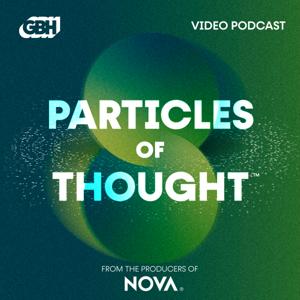

David Kaiser thinks tiny black holes from the dawn of time could be the solution to the dark matter puzzle. David joins Hakeem to discuss primordial black holes, tiny objects that may have formed in the first fraction of a second after the Big Bang. First proposed by Stephen Hawking more than 50 years ago, this hypothesis requires no new physics and no new particles, making it one of the most grounded ideas currently on the table… and one that may solve more than one cosmic mystery. David explains what these primordial black holes are, why many in the physics community are returning to this decades-old idea, and how it could potentially solve the dark matter mystery.
Make sure to subscribe now so you never miss an episode. Learn more about NOVA and visit YouTube channel.
--------------------------
Guest Bio:
David Kaiser is a professor of physics and the history of science at MIT. His research spans the history of modern physics, cosmology, and the foundations of quantum theory. He is the author of several books, including How the Hippies Saved Physics, and is a frequent contributor to public conversations about science and its history.
 View all episodes
 By GBH

4.9
135135 ratings
David Kaiser thinks tiny black holes from the dawn of time could be the solution to the dark matter puzzle. David joins Hakeem to discuss primordial black holes, tiny objects that may have formed in the first fraction of a second after the Big Bang. First proposed by Stephen Hawking more than 50 years ago, this hypothesis requires no new physics and no new particles, making it one of the most grounded ideas currently on the table… and one that may solve more than one cosmic mystery. David explains what these primordial black holes are, why many in the physics community are returning to this decades-old idea, and how it could potentially solve the dark matter mystery.
Make sure to subscribe now so you never miss an episode. Learn more about NOVA and visit YouTube channel.
--------------------------
Guest Bio:
David Kaiser is a professor of physics and the history of science at MIT. His research spans the history of modern physics, cosmology, and the foundations of quantum theory. He is the author of several books, including How the Hippies Saved Physics, and is a frequent contributor to public conversations about science and its history.

90,985 Listeners
21,846 Listeners

43,926 Listeners

43,551 Listeners

12,229 Listeners

6,453 Listeners

16,398 Listeners
246 Listeners

243 Listeners

1,146 Listeners

593 Listeners

215 Listeners
29 Listeners