
Sign up to save your podcasts
Or



One of the most frequently discussed themes in Christian history concerns the relationship between grace, salvation, and human behavior. How does Jesus’s atonement work? How are we saved by grace? What role do human works play? Dr. Cecilia M. Peek takes us back to the early days of Christianity to take a look at these questions again. She also lays out different ways Christians understood Jesus’s saving work–from illuminator, to restorer, to victor, to victim and sacrifice. We discuss her chapter, “Receiving Christ: Atonement, Grace, and Eternal Salvation” in the book Ancient Christians: An Introduction for Latter-day Saints.
About the Guest
Cecilia M. Peek is an associate professor of Classical Studies and the coordinator of the Ancient Near Eastern Studies program at Brigham Young University. She earned her master’s and PhD in Ancient History and Mediterranean Archaeology from the University of California, Berkeley.
About the Host
Blair Hodges earned a bachelor’s degree in communications (journalism) at the University of Utah and a master’s degree in religious studies at Georgetown University. He hosts Fireside with Blair Hodges and previously hosted the Maxwell Institute Podcast at Brigham Young University.
Cover art by Charlotte Condie
Ancient Christians were faced with an incomprehensible puzzle: Jesus was human, and Jesus was divine. How was that possible? They put some of their best thought into solving that mystery. Dr. Jason R. Combs says for Latter-day Saints, there is value in learning how our ancient Christian ancestors talked about these questions—even when they differ from us. We discuss his chapter, “Divine Nature: Father, Son, and Holy Spirit” from the book Ancient Christians: An Introduction for Latter-day Saints.
About the Guest
Jason R. Combs is assistant professor of ancient scripture at BYU. He earned his PhD in religious studies from UNC Chapel Hill, focusing on the history of early Christianity.
About the Host
Blair Hodges earned a bachelor’s degree in communications (journalism) at the University of Utah and a master’s degree in religious studies at Georgetown University. He hosts Fireside with Blair Hodges and previously hosted the Maxwell Institute Podcast at Brigham Young University.
Cover art by Charlotte Condie
Early Christians were fascinated by the nature of God and God’s relationship to humans. They had stories from the scriptures, but they didn’t have a clear or unified explanation about humanity, human nature, and their exact relationship to God. Dr. Gaye Strathearn takes us through the history of Christian thought in response to the question, what makes humans human? We’re looking at her chapter in the book Ancient Christians: An Introduction for Latter-day Saints, called “Human Nature: Creation and the Fall.”
About the Guest
Gaye Strathearn is professor of ancient scripture at Brigham Young University and associate dean in Religious Education. She earned her PhD in Religion, with an emphasis in New Testament and Christian Origins, from Claremont Graduate University.
About the Guest
Gaye Strathearn is professor of ancient scripture at Brigham Young University and associate dean in Religious Education. She earned her PhD in Religion, with an emphasis in New Testament and Christian Origins, from Claremont Graduate University.
About the Host
Blair Hodges earned a bachelor’s degree in communications (journalism) at the University of Utah and a master’s degree in religious studies at Georgetown University. He hosts Fireside with Blair Hodges and previously hosted the Maxwell Institute Podcast at Brigham Young University.
Cover art by Charlotte Condie
The beliefs of early Christians are deeply woven together with their practices–the rituals they performed in worship of God. Mark D. Ellison takes us back to the first few centuries of Christianity, where believers recited the Lord’s prayer, followed a sacred calendar with feasts and celebrations, lit lamps at the close of each day, practiced baptism, and more.
About the Guest
Mark D. Ellison is associate professor of ancient scripture at Brigham Young University. He earned a bachelor’s and master’s from BYU, a master’s in religious studies (Bible and Archaeology) from the University of Southern Florida, and a master’s and PhD in Early Christianity and Early Christian Art from Vanderbilt University.
About the Host
Blair Hodges earned a bachelor’s degree in communications (journalism) at the University of Utah and a master’s degree in religious studies at Georgetown University. He hosts Fireside with Blair Hodges and previously hosted the Maxwell Institute Podcast at Brigham Young University.
Cover art by Charlotte Condie
Early Christians didn’t have wonderful or ornate buildings to gather in during the first decades. They met in small homes and living spaces. Matthew J. Grey takes us back to these early house churches and tells us what worship was like there. As Christianity spread, new buildings replaced the old, which reflected development in belief and worship. In this episode we discuss Grey’s chapter, “Sacred Spaces and Places of Worship: From House Churches to Monumental Basilicas,” from the book Ancient Christians: An Introduction for Latter-day Saints.
About the Guest
Matthew J. Grey is professor of ancient scripture and affiliate faculty member of the Ancient Near Eastern Studies program at Brigham Young University. He earned his PhD in ancient Mediterranean religions from the University of North Carolina at Chapel Hill.
About the Host
Blair Hodges earned a bachelor’s degree in communications (journalism) at the University of Utah and a master’s degree in religious studies at Georgetown University. He hosts Fireside with Blair Hodges and previously hosted the Maxwell Institute Podcast at Brigham Young University.
Cover art by Charlotte Condie
“With too many people offering revelations, the message of the faith quickly spirals out of control [but] with too strict control over revelation, the institution suppresses the voice of the Holy Spirit.”
Early Christians loved scripture, particularly what became the Old Testament. But Thomas A. Wayment says they were also open to new revelation. With diverse views about doctrine spreading, the church sought to bring greater unity to the faith by selecting new scripture to add to the canon. We discuss Wayment’s chapter, “Creating Canon: Authority, New Prophecy, and Sacred Texts,” from the book Ancient Christians: An Introduction for Latter-day Saints.
About the Guest
Thomas A. Wayment is Professor of Classics in the Department of Comparative Arts and Letters at Brigham Young University. He earned his PhD in New Testament Studies from Claremont Graduate University in 2000.
About the Host
Blair Hodges earned a bachelor’s degree in communications (journalism) at the University of Utah and a master’s degree in religious studies at Georgetown University. He hosts Fireside with Blair Hodges and previously hosted the Maxwell Institute Podcast at Brigham Young University.
Cover art by Charlotte Condie
“Offices are constantly evolving in a living church, they're constantly adjusting to revelation and to the needs of the people, and that’s okay. It really does open possibilities for women in the future.”
In the Greco-Roman world of early Christianity, women were considered inferior to men. Dr. Ariel Bybee Laughton says Christianity offered new ways to think about the roles of women in society, and their power and authority waxed and waned over time. We discuss her chapter “Church Organization: Priesthood Office and Women’s Leadership Roles” from the book Ancient Christians: An Introduction for Latter-day Saints.
About the Guest
Ariel Bybee Laughton is an independent historian in Houston. She earned her bachelor’s in history from BYU, and her master’s and PhD in religion from Duke University.
About the Host
Blair Hodges earned a bachelor’s degree in communications (journalism) at the University of Utah and a master’s degree in religious studies at Georgetown University. He hosts Fireside with Blair Hodges and previously hosted the Maxwell Institute Podcast at Brigham Young University.
Cover art by Charlotte Condie
Ancient Christians didn’t “give talks,” they didn’t have monthly “fast and testimony meetings.” But Dr. Kristian S. Heal says the preaching of sermons about the gospel of Jesus Christ was a central part of early Christian experience. We discuss his chapter “Preaching Christ: Scripture, Sermons, and Practical Exegesis,” from the book Ancient Christians: An Introduction for Latter-day Saints.
About the Guest
Kristian S. Heal is a Research Fellow at the Neal A. Maxwell Institute for Religious Scholarship at Brigham Young University. He earned a PhD in Theology from the University of Birmingham.
About the Host
Blair Hodges earned a bachelor’s degree in communications (journalism) at the University of Utah and a master’s degree in religious studies at Georgetown University. He hosts Fireside with Blair Hodges and previously hosted the Maxwell Institute Podcast at Brigham Young University.
Cover art by Charlotte Condie
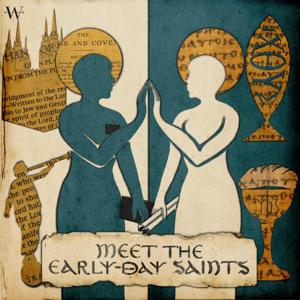
Welcome to Wayfare’s first podcast, Meet the Early-Day Saints, a limited series produced and hosted by Blair Hodges.
In Meet the Early-day Saints, Blair will take you on a journey through time to meet the earliest disciples of Jesus. You’ll learn from a wide range of esteemed Latter-day Saint scholars who reveal the similarities and differences between ancient Christian faith and ours today. Throughout the series, some of your common assumptions may be challenged and in the process you’ll gain a deeper understanding of the gospel of Jesus Christ.
Each guest is a contributor to the new book Ancient Christians: An Introduction for Latter-day Saints, from the Neal A. Maxwell Institute for Religious Scholarship.
In our first episode, we ask what if the “Great Apostasy” wasn’t so great after all? Latter-day Saint scholar Jason R. Combs invites us to revisit our assumptions about the Christians who came before us. We discuss his chapter “Understanding Ancient Christians, Apostasy, and Restoration,” from the book Ancient Christians: An Introduction for Latter-day Saints.
We hope you enjoy the episode and the series!
About the Guest
Jason R. Combs is assistant professor of ancient scripture at BYU. He earned his PhD in religious studies from UNC Chapel Hill, focusing on the history of early Christianity.
About the Host
Blair Hodges earned a bachelor’s degree in communications (journalism) at the University of Utah and a master’s degree in religious studies at Georgetown University. He hosts Fireside with Blair Hodges and previously hosted the Maxwell Institute Podcast at Brigham Young University.
Cover art by Charlotte Condie
From the publisher's feed
820 Listeners
670 Listeners

1,714 Listeners
301 Listeners
2,571 Listeners

10,709 Listeners

1,563 Listeners
2,014 Listeners

191 Listeners