
Sign up to save your podcasts
Or

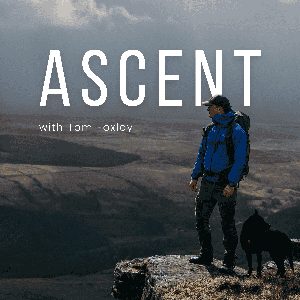


Tom Foxley is having heart surgery. Fully awake. No sedation.
A cardiologist will thread a wire through his groin, navigate it to
his heart, and burn a small section of tissue — while he lies there
conscious for two hours. And there's a small but real chance things
could go wrong.
He's a little bit terrified.
In this episode he shares what that experience has surfaced — and
specifically, the old toolkit he noticed himself reaching for. The one
from Royal Marines training. Ignore it. Push through. Don't feel it.
Be a man.
That toolkit is extraordinary when you're being prepared for combat.
It's what gets you through the unsurvivable. But when you're running
a complex business, training for ultras, trying to be a present
husband and father — it becomes the handbrake. And most high-performing
business owners are driving with it on.
This episode is about what he's been doing instead — and what shifted
when he stopped suppressing the fear and started training his capacity
to feel it.
Topics covered:
- Why suppress-and-push-through works short term and costs you long term
- What unprocessed fear actually does to business performance
- How to train emotional capacity the same way you train physical capacity
- What changed when Tom stopped ignoring the surgery and started
working with the emotion instead
- What this means practically for how you show up this week
This week Tom Foxley took a group of business owners to the Brecon
Beacons — one of the most demanding environments in the UK, and the
place where the SAS run a significant portion of their initial training.
23 kilometres. 1,500 metres of elevation. Winds that knocked people
off their feet. Hail that made it necessary to walk backwards. A wild
camp at minus five degrees. And at the end of the day's hiking — a
lake, in freezing water, with everyone watching each other wondering
if Tom was actually serious.
He was.
This episode is the debrief. What the weekend was designed to do, why
it worked, and the principles that made it more than just a difficult
day out. Including why positive thinking is one of the most dangerous
ideas in psychology, why new environments produce new thinking in a way
that familiar ones never can, and what happened in the 12-24 hours
after the guys got home.
Topics covered:
- Why environment is the missing variable in most business owners'
development
- Why you grow fastest around people operating at the same level as you
- Why positive thinking is naivety disguised as optimism — and what
to do instead
- What cold exposure and physical hardship actually build in a business
owner
- What the week after looked like for every person who was there
Some business owners go through a crisis and fall apart. Others come
out sharper, more capable, more certain of what they're building.
Same difficulty. Completely different outcome.
In this episode, Tom Foxley breaks down the science behind why — drawing
on a landmark paper on post-traumatic growth by Richard Tedeschi and
Lawrence Calhoun. The same mechanisms that produce growth after major
life trauma are the same ones that determine whether a business owner
grows through the difficult periods in their business.
The headline finding from the research: it's not the hard event that
creates the growth. It's the struggle with it. The willingness to go
into it, sit with it, and let it update your understanding of the world
and your place in it.
Tom translates the framework into practical terms — what the
preconditions for growth actually are, why emotional avoidance is the
single biggest brake on development, and why most business coaching
misses the thing that actually moves the needle.
Topics covered:
- Why some people grow through difficulty and others are broken by it
- The preconditions for real growth — and what blocks every one of them
- Why willingness to feel outperforms toughness every time
- Self-disclosure — the first and most essential step in the growth process
- The difference between useful and destructive rumination
- Why struggle is the mechanism of growth, not the obstacle to it
- Three things to do differently this week
You're not lazy. You're not lacking effort.
You're sprinting in every direction — and going nowhere.
In this episode, Tom Foxley breaks down a real coaching case — a
business owner who arrived at a session already running on empty.
Financial pressure building in the background. A key relationship at
home temporarily disconnected. Publicly called out in a group coaching
environment for not having done something sooner. A staff situation
unresolved. All of it hitting at once.
The surface diagnosis was stress. The real diagnosis was hustle
fragility — a system built for output that has no mechanism for
handling load.
Drawing on Nassim Taleb's anti-fragility framework and the Biosphere 2
experiment, Tom makes the case that resilience — just pushing through,
staying tough, not letting it affect you — is the wrong goal. The
strongest systems in nature don't survive stress. They get stronger
because of it.
That's what this episode is about. Not how to reduce the pressure. How
to build the kind of operator who can be still inside it.
Topics covered:
- Why hustle builds the business and then breaks the operator
- Fragile, resilient, anti-fragile — and where most business owners
are actually sitting
- The Biosphere 2 trees — what perfect conditions without stress
actually produce
- Stillness in the storm — the skill underneath every high performer
who operates well under load
- One question to ask this week when the pressure stacks up
A client called me a week out from launching a brand new business.
Facility fitted out. Money committed. No going back. And for the first time in years, he wanted to go out and properly drink that weekend. Not to celebrate. To numb.
He'd also started telling himself the outcome didn't really matter — that the money wasn't important to him. When Tom pushed on it, it collapsed immediately. It mattered enormously. The detachment was the avoidance.
In this episode, Tom breaks down what happens at the threshold of every real breakthrough — and why the instinct to escape the pressure is the exact mechanism that keeps the ceiling where it is.
Drawing on the Arnie pump analogy, the barbell as a metaphor for business load, and the science of voluntary exposure from OCD treatment, trauma therapy and addiction recovery, Tom makes the case that discomfort isn't the obstacle to growth. It's the condition for it.
The line that underpins everything: you grow in direct proportion to the amount of uncomfortable emotion you are willing to tolerate.
Topics covered:
He knew he was the bottleneck.
He could see himself drifting back to the coaching floor, sitting on decisions, staying too hands-on. He just didn't know how to stop.
In this episode, Tom sits down with a gym owner he's been working with for an honest conversation about what brought him to mental performance coaching, what surprised him when he got there, and what's actually changed in his business, his leadership, and his life since.
This isn't a highlight reel. It's a real account of what it looks like to go from self-doubt and anxiety-driven decision-making to clarity, capacity, and a business that's performing at its best.
Including the moment he realised freedom was something he'd always wanted and never let himself admit — and how becoming a father for the first time made that impossible to ignore.
Topics covered:
Most business owners think resilience is the goal.
It isn't.
In this episode, Tom Foxley opens with a story from the Biosphere 2
The reason: no wind. No stress. No stress wood. Without resistance, the
Drawing on Nassim Taleb's three-level framework — fragile, resilient,
Resilience means you can absorb the hit. Anti-fragility means the hit
Topics covered:
Most high performers are chasing the wrong thing. Not more discipline. Not a tougher mindset. Dan Holder — Royal Marines veteran, Bronze Star recipient, Arctic Spine finisher — would argue the thing that keeps you going isn't strength at all. It's flexibility. We cover PTSD recovery, leaving special forces, surviving extreme endurance, and why the parts of yourself you'd rather not look at are where your real capacity lives.
Most business owners who are stuck think they have a team problem.
They don't. They have an identity problem.
In this episode, Tom Foxley breaks down a real coaching case — a business owner with his finger in every pie, always overworked, always the one everyone defaulted to. His team weren't taking ownership. He assumed they weren't good enough. When they looked under the hood, they found something different entirely.
He was manufacturing the dependency. His need to be seen as important, competent, in control — his self-image — was the system producing the exact behaviour he resented. He'd never cut the umbilical cord, because
And here's the trap: it had worked. That identity — the hustler, the person who does everything, the one the business can't run without — got him to a genuinely successful level. The same identity was now the cap on everything he was trying to build next.
Tom unpacks the pattern, the three-step process for catching it in real time, and the principle that runs underneath every plateau he sees in high-performing business owners: we all have a skin that once kept us safe — and at some point, we have to shed it.
Topics covered:
Most leaders think their team has a performance problem.
They don't. They have a reinforcement problem.
In this episode, Tom Foxley breaks down a real coaching case — a business owner whose team kept falling short of the standards he expected. Tasks not done. Gym floor not cleaned. Google reviews not chased. And every time, he stepped in and picked up the slack.
What looked like a team problem was actually a system problem. And he'd built the system.
Tom unpacks the Child Effects Model — the psychological loop that explains how leadership cultures form without anyone consciously choosing them — and makes the case for why the halftime team talk style of leadership actively suppresses the performance it's trying to produce.
He also shares two stories that reframe how most leaders think about recognition: one from a weightlifting gym, and one from a military stalking exercise — both of which show why public praise is one of the most underused performance tools in business.
Topics covered:
From the publisher's feed
You want to be able to build a business that gives you freedom, whilst training like an athlete and being a great family man too. The Ascent podcast will show you how to ascend to becoming the kind of person who can do all of that.
Your host, Tom Foxley, is a mental performance coach for 6 and 7 figure founders, and former Royal Marines Commando.
In Ascent, Tom will show you how to find the level of performance you have always known is in you.

4,768 Listeners

3,365 Listeners

1,135 Listeners