
Sign up to save your podcasts
Or



Ask a question
Tendinopathy is the injury most people quit on. Recovery takes months, progress feels random, and there's a billion-dollar market selling miracle fixes to people desperate for relief. Jarlo has been treating it for 28 years and has dealt with it personally for years at a stretch.
In this conversation we get into:
If you've got a nagging elbow, achilles, shoulder, or knee that's been around longer than it should, this one's for you.
Support the show
👉 Try a free strength and agility workout
Ask a question
Two ways people get it wrong with training around injuries: rest until everything feels perfect (three weeks becomes three months becomes deconditioned and afraid to start), or push through and hope (which usually extends the flare).
Both worked when you were 22. They don't anymore.
Jarlo Ilano (physical therapist, GMB co-founder) and Andy Fossett walk through the framework Jarlo uses with patients and we use across our programs. A discomfort scale, an irritability test, and a way to keep training while you recover.
What's covered:
This one's for anyone who's hit middle age (which Jarlo points out starts way earlier than you think) and noticed the rules have changed. You can run the framework yourself, and it works across most of the common stuff: knees, shoulders, tendons, adductors.
Support the show
👉 Try a free strength and agility workout
Ask a question
In this episode, Andy and Ryan explore the concept of bottlenecks in training, emphasizing how identifying and addressing the main limiting factor can accelerate progress. They discuss practical methods for assessment, common misconceptions, and real-world examples to help listeners optimize their fitness routines.
Key Topics
Chapters
00:00 Identifying Your Training Bottleneck
09:19 The Importance of General Physical Preparedness
18:54 Assessing and Diagnosing Your Bottleneck
28:49 Navigating Constraints and Limitations
Support the show
👉 Try a free strength and agility workout
Ask a question
Sleep Is a Practice
We've talked about sleep before — our PM routines, keeping it dark and cool and quiet, putting down the phone, all the adulting 101 tips that every Instagram account and bestselling book has been yelling at you for years. You know all of it.
So we polled 119 members of our coaching community about their sleep. A third of them are struggling, and the comments made one thing very clear: nobody has a knowledge problem. They have a life problem. Toddlers, menopause, business anxiety, shift-working spouses, bodies that wake up at 3am to replay every unfinished task from the last decade.
This episode is about what to do when you already know the basics and your life won't cooperate.
Resources:
Pick one thing from this episode. One. Practice it for two weeks. If it's breathing before bed, do it every night. If it's moving your phone out of the bedroom, do it every night. If it's the evening stretch routine, commit.
See what actually changes for you, then decide if it stays.
Support the show
👉 Try a free strength and agility workout
Ask a question
Most people think training is about constant progress.
Getting stronger. More flexible. Better conditioned. Always moving forward.
And when that’s not happening, it feels like something’s gone wrong.
But that idea falls apart pretty quickly when you look at how anything actually develops over time.
Athletes don’t train at peak intensity all year. They periodize their with pre-season, in-season, and off-season. Your work has busy periods and slower stretches. Even your energy across a week shifts depending on sleep, stress, and everything else going on in your life.
Training works the same way.
There are seasons to it. Not just one.
In this episode, we break down four of them:
The mistake most people make is treating “building” as the only phase that counts.
But trying to build everything, all the time, usually leads to stalled progress, frustration, or getting hurt.
A better approach is understanding which season each part of your training is in, and adjusting accordingly.
You might be building mobility, maintaining strength, managing a cranky shoulder, and exploring new movement patterns all in the same week.
That’s how sustainable progress actually works.
We’ll walk through how each of these phases works, why they’re all necessary, and how to train in each one so that even maintenance or damage control still move you forward.
Because the goal isn’t to always be pushing harder.
It’s to keep making progress over time without burning yourself out in the process.
Support the show
👉 Try a free strength and agility workout
Ask a question
Most people know when to back off their training, but only once something already hurts. That’s the problem.
In this episode, we break down why pain and fatigue are lagging indicators, and how to start using earlier signals to guide your training instead. You’ll learn how to recognize when you’re actually ready to push harder, not just when you need to stop, and how to adjust your sessions based on what’s really going on in your body and your life.
If you’ve ever felt stuck between going too hard and doing nothing at all, this gives you a better way to make the call.
Support the show
👉 Try a free strength and agility workout
Ask a question
Many people think progress only happens on the days when they push themselves to the limit. Everything else feels like falling behind.
In reality, most productive training happens in the middle. The grey zone between maximum effort and total rest is where you can practice skills, build muscle, develop endurance, and accumulate consistent work without constantly needing long recovery periods.
Autoregulation helps you learn how to operate in that middle range. Instead of reacting to fatigue or chasing max effort every session, you develop the ability to adjust intensity and keep moving forward.
The result is fewer setbacks, more training days, and better long-term progress.
Support the show
👉 Try a free strength and agility workout
Ask a question
This episode is a rambling and unfocused mess. OK, so it's a little better than that, but the truth is that "how do I integrate more training into my life" is a really broad question, and any focused, succinct answer would be incomplete.
What you'll actually get is Ryan and Andy working through the tension between movement snacks and real training sessions, why 15 focused minutes beats 90 minutes of scattered effort, and the five words that have repeatedly saved Andy from his own to-do list. And Ryan's three-word rebuttal.
If you've ever caught yourself researching infrared saunas for three hours instead of doing some damn pushups, this one's for you. And yes, we talk about toilet squats.
Support the show
👉 Try a free strength and agility workout
Ask a question
Andy and Ryan discuss the use of timed sets vs rep counting in the Praxis Protocol, emphasizing the importance of quality movement over quantity. The conversation covers the significance of adjusting intensity, the idea of mechanical drop sets, and the distinction between time under tension and time under attention. They also address how to measure progress without relying on numerical goals, encouraging listeners to focus on their improvement in movement quality.
Takeaways
Chapters
00:00 Introduction to the Podcast and GMB's Unique Approach
02:22 Understanding the Five P's Framework
05:21 Quality Over Quantity in Movement Practice
08:34 The Importance of Timed Sets in Training
11:27 Challenges with Traditional Rep Counting
14:12 Transitioning to Quality-Focused Training
17:23 Conclusion and Future Directions
18:56 Scaling Movements and Adjustments
21:59 Understanding Mechanical Drop Sets
23:53 Bodyweight Variations and Drop Sets
27:22 Quality Over Quantity in Training
29:26 Time Under Tension vs. Time Under Attention
35:31 Focusing on Progress Beyond Numbers
Support the show
👉 Try a free strength and agility workout
Ask a question
If you’ve been training for years but still feel like you're not sure how to keep progress going, have random aches hanging around, and every new “must-do” tip online is somehow making it worse. Then this episode is for you!
Jarlo sits down with Dr. Jason Silvernail (DPT, DSc, U.S. Army Colonel, strength coach) to talk about the problem most people don’t realize they have: it’s not a lack of information… it’s a lack of a way to sort it. They unpack why modern fitness advice swings between two extremes, either a vague “wellness philosophy” or an aggressive “one weird trick” fear based, and what to use instead: a practical framework for making smart training decisions that actually match your real-life goals.
You’ll hear how Jason shifted his own training in his 40s (without giving up being strong), why “masters athlete” training is not resigning yourself to being less. It's a mindset upgrade, and how the best results come from combining the right inputs (movement, recovery, stress, sleep, context) rather than chasing the next magic bullet.
Come for the training insights and leave with a clearer filter for everything you hear about health, fitness, and longevity.
*Opinions expressed by Dr. Jason Silvernail are his own and do not represent the official policy or position of the United States Army, the Department of Defense, or the United States Government*
Learn more from Dr. Silvernail here http://Linktr.ee/jasonsilvernail
Support the show
👉 Try a free strength and agility workout
From the publisher's feed
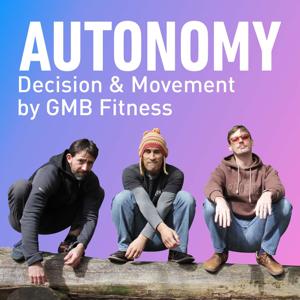
Autonomy means deciding and moving. Ryan, Andy, and Jarlo aren't here to shill for some stupid supplement company. This show explores fitness as a way to play your own game and do more of what…

227,479 Listeners

6,232 Listeners

2,697 Listeners

3,611 Listeners

115 Listeners

29,163 Listeners

2,051 Listeners