
Sign up to save your podcasts
Or

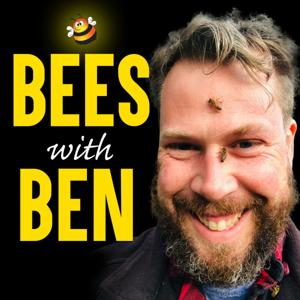


PODCAST EPISODE 63: Ronnie Voigt, natural beekeeper and educator, Natural Beekeeping Tasmania, Hobart, Tasmania
One form of heaven involves two of my greatest loves: natural beekeeping and Tasmania. Most of you would know that Tasmania is an exquisite island situated off the mainland of Australia, home to diverse and pristine landscapes, and unique flora and fauna; also, from my experience, it is also home to many environmentally conscious humans, with huge hearts, doing what they can to spread the word about the vitality of bees. However, for those new to beekeeping, natural beekeeping may be a fresh concept. This form of keeping respects the needs of the colony over those of the beekeeper. This holistic approach comes from an environmentalist perspective that honours these miraculous insects and seeks to provide the most positive domesticated life cycle. In turn, this “api-centric” approach should be encouraged for all beekeepers who want to keep bees for reasons other than intensive honey production. This is often done through the replication of the nest structure that would usually be found in the wild. By doing this, the colony is made to feel as comfortable as possible, and the intricate and sophisticated processes carried out by bees can continue. This encourages the superorganism to communicate as effectively and adapt to external conditions as they arise. For my love of Tasmania, natural beekeeping and the passion of my next guest, I am delighted to introduce you to Ronnie Voigt— natural beekeeper extraordinaire and founder of Natural Beekeeping Tasmania.
Ronnie has been beekeeping using natural methods for almost 15 years, and she does so through the use of some specifical hives and processes. Favouring the Layens Hive—an uncommon choice of hive that originated from France, horizontal in orientation, with extra deep frames— and the Warre hive—a vertical top-bar hive that uses bars instead of frames, also originating from France—Ronnie has honed a unique skill set that keeps bees at the forefront of her practice. She is also interested in Housel positioning—a method of positioning comb in the hive that works with the direction of the hive floor and seeks to approximate the order that comb is arranged in the wild. For me, meeting keepers like Ronnie is an utter treat; I love nothing more than yarning about the intricacies of natural beekeeping— it fills my heart with joy and inspires me to keep finding new ways and means, thrilled to know that there are beekeepers tucked away in the most gorgeous pockets of the planet doing what they can to marry their passion for beekeeping with their genuine love for bees as creatures. I also know that their ethics transfers over to their businesses, which is what we need in the fight of mass and blind consumerism. Through Natural Beekeeping Australia, Ronnie provides beekeeping classes, honey and bee-related products, and hives for keepers–a true Tasmanian gem.
Tune in to hear Ronnie and I unpack the intricacies of the Layens and Warre Hives, what it’s like to live and keep bees in spectacular Tasmania, and the motivation behind her business, Natural Beekeeping Tasmania.
http://www.naturalbeekeepingtasmania.com.au
PODCAST EPISODE 62: Vearna Gloster, beekeeper, poet and author, Trinidad and Tobago, South America
Beekeeping is an ancient and expansive practice that continues to be part of cultures from all over the world. This is one of the aspects of beekeeping that I am most humbled and excited by; also, it means that I have the privilege and joy of meeting people like long-time beekeeper, educator, poet and author, Vearna Gloster of Trinidad and Tobago – a dual-island Caribbean nation near Venezuela, with distinctive Creole traditions. It is my total pleasure to introduce my community to Vearna for episode 62 of the BEES WITH BEN beekeeping podcast.
Interested in bees from a young age, Vearna asked her mother if people “mined” (or kept) bees– delighted that her mother said yes, she soon realised that in fact a cousin of hers had been a beekeeper for a number of years; at that stage, keeping stingless bees. Soon after, Vearna’s husband at the time connected her with a beekeeper in the local village. The more time she spent with the beekeeper, learning the processes and ways of apiary, the more she was hooked: “I had no idea how intoxicating it would become.” Of course, like all life-long practices, there were challenges, ups and downs, along the way – some to do with beekeeping itself and others to do with Vearna’s personal life and financial wellbeing. But after the end of her marriage, and just a few months into a new career in the security field to gain independent employment and income, Vearna returned to beekeeping, purchasing five nucs. She kept her colonies on her brother’s property in Tamana; however, this too provided considerable challenges. The river Vearna needed to cross to get to her bees was very dangerous during the wet season, and her family, especially her mother, was very concerned for her safety. She decided to leave her bees to her brother but continuing to attend beekeeping meetings in Trinidad and Tobago, keeping up to date with apiary news. Soon after, she wrote her first poem on honey which topped the charts in her local area! Vearna’s passion for poetry saved her from the loss she had experienced, both of her family but also her bees. She now has a successful partnership with another beekeeper and continues to write about bees and educate her community about the vital connection between bees and sustainability.
Tune in to hear Vearna and I chat about life in Trinidad and Tobago, the challenges of becoming and staying a beekeeper, and how writing has helped her combine her passions.
https://www.linkedin.com/in/vearna-gloster-ba3a73b0/
PODCAST EPISODE 61: Beekeeper, entrepreneur and founder of Whale Labs, James Watts, Brisbane, Queensland
Beekeeping is an everchanging and exciting practice and industry. With so much still not known about bees and the incredible properties of honey and other bee-related substances, apiary and beekeeping are areas that engage constantly with science and business as new revelations come to light. We already know that bees are vital for the survival of humans and the planet, and that honey, wax, propolis, bee venom and royal jelly have some incredible health properties. But I have a feeling that what we know now is just the beginning, and so I am always beyond excited to hear about new scientific discoveries as they relate to bees, proving that these seemingly humble creatures are more incredible than we even imagined. For that reason, I am delighted to introduce you to beekeeper and entrepreneur James Watts of Whale Labs—a company seeking to help beekeepers find ways to use the ever-expanding goodness of bees to help the planet and their businesses.
Whale Labs is an innovative research and development company based in Brisbane, Queensland, that focuses on bringing novel designs to life. The business was founded by James in November 2017 while conducting dementia research with small polypeptides—which are single linear chains of many amino acids held together by amide bonds—of which the most crucial to the research was bee venom. Bee venom has both anti-inflammatory and inflammatory properties and has been administered to people in shot form for conditions such as rheumatoid arthritis, nerve pain, multiple sclerosis (MS), reducing tendonitis, and muscle conditions such as fibromyositis and enthesitis. Since realising the incredible properties of bee venom, James and his colleague James Kenny decided that they would focus on bee venom and find ways to help beekeepers take bee venom from the hive to the marketplace. Perhaps their most well-known product is the ceramic Australian Bee Venom Collector. This glass tool is suited to the environment in Australia and provides a guilt-free way of harvesting bee venom as it omits a pulse that is not dangerous to bees nor long lasting. Bees deposit their venom on the glass panel, and keepers can then collect it by scraping it off the glass. The venom can then be sold by the beekeeper.
Tune in to hear James and I discuss the vision behind his company, how the Australian Bee Venom Collector works, what new innovations are in the pipeline at Whale Labs.
https://www.whalelabs.com.au/?v=6cc98ba2045f
PODCAST EPISODE 60: Liz Frost, Technical Specialist of Bees and co-manager of Plan B, Hunter region, New South Wales, Australia
There are a lot of people in the bee world who do amazing work, but every now and then you come across someone who truly blows you away. Liz Frost is undoubtedly one of those humans and I am thrilled to introduce her to the BEES WITH BEN beekeeping podcast for episode 60. Hailing from California, now residing in the Hunter region of NSW, Liz has worked in the United States and Australia in honeybee breeding and insemination and has a special ability to reflect on her experiences in the field. In a poem written for the publication 2 Million Blossoms, she aptly described the devastation of the bushfires that had been ravaging the area where she lived for some six months in 2019–2020; highlighting the resilience of the apiarists who “press on in secret… Tracking any budding trees left alive.” In this poem and its accompanying essay, she perfectly conjures the connection between beekeepers and the land, not to mention the vital role bees play is rejuvenating the environment after disasters such as this one.
Liz Frost’s CV is a brilliant manifesto of love for bees and the environment. She has had innumerable roles in the field both locally and overseas and is now working for the New South Wales Department or Primary Industries as a Technical Specialist of bees. In parallel and as part of her role, she is the co-manager of Plan Bee—the National Honey Bee Genetic Improvement Program run in collaboration with USYD, UNE and AGBU—Better Bees WA and the Wheen Bee Foundation—funded by DAWE Rural R&D for Profit Program. Her job involves managing research and development projects focusing on queen bee breeding and pollination, and providing technical advice to the beekeeping industry, government, researchers, media and the public.
Her current project Plan Bee: Australia’s National Honey Bee Genetic Improvement Program is a program that Liz co-manages with University of Sydney professor Dr. Nadine Chapman, whose research interest includes establishing “an economically sustainable national genetic improvement program using innovative breeding technologies to transform the performance of honey bees in Australia.” And that is what Liz and Nadine are doing with Plan B, as they evaluate and implement tools, technologies and systems to better honeybee breeding programs in Australia—amazing and inspiring work! AND excitingly, the Plan B Info Workshop for queen breeders is happening in just a few days on 2 July 2021. For further information on the event, make sure you check out the AgriFutures Australia website
http://www.agrifutures.com.au/partnerships/rural-rd-for-profit-program/plan-bee/
Tune in to hear the inspiring Liz Frost and I chat about how she is helping to improve breeding programs for bees in Australia.
PODCAST EPISODE 59: Andrew Wilson, founder of Sydney Bee Rescue and Snives Hives, Sydney, Australia
The COVID-19 pandemic has led to changes across the globe. We have all felt it, some much more than others. My heart goes out to those people that have been rocked by the illness and its side effects, be they emotional, mental, or financial. Andrew Wilson, the founder of Sydney Bee Rescue and Snives Hives, is someone who was affected considerably by the pandemic, losing his job. However, bees came to the rescue and turned things around (as they seem to do!), and I am thrilled to introduce Andrew to the BEES WITH BEN beekeeping podcast for episode 59.
It’s common knowledge that it takes many years of study and training to become a qualified pilot. So, for Andrew, a pilot who flew planes internationally as his career, the shock of COVID-19 was life-changing. Pilots across the world faced redundancies as long-haul flights came to a complete halt. With time to think on his hands, Andrew considered the activities in his life he was passionate about. It was then that his sideline beekeeping gig turned into something much more serious. These days, Andrew has turned around what could have been seen as misfortune into a brilliant and rewarding new career. Funnily, I have mentored and sold many bee colonies to pilots. Perhaps a shared love of flying makes bee and pilots an instant match!
A clever bloke no doubt, Andrew is a wealth of information about bees and runs his businesses with conservation as their driving force. Sydney Bee Rescue is dedicated to relocating bee nests and hives that have become a nuisance or cropped up in unwanted places to State and National Park apiaries where the bees can live peaceful and happy lives. Snives Hives is a small-scale apiary on Sydney’s north shore that produces and sells honey, wax, and other bee-related products, as well as providing bee and swarm management services. However, what warms the heart about this enterprise is that all the hives are from colonies of bees that Wilson has rescued from roof cavities, walls, floors, and backyard trees! What a gem! But the love doesn’t end there— Andrew is always open and willing to provide insightful tips. One of my favourites is that he uses a plate warmer to help de-crystallise honey. This helps to loosen it up and turn it back into that superb golden elixir without overly heating it and destroying its wonderful properties. Andrew is also incredibly charitable and volunteers much of his time at his local beekeeping club.
Tune in to hear Andrew and I chat about the transition from flying to beekeeping, how it feels to be a full-time beekeeper in beautiful Sydney, and what inspires his practice and business direction.
http://www.sniveshives.com.au
https://www.sydneybeerescue.org
PODCAST EPISODE 58: Daniel Wood from Monsons Honey and Pollination, Mildura, Australia
It’s amazing where life takes you if you let it. Originally from Blackpool in the UK, Daniel Wood did not expect to fall into the profession of beekeeping when he came to Australia almost 11 years ago. Coming from an army background, it was romance that led Daniel to bees— when he met one of beekeeper Trevor Monson’s daughters Shiree, he fell in love, and he also fell into the family business! These days, Daniel is a very happy and skilled beekeeper, having worked for Trevor’s business Monsons Honey and Pollination for 7 years, helping with pollination, including the hectic annual 3-week event where Trevor and his family and staff coordinate approximately 120,000 hives around the state to help pollinate almond orchards. Daniel also spends a lot of time breeding queens for the company, with an aim of breeding 160 queens every 2 weeks!
Based in Mildura—a regional city in northwest Victoria, Australia, on the banks of the Murray River— Monsons Honey and Pollination are noted as being one if not the leading pollination specialist and provider of pollination services in Australia. This is due to the businesses many years of experience, research and their development of practical and innovative solutions that can maximise crop quality. It is the Monson’s deep knowledge of bees, and their passion for pollination, that makes Monsons Honey and Pollination such a reliable provider of bee-related services in Australia. Trevor, Daniel’s father-in-law and the co-founder of Monsons Honey and Pollination, is much sought after by government and consultants for trees and plants, such as almonds, apples, pears, stone fruits, blueberries, strawberries, raspberries, cherries, avocados, vegetables, melons and seed crops— why? Because of these crops rely on the magic of bees to be pollinated. Together with his wife Carolyn, their children, nephew Reece, and son in law Daniel, Monsons Honey and Pollination have taken pollination services to a new level of excellence.
Tune in to hear Daniel and I chat about moving to Australia from the UK, falling into beekeeping, and learning about pollination through the family business.
http://www.monsonshoney.com.au
PODCAST EPISODE 57: Jack Shick of Lord Howe Island Tours, Lord Howe Island, Australia
Australia is still so mysterious to me, as I feel it is to many people who now call Australia home. Across this vast land, there is incredible diversity, many paradises, many isolated landscapes, abundant in unique flora and fauna. And as we move in and out of lockdowns due to COVID-19, my mind wanders to the many places I long to visit. One of these places at the top of my list is Lord Howe Island, and when I am there, I will be sure to spend time with local beekeeper and tour guide, Jack Shick of Lord Howe Island Tours. Being a fifth-generation Islander, a third-generation tour guide, and the keeper with the most colonies on Lord Howe, I know I will be in safe and knowledgeable hands with Jack!
Lord Howe Island is a tiny crescent-shaped island in the Tasman Sea east of Port Macquarie, NSW, between Australia and New Zealand. With remarkable and unique natural features and fantastic endemic wildlife, this World-heritage listed location is a truly stunning part of the world. Lord Howe is known for its sandy beaches, subtropical forests, sparkling clear waters, pristine coral reef and amazing bird watching. It is also the perfect secluded get away, with great places to eat, drink, hike, swim, snorkel, fish and relax.
Most of the population of Lord Howe live in the south of the island— here, Ned’s beach has calm waters with an abundance of fish and coral life. The water is a spectacular blue-green hue. The south, however, is dominated by forest, and is where you will find Mount Gower—875 m high, hiking the eight hours to its peak is considered one of Australia’s greatest day walks. The island is home to many seabird colonies, including the Masked Booby (Sula dactylatra)— a large, white seabird, that can fly far from the land to areas of the deep sea where it will dive for fish and squid. Only allowing 400 visitors at a time, Lord Howe is a total paradise, and just a short two-hour flight from Australia's east coast.
Tune in to hear Jack and I chat about what it’s like to live and work on gorgeous Lord Howe Island, on keeping his 10 hives of bees, and the delicious rich caramel flavour of his locally made honey.
https://www.lordhoweislandtours.net/
PODCAST EPISODE 56: Simon Mulvany, Founder of Save the Bees, Blairgowrie, Australia
As many of you know, Founder and CEO of Save the Bees Simon Mulvany and I go way back. Save the Bees is an outstanding Australian organisation that aims to galvanise a community of like-minded people who would put their energy into saving bees from unethical and damaging processes. This has included (but is not limited to) incredible feats of activism (most famously against honey giant, Capilano) and the development of a wildly unique and useful online “honey map”, where local honey producers and stockists are pinpointed so consumers can bypass mainstream, unethical companies and their bee-related products. I am blown away by the work achieved by Save the Bees, and it is therefore a great pleasure to welcome one of my absolute favourite people to the BEES WITH BEN beekeeping podcast — the passionate, gutsy and determined beekeeper, Simon Mulvany.
If I were to describe Simon to you, it might go something like this. He thinks outside the square. He seeks information from a wide range of sources. He is a philosopher, a father, an activist. He has the wellbeing of bees always in mind and is critical in his analysis of beekeeping practices. With a huge heart and a straight-down-the-line approach to helping the world’s bees, Simon has proved that fighting for what matters and what is right, no matter the cost, is key. Simon’s understanding that bees are central to so many important contemporary issues: organic farming, nutrition, pollution, the environment, education, wisdom, permaculture, and love. Through a strong media presence and unabashed approach, Simon is united people to fight the plight of the bee, one corporation or capitalist ideal at a time.
However, Simon’s personal life has also been complex, and this makes him even more compassionate.
There have been some tough times in Simon’s past, and he has dealt with these lows with his usual courage and integrity. Looking back, Simon recalls struggling with the regimentation of educational systems and workplaces (something I understand myself); regardless, he did quite well in his assignments and exams, but then rebelled, broke free from the system, and spent the next ten years travelling: “During that period I spent a lot of time surfing, diving and spear fishing. I worked on vineyards and as a pearl diver and dive assistant”. Eventually he made the choice to settle in Blairgowrie, Victoria, work as a park ranger and start a family—in turn, his wonderful son, Oscar, was born. However, very tragically, Oscar and Simon lost Oscar’s mum, Georgie, soon after. I can only imagine how completely devastating this must have been, and my heart goes out to Simon every time I think about this chapter of his life.
Simon once said to me, “Bees are medicine for humanity, not only through what they produce but how they live in harmony”. Surely there isn’t a better way to sum up just how passionate this beekeeper is about connecting, educating and building a community of people who care for bees, the environment and each other. Tune in to hear Simon and I— a little hungover albeit after a beautiful World Bee Day educational event held at the lovely Sparkke brewery in Adelaide — go deep into his personal and professional journey to beekeeping.
https://www.beethecure.com.au
PODCAST EPISODE 55: Brenna Quinlan, permaculture illustrator, co-author of the Bee Detectives, Western Australia.
I like art that is joyful. Playful. Often childlike. The kind of work where the artist’s hand lightly brings people, objects, animals and places to life in a way that seems completely effortless. I like colour, too. The kind of combining of colour that sparks energy, vivacity, and shows a certain sensitivity shared between the artist and the world. Artists, in my experience, have a way of connecting with the world that is unique. They build a relationship with it, speak with it, and through those intimate conversations, they make new representations of how it feels to be alive and in connection with other humans and the planet. It seems big, and it is! We need more people that take the time to envision the times in which we are living with a new sense of positivity—to make pictures of a bright future so we can make that vision happen. For that reason, I am thrilled to introduce the crazily talented Brenna Quinlan to the BEES WITH BEN beekeeping podcast for episode 56. Permaculture illustrator, co-author of the remarkable Bee Detectives, activist and educator— I am sure that you will all be as overjoyed with Brenna’s work as I am.
Little vegies pop out from plump garden beds. A pair of young and wide-eyed detectives with oversized magnifying glasses seek out and explain the life of bees. Native plants are drawn in their stunning colours and marvellous forms. And diagrams of permaculture cycles and processes are articulated through illustrated flow charts, making science easy to understand. Brenna Quinlan is a fantastic illustrator. I came upon her work on Instagram, where I marvelled at her incredible drawings and visions of the world; they made me feel like a kid again, but also like I had (which I do) a responsibility to make this world and planet a better place. Her book The Bee Detectives— co-authored with Vanessa Ryan-Rendall—made me smile from ear to ear! Brenna is also an educator, and I can see how children and adults alike would be beyond thrilled to be her student. She is part of the Formidable Vegetable teaching team for the School Permaculture Tour program run in association with Resource Smart Schools Victoria, and she teaches and collaborates with Milkwood Permaculture.
For the past four years she has lived a low-impact lifestyle at Melliodora on Dja Dja Wurrung country—a permaculture demonstration site created by permaculture co-originator David Holmgren and his partner Su Dennett in Central Victoria, Australia. This community grows its own food, keeps happy animals, and builds sustainable living arrangements. There is no doubt in my mind that Brenna’s lifestyle is a perfect vision for the future we see illustrated in her amazing artworks.
Tune in to hear Brenna and I talk about bees, native flora and fauna, art and sustainability.
https://www.brennaquinlan.com
https://www.instagram.com/brenna_quinlan/
PODCAST EPISODE 54: Chris Monaghan, Holy Cross Retreat, Templestowe, Victoria, Australia
Spirituality means different things for different people. But in challenging times, like the one we have been experiencing since COVID-19 hit, I have noticed a real need—in myself and other people—for meaning. A seeking out of what’s important. Looking deeper into how spirituality might be invited into everyday life, tasks and duties as a way to keep in touch with hope and positivity for the future. For some, spirituality includes religion, religious services, ceremonies, the institution of the Church, its principles and values. For others, spirituality is something found in nature, animals, plants, their beauty and soothing ways. For others, the spiritual manifests in good deeds, community, love and family. Of course, spirituality moves between its more organised and everyday forms, and every person’s belief system is unique, in some way, to them. In my forties, I am still not entirely certain what I believe, but I understand that there is great healing and stability to be found in finding something to go to, in your mind and maybe your body, when times are tough. For that reason, I am delighted to introduce you to a wise and humble man, a great thinker and seeker, and a lover of bees— priest, scholar and beekeeper Chris Monaghan.
Born in Melbourne in 1955, Chris Monaghan has always loved nature, beauty, art and music. A keen nature photographer and musician, he was ordained a Catholic Priest in 1981. After his ordination, he studied biblical studies in Rome and Jerusalem, before gaining a PhD on the New Testament. Since 1987, Chris has been teaching at Yarra Theological Union—a college of the University of Divinity. These days, Chris lives at the beautiful Holy Cross Retreat in Templestowe—a 10-acre property with a conference centre, home to a religious community. Here, Chris and his bees have a happy life: “My bees have a beautiful and restful home down by our dam shared with ducks and other water birds. It is a delight to watch how they interact with their environment.” For Chris— a wealth of knowledge on the history of bees’ appearance in scared religious texts and stories— it is the “collective intelligence” of bees that amazes him; the way in which they work, in unison, with their environment and their colony members to make the delicious elixir that is honey. From this, Chris derives great lessons that could, and should, transpose superbly to human life: “They teach me how to live in harmony with all creation—it’s a pity that human beings are so slow to learn the lessons that they teach us about cooperation and how we can achieve so much together if we try.”
Tune in to hear Chris and I chat about the spiritual quality of beekeeping, the profound place of bees in biblical and sacred texts, and how bees are wonderful role models for human cooperation with the environment.
From the publisher's feed

1,048 Listeners
37,610 Listeners
770 Listeners
194 Listeners
1,219 Listeners
316 Listeners
235 Listeners
130 Listeners
319 Listeners
12,486 Listeners