
Sign up to save your podcasts
Or

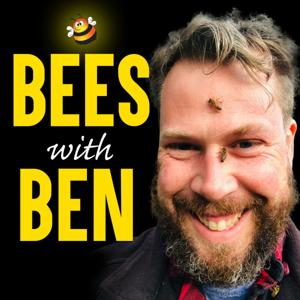


Welcome to Bees with Ben podcast episode 81. Randy Oliver is a commercial beekeeper in California who currently runs around 1,000-1,500 hives with his two sons. He started keeping bees as a hobby back in about 1966, and later obtained science degrees specialising in entomology. In 1993, the varroa mite arrived in California, and after having his apiary wiped out for the second time in 1999, Randy decided to fight back, devouring every scrap of data he could, in order to learn more about beekeeping and provide beekeepers the world over with a resource that is evidence-based and scientifically verified, so that they are better able to make sound, practical management decisions.
Randy is a regular contributor to the American Bee Journal, and his website, www.scientificbeekeeping.com contains a wealth of information, in the form of blogs and articles. He has authored books on beekeeping, and is a popular keynote speaker at beekeeping conventions, as well as having visited beekeepers all over North America and several other continents.
Due to the time difference, Ben had to get up at 2:30 a.m. to record this podcast! Ben describes Randy as a ‘guru of gurus’ and is really pumped for this episode despite the early start. Randy says it’s now almond season in California; premium almond pollination forms a substantial part of his business. He says Californian beekeepers are a bit different to their colleagues in other parts of the US. California is not a very good honey producer but has an advantage due to the early build up and is an important supplier of queens and packaged bees.
Randy tells Ben he had a pretty simple business model that used to work well. The almonds start to bloom in February, and immediately after almond pollination had finished, he retrieved his colonies and split them. He works on selling 1,000 nucleus colonies a year, and they would all be sold by the end of April, resulting in the vast majority of his income being derived from a three-month period. Any honey was a bonus! Randy also used to take his bees to Nevada for the irrigated lucerne crop, but they pretty much looked after themselves for the rest of the year.
The varroa mite changed all that, as it was impossible to leave bees alone for any length of time without management. There was simply not enough food for the bees in the Californian foothills where Randy resides, so he was forced to experiment with pollen subs, and found that in this way he could successfully keep the bees at home.
Randy informs us that he is currently running an experiment using oxalic acid dissolved in glycerine on cellulose sponges in order to combat varroa mites. He says it is organic, cost effective and efficacious. He has also been running a very strong selective breeding programme for varroa resistant colonies, and says he now has 14% of colonies that require absolutely no treatment to stay free from varroa, although varroa-resistance is not yet a reliable heritable trait. He is confident there are no negative traits associated with varroa resistance.
Bees with Ben podcast episode 80 features the father and son combination of Mark, the eccentric ‘The Bush Bee Man’, and John (his son) who is responsible for holding the camera. Their website describes Mark as a ‘quintessential farmer from the Australian outback region of the Riverland’. He is noted for his humorous YouTube videos, and Ben struggles not to laugh as he recounts Mark’s hilarious attempts to keep his language in check!
Asked first up about the funniest incident on camera, John recalls a time when Mark risked serious burns when he opened the radiator cap on their vehicle. Mark reckons John won’t be able to get rid of him that easily! Mark says the whole process of working with bees has been a bonding experience, and John agrees that it has brought them closer together.
John explains that he runs a video production company. He was originally employed by Channel 10, and the bee work was an opportunity to showcase his talents - but eventually became a full-time job. The success of the videos has enabled him to invest in equipment and has also helped his parents to build up their honey business. John quips that a ‘rising tide lifts all boats’, whereupon Mark immediately accuses him of being some sort of philosopher!
Mark admits that he didn’t know how much effort went into making a video production, and that it’s ‘pretty intense’. They started out with a second-hand mic that John bought from the Op Shop for $5. Mark says that one of the hardest parts about prolonged filming is keeping his smoker alight - he says that attracted plenty of comments early on.
Mark confirms that they are up to nearly 50,000 subscribers on their YouTube channel and sends a big thankyou to their Patreon supporters. John reveals that they shoot a month’s worth of content in two and a half days, and that eighty minutes of film is cut down to twenty in the finished product.
Mark thinks for a moment before declaring that his biggest mistake was, ‘Probably starting - but then you fall in love with them (bees) and there’s no hope for you!’
He admits to being surprised at how much manual labour is still involved in beekeeping, compared to other agricultural pursuits, but says that may be a good thing in that beekeeping won’t get taken over by big business. He tells Ben that he also has an almond orchard, which he established thirty years ago, and that prompted his foray into beekeeping. He recalls that when he first planted his orchard, the locals couldn’t understand why he would only plant a single crop, as opposed to a variety of fruits which could be harvested all year round. Mark says the industry has exploded in recent years, and that is now common practice to plant thousands of acres of almonds.
Mark says more farmers’ markets are definitely on the agenda for the future, but that finding the time is a problem at the moment. He is amazed at how many people come up to him at markets quoting the number of a video episode - then he has to look it up himself to see what they are talking about!
Regarding content, John says they plan a lot better now, but originally, he would simply say to Mark, ‘Dad, I’m coming up for three days; figure out some shit we can film!’
https://www.youtube.com/c/TheBushBeeMan
In the Bees with Ben podcast episode 79, Ben chats with Jay Curtin, the CEO of Australian Honey Ventures, based in Western Australia. The AHV website describes the business as ‘a 100% Australian privately owned aggregator of Australian honey with impressive honey inventory levels capable of supplying packaged honey products to export markets’. Through ‘collaborative relationships with beekeepers and distributors, and product innovation in the medicinal, endurance racing and well-being markets’ AHV claims that it is well on the way towards a target of brokering at least one third of Australia’s total commercial honey production by 2027. And by investing in product development and marketing, AHV aims to lift the value of Australian honey and return higher prices to beekeepers. Wow!
Jay also highlights the predicament of beekeepers as being similar to that of dairy farmers; traditionally, apiarists have not been getting a fair price for their honey in an industry controlled by a few large players that was rife with price-setting. Jay remembers hearing of jarrah honey from WA selling for $500 per kilogram overseas at a time when local producers were receiving a mere $12 per kilogram. She says she hates seeing Aussies being rorted; AHV’s business model is to identify exciting and lucrative sales opportunities overseas, and then pay beekeepers a high upfront price for their honey. In addition, beekeepers also receive a quarterly profit share, and using AHV’s deal with Kuwait as an example, this means that local apiarists can expect a return of about $33 per kilogram for TA35+ honey, as opposed to $4.80 per kilogram from the major local packer.
Jay can’t understand why jarrah honey has previously been touted as the ‘be all and end all’. She says we need to market ourselves as a powerhouse of medicinal honey, with a whole range of attractive varieties, each with its own unique flavour. She says many people in the Middle East don’t actually like the taste of manuka honey but eat it anyway as it is a luxury item with medicinal properties! Manuka has, however, paved the way for export opportunities for Australian honey as it has desensitised overseas markets to high prices commanded by medicinal honey.
Australian Honey Ventures is currently engaged in a drive to raise new capital. The company has earmarked $1 million for marketing in the next twelve months and is in the process of building a state-of-the-art processing plant. They are also negotiating with Woolworths to supply the domestic market and are intent on devising new science to accurately measure the medicinal properties of Australian honey. Presently the top rating for medicinal honey is TA35+; some Australian honeys have raw test results up to TA66 but are unable to be labelled as such because this is beyond the scope of the current procedures, and Jay is convinced we are missing an opportunity in this regard.
Jay is also excited about AHV’s new brand ambassador, prominent TV personality and former professional rugby player, Nick ‘The Honey Badger’ Cummins. His nickname is a fortunate coincidence since it has nothing to do with his love of honey. Jay explains that although Nick may have lacked size and speed in comparison to other players, he made up for any other shortcomings with a ferocious on-field nature. Likewise, the honey badger will take on far larger creatures thanks to its tenacious character and an iron jaw! Nick lives ‘off the grid’ in the midst of a national park; he uses solar power and grows much of his own food. He has declared his association with AHV to be a ‘match made in heaven’ and has actually bought shares in the company.
https://australianhoneyventures.com.au/
PODCAST EPISODE 78 of the Bees with Ben podcast features Kevin Tracy, the queen bee guru from Queensland’s Gold Coast. Originally from Chicago, Kevin says he’s more Australian than Australia, but he still hasn’t managed to lose the tell-tale accent (he claims it is 100% Queenslander!).
Kevin is the owner and manager of BeeZone Apiaries Queen Bees and Training, and besides producing queens, honey and delivering pollination services, he also offers comprehensive training for apiarists, and in this capacity has educated beekeepers across the country. He is a member of beekeeping associations in four states, as well as being actively involved in the Australian Biosecurity Bee Emergency Response Team (BERT) and the Australian Queen Bee Breeders Association, and assisted in the South Australian Government’s Bushfire Recovery programme and with the ‘Outback Academy’, an indigenous not-for-profit organisation. Kevin is also in demand as a guest speaker, and has a very entertaining style, as you will no doubt discover.
Kevin says he initially purchased a couple of hives as he thought bees were cool and fitted in with his permaculture lifestyle, but admits to knowing nothing about them at the time - a big mistake in retrospect, since he was stung so severely that he was comatose for three days. Eventually he returned to beekeeping and became focussed upon the production of queens. He says there is a certain magic or mythology that surrounds the creation of queens, but that in reality it is actually quite simple. Kevin says he is convinced that everyone should produce their own queens and is committed to teaching apiarists how to achieve this. He’s on a mission and will travel anywhere to fulfil this objective.
When asked to describe the perfect queen, he unhesitatingly replied, ‘Elizabeth!’ Seriously, Kevin says a good queen is the one that does what you need for your colony - colour or appearance is of no significance. Interestingly, he says the hardest part of creating queens is the timetable.
We also talked about pests and diseases, and the challenges of keeping bees in south-east Queensland. Kevin provided a fascinating insight into his selection process for queens, whilst reiterating that he is a big fan of ‘local vigour’. The controversy surrounding feeding bees was covered in some detail, and Kevin revealed his pet hate - the Dunning-Kruger effect. This may be defined as a ‘cognitive bias in which people overestimate their knowledge of ability in a specific domain’. Unfortunately, according to Kevin, it is prevalent in some bee groups!
Kevin is incredibly knowledgeable and quite a character. Do queen bees have crowns? And why, given the choice of any historical figure, would Kevin choose to share a coffee with Joan of Arc? You will have to listen to the podcast to find out more!
https://www.facebook.com/beezoneapiaries
Welcome to episode 77 of the Bees with Ben podcast!
It has been said that age is of no importance unless you are a cheese, and that the only thing that comes automatically as a result of old age is wrinkles! Bill Vaughan once remarked that, ‘By the time you’re eighty years old you’ve learned everything - you only have to remember it!’ But, jokes aside, it has also been observed that life is about the accumulation of wisdom, love and experience, and of obstacles overcome. Those who improve with age are said to embrace the power of personal growth and to replace youth with wisdom and understanding. At the ripe old age of eighty-seven, Michelangelo declared that he was still learning.
This week’s episode is something of a departure from the norm, and is devoted to my dear friend Keith Johnson, a hobbyist beekeeper from south-east Melbourne. In his eighty-two years on this Earth, Keith has amassed a wealth of knowledge and wisdom that is often dispensed with a healthy dose of humour! For instance, when I asked him about the most important lessons he had learnt during his lifetime, his immediate reply was, ‘Don’t run barefoot in clover!’
Apparently, he had done just that when only four years’ old and had received a rather painful introduction to the amazing world of bees when he was stung on the feet. Keith also counselled that it was best not to meddle with electrical wiring, since he had once cut a lead that had almost sent him to God. He has broken quite a few bones over the years, and recently a ladder gave way underneath him, resulting in a crushed vertebra. His doctor had some sage advice, telling him that it is best that older people do not climb ladders!
Keith was born in Brisbane on January 1st, 1940 and can still remember food coupons and the sound of the air raid alarm that was trialled in his neighbourhood. His second encounter with bees occurred when he was six years of age and living in the Brisbane suburb of Coorparoo. Keith recalls watching Mr Fleet (a beekeeper from up the road) removing a swarm, but was particularly fascinated by the apiarist’s car, as there weren’t too many vehicles around back then.
Later, Keith moved to Melbourne where he established a couple of hives. He was a regular customer at Redpath's Beekeeping Supplies, which opened its doors in 1964 and is still in business today. At the time it was owned by Norman Redpath, and Keith purchased his book, A Guide to Keeping Bees in Australia; a publication that was to become his ‘bee bible’.
Fast forward a few years and Keith invested in two Flow Hives. He loves the Flow Hives due to the ease of extracting honey. In 2018 he harvested over 70 kilograms, but the weather has not been the best in the last couple of years so honey production has been a bit slower. Keith’s wife of fifty-eight years, Shirley, also loves the bees, but is yet to be persuaded to don Keith’s beekeeping suit.
I’ve known Keith for four years now and we have a fantastic friendship. I reckon he has aged a bit like a good bottle of red. Plus, Keith splits his hives to manage swarming, and after doing all the hard work, gifts me some big fat boxes of bees!
Podcast Episode 76: Gruffydd Rees from Carmarthenshire, Wales UK
It is always inspiring to meet beekeepers from all parts of the globe who are passionate about caring for honey bees - and producing pure, raw, local honey - and Gruffydd Rees is a perfect example. Hailing from South Wales, Gruffydd was originally gifted a hive by a local farmer, and from humble beginnings at the bottom of his parent’s garden, this quickly multiplied into around a hundred hives dotted around the countryside of rural Carmarthenshire. In 2010, along with his wife Angharad, he founded Gwenyn Gruffydd, a small business bent on producing the highest quality, all natural, untreated, 100% raw, Welsh wildflower honey. Even his two young sons get involved! Gwenyn Gruffydd’s honey is single origin, never blended, and undergoes minimal filtration; numerous awards attest to the quality of the product!
After a small time away over spring its great to be back and I introduce you to Gruffydd from Wales to episode 76!
In addition to premium wildflower honey, Gruffydd produces a range of other items including hampers, beeswax candles, peat-free compost and bee-friendly wildflower seeds. He also offers beekeeping training, mentoring and experience days, as well as a full range of beekeeping supplies. Gwenyn Gruffydd has instituted an ‘Adopt a Beehive’ scheme to help arrest the decline of honey bees and is also active in promoting the benefits of sowing wildflower seeds to provide valuable food and shelter for pollinators.
Even better, Gruffydd is up for a chat, and I am delighted that he was able to feature in our latest podcast. We touched on the proud history of his native Wales, and I was surprised to learn that Welsh is still the first language taught to children - English comes later. We also discussed beekeeping issues peculiar to the region; one unusual problem that Welsh beekeepers have to contend with is woodpeckers making holes in the side of hives! I had not heard of this before and it’s pretty cool, although obviously bad for the bees. Some beekeepers apparently put bird wire around their hives to prevent this from happening. Occasionally, badgers (the closest European equivalent to wombats) can also become cause for concern, as they may knock hives over.
https://gwenyngruffydd.co.uk/
Its been 3 months since the last Bees With Ben Podcast!
Stay tuned over the coming weeks as we have some incredible guests lined up!
PODCAST EPSIODE 75: Col Wilson, commercial beekeeper, Hunter Valley, New South Wales
As life has moved more and more online, it’s often quite easy to find out about a person, their life and business, just by a quick Google search. And while I love the magic and connection and potential the internet and social media has to offer, there is something to be said for living outside of this realm of technological communication. At the end of a seriously busy day, possibly after a seriously busy month or more of work, I have very occasionally reached a point where I have thought how delightful it would be to be able to turn off completely; to not receive emails and messages; to just live in the moment and care for bees and wake up without a million notifications and reminders. Like I said, it doesn’t happen that often, as I love my busy career and life and I am always up for a yarn, but it gets you thinking about the simple life. For that reason, I am thrilled to introduce you to Col Wilson, a commercial beekeeper from the Hunter Valley in New South Wales, for episode 75 of the BEES WITH BEN beekeeping podcast. While Col doesn’t have a huge internet presence, he’s a fantastic beekeeper, and it was a total delight to chat with him about the intricacies of his beekeeping practice.
This episode is a deep dive into the life of a commercial beekeeper – this is the real deal, no glossing over the truth, no prettying things up, no marketing. It shows the real passion and the real challenges that face commercial beekeepers day in and out. It’s a story about the daily (and seasonal) highs and lows that come part and parcel with the job. It unpacks how beekeepers must learn to cope with and adapt to the weather in a country where weather conditions can be totally extreme and harsh. It’s about what it’s like to live in the marvellous and mysterious Australian bush, feeling in awe of it but also sometimes frightened by its strength and natural power. It’s a chat about loving bees, and loving honey, and doing whatever you can to make those passions your career. Commercial beekeepers are hard workers, and I am thrilled to introduce a beekeeper to the podcast who lives very much in the real world of beekeeping. Tune in to hear Col and I get down to the nitty gritty, the ups and downs, of being a commercial beekeeper in Australia.
PODCAST EPSIODE 74: Michael Johnson, Co-founder of The Basin Backyard, Knoxfield, Victoria
The Melbourne suburb known as The Basin (of the City of Knox) is, as the name suggests, a basin-like area surrounded by the majestic Dandenong Ranges. A part of the world I know well, I was over the moon when I first stumbled upon a fantastic bee business aptly named The Basin Backyard – a garden paradise in the outer eastern suburbs with an abundance of edible plants, as well as bee mentoring and beekeeping classes, and a fantastic supply of local honey and delicacies. Heaven! For that reason, I am delighted to introduce Michael Johnson, co-founder of The Basin Backyard, to the BEES WITH BEN beekeeping podcast for episode 74.
Michael and Meredith Johnson have lived in The Basin for over 25 years, and purchased their current house as a renovators’ delight, which they quickly set about making their home. Their dream renovation included a garden, which at the time was merely lawn and pittosporums. With something more ambitious and complex in mind, the bee-loving couple set about making a native/edible garden that they could share with wildlife and humans alike. As their once-humble garden grew to house over 70 varieties of edible plants, they decided in 2009 to branch out further and turn their garden into what is now known as The Basin Backyard. A garden and bee-related business in Knowfield open to the public.
When asked about the vision behind The Basin Backyard, the couple share a humble but profound idea that has been at the core of the venture from the beginning: “The Basin Backyard was and still is about thinking about where your food comes from, and if you have land (no matter how small) what you can grow on it.” The couple have made this happen through the creation of the garden itself, but also through incredible workshops that teach the public about all kinds of edible processes, from honey production and beekeeping to workshops on building an edible garden, making salami, making cheese, and fermenting! The Basin Backyard is a garden, a store, an educational facility, and a warehouse – a fantastic resource and space for bee, food and garden lovers alike.
Tune in to hear Michael and I chat about how The Basin Backyard grew and grew (literally and as a business).
https://tbbyard.com.au
PODCAST EPSIODE 73: Nat and Shane, Beekeepers and Founders of Wondermazing Honeybees, Macedon Ranges, Victoria
When you run a bee business, thinking up your business name is a big deal. For me, having a name starting with “B” was very helpful, and the sing-song nature of Ben’s Bees felt right from the start. However, if my name wasn’t Ben, and I was searching for a business name that could encapsulate all the incredibleness that bees offer humans and the planet, it would be a hard task. How can one name sum up all that gloriousness? Well, I do know two people that got it right —Nat and Shane from Wondermazing Honeybees — a fantastic bee enterprise based in the foothills of Mount Macedon. I am delighted to introduce the bee-loving couple to the BEES WITH BEN beekeeping podcast for episode 73.
This is a bee love story (and you know that’s my favourite kind). As Nat and Shane explain, their home near the stunning Macedon Ranges – about 65 kilometres from Melbourne – is a wonderful home for bees, especially in springtime where the air if filled with the buzzing of happy bees: “Even before we became beekeepers, the hillside buzzed and we thought it was the perfect location to have a beehive. We caught our first swarm and completed our first beehive 'cutout', rescuing and relocating a beehive from where it was not wanted in the wall of a house. We just loved working with the bees!”
Now Nat and Shane run a successful bee business with the fantastic and appropriate name Wondermazing Honeybees. The couple love working together, removing and rehoming swarms and unruly nests, making honey, developing recipes for delicious mead cocktails and selling happy honeybees to the Victorian community. Tune in to hear about how this bee-happy couple are bringing the joy of bees to the Macedon Ranges.
https://wondermazinghoneybees.com.au
https://beeremovals.com.au/
From the publisher's feed

1,048 Listeners

37,610 Listeners
770 Listeners
194 Listeners
1,219 Listeners

316 Listeners
235 Listeners
130 Listeners
319 Listeners
12,486 Listeners