
Sign up to save your podcasts
Or

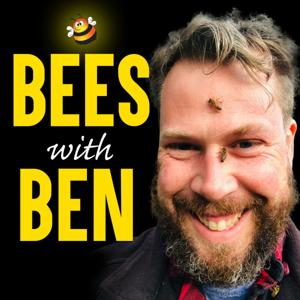


PODCAST EPSIODE 72: Crispin Boxhall, Beekeeper and Beekeeping Educator, Petwood, South Australia
As some of you know, the Almond Pollination and Beekeeping Field Day held annually (pre-COVID) at Renmark in South Australia is a real love of mine – it’s kind of a bee-nerd fest, if I am honest. Coming together with a group of passionate, dedicated beekeepers is an absolute delight; I find myself getting into deep and meaningful bee chats and coming home with incredible new information about bees and apiary practices. It was at this incredible field day, three years ago, that I met Crispin Boxhall, a passionate beekeeper and beekeeping educator located in Petwood, South Australia, and I am delighted to introduce him to the BEES WITH BEN beekeeping podcast for episode 72.
This fascinating chat goes in-depth about entomovectoring – a new method being tried out by researchers from the University of Adelaide that, according to an article published on Entomology Today, “uses bees to deliver spores of a parasitic fungus to prevent the fungus that causes the brown rot from colonizing the flower”. What is brown rot you ask? It’s a fungus that attacks cherry trees, ruining the fruit (a simple Google image search on the issue will bring tears to your eyes!), and costing the cherry industry $150 million per year! As Dr. Katja Hogendoorn explains in the article, bees can be used to deliver a separate parasitic fungus to the cherry trees which prevent the brown rot fungus from colonising the flower. It is this process that is known as entomovectoring, and if the method is proven successful, it could be used instead if spraying insecticides. Incredible news!
It turns out that Crispin has great insight into this fascinating new method of controlling brown rot, and it was a total joy to learn more about this process through our chat! Tune in to hear Crispin and I chat about the fantastic Renmark Almond Pollination and Beekeeping Field Day, his beekeeping and bee education business in Petwood, and to learn more about the fascinating process of entomovectoring.
https://crispinsbeekeeping.com/author/crispin/
https://entomologytoday.org/2014/09/25/entomovectoring-uses-bees-to-fight-fungus-with-fungus/
Hive Buddy is a new place for beekeepers to learn, contribute and grow together with their beekeeping. It has been put together by some Australian beekeepers with the hope to finally create a place where beekeepers can increase their confidence and competence in both an informal setting and through more organised mentorship groups.
Hive Buddy is a really relaxed (and free) experience sharing platform that creates a positive culture that supports all types of beekeeping and any stage of a beekeepers journey. Doesn’t matter if you’re just getting started or been around it for years, there’s something for you.
As we all know beekeeping can be daunting and confusing, especially when you just start out. The Hive Buddy online mentorships are meant to feel like you have a close friend near you when you need it. The mentors have been carefully selected for variety of personality combined with different experiences and areas of interest. No two mentors are the same but they all have the ability to bring competence and confidence to you and your beekeeping.
I’ve joined as a mentor on Hive Buddy and there are many other amazing mentors there also. We have an online catchup every two weeks where we discuss issues that have come up and discuss solutions and seasonal aspects of beekeeping. It doesn’t necessarily matter if you aren’t from the same place as your mentor, the discussions are always interesting and will be an opportunity for you to learn and share. It’s not meant to be a teacher and student approach but more a supportive group that solves problems together. I love being part of this and can see the confidence that this will bring to beekeepers from right across Australia.
General info - https://www.hivebuddy.com.au/
Hive Buddy platform - https://members.hivebuddy.com/
Mentors - https://www.hivebuddy.com.au/mentors
Mentorship programs - https://www.hivebuddy.com.au/programs
Email - [email protected]
PODCAST EPSIODE 71: Bron Barton, President of the South Gippsland Beekeeper Club, Korumburra
With the rise of bees in the consciousness of the public as people come to realise their role as the world’s most vital pollinators, beekeeping clubs have also risen in popularity. Beekeeping clubs offer a range of amazing resources for new and professional beekeepers, but they are especially useful for those just starting out or traversing the early stages of their hobby or career. With COVID-19 bringing a halt to some face-to-face activities and club sessions, beekeeping clubs are finding new ways to connect with their members while we wait patiently for life in much of Australia to open back up. It’s important for the bees, but also for our mental health, to keep connecting with others about things you love, and I have seen how beekeeping clubs have brought incredible joy and belonging to so many people over the years. For this love of beekeeping clubs, I am delighted to bring Bron Barton, President of the South Gippsland Beekeeper Club to you for episode 71 of the BEES WITH BEN beekeeping podcast.
Reflecting on a fantastic piece of writing by Bron from 2016, the third season of the South Gippsland Beekeeper Club is a “tale of sadness, excitement, thrills and eventual triumph”. Bron is candid about the ups and downs of the season, describing it as “quite a mixed bag” of experiences. There were huge swarms that would “surprise and shock even the most experienced and hardened beekeepers”. Bron’s incredible sense of humour shines through as she describes the Italian bees, who had been feasting on Chianti and Bolognese, that took off in droves with “Squeals of laughter and loud rambunctious raspberries were blown as they flew away again and again and again!” As Bron and Mr B – the two “Grand Poobahs of Ineptitude” – check in on two apiaries to see how their colonies are faring, readers are taken on a wild ride. There is much learning that happens along the way (not to mention a sting or two) – a delightful and hilarious account of the everyday experience of learning to keep bees.
Tune in to hear Bron and I chat about the importance of beekeeping clubs, her role as the President of the South Gippsland Beekeeper Club, how she started keeping bees, and why bee education is so vital to the health of the planet and the joy of humans.
http://www.southgippslandbeekeepers.org.au
PODCAST EPISODE 70: Dr John Roberts, entomologist and bee expert at the CSIRO, Australia
There are amazing Australians working to keep the country and the planet healthy and disease-free. We have all seen the incredible work that healthcare workers are doing day in, day out, to test, and vaccinate people from catching COVID-19, as well as those nurses and doctors doing the tough job of treating patients with the virus in hospitals. Luckily, there are also incredible scientists and environmentalists working hard to keep the environment safe, and that includes Australian bee populations. For the first time in 15 years, bees are being imported into Australia for a very special purpose. As Tim Lee for ABC Landline explains, the foreign imported queen bees have special traits to protect them against the blood-sucking pest, varroa mite, which has devastated bee colonies all over the world, with Australia being the only continent still varroa-mite free. It is for that reason that I am thrilled to introduce you to entomologist and bee expert at the CSIRO John Roberts for episode 70 of the BEES WITH BEN beekeeping podcast, so that he can fill us in on these new breeding and importing programs.
But to begin, what is varroa mite, you ask? Varroa destructor (Varroa mite) is an external parasitic mite that attacks honey bees, Apis cerana and Apis mellifera, and can only reproduce in a honey bee colony. It is also the parasite that has the most devastating effect on the beekeeping industry overall. The mite attaches itself to the body of the bee and weakens it by sucking its blood; this occurs on both adult bees and developing brood, especially drone brood. During this terrible process, viruses spread, such as deformed wing virus. In turn, this process weakens and shortens the bee’s life. The emerging brood may be born without legs or wings or suffering deformations. If the infestation grows, varroa mite can kill whole bee colonies. Australia has been diligent in keeping varroa out of the country, but this breeding project that imports varroa-resistant bees into Australia is the industry’s most recent approach.
John’s experience and research has included studies on the genetics, pathogens and management of emerging Varroa and Tropilaelaps mite pests in Papua New Guinea, conducting the first Australia-wide study of honey bee viruses and other pathogens affecting honey bees, and examining genetic and nutritional factors associated with the honey bee fungal pathogens, Nosema and chalkbrood.
At the CSIRO, his primary role has been to screen bees for the presence of viruses, which makes this recent breeding and importing program an exciting move for him – he told the ABC that he hopes Australia can make the most of breeding programs such as this one to “bring in those genetics.” Furthermore, he would love to see Australian apiarists continue to develop this strain of varroa-resistant bee, which would be a “landmark for the industry.”
Tune in to hear John and I discuss his role at the CSIRO, the nasty varroa destructor, and the potentials of breeding and importing disease-resistant bees into Australia.
PODCAST EPISODE 69: Stan Taylor, beekeeper and author of Stan’s Bee Book, Western Australia
Ben’s Bees has given me so many incredible opportunities. I love the people I meet each and every day through running a business built on passion. This includes activists and entrepreneurs doing incredible work that helps the environment and makes living on this planet a more joyful and sustainable experience. But of course, it is the beekeepers themselves that hold an extra special place in my heart – by creating the BEES WITH BEN beekeeping podcast I have had the utter privilege of meeting the most amazing keepers and hearing the varied stories of how they came to love bees, keep bees, make bees their life and possibly career. This next podcast is an extra special example of just that: please welcome 92-year-old gem, beekeeper and author Stan Taylor for episode 69 of the BEES WITH BEN beekeeping podcast.
Now, there is something extra special about this particular podcast – Stan is deaf, which meant that to share his story I had to send him questions via text message, and he was then able to respond verbally for the program. Even just this element of the process of the conversation feels special; the ability to overcome adversities of different kinds to connect and build community is something I think about more and more each day.
Born in 1929 in Manchester, England, and trained as an accountant, Stan migrated to Western Australia in 1950 where he was struck a local job shortage; this led him to work for the legendary Rob Smith, helping out with Karri planting and flowering. Before he knew it, Stan had leased himself some hives, and for almost 70 years, he has been keeping bees and learning from them every step of the way. Stan’s story is full of heart-warming gems: the way he would drop a handkerchief gently over a bee so he could listen to it “talking”; and the time, when preparing for a bush fire to sweep through, an unusual man – a kind of “bee whisperer”– wearing nothing by thongs and bathers appeared, completely unperturbed by the savage bees that were swarming Stan and his friend. ““They never sting me,” he said, and they didn’t, said Stan, although he has no idea why.
Tune in for this special episode of beekeeping tips that come from years of experience, advice for new beekeepers, and enthralling stories of almost 70 years of beekeeping in rough Australian terrain.
PODCAST EPISODE 68: Simon Mildren, fire fighter, beekeeper, and CEO/founder of HiveKeepers, Australia
Some people love hot-rods, while others get more excited over diamonds; high-end designer handbags; fine china; boats; the fanciest pair of sneakers. There are many lush collectables that people desire with all their heart and do whatever they have to do to get their hands on…. steal, even! Now we all know it’s a common and unfortunate occurrence that fancy cars and jewellery get swiped, but what about if you are a BEE LOVER?! Did you know that beehives get stolen from their locations on a semi-regular basis? That’s right, you heard me correctly – people thieve bee colonies as they are worth a decent amount of money, produce honey and have the capacity to generate income. Or they can be sold on. Regardless, I am very happy that our next guest on the BEES WITH BEN beekeeping podcast is doing the work he is, finding technological solutions to stop bee theft in its tracks – please welcome fire fighter, beekeeper, and CEO/founder of HiveKeepers, Simon Mildren.
With over 10 years of beekeeping experience, Simon has developed a business composed of an incredible team of innovators – including beekeepers, systems architects, data analysts, engineers, and researchers – who are passionate about bees and driven to create a sustainable future for our food systems. One of their remarkable contributions to that future is Hive Guardian: a tiny, discreet, lightweight and super-dupa rugged battery-powered GPS beehive tracker with up to 3 years of battery life for beehive tracking and theft recovery. Placed inside the hive, keepers can have peace of mind and stay cool, calm, and collected knowing that their bees are safe and haven’t wandered off in the arms of a thief overnight! The fantastic reach of the HiveKeepers network offers Australian beekeepers the best coverage available without the expensive costs of a satellite communications link, which can save you thousands! You can login to see the movements of your hive at any time, set alerts to let you know if there is suspicious activity, and obtain a precise GPS if your hive does happen to go walk about! HiveKeepers also make an incredible app that enables keepers to record their hive activity and better understand the life cycle of their bees.
Tune in to hear Simon and I chat about his remarkable company HiveKeepers and how his team are using technology to help bees and build a sustainable future.
https://www.hivekeepers.com
PODCAST EPISODE 67: Trevor Weatherhead, beekeeper and chair of the AHBIC, Peak Crossing, Queensland
As a baby of the 1970s, I have a sense of nostalgia and fondness for that era. The social change, the focus on environmental issues, the passion that people had for protesting for a more liberated and conscious society – not to mention the fashion! I often send my mind back to imagine what it would have been like to be a beekeeper at that time, and my dream is idyllic. While we have the unbelievable privilege of living in a time where bees are finally getting the attention they deserve, I imagine it would have been exciting to be around in the 1970s, when people were really starting to think about the connections between plants, animals, chemicals and human wellbeing, with every new realisation being an exciting revelation. For that reason, I am thrilled to introduce you to a very learned, passionate and devoted human being who started his beekeeping career over 40 years ago and continues to honour bees and their contribution to saving the planet – please welcome Trevor Weatherhead, beekeeper and chair of the Australian Honey Bee Industry Council (AHBIC) for episode 67 of the BEES WITH BEN beekeeping podcast.
As mentioned, Trevor’s love of bees and beekeeping dates back some time; he bought his first beehive in 1972 and has been addicted to beekeeping since! He then became a commercial beekeeper in 1978 – which is the same year I was born, 42 huge years ago! Trevor then worked as a commercial beekeeper for 24 years, breeding up to 5000 queens per week in the busy season. Due to the physical nature of bees, Trevor retired from the beekeeping game due to back issues; however, he is still very active in the bee community – every bee-related conference or expo or symposium around the globe, Trevor is there! And not alone – with his amazing wife, Marion. Part of Trevor’s ongoing commitment to the world of bees and contribution to the beekeeping community is being the chair of the Australian Honey Bee Industry Council (AHBIC) – a fantastic organisation helping the beekeeping industry in a multitude of ways, including (but my no means limited to) various training and education programs ranging from beginner level to professional certifications; advising and implementing a National Bee Biosecurity Plan; and providing beekeepers and others working in industry with informative newsletters and reports. At present, one of the many issues the AHBIC are tackling is the importation of beeswax from overseas; of the six samples that were imported, all of them contained paraffin wax! In Australia, we have the best beeswax in the world, so to learn that imported beeswax contains non-beeswax products is a reminder of the unethical production processes that continue to mislead consumers today. I tell you what, I never hesitate to support the AHBIC however I can and encourage anyone able to donate to dig deep and provide this incredible organisation with the support they wholeheartedly deserve.
Tune in to hear Trevor and I talk about beekeeping from the 1970s to now, ways of supporting Australian beekeeping, and the great work being carried out at the AHBIC.
https://honeybee.org.au/
PODCAST EPISODE 66: Cate Burton, Founder and CEO of Queen B, Sydney, Australia
Anyone that knows me knows, even before I had a factory space to make all my bee-related products for Ben’s Bees, and even before I had the staff to help me make them, my home was overflowing with handmade bee products. In particular, the kitchen would transform into a candle-making workshop most nights of the week after dinner and candle making would happen late into the night. And although it was hard work, I love making beeswax candles. Making a bespoke candle with the incredible material of beeswax is a special process; knowing that it will be treasured by someone and bring literal light but also a kind of spiritual ambiance to their home space makes it all that much more worthwhile. And while I know that I make a good beeswax candle, I am in awe of the passion and craftsmanship that some candle makers have. Cate Burton from Queen B is one of those special people, and I am delighted to introduce her to my community for episode 66 of the BEES WITH BEN beekeeping podcast.
I met Cate three years ago now, when I popped into her shop in Sydney. And what a delight it was. Queen B makes and sells the most incredible range of 100% Australian beeswax candles and bee-related products; their deigns are unique and their products high-quality. A truly amazing person and an intensely hard worker, Cate came to beeswax candle making over 20 years ago as a form of relaxation to quell the anxieties of her then high-pressure corporate job. This hobby transformed into her incredible business, Queen B: she has now made well over 2,000,000 candles without deviated from her handmade process. In turn, this imperative to make her products by hand extends to beeswax wraps, and Cate was the first person to be making and selling handmade wraps for the Australian market. As she states: “Ultimately, we exist to make a difference by bringing realness & simplicity to your life, in turn helping the planet.”
Behind this seemingly simple, yet hugely profound, business mission lies a passion for beeswax — a material far superior to paraffin, a toxic petrochemical — and an incredible work ethic. Despite arriving at candle making to relax her, Cate’s natural drive means that she now works seven days a week on Queen B. But, as they say, find a job you love, and you’ll never work another day in your life: Cate still loves candle making and finds great joy in using her hands and working with such a special material. Also, she uses the most amazing, mind-blowing, romantic candle making machine that is over 110 years old, weights over two tons, and was made by Kurschner in Germany!
Tune in to hear Cate and I chat about career changes, her love of beeswax, the therapeutic aspect of making candles, Queen B, and her love–hate relationship with her fantastic (yet complex) candle making machine.
https://www.queenb.com.au
PODCAST EPISODE 65: Natalie Skovron, founder and CEO of DETOXDEN, Sydney and online
Being a beekeeper has opened my mind and life up to healthy living and expanded my awareness of using natural materials whenever possible. One of the things I have deeply enjoyed about selling bee-related products over the past ten or more years, is watching the way in which consumers in Australia have leaned into buying locally made, environmentally friendly, health-conscious products for their bodies, their homes, and as gifts for their families and friends. I have also seen the rise of great businesses, run by amazing people with huge hearts and creative visions. One of these fantastic individuals is Natalie Skovron from DETOXDEN, Sydney, and I am delighted to introduce her to my community for episode 65 of the BEES WITH BEN beekeeping podcast.
DETOXDEN is an online home furnishing business based in Sydney that thoughtfully selects and sells homewares that are non-toxic, environmentally friendly, and locally made. This includes gorgeous cushions, draft stoppers, dinner sets, throws, wall stickers, tea towels, diffusers, bedding, shower curtains, and candles (including Bens Bees beeswax candles!), among many other fantastic items for the home. With a mission to “inspire a world of healthier homes and spaces,” Natalie supplies non-toxic and high-quality homewares that are made with safe materials and can be used day in day out in the home by ourselves and our loved ones. These products have passed Natalie’s “Dirty Den checklist”— they do not contain BPA, flame retardants, paraffins, harmful pesticides and insecticides, phthalates, PVC, toxic dyes and inks, toxic heavy metals, or volatile organic compounds.
Since COVID-19, we have all come to realise the necessity of a happy home — one that nourishes us and brings a sense of calm and respite from a world that has felt more than a little unstable for some time now. A home is not just a building, an architectural structure; it is a small part of the world where you can feel joyful and safe; somewhere to rejuvenate yourself; somewhere to curl up and relax at the end of a long day. And as our homes are somewhere we have needed to spend more and more time in what feels like never-ending (but necessary) lockdowns (we are currently experiencing Melbourne’s fifth lockdown to date), it is my hope that our homes have become places we have grown to love more than before. For that reason, fill your home only with good quality, safe, beautiful, healthy products so that you can settle in without a worry in the world.
Tune in to hear Natalie and I chat about DETOXDEN and why safe and non-toxic homewares are so important to fully enjoying life at home.
https://www.detoxden.com.au
PODCAST EPISODE 64: David Priddy from Sundew Solutions, Australia
As some of my many jobs include the rehoming of bee swarms and nests and the removal of dangerous wasp nests, I have done quite a bit of thinking about different methods of pest removal. Of course, when it comes to bees, the answer is to do what you can to always save the colony and rehome the bees safely and happily. However, the world of (real) pest removal is a broader field, and one that I continue to learn about. The development of chemicals and technologies used for pest control purposes requires the right people with the right perspective, smarts and values. For that reason, I am delighted to introduce David Priddy of Sundew Solutions to the BEES WITH BEN beekeeping podcast.
Established in 2009, Sundew Solutions is a leading Australian research and development company. With over 25 Australian Pesticides and Veterinary Medicines Authority (APVMA) approvals to date, Sundew is a company at the top of its field, developing innovative state-of-the-art formulations and technologies for professional pest management. Sundew Solutions is a family owned 100% Australian business employing local families and manufacturing facilities in Australia and New Zealand to produce all of our products. Sundew also utilises the services of local Australian research companies, registration professionals, chemical laboratories, and raw materials suppliers. In these ways, keeping business local is super important to Sundew and to David.
David has a whopping 32 years' experience both in Australia and overseas in both the business and chemical industries. His areas of specialisation are strategic marketing, customer relationship management, integrated marketing, brand stewardship, benchmarking, and innovation modelling tools – he is a smart bloke who has spent time working for international companies such as SC Johnson and Sons and Bayer. David is one of very few business managers in Australia who have studied to be a facilitator of Smart Innova Systems from the Israeli company Systematic Inventive Thinking in Lyon, France 2006. He conducts facilitation workshops with clients to look at specific situations, problems or processes and applies these tools to create innovative opportunities and solutions. David also is also regularly published in the Australian Professional Pest Manager magazine, Australian Environmental Pest Managers Association newsletters and Our Gardens Magazine published by The Garden Clubs of Australia. He is also a regular presenter on business marketing topics and formulation technologies for the pest industry.
Tune in to hear David and I chat about the complexities of pest control technologies and chemicals, why the environment needs to be considered every step of the way when creating and developing chemical solutions, and the passionate story behind the company name, Sundew.
https://sundewsolutions.com.au
From the publisher's feed
1,048 Listeners
37,610 Listeners
770 Listeners
194 Listeners
1,219 Listeners
316 Listeners
235 Listeners
130 Listeners
319 Listeners
12,486 Listeners