
Sign up to save your podcasts
Or

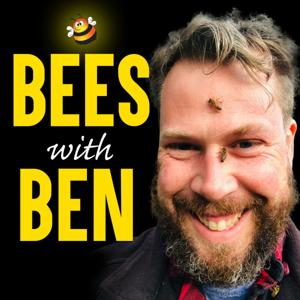


This week’s podcast is something quite different. Bees with Ben episode 86 consists of a candid chat with commercial beekeeper Tommy Daniels, from Melbourne’s Yarra Valley. Candid because Tommy had no idea that he was being recorded, as Ben called him under the guise of merely having a friendly chat. Ben explains that sometimes beekeepers are quite reticent, and he wanted to make their conversation raw and natural. Of course, immediately after the phone call, Ben called Tommy back to ask for permission to use the recording, which was duly granted - after a few short edits!
Given the fact that Tommy was unaware he was to be the subject of a podcast, one thing that this episode does demonstrate quite clearly is that beekeepers can certainly talk! Tommy reckons he’s a bit burnt out at the moment. He has over 1000 hives to look after, and says his bees are happy and there is a bit of nectar around, but not much honey coming through.
Ben wonders whether Tommy has seen any of the effects of climate change; Tommy says that 20 years ago honey flows were completely different and much more significant than today. The accepted average earn per hive for pollination and honey combined used to be $500, but now it’s more like $300.
It is obviously apparent that Ben and Tommy could talk all night. Ben gets a text that dinner is ready, so he signs off, but not before Tommy makes that berage that most beekeepers love, a hot cup of tea!
The podcast series where we put the spotlight on the best in the pest business. Hear their stories, their successes, their failures, and ultimately what lead them to where they are today! Join Jay Turner as he interviews some of the most inspirational pest managers in the Australian Pest Management Industry.
Check it Out!
https://podcasts.apple.com/au/podcast/pestie-profiles/id1586241937
HELLO, NAME IS SIMON MCEVEDY
I'M THE FATHER OF TWO GIRLS
I'M INFANTRY BY TRADE & NURSE BY PROFESSION
I'M ALSO A VETERAN
WHO HAS FINALLY FOUND A HOBBY @ THE RIPE OLD AGE 49
AND IM ALSO KNOWN AS A NEWBEE BEE KEEEPER
I HAVE NAMED BOTH OF THE HIVES
ONE IS A CONBINATION OF MY DAUGHTERS NAMES ELLE & LEAH
AND JOYBELL IS NAMED AFTER MY MOTHER
AS YOU CAN SEE, I HAVE BEEN A LITTLE CREATIVE WITH THE SPRAY PAINT ON THE OUTSIDE OF THE HIVE
BEE CREATIVE I SAY
AT THE START OF LOCKDOWN
I STARTED SEEING POSTS ON SOCIAL MEDIA ON FLOW HIVE AND GOT ME INTERESTED
BY CHANCE RSL ACTIVE PUT ON URBAN BEEKEEPING CSE AT BOX HILL RSL
WHERE KATRINA AND I FORTUNATE ENOUGH TO MEET BEN & CHRIS GRAY
I HAD GENERAL INTEREST IN BEES BEFORE BUT HALFWAY THROUGH PRESENTATION
BENS CHARISMATIC PERSONALITLY & PASSION FOR ALL THINGS BEES
GOT ME HOOKED & HE HAS ONLY A POSITIVE INFLUENCE SINCE THEN
BEN TEACHER IN THE TRUEST SENCE OF THE WORD
HE PASSES ON HIS KNOWLEDGE FREELY – CALMING MANOR – GIVES CONFIDENCE IN ALL AREAS OF EXPERTISE.
HIS PROFESSIONALISM IS SECOND TO NONE
THESE ARE ALL THE THINGS MY BEES HAVE GIVEN ME
IN AUG 2021 RECEIVED FIRST TWO NUCLEUS HIVES
REGISTERED AS AN OFFICIAL BEEKEEPER WITH AG VICTORIA
YOU CAN HAVE UP TO 5 HIVES ON RESIDENTIAL PROPERTY
FORTUNATELY, NEXTDOOR NEIGHBOUR IS A CARPENTER WITH VET CONSTRUCTIONS
AND HE SUPERCHARGED COFFEE TABLE – SIDE OF ROAD
TURNED INTO WORKABLE HIVE STAND
SO, WHAT HAVE BEEN THE MAIN BENEFITS
FIRSTLY, I FOUND A HOBBY
THIS HAS GIVEN ME PURPOSE
AND THIS PURPOSE GUIDED ME IN A POSITIVE DIRECTION OF LEARNING
LOTS OF YOUTUBE VIDEO, READING BOOKS, JOINING ONLINE BEEKEEPING GROUPS & ENABLED TO CONNECT WITH OTHER BEEKEEPERS
THESE CONNECTIONS ENABLED ME TO RE-ENGAGE WITH OTHERS
MAKING CONNECTIONS IS SOMETHING I HAVE FOUND VERY DIFFICULT.
AND ISOLATION IS SOMETHING THAT AFFECTS MANY VETERANS.
On Instagram veteran_bee_therapy
Episode 86 of the Bees with Ben podcast features a young, up-and-coming beekeeper, Stephanie Parsons. Ben met Stephanie a few weeks back when he was asked to talk at Geelong Beekeeping Club and was impressed by her obvious enthusiasm, upbeat personality and love of beekeeping. Steph is living proof that beekeeping can become a rewarding profession for young people - and particularly young women - in the 21st century, especially those that prefer learning in a practical environment, and don’t quite fit the typical ‘nine to five’ routine.
Steph works for Edmonds Honey, a commercial beekeeping operation commenced by John Edmonds and his father in 1982. Today, Edmonds Honey has approximately 500 hives in western Victoria, and produces pure, chemical-free honey from bees that forage in natural bushland. The business is noted for producing queens, and also offers nucleus hives and a comprehensive range of beekeeping equipment through their retail outlet in Mount Duneed, just out of Geelong. John Edmonds was Ben’s special guest a couple of years back in one of the very early instalments of Bees with Ben. He is also full of enthusiasm and has a wealth of experience with bees, not to mention a seemingly unending supply of anecdotes, and is the perfect person to mentor a young person starting out in the beekeeping industry (Steph describes him as her ‘bestie’ despite their age difference).
En route to the ‘secret site’ Steph explains that they have sites everywhere, predominantly on private land, since vandalism is a problem on public or government land - once they even had their hives set on fire! The docile nature of their bees can actually be a disadvantage under such circumstances. Where 'government' sites are used, Edmonds bolt their hives to pallets using three different types of fasteners (inside and out) and are careful to use ‘stingy’ bees as a deterrent near the entrance. They have even gone to the extent of covering their tyre tracks to conceal the location of their apiaries.
One of the things that Steph finds so interesting about beekeeping is that there are so many different approaches, and no right or wrong way to do things. She loves travelling around working on the bees and says John’s stories are really funny. Her pet hate is stocktaking - she reckons she would rather watch an election! Steph loves that beekeeping is not like a typical office job. The working week usually runs from Monday to Saturday; Steph watches the shop on Saturday while John will go out to the bees and pick up cell raisers so they can graft on Monday. There is usually a day of grafting, a day of catching and a day of putting cells out, but it is all dependent on the weather. Sometimes they work well into the evening if they are moving bees or catching queens during daylight saving, but there are no set times and it all works out.
Steph says nobody really knows about beekeeping as a career but describes it as the ‘coolest industry’. She reckons the issue is that all the ‘old fellas’ like John have so much knowledge, but no one coming along underneath them. As for the future, besides adding to her collection of ‘ridiculous' sunglasses, Steph plans to become a professional queen breeder. She says it is a little ‘left field’, without the heavy lifting involved in honey production. She also wants to share information and knowledge, and has her own Facebook page, as well as running all the social media for Edmonds Honey.
https://www.facebook.com/SPBees
https://www.facebook.com/geelonghoney
Episode 85 of the Bees with Ben podcast is co-hosted by Dr Anna Carrucan, a second-generation beekeeper and botanist, and the driving force behind Buukaar Waaruung boutique apiary and artisan honey. Also along for the ride (but taking something of a back seat on this occasion) is Simon Mildren from The Hive Buddy, a website dedicated to bees and beekeepers.
In this podcast, Ben and Anna discuss the merits of the ProtectaBEE all-in-one adjustable hive entrance that is currently exceeding expectations on the crowd-finding site Indiegogo. Not only can the ProtectaBEE apparently exclude pests like wasps, hornets, robber bees, mice and other predators from the hive, but it can also be used to deliver treatments for varroa mites, diseases and pesticide poisoning. The Protectabee’s conical inserts are claimed to mazimise bee movement while establishing an effective physical barrier against predators. Traffic in and out of the hive can be conveniently enhanced (in times of growth), reduced (to aid in winter warming) or even eliminated (when moving hives) by the use of a variety of inserts.
The promotional material cites the research of Dr Peter Kevan, from the University of Guelph, who more then twenty years ago came up with the concept of using bees to carry fungal powders to plants to fight pests and diseases; bee vectoring has since been used to improve the health of crops such as strawberries and blueberries. Likewise, Dr Kevan hypothesized that bee vectoring could be effective in combatting pests and diseases inside the hive. Normally, if powders are placed in a hive, the bees will simply carry them out, however, research has evidently shown that ProtectaBEE facilitates treatment inside the hive, and that the device has potential to reduce varroa mites, as well as effectively treating foulbrood and other pests and diseases.
ProtectaBEE has been designed to fit both Langstroth and Flow hives; it has been featured in Bee Culture magazine, and is simply and easy to install, as well as being relatively cost effective. The first production run is scheduled for delivery in June 2022, and discounted prices are available for prepurchase via Indiegogo. So what do our experts think? You’ll have to listen to the podcast!
https://buukaarwaaruung.com.au/meet-the-beekeeper/
https://get.protectabee.bestforbees.com/landing-page-protectabee1638034795905
https://www.hivebuddy.com.au/
The 4th Australian Bee Congress: Celebrating Honey Bees at the Heart of a Healthy Australia.
Registration is now open for the 4th Australian Bee Congress, to be held at Rosehill Gardens in Sydney from 8-11 June 2022. Proudly hosted by the Australian Honey Bee Industry Council, this year’s congress is particularly auspicious, as it coincides with the 200th anniversary of the successful introduction of the honey to Australia. The Congress Organising Committee has been working hard to make this a memorable event for professional and recreational beekeepers alike, as well as others from a broader agricultural background.
Since the last hugely successful Congress in 2018, we have had to contend with bushfires, floods and a pandemic, but beekeepers and the beekeeping industry - the very cornerstone of Australian agriculture - remains passionate and steadfast and continues to succeed despite mounting challenges. The 4th Australian Bee Congress represents an opportunity, not only to celebrate the historic arrival of honey bees in Australia, but also for the beekeeping community to come together and learn about the latest advances in beekeeping. The Congress will feature an extensive tradeshow, which will showcase the latest equipment, technologies and information. In addition, an array of special guest speakers will talk about cutting-edge approaches and the latest science on keeping bees healthy. The program is currently being finalised, but two guest speakers have already been confirmed.
Dr Nural Cokcetin is a Research Fellow at the ithree institute of the University of Technology, Sydney. Nural’s research focuses on understanding the relationship between bees, the environment and medicinal honey, and aims to support the apiary industry, pollination and human health. She is preeminent in the field of medicinal honey, having previously investigated the antibacterial effect of honey against ‘superbugs’ and demonstrated the prebiotic potential of Australian honeys. Nural is currently engaged in a variety of research projects concerned with the bioactive properties of honey and has attracted a high level of funding and industry engagement, as well as having received numerous awards for research impact and excellence.
The second speaker confirmed for the 4th Australian Bee Congress is Emeritus Professor Ben Oldroyd, of the University of Sydney. Having originally obtained a degree in Agriculture, Ben completed a PhD on bee behaviour in 1984. Since then, he has researched the genetics of honey bees and the evolution of social behaviour. He is intimately involved with the Australian beekeeping industry and is helping our beekeepers breed heathier strains of bees. He has authored more than 300 scientific papers on bees, as well as the authoritative book Asian Honey Bees: Biology, Conservation and Human Interactions, and is currently Chair of the Honey Bee and Pollination advisory Committee of Agrifutures.
The 4th Australian Bee Congress will also feature social events including a reception, a beekeeper breakfast, a harbour cruise and the Congress Dinner. Naturally, a raft of COVID-19 policies is in place to minimize risk to all attendees. If you are passionate about Australian bees, or have anything to do with the beekeeping industry, don’t miss the 4th Australian Bee Congress from 8-11 June 2022 at Sydney’s Rosehill Gardens. For further information including program updates, registration and accommodation visit
https://australianbeecongress.com.au/registration/
Ben likens his special guest for episode 84 of the Bees with Ben podcast to ‘The Jackal’ - everyone has heard of him, but no one has ever seen him! As well as being hard to track down, and something of a character, Joe Horner has developed a reputation amongst Australian beekeepers that approaches legendary status. In particular, the Joe Horner line of queen bees are considered by many to be second to none. When Ben finally does manage to nail Joe down for a chat, he admits to being a bit sketchy about the nature of podcasts, and that computers are, ‘Out of my league!’
But why are his queens arguably the best in the country? Joe puts it down to his selection process. Incredibly, he says that he hasn’t added any new blood in thirty or forty years. All of his breeding stock is contained in hives involved in the commercial production of honey, and honey production (measured per bee) together with brood viability and quietness are important criteria. In fact, Joe’s bees are so docile that he never wears a veil; when he recently harvested honey, he left his smoker on the truck!
Only 10-15% of Joe’s income comes from rearing queens, so selective breeding for improved honey production is doubly important. Inbred lines have been especially productive of late, and this season Joe collected no less than 60 IBCs full of honey from his 700 hives. He also runs a 4,000-acre cattle property and works a seven-day week - or more! Nevertheless, Joe says he never done it for the money, and that he remains passionate about the bees.
Interestingly, some of Joe’s hives have not been shifted for nearly three years, and he imposes a travel limit of around a hundred kilometres. He says beekeeping requires an in-depth knowledge of the landscape and of eucalypt species, together with a real understanding of bees and their characteristics. The demands of maintenance in addition to queen bee breeding means that he is often working 14-15 hours a day just to keep up. Every box of bees that passes through Joe’s extraction plant is weighed to determine exactly how much honey has been produced, and this is instrumental in selection for breeding.
Now 72, Joe followed his father into beekeeping on the family property when he was a teenager in the min-sixties - Joe’s son has since carried on the tradition. In fact, they all live and work on the same property, along with Joe’s daughter and son-in-law. The only other employee is a woman who has been with them for 27 years. ‘She’s family too,’ declares Joe.
What has changed in five decades of beekeeping? Joe reckons production per hive has increased dramatically, especially over the last 10-15 years. He says that selective breeding has also resulting in significant modifications in the characteristics and behaviour of his bees. He has some sage advice for any hobbyist considering making the switch to commercial honey producer - don’t get too big too fast. Joe says you can make a living from 300 hives, and it is best to concentrate on keeping the bees healthy. His apiaries are subject to six extractions per year, with an annual yield of 20-30 kilograms of honey per hive. He uses no chemicals whatsoever and does not have to contend with hive beetles or nosema. He reiterates that he attributes much of this – along with diminished swarming activity - to his work in breeding queens.
Ben asks Joe what he would change, and where he sees the beekeeping industry in ten years? Joe reveals that despite his daunting schedule, he has been battling cancer and is currently receiving chemotherapy. He is looking forward to some downtime so he can paddle down a remote river and says he has always done his own thing, but has no secrets and is happy to share the knowledge borne out of a lifetime of experience.
In episode 83 of the Bees with Ben podcast, Ben chats with Sarah Calleja of Randox Food Diagnostics, a subsidiary of Randox Laboratories. With over 1,300 employees and offices in more than 145 countries, Randox is a world leader within the in vitro diagnostics industry, committed to innovative diagnostic solutions for hospitals, a wide variety of laboratory applications, and food testing. Their vision is to improve health worldwide.
Amongst recent achievements, Randox has launched mobile COVID-19 labs for workplace testing, capable of processing up to 1,000 tests per day. Furthermore, the company has developed the world’s fastest PCR test, with results in 39 minutes, a sensitivity of 98% and a specificity of 100%.
Randox is also a leader in food screening technology, and Randox Food Diagnostics have pioneered a range of honey quality tests, which allow apiarists across the world to confirm the safety and quality of their product, and thereby ensure consumer confidence. The tests can screen simultaneously for the presence of residual concentrations of multiple antibiotics used to rid bee hives of pests and diseases from a single sample of honey. This adds to Randox’s impressive suite of honey screening tests, which also includes an assessment for hydroxymethylfurfural (HMF), an organic compound produced by dehydration of sugars, and which can be indicative of overheating, poor storage or aged honey.
Honey also contains small amounts of enzymes which vary according to floral source and region. These enzymes are instrumental in determining the functional properties of honey and enzymatic analysis is important in determining quality. Randox describe their RX misano as the ‘most modern enzymatic analyser in the industry’. It is capable of measuring diastase, total sugars (glucose and fructose) and colour, as well as HMF, all incorporated into a table -top size unit that requires very little maintenance. The RX misano features a touch screen display, customisable test menus (new parameters can be uploaded by USB), and the ability to export data. It is also extremely accurate and cost effective, making it suitable for commercial beekeepers as well as large honey producers and packers.
Randox also offer in-house analysis and testing. Randox Managing Director, Dr Peter Fitzgerald stated, ‘We are working closely with industry to promote a responsible approach to antibiotic use in food production and we hope that by working with some of the biggest names in the apiculture market, other honey producers will see the benefits of being able to offer their customers complete consumer confidence in a high quality, and importantly, safe product.’
Obviously, the ability to substantiate the quality of their product is of great benefit to apiarists, particularly since the aroma, taste and therapeutic properties of honey are optimised when it is preserved in a raw, unprocessed ‘organic’ state. Screening for antibiotics and enzymatic analysis may seem a rather novel approach for many beekeepers, but it is likely to become increasingly important in the future.
https://www.randoxfood.com/
Episode 82 of the Bees with Ben podcast focusses on the transition from hobbyist to full-time commercial beekeeper, with the aid of Ben’s special guest, Matthew Petersen from Dividing Creek Farm. Matt says he grew up on a dairy farm with a large orchard, and his dad always had five or six hives, so he was bitten by the bee bug very early in life.
However, Matt’s father passed away when he was still quite young, and Matt moved to Melbourne to make money to buy the farm. He tells Ben he started an epoxy flooring business installing hygienic flooring systems in food processing plants, abattoirs, and fast-food businesses. His main customer base came from the food industry, and it gave him some insight into food production. He realized how much he missed the bees and raised nucs to fill in time and to maintain the connection between bees and the farm.
For Matt, the whole reason for raising capital through his business was to enable him to purchase the beef farm near Wilsons Promontory in south Gippsland, where he raises Angus, grass-fed beef - bees were always on the side. But when the bug really kicked in in his mid-20s, Matt found himself juggling a flooring business, a farm, and the bees, and he was simply wearing himself out. He reckons the transition to full-time beekeeper took about seven years and says that any hobbyist wanting to go full-time will experience a similar situation, in that you need capital, a job, or some form of back up until you get yourself established. Ben agrees. Interestingly, Matt reveals that for him, Covid was the final trigger, since lockdowns and the inability to travel interstate meant that he lost much of his flooring clientele overnight.
Ben asks Matt to tell us his biggest highs and lows with bees, and Matt says the biggest high is seeing people consume your product and really enjoy it. His biggest low came this season when he lost 40% of his hives in a flash flood. He had 120 hives set up to go onto red gum on an old, dry creek bed near Bendigo when a freak storm cell dumped 70ml of rain in twenty minutes about 20km upstream. Matthew says there was no warning, and it didn’t even rain where the bees were, but they were struck by a four-metre flood, and he is still finding boxes 15km downstream. Matt says it was heartbreaking, but you only get a sore neck looking backwards!
https://www.facebook.com/dividing.creekfarm
This one is bit of a bonus/extra podcast episode.
I did a presentation at the Geelong Beekeepers Club 18/2/22
https://geelongbeekeepersclub.org.au/
From the publisher's feed

1,048 Listeners

37,610 Listeners
770 Listeners
194 Listeners
1,219 Listeners

316 Listeners
235 Listeners
130 Listeners

319 Listeners
12,486 Listeners