
Sign up to save your podcasts
Or

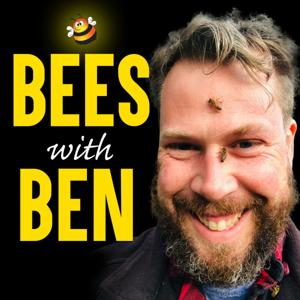


Its been over 3 months since the last Bees With Ben Podcast!
Stay tuned over the coming weeks as we have some incredible guests lined up!
Earlier this year NSW DPI detected Varroa mite in surveillance hives at the Port of Newcastle, and then subsequent areas following more hive inspections. NSW DPI then released the Biosecurity (Varroa mite) Emergency Order 2022 in an attempt to eradicate this parasite that has the potential to seriously impact the Australian Honeybee Industry. This week we chat to Ben Moore from Ben's Bees (our resident bee guru) to get the latest updates on the Varroa Mite outbreak status, we chat about the biology of this parasite, the lead up to where we are now, the future of our honey bee industry but more importantly what our obligations as pest managers are. What can and should we be doing to prevent the spread of Varroa Mite. This episode is a must listen for any pest manager that deals with bees and especially if you are based in NSW! Familiarise yourself with the Varroa mite emergency zone map and get the latest updates here- https://www.dpi.nsw.gov.au/emergencies/biosecurity/current-situation/varroa-mite-emergency-response
https://podcasts.apple.com/au/podcast/pestie-profiles/id1586241937
Episode 107 of the Bees with Ben podcast is likely to be the last for two or three months, as spring
has sprung and Ben is busy contending with his usual hectic workload at this time of year.
This episode is also a little different, as Ben gives us some insight into his journey thus far and offers
some advice for those possibly thinking of setting up a beekeeping business. First of all, it’s hard
work; Ben tells us that his next day off is likely to be Christmas Day, so you have to love the bees to
be in this business.
Back to beginnings. As a chef in the 90s, at one stage Ben used to work 90 hours per week, with two
full-time jobs. Perhaps that was partly responsible for reinforcing the work ethic that is required as a
beekeeper, but working nights with a young family certainly wasn’t ideal. Ben had always been
interested in strange critters, and in 2004 he was offered a job at Amazing Amazon, a shop in
Melbourne that deals in unusual pets like reptiles, fish, spiders and the like. Four days into cleaning
fish tanks, Ben was wondering why he had swapped cooking for celebrities for the bottom of the
barrel in a pet shop, but he persevered and eventually became the manager of the business. In his
downtime he ran a few bee hives, but by about 2008 he was getting right into bees, catching a few
swarms, selling bees, etc. The bees started to take over, and Ben went from five days a week at the
pet shop to four and then three. Then one day about six years ago, the owner of the shop wanted to
talk to Ben about the wages bill, and Ben told him that he simply couldn’t do it anymore. And with
that he became a full-time beekeeper.
Initially, things went well; the income from removing swarms was good, and Ben also started
eradicating European wasps (people were often calling him for bees mistakenly, when they had a
wasp infestation), and this necessitated accreditation with a pest control license. Incidentally, Ben
believes it is important to charge for removal of swarms; it is, after all, a service which requires
appropriate expertise and equipment, plus insurance, certifications, etc., all of which cost money.
Anyway, after about Easter, things started to go quiet. Ben had been pouring money back into his
business but was forced to max out a $40,000 credit card limit to make ends meet. Fortunately, soon
it was September again, and along came some lucrative pollination jobs. Ben points to the
importance of diversification, of finding your niche and of working with people and finding people
you can work with - even if they are from completely different industries.
He also learnt a valuable lesson from the only bad review he has received. One day, when it was hot
and the bees were stinging, a man rang Ben’s mobile for a chat. Ben made the mistake of answering
the phone but his manner was (perhaps understandably) a little short and sweet. Consequently, now
Ben doesn’t answer the phone unless he can give the caller his full and undivided attention.
Ben has some valuable tips about marketing and branding too; he says that every post he puts on
social media is evaluated by three criteria; it must entertain, educate and inspire. He cautions
against undervaluing both yourself and the bees (“If you’re too cheap, it’s a race to the bottom”) and
underscores the value of excellent service, and of staying positive (“Don’t think negative
thoughts….be excited, because the job we do as a beekeeper is a marvelous job”).
Ben says that he is still learning and evolving, and reveals that he once even went to comedy school
in an effort to make his interactions with customers more memorable!
www.bensbees.com.au
Ben Moore is one of the top bee keepers in Australia and has been on the podcast before on episode 16, discussing homelessness, prior careers, police raids and his passion for all things Bees. Given the incredibly serious invasive pest new to Australian shores, the Varroa Mite, we chat what is being done to combat the pest and the impact on the food production if we don’t. Plus we talk why some people are risk adverse when it comes to following their passion.
Check Out The Podcast, One Moment Please
We all have fear. Some are consumed by it, others overcome it. Our inspiring guests take a moment to share their stories of how they have overcome adversity and achieved success. We hope it motivates you to overcome your fears and achieve your full potential.
The guests are varied. Some of which include those leaving the corporate world to become entrepreneurs to ex-prison officers, army parachuting accident survivor turned YouTuber to ex-spies and a Victoria Cross awarded Army officer just to list a few.
Enjoy!
https://onemomentpleasepodcast.com
https://www.facebook.com/OneMomentPleasePodcast
https://www.instagram.com/onemomentpleasepodcast/?hl=en
When we last met Kristofer Fricke, some months back in episode 94 of the Bees with Ben podcast,
he was preparing to head to Africa to work on a couple of beekeeping aid projects. Well, he has just
got back, and Ben couldn’t wait to hear what he has been up to.
This episode of the podcast is also being broadcast on YouTube, and Kris is aptly dressed for the
occasion in what he describes as a ‘Ghanaian smock’. Ghana was in fact his first stop, where he was
to spend three weeks working on a project funded by the German government, in partnership with
QSI, a major European food testing laboratory. The objective was to make Ghanaian honey fit for
export, and the enterprise was rather unimaginatively entitled the ‘Make Ghanaian honey fit for
export project’!
The problem was that although Ghana has lots of beekeepers that are reasonably proficient at their
craft, the honey simply doesn’t measure up to international standards. Kris stayed a week in three
different locations talking to groups of 50-70 trainees about the best practices for harvesting honey,
as well as common problems associated with the top bar hives, which are universally used by
Ghanaian beekeepers.
Quality issues are created by the common practice of harvesting honey at night - primarily because
the bees are less aggressive. However, in the dark, it is easy for beekeepers to contaminate the
honey with brood, or uncapped honey. Kris says that he saw a lot of honey that was cloudy -
indicating the presence of brood - and tasted some which was part fermented, or unripe. Testing
also indicated the presence of significant amounts of smoke in the honey, but Kris doesn’t believe
this is attributable to the use of smokers. It is more likely to be due to the traditional method of
lighting a fire under the hive to chase the bees out before harvesting honey.
Undaunted by the beekeepers’ reluctance to work their hives during daylight hours, on the first day
Kris inspected some hive in which the bees did indeed seem quite agitated. On the second day, three
hives were opened. The first two were reasonably easy to manage, but the third quickly became
very aggressive. Kris admits to perhaps becoming a little complacent due to his previous experiences
in Africa, and was unwilling to admit defeat due to the adverse effect this would have on the local
beekeepers, so he attempted to power through, but was soon forced to abort as people within a
200-metre radius were being harassed by the bees. It took 45 minutes for the enraged insects to
calm down!
A similar incident happened the next day, at a different location. Invoking the mantra that ‘I do not
run from bees’ Kris was attempting to beat a dignified retreat from an angry hive, but soon his face
became covered in bees, and he was forced to run for it.
These events compelled Kris to admit that Ghanaian bees were far more aggressive than those that
he had experienced in other parts of Africa. Consequently, after that, hives were generally opened in
the last hour of daylight, and not around people working, and there were no further problems. The
local beekeepers were convinced that their bees would be more docile in the early morning, so they
also ended up opening a lot of hives between 7:00 and 9:00 a.m. and this worked quite well.
Episode 104 of the Bees with Ben podcast documents the extraordinary progress of a ground-
breaking Australian small business. Against all odds, they launched their product just a week before
Covid restrictions were announced in February 2020. John McArthur, of Banana Feeds Australia, says
that he and his business partner, Robert Borsato (who is a third generation banana grower), were
sick of seeing high quality bananas being downgraded because of minor skin blemishes, or the wrong
shape, and decided to look further afield to find uses for this product. The Banana Feeds Australia
website notes that for centuries, bananas have played a vital role in the healthy diet of both humans
and animals alike and have been used by many elite athletes to help achieve peak performance. The
business owners decided initially to focus on the possibilities of an equine supplement, but research
was hard to find. Bananas had been shown to reduce the incidence of ulcers in rats, and to assist to
prevent mastitis in dairy cattle, but this was unlikely to convince racehorse owners to try a product
made entirely from dehydrated green bananas.
So a research project was undertaken with the University of Adelaide, in an effort to identify and
analyse the beneficial components of green bananas. In contrast to ripe bananas, which have a
much higher sugar content, green bananas are high in carbohydrates. They also contain beneficial
polyphenols and flavonoids, along with dopamine and serotonin, all of which are chiefly found in the
peel.
Banana Feeds Australia then constructed a state of the art factory in Far North Queensland, where
whole green bananas (including peel, stems and flower ends) are washed, sliced, dried (raw bananas
consist of 85-90% water) and then milled in a simple and safe process that produces a product that
can easily be shipped anywhere in the world.
B-Complete, the initial equine supplement, was launched with very little marketing and promotion;
as John says, when you have a world-first product it’s ‘pretty important’ to be able to travel, in order
to tell people about it, and this was impossible at the time. Nevertheless, B-Complete took off,
thanks to some fantastic results and endorsements - a Blue Diamond Stakes winner was among the
horses to have used the product. It wasn’t long before dog breeders and greyhound trainers started
to purchase the equine supplement, and this soon resulted in B-Complete for dogs, which is milled
to a somewhat finer consistency.
So how, exactly, is this relevant to bees? Well, Banana Feeds Australia received a telephone call from
a well-known apiary in Tasmania, which had experienced some beneficial effects using green
bananas in the bottom of hives (although no-one quite understood why), with a request to provide
their product in a powdered form. Trials of the green banana powder were overwhelmingly positive;
the apiary used the product on some of their weakest hives, and these subsequently became their
best performing colonies. General colony health and strength was enhanced, and chalkbrood
eliminated. Similar feedback came from other beekeepers, and so 'Bee-Complete’ powdered
supplement became a reality. The product may be sprinkled over the top of frames or used for open
feeding. Many apiarists choose to use it as a supplement in the off season, in order to strengthen
colonies, but it has proved effective all year round.
https://www.bananafeedsaustralia.com/
Antony Adare from Natural Life is our featured guest on episode 103 of the Bees with Ben podcast.
Almost 30 years ago the chance discovery of a native beehive in a Sydney backyard developed into a
daily source of fascination for Antony, who soon established a hobby hive for himself. Then in 1994,
a Japanese scientist published a paper extolling the anticarcinogenic properties of propolis, which
resulted in booming sales in Japan, where a small bottle of propolis could sell for up to $800. Having
used propolis to treat cuts, abrasions and sore throats in his own family, Antony knew that it
worked. He began to talk to people in the industry, and eventually launched his first two products, a
propolis and manuka honey spray and a propolis tincture; so in 1996 the Natural Life brand was
born. Antony managed to get those first two products onto shelves in Sydney airport, which proved
a masterstroke, as a single Japanese tourist would often purchase all the stock, meaning there was
little need for marketing!
Over time, new products were added including royal jelly capsules, propolis candy and toothpaste
and Australian manuka honey. Natural Life now sells to Singapore, Malaysia, the UAE, Vietnam and
Kuwait, as well as to Japan, China and Korea. There is also a solid customer base in the Middle East,
and prior to the onset of Covid, Natural Life’s products were in all duty free stores and Asian markets
around Australia. Australian Therapeutic Goods Administration (TGA) regulations are amongst the
toughest in the world, and Natural Life works continuously with manufacturers, suppliers and
regulators to ensure the products remain of premium quality and potent activity.
But it hasn’t all been plain sailing. Retail closures due to Covid resulted in a 40% drop in sales.
Antony recalls that the whole travel industry ‘evaporated’ meaning that he had to push the online
side of the business. And although the airports have reopened, we are yet to see a real influx of
Asian tourists, who traditionally drive sales. Furthermore, Antony says whereas propolis is big in
pharmacies across Europe, he is banging his head against a wall trying to get propolis products into
health food stores in this country. Consequently, he has taken it upon himself to educate Australians
about the benefits of propolis, in the hope of generating a significant domestic market. Antony says
he would love see propolis in more stores, as this would increase demand, which in turn would
provide extra income for beekeepers. Just before Covid struck, Natural Life released their ‘Wild Bee’
skin care range, which is 100% Australian produced, and combines royal jelly, propolis from native
stingless bees, Australian manuka honey and botanicals collected by Aboriginal communities in the
Northern Territory.
www.naturallife.com.au
Originally from Brazil, Karen Santos was an undergraduate biology student when she volunteered for
an intern project working with beekeepers and palynologists (who specialise in the study of pollen)
to examine the diet of honey bees on the Brazilian savannah in 2012. This triggered a fascination
with bees and led to further research, particularly in the different aspects of pollen ecology. In 2019,
Karen moved to Australia to continue her research as a PhD candidate at the University of New
England; her main interests involve understanding the diverse effects of large crops on native
vegetation, together with the behaviour and efficiency of pollinators within these crops. She
presented an intriguing paper at the 4 th Australian Bee Congress in April of this year and is our very
special guest on episode 102 of the Bees with Ben podcast.
Karen says it was exciting to be able to return to conferences after Covid lock downs; she normally
attends more ecology-based forums, and the Bee Congress provided an opportunity to learn about
different research and to chat with a variety of people, including beekeepers. She explains that she
had zero knowledge about bees when she embarked on that first project in 2012. This involved
analysing pollen grains collected in pollen traps amongst colonies of Africanised honey bees to
determine what sort of resources they were collecting in a given area. Although people were telling
her that the bees were ‘crazy’ or ‘killers’, Karen had nothing to compare them to at the time. She
does acknowledge that precautions had to be taken to ensure the bees did not become agitated -
such as avoiding noise or wearing perfume - and that Australian honey bees have a far more mild-
mannered disposition and tend simply to ‘mind their own business’.
Karen’s presentation at the Congress concerned the diet of bees in almond orchards and was based
upon data collected in Victoria. The results were surprising, as although almond pollen is extremely
attractive to honey bees (it is a good source of protein), the bees nevertheless also seek out and
collect complimentary resources, even at the height of the flowering season. Results varied
significantly between hives, but the lowest proportion of almond pollen encountered was around
62%.
Karen is currently working on other crops including blueberries, blackberries, raspberries and apples,
and was lucky to finish her PhD data collection just prior to the onset of Covid restrictions -
particularly since she was working with blueberries at Coffs Harbour, which is now the subject of a
varroa mite incursion. However, plans to visit apple farms in Queensland had to be abandoned in
2020 and again in 2021 due to border lockdowns. Eventually, Karen is hoping to conduct a fieldtrip
to gather data on the pollen flow between apple cultivars. Like some almonds and blueberries,
apples also require cross pollination, and growers often interplant two or three cultivars in the same
area. Fluorescent pollen dye is used to track the movement of bees via UV light, which Karen says
can create quite a beautiful scene at night.
Episode 101 of the Bees with Ben podcast showcases the research of Dr Trong Tran, who lectures in
chemistry at the University of the Sunshine Coast, and the magical substance known as propolis! Ben
met Trong at the recent 4 th Australian Bee Congress in Sydney and knew immediately that his work
on propolis would make for a fascinating chat. Propolis is well known to have antioxidant qualities
that may have great therapeutic potential for humans. It helps promote healthy bee hives and can
inhibit foulbroods and chalkbrood.
Trong originally came to Australia from his native Vietnam 14 years ago to work on his Masters
project, which involved searching for bioactive compounds that exhibited anticancer properties in
marine organisms, with a special emphasis on attempting to identify compounds that may be
valuable in the treatment of prostate cancer. He was awarded a PhD degree in Organic Chemistry
from Griffith University in 2015, and then undertook postdoctoral research in the National Cancer
Institute - US National Institutes of Health. In 2019 he was the recipient of an Australian Endeavour
Executive Leadership Award. Trong has thereby gained extensive research experience in natural
product drug discovery but explains to Ben that it can be a very long road from identifying a
beneficial bioactive compound to getting it approved for human use; involving significant investment
from pharmaceutical companies and substantial clinical research. A lot of time and expense can be
spared by focussing on agricultural research - dealing with raw, natural products that are already
consumed by humans with no ill effect. The raw material (rather than an isolated chemical
compound) therefore becomes the product. Trong says this was part of the reason he switched the
subject of his research to agriculture, and then specifically propolis, about 3 years back.
Starting with propolis derived from native stingless bees, he was able to demonstrate wound healing
properties; the propolis helped to improve scars and exhibited anti-scarring activity. Trong then
turned his attention to honey bee propolis, aware that this could represent another significant
source of income for beekeepers. The beneficial properties of propolis appear to derive largely from
bioactive components of plant resins, in particular polyphenols. This large family of organic
compounds is abundant amongst plant species. Trong tells Ben that most premium propolis contains
a high level of polyphenolic compounds, which act as antioxidants and can assist in boosting
immunity and in the treatment of diabetes and other conditions.
How does one consume a daily dose of propolis? Trong says that some people like to make a
tincture, but that this is best stored under cold and dark conditions. Propolis can also be processed
into a powder which can be mixed into drinks or sold as capsules or tablets. And the appropriate
amount? This is currently the subject of further research. The resins in Australian propolis are very
different from those overseas. The recommended dosage for Brazilian green propolis, for example, is
up to 500mg per day. However, when used as a treatment to boost immune function in Covid
patients, 1500mg was used daily. Trong stresses that propolis is not a food, and that more research
is required with Australian propolis to establish, for instance, if there is any toxicity associated with
ingesting large quantities. He says that the propolis industry in Brazil has been going for 30 years,
and that they are consequently far more advanced in understanding level of polyphenolic compounds.
We’re celebrating! The Bees with Ben podcast has reached 100 episodes. And the 100 th episode is
very special, being co-hosted Dan Curless from Curless Aussie Apiaries. Our distinguished guest is
Bob Binnie of the Blue Ridge Honey Company from Northeast Georgia in the US. Bob has been a
commercial beekeeper since 1981; after reading a book on bees he was introduced to a commercial
beekeeper and pollinator in Oregon and the rest is history. He is a past President of the Georgia
State Beekeepers Association as well as the Northeast GA. Mountain Beekeepers Association and the
Macon County Beekeepers Club. In 2003, he was voted the Georgia State Beekeeper of the Year. Bob
runs over 2,000 colonies; he also teaches beekeeping and is a popular guest speaker, as well as
having a popular YouTube channel.
The Blue Ridge Honey Company is a family business; Bob manages the apiary while his wife Suzette
handles shipping and administration. Honey, pollen and beeswax products are offered for sale; the
honey is pure, natural and raw and is not pasteurised or micro-filtered. Varieties include Sourwood,
Tupelo, Orange Blossom, Gallberry, Tulip Poplar, Purple Starthistle and Wildflower.
Obviously, the recent varroa incursion in Newcastle is foremost in the minds of Australian
beekeepers at the moment, and although no-one would wish the varroa mite on their worst enemy,
it is appropriate in one sense that this constitutes our 100 th episode, as Bob’s experience and advice
makes for essential listening. Combatting varroa is a complex, expensive and labour intensive
process, as demonstrated by the excerpts that follow, but to get the most out of this podcast, you
really need to listen to the whole thing.
Bob starts with some sobering comments about the varroa invasion in the US. He says that initial
attempts to eradicate the mites were ‘absolutely unsuccessful’ and that colonies were killed, and
beekeepers forced out of business before the authorities threw up their hands and said, ‘You’re on
your own.’ Bob doesn’t think we can stop varroa here in Australia, but is certainly of the opinion that
it is a good idea to get educated ‘ahead of the game’ and be prepared before it turns up In our
apiaries.
It is immediately apparent that Bob’s integrated pest management programme has been the result
of a lot of research, thought and experimentation. For example, varroa often wipes out colonies in
winter, but he treats his hives well beforehand around August 1, the idea being that he is treating
the bees that will raise the winter bees. Oxalic acid vaporisation only kills mites that are on bees, not
brood, so this is applied twice in early to mid-winter during the broodless period.
Bob has used Apivar (active ingredient is amitraz) and Apiguard (active ingredient is thymol)
effectively for his early August treatments, but the latter is temperature sensitive. Apivar in
particular is very expensive (Bob’s bill three years ago was $18,000 US) and some colonies are now
starting to show resistance to amitraz. Bob is not a fan of Apistan; its active ingredient, fluvalinate,
proved very effective early on, but the mites quickly became resistant. Fluvalinate has a very long
half life and will persist in comb for many years; it can also pose problems when mixed with other
chemicals. This is an extremely informative podcast that should be listened to in its entirely. And it’s not all
doom and gloom. Bob says that beekeepers in the US had to learn the hard way, but we need not
‘go down fast’ as there is now so much information available to help.
From the publisher's feed
1,048 Listeners
37,610 Listeners
770 Listeners
194 Listeners
1,219 Listeners
316 Listeners
235 Listeners
130 Listeners

319 Listeners
12,486 Listeners