
Sign up to save your podcasts
Or

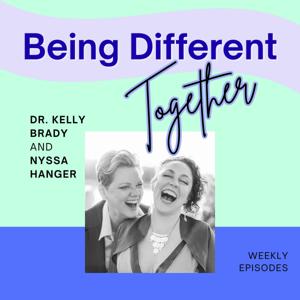


A delayed home renovation brings Dr. Kelly Brady and Nyssa Hanger into a candid conversation about anger, anxiety, expectations, and the challenge of making space for a loved one’s big life transition.
Drawing on Buddhist ideas about attachment and anger, they explore why unmet expectations can feel so upsetting, how social conditioning shapes the way women express anger, and the difference between venting frustration and advocating for what matters.
Along the way, they consider practical ways to set boundaries, respond with intention, and find a more peaceful path—even when the outcome is outside your control.
Links:
Stay in Touch:
Nyssa Hanger: www.nyssahanger.com | IG: @nyssahanger
Kelly Brady: www.kellybrady.me | IG: @drkellybrady
The pelvis is more than a place where the legs meet the body: it’s a center of movement, creation, sensation, and letting go.
From the pelvic floor and hip tension to the mind-body connection, Kelly and Nyssa explore the pelvis as both a physical structure and a rich metaphor for how we contain—and release—what we carry. They discuss the pelvis through the lens of Traditional Chinese Medicine and the lower jiao, alongside ideas about embodiment, emotional “armoring,” stress, creativity, and the body’s capacity to receive.
The conversation also wanders through the sacrum, Kundalini and Qigong practices, the hara and lower dantian, and the challenge of bringing our ideals into material life. What might change when we stop living only in our heads and listen to the wisdom of the body?
Main Topics Covered:
Stay in Touch:
Nyssa Hanger: www.nyssahanger.com | IG: @nyssahanger
Kelly Brady: www.kellybrady.me | IG: @drkellybrady
What if forgetting something isn’t always a failure—but sometimes a signal that you’ve reached your limit? After a stressful week of home construction, Kelly and Nyssa realize they’ve forgotten to record their podcast—and find themselves laughing instead of feeling ashamed.
Their conversation explores stress, burnout, psychological defense mechanisms, and the unconscious mind’s possible need for rest, drawing on Jungian ideas, fairy tales, and stories of sleep and awakening.
They also reflect on work-life boundaries, the idea of an “inner ally,” and synchronicity, including a timely encounter with the word pronoia—the belief that the world may be conspiring in your favor. Could forgetting sometimes be a pause that helps us come back to what matters?
Main Topics Covered:
Links:
Stay in Touch:
Nyssa Hanger: www.nyssahanger.com | IG: @nyssahanger
Kelly Brady: www.kellybrady.me | IG: @drkellybrady
Could a law of physics help explain why acupuncture works—and what the body does with the information it receives?
Becky Rubright joins Kelly and Nyssa to explore the Constructal Law—the idea that systems evolve to make flow easier—and its surprising connections to acupuncture and traditional Chinese medicine. They talk about how flow might help us think about the body, fascia, the interstitium, and the way cells process information, including the biogenic principle and cellular cognition.
Along the way, the conversation wanders through synchronicity, creativity, emotional flow, medical knowledge, and the unexpected paths that lead us toward new ideas. Becky also shares how she came to write a paper on acupuncture and the Constructal Law, and why she’s taking that work to a conference in Paris.
Main Topics Covered:
Links:
Stay in Touch:
Nyssa Hanger: www.nyssahanger.com | IG: @nyssahanger
Kelly Brady: www.kellybrady.me | IG: @drkellybrady
What are your legs moving you toward—and what might they be helping you move away from?
Dr. Kelly Brady and Nyssa Hanger explore the surprising connections between legs, relationships, emotional well-being, and agency. Drawing on bioenergetics and traditional Chinese medicine, they talk about leg meridians, flexibility, the effects of locking your knees and sitting for too long, and how movement can shift how we feel.
They also get curious about beauty standards, disability, and the stories we tell about legs—from The Little Mermaid to myths of wounds and transformation. Along the way, they invite listeners to notice how they inhabit their bodies, appreciate what their legs do for them, and consider where they want to go next.
Main Topics Covered:
Links:
Stay in Touch:
Nyssa Hanger: www.nyssahanger.com | IG: @nyssahanger
Kelly Brady: www.kellybrady.me | IG: @drkellybrady
Have you ever thought about what your feet say about how you stand in the world?
Kelly and Nyssa kick off their head-to-toe body series with the feet, and there's a lot to explore. They talk about common foot pain like plantar fasciitis, achy morning feet, and neuropathy. They get into why narrow toe boxes and tight shoes may be doing more harm than good, and how minimal footwear, toe spreading, and a little curiosity can improve foot health at any age. (Kelly's feet are better at 57 than they were at 47!)
From there, they wander into the mind-body connection: grounding and the Kidney 1 "Bubbling Spring" point in Chinese medicine, how posture and gait mirror our personality, and the history of shoes as symbols of class, beauty, and control, from foot binding to high heels.
Kelly also tells Hans Christian Andersen's haunting fairy tale The Red Shoes, which opens up a Jungian conversation about desire, vanity, and what we're willing to change about our bodies to fit in. The big question: does the shoe fit the foot, or are you changing the foot to fit the shoe?
Main Topics Covered:
Stay in Touch:
Nyssa Hanger: www.nyssahanger.com | IG: @nyssahanger
Kelly Brady: www.kellybrady.me | IG: @drkellybrady
The armor is on, but the battle's long over.
That old line is the heart of this conversation about body armor — Alexander Lowen's Bioenergetics, Wilhelm Reich's lineage, and how the tightening we learned in infancy quietly shapes the way we move, breathe, and meet the world decades later. Nyssa explains how she encountered this work through Structural Energetic Therapy and Emotional Release Breathwork, why muscles are "the most loyal Labrador," and what's really happening when a bodyworker finds a so-called knot.
Kelly brings 30 years of clinical practice and a healthy skepticism toward the idea that trauma is stored in the body — suggesting remembered might be the truer verb — while both dig into traditional Chinese medicine's view of emotions as energy moving through channels, why stagnation matters, and what happens when a beloved mentor answers "when will this be over?" with a simple, kind "it's not."
Warm, curious, and unhurried, this one sits with the idea that healing isn't linear, that trauma may be the gateway to individuation, and that the goal was never winning.
Why holding back a cough makes you want to cough more — and what that reveals about armoring
Main Topics Covered:
Stay in Touch:
Nyssa Hanger: www.nyssahanger.com | IG: @nyssahanger
Kelly Brady: www.kellybrady.me | IG: @drkellybrady
What if your next cold, flu, or full-on crash isn’t a failure of your wellness routine, but an invitation for change?
Kelly and Nyssa get real about getting sick as solopreneurs and healthcare providers—from the shame of calling in sick with clients, to the financial hit, to the deep ego bruise of admitting “I’m human.”
They explore how illness can become an unexpected spiritual teacher, weaving together Jungian psychology, Buddhist perspectives on impermanence (including the Five Remembrances), and the alchemy of illness as a catalyst for life change, mental health reset, and reevaluating priorities.
Along the way, they unpack the pressure of toxic wellness culture, the myth that we can completely control our health with perfect routines and metrics, and the strange clarity that comes when sickness forces you to stop, reflect, and ask: If all this fell away, what do I really want?
Main Topics Covered:
Links:
Stay in Touch:
Nyssa Hanger: www.nyssahanger.com | IG: @nyssahanger
Kelly Brady: www.kellybrady.me | IG: @drkellybrady
What if the blonde “hillbilly” in full drag, with big hair and bigger humor, was actually one of our culture’s wisest spiritual teachers?
In this heartfelt conversation from Cocoa Beach, Kelly and Nyssa remember Dolly Parton’s life and legacy through the lenses of Jungian archetypes, the trickster figure, Buddhist “skillful means,” and real dialog. They explore how Dolly’s campy, hyper-feminine persona functioned like a sacred disguise—smuggling queer-inclusive, compassionate, deeply Christian-in-the-best-way values into country music and mainstream American culture.
Along the way, they share personal stories of dancing to Dolly’s version of “Peace Train,” reflect on what makes Dolly a queer icon and a bridge-builder in polarized times, and unpack why her exaggerated “drag” femininity somehow made her feel more authentic, not less. If you’re curious about Dolly Parton’s death, her impact on grief and healing, or how archetypes like the trickster can help us hold paradox without needing a winner and a loser, this episode offers a tender, thoughtful tribute.
Main Topics Covered:
Links:
Stay in Touch:
Nyssa Hanger: www.nyssahanger.com | IG: @nyssahanger
Kelly Brady: www.kellybrady.me | IG: @drkellybrady
A simple decision about where to put the couch opens up a whole world of insight about compromise, power, and what it really means to share a life with someone.
Kelly and Nyssa use a deceptively simple question—where does the couch go?—to explore how couples make decisions about shared space, division of labor, and everyday compromises when living together. They unpack the difference between true compromise and people-pleasing, how power dynamics show up in “small” choices like furniture placement, air conditioning, and dishwasher loading, and why so many partners secretly wonder whose reality is “right.”
Drawing on ideas like subjective vs. objective reality, consensus decision-making, Jungian metaphors of the house as psyche, and even sleep hygiene and TV habits, they invite listeners into a warm, honest conversation about being different together while still honoring your own preferences.
Main Topics Covered:
Stay in Touch:
Nyssa Hanger: www.nyssahanger.com | IG: @nyssahanger
Kelly Brady: www.kellybrady.me | IG: @drkellybrady
From the publisher's feed
Being Different Together explores the realms of relationship, entrepreneurship, and personal development through the lens of Real Dialogue, a set of principles, practices, and methods for…
In other words, just because we disagree, doesn’t mean we can’t get along.
Through this series, Nyssa and Kelly will bring their combined experience as holistic health practitioners to the table to share what they’ve learned through the process of integrating these skills in their lives.
This podcast is for all the people who want to make the world a better place and feel a little less alone doing it.