
Sign up to save your podcasts
Or

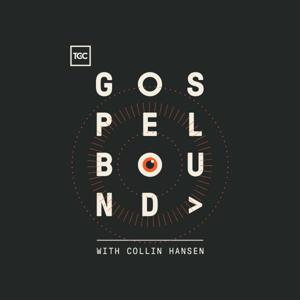

It’s the fundamental lie of modern life, says Alan Noble: that we are our own. Compared to our ancestors, we’re less worried about war. We’re less worried about starvation and famine. But by believing that we are our own, we tend to struggle with new problems: the loss of meaning, identity, and purpose.
Noble says this in his new book, You Are Not Your Own: Belonging to God in an Inhuman World, published by InterVarsity:
Everyone is on their own private journey of self-discovery and self-expression so that at times, modern life feels like billions of people in the same room shouting their name so that everyone else knows they exist and who they are—which is a fairly accurate description of social media.
Noble’s book feels like a douse of cold water that wakes us from our delusion. His book builds off the first question and answer of the Heidelberg Catechism. And he helps us find our way back to this well-worn path of divine wisdom. He writes, “Our selves belong to God, and we are joyfully limited and restrained by the obligations, virtues, and love that naturally come from this belonging.”
Noble is assistant professor of English at Oklahoma Baptist University and co-founder and editor in chief of Christ and Pop Culture. You may know his previous work, Disruptive Witness: Speaking Truth in a Distracted Age.
Use code “GOSPELBOUND” for 25% off tuition.
Learn more at downlinememphis.com/virtual-institute or email [email protected] for group pricing and discounts.
Hosted by Simplecast, an AdsWizz company. See pcm.adswizz.com for information about our collection and use of personal data for advertising.
 View all episodes
 By The Gospel Coalition, Collin Hansen

4.7
333333 ratings
It’s the fundamental lie of modern life, says Alan Noble: that we are our own. Compared to our ancestors, we’re less worried about war. We’re less worried about starvation and famine. But by believing that we are our own, we tend to struggle with new problems: the loss of meaning, identity, and purpose.
Noble says this in his new book, You Are Not Your Own: Belonging to God in an Inhuman World, published by InterVarsity:
Everyone is on their own private journey of self-discovery and self-expression so that at times, modern life feels like billions of people in the same room shouting their name so that everyone else knows they exist and who they are—which is a fairly accurate description of social media.
Noble’s book feels like a douse of cold water that wakes us from our delusion. His book builds off the first question and answer of the Heidelberg Catechism. And he helps us find our way back to this well-worn path of divine wisdom. He writes, “Our selves belong to God, and we are joyfully limited and restrained by the obligations, virtues, and love that naturally come from this belonging.”
Noble is assistant professor of English at Oklahoma Baptist University and co-founder and editor in chief of Christ and Pop Culture. You may know his previous work, Disruptive Witness: Speaking Truth in a Distracted Age.
Use code “GOSPELBOUND” for 25% off tuition.
Learn more at downlinememphis.com/virtual-institute or email [email protected] for group pricing and discounts.
Hosted by Simplecast, an AdsWizz company. See pcm.adswizz.com for information about our collection and use of personal data for advertising.
16,086 Listeners
1,131 Listeners
749 Listeners
1,137 Listeners
77 Listeners
355 Listeners
302 Listeners
719 Listeners
2,361 Listeners
637 Listeners
125 Listeners
180 Listeners
1,123 Listeners
642 Listeners
221 Listeners
211 Listeners
132 Listeners
320 Listeners

46 Listeners
80 Listeners
53 Listeners
87 Listeners
155 Listeners

319 Listeners