Bharatvaarta

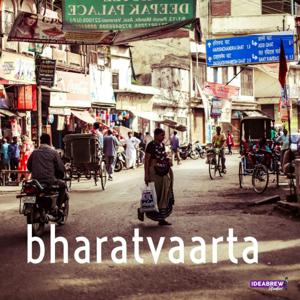
Bharatvaarta

By BharatvaartaNewsNews Commentary
Download on the App Store

Bharatvaarta episodes

  • Why Are Insurance Commissions Becoming a National Debate? | Monika Halan

    What really happens to your money when you buy an insurance policy in India? Monika Halan explains - and it’s a question the whole industry is suddenly being forced to answer.

    Insurance mis-selling is finally India’s biggest money debate. IRDAI’s new consultation paper has capped commissions, exposed how insurance is really sold - and sent stocks like PolicyBazaar crashing. Monika Halan explains what it all means for your money.
    For over 20 years, Monika Halan has warned about how insurance is mis-sold in India - and now the regulator’s own data is proving her right. In this conversation with Roshan Cariappa, she breaks down the IRDAI paper (“Recalibrating Economics of Insurance Distribution”) that has rattled the industry: commissions running as high as 90%, growing 4-5x faster than premiums, and savings policies that quietly turn a 7% return into 2-4%.
    They get into why so few policies survive their full term, why you can’t compare policies before you buy, what this means for banks and PolicyBazaar-style distributors, and the exact questions to ask before you buy any financial product.
    📚 CHAPTERS
    (00:00) — Intro
    (01:06) — Why This Consultation Paper Changes Everything
    (04:28) — Why Markets Crashed - and the 92% Commission Problem
    (08:09) — How Did Commissions Get This High?
    (09:41) — “Insurance Is Sold, Not Bought” - The Agent Myth
    (14:05) — The Shocking Truth About Persistency
    (16:33) — How Do You Actually Grow Insurance in India?
    (18:16) — Why You Can’t Compare Policies - and the Hidden Returns
    (21:26) — Fixing the Product, Not Just the Sales
    (24:02) — Why Financial Products Are So Confusing
    (25:27) — Buyer Beware vs Seller Beware
    (28:37) — What This Means for Banks
    (30:52) — India’s Quiet Healthcare Advantage
    (34:08) — How Much Should the State Step In?
    (36:40) — The Questions to Ask Before You Buy Anything
    (38:24) — Should You Stop Your SIPs Right Now?
    (41:23) — How India’s Money Mindset Has Changed
    (44:05) — What Monika Is Hopeful About
    👤 ABOUT MONIKA HALAN
    Monika Halan is a bestselling author and one of India’s most trusted voices on personal finance. Her books Let’s Talk Money and Let’s Talk Mutual Funds have helped millions of Indians understand investing and build better portfolios. A financial educator and columnist, she has served on SEBI’s mutual fund advisory committee and has spent over two decades campaigning for transparency, consumer protection and an end to financial mis-selling.
    🇮🇳 ABOUT BHARATVAARTA
    Bharatvaarta is a long-form podcast focused on India’s politics, policy, economy, technology and culture — honest, in-depth conversations about what’s happening around us, and what it means for India’s future.
    🌐 Website: https://www.bharatvaarta.in
    ✖️ X: https://x.com/bharatvaarta
    📷 Instagram: @bharatvaarta
    #MonikaHalan #Insurance #PersonalFinance #MutualFunds #IRDAI #MisSelling #Bharatvaarta #RoshanCariappa
    Join this channel to get access to perks:
    ▶️ /@bharatvaarta

    Learn more about your ad choices. Visit megaphone.fm/adchoices

    46 min
  • If AI Changes How We Work, How Do You Stay Relevant? Manish Sabharwal

    India doesn't have a jobs problem. It has a wages problem.


    That reframe from Manish Sabharwal sets up one of our sharpest conversations on why India keeps producing record numbers of graduates who still feel stuck - and what a young person should actually do about it.


    Roshan Cariappa sits down with Manish Sabharwal - co-founder of TeamLease and Ashoka University - to ask questions that are useful at any age: government job, private job, or building your own thing? And in a world where AI can do the "quick and dirty" first draft, what keeps a human relevant?


    They get into India's 200-year-old education crisis, why our exams reward memory over judgement, why education became "the filling of a bucket" instead of "the lighting of a fire," and why your first job has almost nothing to do with where you end up. Manish makes the case that a skilled electrician now out-earns many salespeople, that "unemployment is a luxury good," that bravery is the one virtue you can't fake - and that the people who pull ahead are the ones who treat learning as a lifelong habit, not a one-time degree.


    📚 CHAPTERS


    ⁠(00:00)⁠ — The Questions This Conversation Answers

    ⁠(01:19⁠) — Are the Student Protests a Warning Sign?

    ⁠(01:42⁠) — India's 200-Year-Old Education Crisis

    ⁠(05:18⁠) — Medical Seats: Scarcity by Design

    ⁠(07:13⁠) — Should the Government Run Education?

    ⁠(10:17⁠) — When a Degree Stops Meaning Anything

    ⁠(12:41⁠) — What Questions Are Worth Asking?

    ⁠(15:34⁠) — The Three Intelligences AI Can't Replace

    ⁠(20:29)⁠ — Why Outrage Is a Poor Fuel for Change

    ⁠(24:14⁠) — Student Activism: Get Stronger First

    ⁠(28:52⁠) — The Social Contract That Was Never Real

    ⁠(30:21⁠) — How Manish Would Redesign Education

    ⁠(33:00)⁠ — "A Wages Problem, Not a Jobs Problem"

    ⁠(36:17⁠) — Why the Next 20 Years Belong to India

    ⁠(40:31⁠) — Everyone Wants a Bank Job. Plumbers Earn More.

    ⁠(41:38⁠) — "Unemployment Is a Luxury Good"

    ⁠(44:43⁠) — Bravery: The Virtue You Can't Fake

    ⁠(48:38⁠) — Is AI Killing the Entry-Level Job?

    ⁠(54:43⁠) — You Can't Outsource Your Own Destiny

    ⁠(01:00:46⁠) — The Doom and Victimhood Narrative

    ⁠(01:03:05⁠) — How Parenting Quietly Changed

    ⁠(01:08:41⁠) — Advice to an Anxious 21-Year-Old


    👤 ABOUT MANISH SABHARWAL

    Manish Sabharwal is the co-founder of TeamLease Services, one of India's largest staffing and skilling companies, and a co-founder of Ashoka University. A long-time columnist and former independent director on the board of the Reserve Bank of India, he is the author of Made in India. He has spent over two decades working on India's jobs, skilling and education reform.


    🇮🇳 ABOUT BHARATVAARTA

    Long-form conversations on India's politics, policy, economy, technology and culture — beyond the headlines.


    🌐 ⁠https://www.bharatvaarta.in⁠

    ✖️ ⁠https://x.com/bharatvaarta⁠

    📷 @bharatvaarta

    Learn more about your ad choices. Visit megaphone.fm/adchoices

    1 hr 13 min
  • What Is the Real Business Model Behind AI? Ft. Vivek Raghan, Co-Founder Sarvam AI

    AI is getting better. AI models are getting more capable. And yet, in many cases, the cost of using AI keeps falling.

    So… who is actually paying for all of this?
    In this conversation, Roshan Cariappa sits down with Vivek Raghavan, Co-founder of Sarvam AI, to unpack one of the biggest questions around the AI boom: what is the real business model behind AI?
    We talk about why companies can spend billions building AI and still offer powerful models to users at little or no upfront cost. What exactly are we giving up when we use “free” AI? And if India is among the world's biggest users of AI, are we simply exporting our data and importing intelligence?
    The conversation then goes much deeper.
    Vivek explains how large language models actually work, why training frontier AI is so expensive, and why rapidly improving GPUs and smaller, specialised models could make advanced AI dramatically cheaper to build.
    We also discuss India's AI strategy, sovereign AI, China’s approach to technology, the growing geopolitical importance of AI, and whether India can build foundational AI capabilities of its own.
    And perhaps most importantly: has India actually missed the AI bus—or is the economics of AI changing fast enough for India to catch up?
    ⏱️ CHAPTERS
    (00:00) – The AI question nobody is asking
    (00:19) – Who actually controls the AI world?
    (00:58) – Meet Vivek Raghavan & Sarvam AI
    (01:28) – How does an AI model actually work?
    (03:32) – What are the “parameters” inside an AI model?
    (04:58) – How AI actually generates an answer
    (05:44) – Does AI really “learn” when we use it?
    (07:19) – Why should India build its own AI?
    (08:37) – Where should Indian data actually live?
    (09:26) – If AI is free, what are we really paying for?
    (10:34) – India: exporting data, importing intelligence
    (11:52) – What did China do differently?
    (14:34) – Should India create space for Indian AI companies?
    (15:10) – AI has become a geopolitical game
    (15:45) – Will AI create a new global power hierarchy?
    (16:36) – How do you actually build sovereign AI?
    (18:00) – Why building AI is getting cheaper
    (19:30) – Why India may NOT be too late to AI
    (20:16) – Do we really need the biggest AI models?
    (21:48) – Why sovereign AI matters in the long run
    (23:13) – Can smaller AI models beat frontier models?
    (23:35) – India’s unique advantage in AI
    (24:34) – What exactly is Sarvam AI building?
    (25:21) – Why voice could be the future of Indian AI
    (26:09) – “We are at the base of the mountain”
    (26:24) – The road ahead for India’s AI ambitions
    🎙️ ABOUT VIVEK RAGHAVAN
    Vivek Raghavan is the Co-founder of Sarvam AI, an Indian company building a full-stack sovereign AI platform focused on India's languages, context and everyday needs.
    Before Sarvam, Vivek was involved in building India's digital public infrastructure, including work connected with Aadhaar and UIDAI. He brings that experience in building technology at population scale into the AI ecosystem.
    Sarvam is now building foundational models, AI infrastructure and applications designed for India, with a particular focus on multilingual and voice-first AI.
    🇮🇳 ABOUT BHARATVAARTA
    Bharatvaarta is a long-form podcast focused on India's politics, policy, economy, technology and culture.
    We bring together founders, policymakers, technologists, academics, writers and thinkers to have honest, in-depth conversations about what is happening around us — and what it means for India's future.
    Subscribe to Bharatvaarta for more conversations that go beyond the headlines.
    🌐 Website: https://www.bharatvaarta.in
    🐦 X: https://x.com/bharatvaarta
    📸 Instagram:   / bharatvaarta 

    Learn more about your ad choices. Visit megaphone.fm/adchoices

    28 min
  • If God is Formless, Why Do Hindus Worship So many Idols? Ft. Ami Ganatra

    Who is a Hindu? And what does it really mean to be one?


    Many of us grew up calling ourselves Hindu, but the deeper we look, the more questions emerge. Is Hinduism a religion or a way of life? How did the gods and deities we worship today evolve? And what ideas hold together such a diverse philosophical tradition?


    In this conversation, Roshan Cariappa sits down with author Ami to explore the foundations of the Hindu worldview — from karma, rebirth and moksha to dharma, the cosmic order, questioning, pluralism and the evolution of Hindu deities.


    The conversation also looks at how Vedic gods evolved over time, why personal forms of the divine became important, and what makes the Hindu worldview inherently plural and comfortable with different schools of thought.


    This is a shorter version of the full conversation, bringing together some of the key questions and ideas from the original episode.


    📚 CHAPTERS

    (00:00) — Who Is a Hindu?

    (02:25) — What Does It Mean to Be a Hindu?

    (04:45) — Hindu vs Abrahamic Worldviews

    (05:44) — Karma, Rebirth & Moksha

    (08:00) — Why Sanatan Has Never Become Stagnant

    (08:43) — Is Hinduism a Religion or a Way of Life?

    (09:07) — Dharma & The Cosmic Order

    (12:10) — Can Islam & Christianity Be Darshanas?

    (14:48) — Why Questioning Matters

    (15:27) — How Did Our Gods Evolve?

    (16:52) — Why Ancient Humans Created Gods

    (19:01) — From Vedic Gods to Personal Deities

    (22:18) — How Local Deities Became Part of a Larger Tradition

    (23:05) — Why Do We Worship Murtis?

    (25:00) — How Ganesha's Form Evolved

    (26:47) — What Makes the Hindu Worldview Different?

    (28:33) — Why Hinduism Is Inherently Plural

    (29:12) — Understanding a Nuanced Tradition


    👉 If you found this conversation valuable, subscribe to Bharatvaarta.

    We bring you serious, long-form discussions on civilisation, philosophy, and the ideas shaping India’s future.


    🎧 Listen & Subscribe


    Spotify → https://open.spotify.com/show/6tqY8tb...

    Apple Podcasts → https://podcasts.apple.com/in/podcast...

    X → https://x.com/bharatvaarta

    Instagram → / bharatvaarta

    ⸻

    👤 Guest — Ami Ganatra

    Author | Researcher | Indian Knowledge Systems

    X → https://x.com/6amiji

    Instagram → / amig_insta


    Tags:

    hinduism, what is hinduism, hindu religion, hinduism facts, hinduism history, origin of hinduism, hinduism explain, sanatan, Ami Ganatra, Spiritual, Ramayan, hindu mythology, history, podcast, yuga, shlokas, shri ram and sita, mahabharat title song, hai katha sangram ki, mahabharat full song, karna mahabharat, duryodhan, bheem, draupadi, arjun, is hinduism a religion, indian spirituality, veda philosophy, darshan meaning, podcast india spirituality, karma and rebirth, hindu dharma


    Get her book- https://www.amazon.in/Why-Are-We-This...

    ⸻


    👤 Host — Roshan Cariappa

    X → https://x.com/RoshanCariappa

    Instagram → / carygottheblues

    In this clip, we explore questions around what it means to be Hindu and the diverse interpretations of this ancient tradition. Ami Ganatra explains that understanding hinduism goes beyond a singular definition, encompassing a broad cultural identity and the concept of dharma. This discussion provides insight into the essence of Hindu religion and sanatan dharma, highlighting its multifaceted nature.

    Learn more about your ad choices. Visit megaphone.fm/adchoices

    31 min
  • How Much of "Made in India" Defence Is Actually Indian?

    India wants to become a defence superpower. But how can that happen when we still depend heavily on foreign technology, engines, sensors and weapons?


    In this conversation, Roshan Cariappa sits down with Vivek Krishnan, CEO & Co-Founder of SSS Defence, and Dinesh Shivanna, Co-Founder & CTO of SSS Defence, to unpack one of India's biggest strategic challenges: building a genuinely self-reliant defence industry.


    Why does India still import so much of its military equipment? Why have we struggled to build indigenous engines? Why isn't simply having more defence startups enough? And what has the Indian Navy done differently when it comes to building capability?


    Vivek and Dinesh argue that becoming Atmanirbhar in defence requires much more than assembling imported components. India needs long-term investment in R&D, engineering talent, domestic supply chains, sensors, engines and manufacturing capability — even if some of those bets fail.


    This is a blunt conversation about what it will actually take to build India's military-industrial complex.


    ⏱️ CHAPTERS

    (00:00) - Why Does India Import Most of Its Weapons?

    (00:20) - The Cost of Buying Foreign Weapons vs Building at Home

    (01:25) - India’s Missing Engine Ecosystem

    (02:14) - Why India Must Start Building Even Small Engines

    (03:38) - Why Defence Startups Alone Cannot Solve the Problem

    (04:20) - The Danger of Depending on Foreign Sensors & Components

    (04:58) - What Happens When Foreign Supply Chains Are Cut?

    (05:18) - Why Government + Industry Must Think Long-Term

    (06:20) - Why India Must Be Ready for War

    (07:15) - Defence R&D Requires Failure

    (08:35) - Why the Indian Navy Has Done Better

    (09:15) - The Talent India Needs to Bring Back

    (10:06) - Where India’s Defence Procurement Goes Wrong

    (11:03) - When Indian Radar and Missiles Don't Even Talk to Each Other

    (12:23) - The Mindset Problem: Why Foreign Weapons Were Trusted More

    (13:27) - Why Defence Trials Take Years

    (15:16) - How Procurement Can Become Faster

    (16:00) - The Cost of Living With Foreign Weapons

    (17:10) - Should Indian Defence Companies Get Priority?

    (18:45) - What “Atmanirbhar Bharat” Should Actually Mean

    (20:13) - What India Can Learn From the Navy

    (22:21) - What India Can Learn From Israel

    (23:35) - Israel’s Defence-Tech Ecosystem

    (24:53) - A Call to Indian Engineers

    (25:34) - “You Need to Be at War to Be at Peace”


    🎙️ GUESTS

    Vivek Krishnan — CEO & Co-Founder, SSS Defence

    Dinesh Shivanna — Co-Founder & CTO, SSS Defence


    SSS Defence is an Indian defence OEM established in 2017, focused on designing, developing and manufacturing small arms, precision weapon systems and other defence technologies in India.


    🎙️ HOST

    Roshan Cariappa — Bharatvaarta


    ▶️ WATCH THE FULL CONVERSATION:

    [ https://youtu.be/0IsnmQMnvrE ]


    The full episode goes deeper into India's defence imports, military-industrial complex, defence startups, engines, sensors, drones, procurement, Israel, indigenous weapons and the path to genuine defence self-reliance.


    #India #Defence #DefenceTechnology #IndianDefence #AtmanirbharBharat #MakeInIndia #Military #DefenceIndustry #Bharatvaarta #airforce #Indiannavy


    Join this channel to get access to perks:

    https://www.youtube.com/channel/UCfBfBd-1kvCOPxVll8tBJ9Q/join

    Learn more about your ad choices. Visit megaphone.fm/adchoices

    28 min
  • The World Is Changing. How can India Become the Voice of the Global South?

    The world is changing - and India is being forced to make choices.


    China has transformed itself into an economic and strategic superpower. The United States is still the world's dominant power, but its relationship with China is changing. Russia remains a major geopolitical force. And the Global South is demanding a greater say in how the world is governed.


    So where does India stand?

    In the run-up to India's BRICS 2026 Summit, Bharatvaarta brings together perspectives from three of India's leading thinkers and practitioners to examine India's position in this emerging world order.


    From India's economic race with China to the future of US-China relations, from BRICS and the Global South to strategic autonomy and India's ability to become a power that can choose its own path — this is a conversation about the choices that will shape India's next chapter.


    ⏱️ TIMESTAMPS

    (00:00) — India, China & the changing world order

    (00:36) — Why did China pull so far ahead of India?

    (02:43) — The policy risks that powered China's rise

    (03:41) — Why India's size can become a weakness

    (05:21) — How can India become export competitive?

    (06:23) — What China did differently

    (10:34) — Can India reach 9–10% growth?

    (10:53) — How should India deal with China?

    (11:54) — The future of US-China relations

    (13:17) — Why India cannot afford a confrontation with China

    (16:09) — China's rise and the challenge to American power

    (16:38) — Can the West accept a powerful India and China?

    (18:07) — India, Russia & China: a new geopolitical equation

    (18:35) — Who are the real hegemons?

    (19:43) — Is the West trying to keep India down?

    (20:06) — Was bringing China into the WTO America's biggest strategic mistake?

    (21:41) — The Thucydides Trap: Is US-China conflict inevitable?

    (24:12) — Is American power declining?

    (24:26) — India between the US and China

    (24:40) — Where does India go from here?

    (25:00) — The difficulty of strategic policy in a democracy

    (26:35) — India's battle-tested military advantage.

    (27:06) — What India needs to get right.


    ABOUT THE GUESTS

    👤 MANISH SABHARWAL- Economist, entrepreneur and public-policy thinker. Co-founder of TeamLease Services, economist and public policy thinker. He has served on multiple government and policy bodies, including the RBI Board, and writes extensively on employment, education, economic growth and India's reform agenda.

    Connect:

    LinkedIn → https://www.linkedin.com/in/manish-sabharwal-187827176


    👤 NEELKANTH MISHRA

    Chief Economist, Axis Bank and Head of Global Research, Axis Capital. A prominent economist and policy thinker, Mishra has spent over two decades working across Indian and global markets, with a particular focus on India's growth, capital formation, productivity and economic policy.

    Connect:

    X → https://x.com/neelkanthmishra

    LinkedIn → https://www.linkedin.com/in/neelkanth-mishra-46629b


    👤 AMBASSADOR DR. MOHAN KUMAR

    A veteran Indian diplomat with 36 years in the Indian Foreign Service, Ambassador Dr. Mohan Kumar served as India's Ambassador to France and Bahrain. He was also India's lead negotiator at GATT and the WTO, dealing with issues including trade, intellectual property, services and dispute settlement. He brings the perspective of a practitioner who has spent decades negotiating India's interests in a changing international system, and examines the choices confronting India between the world's major powers.

    Connect:

    X → https://x.com/AmbMoKumar

    LinkedIn → https://www.linkedin.com/in/dr-mohan-kumar-76027834

    Website → https://ambmokumar.com


    👤 VIKRAM SOOD

    Former Secretary of India's Research and Analysis Wing (R&AW), where he served from 2000–2003. He is currently an adviser at the Observer Research Foundation and the author of The Unending Game and The Ultimate Goal. His work focuses on intelligence, geopolitics, national security and strategic affairs.

    Connect:

    X → https://x.com/Vikram_Sood

    LinkedIn → https://www.linkedin.com/in/vikram-sood-1b009715


    FULL EPISODE LINKS:

    1. Manish Sabharwal: Deregulation, Civil Service Reform & India's Growth Story (https://youtu.be/f1hRTb6MIZ8)


    2. Neelkanth Mishra: India vs China: What's Holding Us Back? (https://youtu.be/d4ouuGUv6mQ)


    3. Ambassador Dr. Mohan Kumar: Former Ambassador Reveals What Happens Inside India's Toughest Global Negotiations (https://youtu.be/Ys99H7_WjcM)


    4. VIKRAM SOOD: Understanding the Deep State | Former R&AW Chief Vikram Sood (https://youtu.be/TomnFVq3Bt4)


    ABOUT BHARATVAARTA

    Bharatvaarta is a long-form podcast focused on politics, policy and culture in India. We bring together policymakers, founders, officers, technologists, writers and thinkers for honest, in-depth conversations about what is happening around us — and what it means for India's future.


    If this conversation made you think, subscribe to Bharatvaarta.


    Join this channel to get access to perks:

    https://www.youtube.com/channel/UCfBfBd-1kvCOPxVll8tBJ9Q/join

    Learn more about your ad choices. Visit megaphone.fm/adchoices

    28 min
  • If RSS Is So Powerful, Why Doesn't It Take Power? The Reign Behind Indian Politics | Sachin Nandha

    The RSS does not contest elections. So where does its influence over Indian politics and society actually come from?

    In this focused Bharatvaarta conversation, Roshan Cariappa speaks with Sachin Nandha about the organisation, ideology and structure of the Rashtriya Swayamsevak Sangh (RSS) - and its relationship with the BJP, Narendra Modi and the larger Sangh Parivar.
    What makes the RSS so influential despite not being a political party? Why does the organisation place such importance on the shakha? Is the BJP an instrument of the RSS, or does it operate independently? And how should we understand the relationship between the RSS, the BJP and the Indian state?
    Sachin Nandha offers a different framework for looking at these questions - from the distinction between the Rashtra and the Rajya to the way the RSS's influence extends beyond electoral politics.
    ⏱️ TIMESTAMPS
    (00:00) – How Does the RSS Have So Much Power?
    (03:36) – What Is the RSS Really Designed to Do?
    (06:00) – Why the RSS Starts and Ends With the Shakha
    (10:00) – Rashtra vs Rajya: What Is the RSS Really Trying to Change?
    (13:00) – Why the RSS Doesn't Actually Care About the BJP
    (15:00) – Can the Rashtra Discipline the Rajya?
    (18:00) – How Does the RSS Influence the BJP?
    (20:00) – Is the BJP Really Independent of the RSS?
    (21:00) – The RSS as the BJP's “Great Grandmother”
    (22:00) – What Is the Relationship Between Modi and the RSS?
    (24:00) – Who Has More Power: RSS or BJP?
    (26:00) – Is the RSS–BJP Conflict Real or a “Circus Act”?
    🎙️ About Sachin Nandha
    Sachin Nandha is the author of Hedgewar: A Definitive Biography, a biography of K.B. Hedgewar, founder of the Rashtriya Swayamsevak Sangh (RSS). He is also associated with the International Centre for Sustainability and writes and speaks extensively on the RSS, civilisational movements, social capital and power structures. His book and public work focus heavily on understanding the origins and evolution of the RSS and its place in modern India.
    🔗 Connect with Sachin Nandha:
    Instagram — @thesachinnandha
    X — @sachinnandha
    LinkedIn — Sachin Nandha
    Website — sachinnandha.com
    📚 His book
    Hedgewar: A Definitive Biography: https://www.amazon.in/Hedgewar-Founder-Rashtriya-Swayamsevak-Sangh/dp/0143467662
    (The book was published in 2025 and examines the life and ideas of K.B. Hedgewar and the origins of the RSS.)
    The complete episode - https://youtu.be/IaSo8UQ-buw
    ABOUT BHARATVAARTA
    Bharatvaarta is a platform for long-form conversations on India's politics, policy, economy and culture — the arguments that shape the country, heard in full and without the shouting.
    Join this channel to get access to perks:
    https://www.youtube.com/channel/UCfBfBd-1kvCOPxVll8tBJ9Q/join

    Learn more about your ad choices. Visit megaphone.fm/adchoices

    29 min
  • "Who Is Funding This?" Mohandas Pai On NGOs, Foreign Money, Religious Conversions & Indian Politics

    A closer look at one of the sharpest threads from our full conversation with Mohandas Pai.

    The complete episode - covering the Gen Z protests, the NEET crisis and India's youth unemployment story, along with everything below - is live here: https://youtu.be/hG48jHX7xks
    This cut focuses on the politics underneath it all: foreign funding, the Congress's search for direction, and what's actually broken in how India is governed.
    Pai opens with a hard line on foreign money in Indian civil society: no foreign funds for advocacy, no foreign funds for politics, and no exceptions for NGOs who want to influence Indian public life without raising money from Indians first. He questions the funding and online amplification behind recent protest movements, and argues India's FCRA framework - tightened originally under Indira Gandhi - exists precisely to prevent outside actors from shaping domestic politics and religious life.
    From there, the conversation turns to the Congress party's decline, with Pai arguing the party has failed to offer a real alternative to the government's delivery on basic needs - water, power, bank accounts, gas connections - and that without a clear agenda beyond cash guarantees, its Karnataka government under Siddaramaiah has little to show after three years. He makes the case for job creation over subsidies, using Karnataka's own numbers on jobs needed versus jobs delivered, and points to Bengaluru's recent civic turnaround as proof that leadership and accountability - not bigger budgets - are what change outcomes on the ground.
    The conversation closes on India's justice system: why the country has a fraction of the judges per capita that other democracies do, why delays in prosecuting corruption cases erode public trust, and what accountability would actually require.
    If you want the full context - including the NEET and jobs conversation that precedes this - the complete episode is linked above.
    ⏱️ TIMESTAMPS
    (00:00) - Foreign money in Indian advocacy and politics
    (01:46) - The case for India's FCRA law
    (04:37) - Foreign funding, NGOs & accountability
    (06:43) - Religious conversion, foreign money & the churches
    (09:04) - Tech platforms, bots & the funding behind recent protests
    (10:27) - "What is the alternative Congress is giving?"
    (11:14) - Modi's core achievement: ending deprivation, not poverty
    (12:51) - Why cash guarantees aren't a governing agenda
    (13:42) - Subsidies vs jobs: the real Karnataka numbers
    (16:30) - A jobs idea for a million people: private security
    (18:08) - Delimitation, representation & political incentives
    (18:35) - Bengaluru's turnaround: what changed under new leadership
    (19:10) - The colonial mindset still inside our institutions
    (20:15) - "Rulers, not the ruled": what Pai wants from politicians
    (21:15) - Why India doesn't have enough judges
    (22:01) - Justice delayed: corruption cases and accountability
    🎙️ ABOUT THE GUEST
    T.V. Mohandas Pai is Chairman of Aarin Capital and 3one4 Capital, and Chairman of Manipal Global Education. He was CFO and a board member at Infosys, where he helped take the company to NASDAQ and instituted India's first broad-based employee stock option plan. He has served on the boards of SEBI and the NSE, co-founded the Akshaya Patra Foundation, and was awarded the Padma Shri in 2015. He remains one of India's most outspoken voices on education, employment and public policy.
    🔗 CONNECT WITH MOHANDAS PAI
    X: https://x.com/TVMohandasPai
    LinkedIn: https://in.linkedin.com/in/mohandaspai
    ABOUT BHARATVAARTA
    Bharatvaarta is a platform for long-form conversations on India's politics, policy, economy and culture — the arguments that shape the country, heard in full and without the shouting.
    New episodes every week. Subscribe and hit 🔔 so you don't miss one.
    💬 Where do you land on reservation reform? Tell us in the comments.
    Join this channel to get access to perks:
    https://www.youtube.com/channel/UCfBfBd-1kvCOPxVll8tBJ9Q/join

    Learn more about your ad choices. Visit megaphone.fm/adchoices

    23 min
  • Mohandas Pai on NEET Protests, Education Reforms, Reservations and India's Future | Bharatvaarta

    22 lakh students wrote NEET this year. There were about 1.35 lakh seats.

    That gap is where the protests came from — but Mohandas Pai's argument is that NEET was only the trigger. The real story is a generation that did everything it was told to do, and found nothing waiting on the other side.
    In this conversation, the former Infosys CFO lays out why the anger erupted in the Hindi belt and not the South, why a student clearing 80% watches a 45% score take the seat, what medical education actually costs once you strip out the policy distortions, and why he believes reservation must continue — but cannot keep serving the same families for three generations.
    Then he turns to the fix. A jobs incentive across the 400 poorest districts. Five thousand census towns built out so industry has somewhere to go. Why he thinks "India lives in her villages" is one of the most expensive ideas in Indian politics. Why AI will create more jobs here than anywhere else on earth. And a blunt account of what he thinks the political class, the bureaucracy and the courts are getting wrong.
    Sharp, specific, and backed by numbers throughout. Watch to the end.
    ⏱️ CHAPTERS
    (00:00) 22 lakh applicants, 1.35 lakh seats
    (00:52) Welcome to Bharatvaarta
    (01:05) Why the scale of the protests caught India off guard
    (01:40) The youth bulge: 2.5 crore entering the job market each year
    (02:20) Why the anger is loudest in the Hindi belt, not the South
    (03:20) Parents selling land to pay coaching centres
    (04:00) The cutoff gap driving the reservation anger
    (05:20) Why Karnataka and Tamil Nadu stayed quiet
    (07:50) What medical education actually costs — and why
    (10:50) One medical college per district: the faculty problem
    (12:00) The brownfield fix nobody attempted
    (13:10) A scholarship proposal for the non-reserved category
    (14:20) 1.5 crore jobs a year, and why 80% don't pay enough
    (16:00) 17,000 IIT graduates, 7,000 without offers
    (17:00) Reservation must stay — but become more inclusive
    (19:30) The privileged class inside the reserved category
    (22:00) Reservation as an exception to Article 14
    (24:00) Why the IITs must expand to one lakh seats
    (25:20) Jobs plan 1: the 400 poorest districts
    (26:30) Jobs plan 2: developing 5,000 census towns
    (28:00) Why "India lives in her villages" is a costly myth
    (29:40) Dignity of labour, and what a housemaid earns
    (33:00) Why industry must train: the L&T story
    (35:40) The internship programme India actually needs
    (37:20) What four years of college is really for
    (40:20) Why 10 lakh students leave India every year
    (44:40) How Karnataka won Toyota
    (46:40) Why AI will create more jobs in India than it takes
    (49:00) Foreign funding of NGOs and the new law
    (55:30) Bots, platforms and manufactured outrage
    (57:50) Deprivation vs poverty: what has actually changed
    (59:00) Freebies vs permanent jobs
    (01:03:00) A jobs idea hiding in plain sight
    (01:06:30) "Politicians are our representatives, not our masters"
    (01:08:00) India needs 50 judges per million
    🎙️ ABOUT THE GUEST
    T.V. Mohandas Pai is Chairman of Aarin Capital and 3one4 Capital, and Chairman of Manipal Global Education. He was CFO and a board member at Infosys, where he helped take the company to NASDAQ and instituted India's first broad-based employee stock option plan. He has served on the boards of SEBI and the NSE, co-founded the Akshaya Patra Foundation, and was awarded the Padma Shri in 2015. He remains one of India's most outspoken voices on education, employment and public policy.
    🔗 CONNECT WITH MOHANDAS PAI
    X: https://x.com/TVMohandasPai
    LinkedIn: https://in.linkedin.com/in/mohandaspai
    🇮🇳 ABOUT BHARATVAARTA
    Bharatvaarta is a platform for long-form conversations on India's politics, policy, economy and culture — the arguments that shape the country, heard in full and without the shouting.
    New episodes every week. Subscribe and hit 🔔 so you don't miss one.
    💬 Where do you land on reservation reform? Tell us in the comments.
    #MohandasPai #NEET #NEETProtest #GenZ #EducationReform #Reservation #IndianEconomy #JobCreation #IndianPolitics #Bharatvaarta #IITAdmissions #HigherEducation #YouthUnemployment #PublicPolicy #India
    Join this channel to get access to perks:
    https://www.youtube.com/channel/UCfBfBd-1kvCOPxVll8tBJ9Q/join

    Learn more about your ad choices. Visit megaphone.fm/adchoices

    1 hr 10 min
  • How India Is Ending Naxal Terror | The Untold Strategy Behind the Final Crackdown FT. Tuhin Sinha

    Every nation has a story, but some chapters are written in blood. For decades, India fought an enemy that didn't wear a uniform - an ideology that spread through forests, cities and silence, in one of the longest internal-security battles in the country's history. Roshan Cariappa sits down with Tuhin A. Sinha - BJP National Spokesperson, author of 14 books, and now the writer of a comprehensive new book "Naxal Terror Vanquished: The Long War against Maoism, and the Doctrine That Ended It." This book discusses how India confronted and pushed back Naxal terror.
    We've had Tuhin on the show before - last time, to talk delimitation, the women's reservation bill and the coalition arithmetic of the Monsoon Session. This time the conversation turns to something bigger and bloodier. His starting point is a memory gap: Gen Z and Gen Alpha never saw this threat at its peak, and the country readjusted so fast that few remember how bad it got. In 2010 alone, over a thousand people were killed in Naxal violence - 74 CRPF jawans ambushed at Dantewada, and the Gyaneshwari Express sabotaged in West Bengal, killing 150. This, he argues, was never a "socio-economic problem" - it was an out-and-out terror movement.
    From there the conversation traces the full arc: the origins in Naxalbari in 1967, the role of "urban Naxals" in supplying funds and arms, the Salwa Judum movement and the price its leaders paid, and the turnaround that followed - the convergence of security agencies across a seven-state Red Corridor, the surrender-and-rehabilitation policy, Operation Kagar's final push, and the development story behind it. Tuhin's central claim is a bold one: that Naxalism has been pushed to the brink of extinction.
    ⏱️ TIMESTAMPS
    00:00 - The enemy that didn't wear a uniform
    01:20 - Welcome back to Bharatvaarta
    02:08 - How serious a threat was Naxalism, really?
    03:06 - Dantewada & the Gyaneshwari Express: how deadly it got
    04:36 - When a leader calls a Naxal his role model
    05:10 - Where it began: Naxalbari, 1967
    06:30 - How it evolved - students, Bihar & caste
    08:05 - The UPA years: scrapping POTA & the NAC
    08:36 - Salwa Judum, and the myth about tribal support
    11:37 - Struck down: the fresh wave of violence & the leaders killed
    12:54 - Why "socio-economic problem" was a fatal misreading
    13:47 - Urban Naxals: the supply of funds and arms
    17:52 - What this government did differently
    20:26 - The surrender & rehabilitation policy
    21:16 - Operation Kagar: the final phase
    22:45 - Bastar Olympics & bringing fighters into the mainstream
    24:46 - Development as the closing chapter: Modi for tribals
    26:02 - Will Naxalism ever return?
    📚 ABOUT THE GUEST
    Tuhin A. Sinha is a National Spokesperson of the Bharatiya Janata Party and one of India's most prolific authors, with 14 books spanning political thrillers, romance, non-fiction and historical narrative.
    Born in Jamshedpur and educated at Hindu College, Delhi University, he was a novelist and screenwriter before joining the BJP in 2014, becoming Mumbai unit spokesperson in 2016 and later National Spokesperson. His work includes a trilogy on India's unsung subaltern freedom fighters - The Legend of Birsa Munda, The Great Tribal Warriors of Bharat and Sido Kanhu - plus Modi's Northeast Story and Climate Action India. Earlier books include Of Love and Politics, The Edge of Desire, The Captain and Daddy. He co-authored India Aspires with Union Minister Nitin Gadkari and Mission Shenzhen with Clark Prasad, and writes columns for The Times of India and DNA. His latest book, examines the rise and fall of Naxal terror in India.
    📖 Browse and buy all of Tuhin A. Sinha's books (authored & co-authored) on his official Amazon Author Page:
    👉 https://www.amazon.in/stores/Tuhin-A.-Sinha/author/B008HTR2DY
    🎙️ ABOUT BHARATVAARTA
    Bharatvaarta is a podcast on politics, policy and culture, focused on India. Hosted by Roshan Cariappa, it brings together academics, authors, entrepreneurs, technologists, policymakers and politicians for long-form conversations that don't fit into a nine-minute news segment. New episodes every week.
    🔔 SUBSCRIBE: [Hit the bell icon]
    🌐 Website: https://www.bharatvaarta.in
    🐦 Twitter/X: @bharatvaarta
    📸 Instagram: @bharatvaarta
    #TuhinSinha #BJP #Naxalism #NaxalTerror #Naxalbari #RedCorridor #InternalSecurity #AmitShah #NarendraModi #Chhattisgarh #Bastar #IndianPolitics #Bharatvaarta #PoliticalPodcast #maoistnews
    Join this channel to get access to perks:
    https://www.youtube.com/channel/UCfBfBd-1kvCOPxVll8tBJ9Q/join

    Learn more about your ad choices. Visit megaphone.fm/adchoices

    27 min

About Bharatvaarta

From the publisher's feed

Bharatvaarta podcast is a commentary on politics, policy and culture focused on India. The podcast brings together people from different walks of life who have varied and interesting perspectives on…

More shows like Bharatvaarta

Odd Lots by Bloomberg

Odd Lots

1,968 Listeners

The Daily by The New York Times

The Daily

111,876 Listeners

Stories of Akbar Birabal अकबर बीरबल की कहानियां by Arpaa Radio

Stories of Akbar Birabal अकबर बीरबल की कहानियां

4 Listeners

3 Things by Express Audio

3 Things

56 Listeners

The Odd Couple With Jaggu & Tarana by The Odd Couple

The Odd Couple With Jaggu & Tarana

2 Listeners

Long History Short with Ranjit by Ranjit Pawar

Long History Short with Ranjit

2 Listeners

Inspiring Stories by Nandini Revankar

Inspiring Stories

1 Listeners

Vaad by Arihant

Vaad

20 Listeners

Empire: World History by Goalhanger

Empire: World History

2,457 Listeners

On with Kara Swisher by Vox Media

On with Kara Swisher

3,469 Listeners

ANI Podcast with Smita Prakash by Asian News International (ANI)

ANI Podcast with Smita Prakash

93 Listeners

Katha Udyojakanchi (Stories of Indian Businessmen) by Ideabrew Studios

Katha Udyojakanchi (Stories of Indian Businessmen)

0 Listeners

Mahakavyanchya Aprachlit Katha by BIG FM

Mahakavyanchya Aprachlit Katha

2 Listeners

Lok Kathao Ki Duniya by Er. Nishant Saxena Aahaan

Lok Kathao Ki Duniya

0 Listeners

SPOTBOYE PODCAST by Ideabrew Studios

SPOTBOYE PODCAST

0 Listeners

CTRL + ALT + WIN by Ideabrew Studios

CTRL + ALT + WIN

0 Listeners

Stories with Abhash Jha by Abhash Jha

Stories with Abhash Jha

0 Listeners

PolicyBazaar - Telugu - బీమా ఇన్‌సైట్స్ by Policybazaar

PolicyBazaar - Telugu - బీమా ఇన్‌సైట్స్

0 Listeners

Ramadan Special by Shemaroo

Ramadan Special

0 Listeners

30 Films that changed Telugu cinema by BIG FM

30 Films that changed Telugu cinema

0 Listeners

Bullish by Mahesh Rathore

Bullish

0 Listeners

काहीतरी नविन | Kahitari Navin by Swayam Talks

काहीतरी नविन | Kahitari Navin

0 Listeners

AI Insights by Sunil Kumar

AI Insights

0 Listeners

Celebrating Life by Himali Mundra

Celebrating Life

0 Listeners

True Yoga Podcast by Bhavini Sharma

True Yoga Podcast

0 Listeners

The ISOLASHUN Podcast : A Search for Identity and Beauty by Aditya Prakash

The ISOLASHUN Podcast : A Search for Identity and Beauty

3 Listeners

Market ke  Fundey by Angel One

Market ke Fundey

0 Listeners