
Sign up to save your podcasts
Or

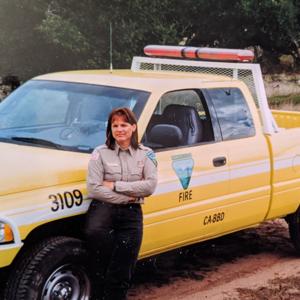


Today feels weird and disorienting to me. Well, It’s been feeling weird and disorienting for a few weeks. The images above probably give you the topics that are making me feel odd. Tomorrow is the 19 year anniversary of the attacks on New Your City. You may have listened to some of my stories from the weeks I spent working there at the pile. We’re also into the 6th or 7th month of isolation due to covid-19. Now to top it off, wildland fires are ravaging and destroying communities throughout California, Oregon and Washington. It can wear on you even if you’re not being evacuated from your home due to a wildfire. It can wear on you even if you weren’t in NYC on September 11, 2001. It can wear on you even if you haven’t lost anyone to covid-19. Today’s story is just about that general unease you may be sharing with me today.
A few of the stories on this website related to today’s topic are…
My hope is that after listening to this week’s story you’ll want to listen to some of the related stories and develop an interest in learning what we can do to support each other and our communities. We really do have the ability to help make our lives better and our communities safer. Most importantly, I hope we can be tolerant and understanding while everyone is feeling stressed, anxious and maybe a bit overwhelmed.
About a month ago my good friend Mark Sigrist passed away. He worked for the US Forest Service for many years and was an experienced firefighter and Operations Section Chief. When I first became an Ops Chief myself, Mark was the senior Ops Chief on my team and mentored me in his own classic style. Looking back on those days I was nearly un-mentorable. But Mark did mentor me and I did learn. What he taught me were his values. First, be good at your job and don’t do anything half assed. Be professional and most of all, be concerned about the firefighters who we’re supervising. That last item was very important to Mark. He was always concerned about their safety, health and comfort.
Mark was a mentor to many of us on that Incident Management Team. I have two brothers, but Mark was the brother I never had. He was that big mountain of a man that everyone loved. And through all that serious and critically important issues facing fire chiefs everywhere, Mark told me it was OK to laugh and have a good time at work. I already did laugh at work. But I wasn’t sure if it was appropriate at this level of the organization and when was it OK. Mark was all business on the job and especially while on a fire. But when we were relaxed and not worrying about people’s lives and property, he made us all laugh. He was tough when necessary but kind and tender when that was needed by his co-workers and friends. But when I think of Mark I will smile and laugh because that’s what I loved most about him. He made me laugh. And in this life, we need as much of that as we can get.
To his family, all I can say is thank you for sharing Mark with us while he was alive. He spent so much time with us during the summers and I know that’s time he wasn’t with you. So thank you. To everyone else, here’s a tiny glimpse into one man’s life and how he impacted his firefighting co-workers around him.
Today (August 21, 2020) while listening to the news, I heard the familiar refrain that if California would only “rake the forest” they wouldn’t be having all these fires. This story is not about what you hear in the news or about our current leadership in Washington. But I do want to describe what it takes to make our forests and wildlands safer from fire. As I’ve described in previous stories, it is not easy to treat the fuels in our wildlands. It doesn’t matter if it’s a forest or brush or even just grass. It might be a federally managed Park or a National Forest. Maybe it’s a private or corporately owned timber production area. You may own 20 acres in the back country yourself. Or even more likely, you may live in a house surrounded by a beautiful natural landscape.
What’s important to keep in mind is that all the fires burning in California right now are not even burning in what we think of as a Forest. Many of the fires are burning in brush lands. There may be big trees scattered throughout the brush, but many of the fires are burning small state parks and individual’s small plots of lands. This isn’t gross mismanagement of public lands. To be more specific, there were more than 70,000 lightning strikes across California during their driest part of the year. Plus, the State is beginning to enter drought conditions once again. 70,000 lightning strikes on dry natural vegetation is going to start a lot of fires. I don’t care where you live.
So before you get all riled up, I’m not suggesting we can’t do more than we are now. I’ve been working for more funding and better regulations for years. And keep in mind I’m coming to this discussion with 45 years of experience and multiple degrees including a Masters of Forestry. I’ve been a prescribed burning practitioner and a fuels management expert for a long time. There are some who have more experience than me. But that list isn’t that long either. Lets just agree that this is a complex issue. And we really need public support for the agencies managing our wildlands and we need private land owners and homeowners to take some responsibility for themselves. And “Rakes”… rakes are critical around your own home to keep the pine needles away from your home. That’s about it.
As always, thanks for listening.
Scenes from Fire Camps
Living and sleeping at large wildfires can be challenging. This year with the Covid virus it’s even more challenging. But this week’s story is about sleeping in a busy fire camp. I’ve also included a few pictures from a fire camp for those of you who might not have ever had the pleasure of living in the dirt and dust for weeks on end. The pictures will illustrate just how amazing the folks who work in the Logistics Section are. The firefighters get all the kudos but to all the folks working back in camp in Logistics, Finance and Planning, my hat is off to you.
The following photos show firefighters during their morning briefing, the kitchen units, showers, sleeping trailers and tents, the office area, etc. In the meantime I hope you enjoy this peek into the life of firefighters at a large wildfire.
In 1988 many firefighters from around the United States and Canada ended up in Yellowstone National Park assigned to the many fires in and near the park. Some firefighters made multiple trips to the area. I only made it for one trip to the fires there but that assignment lasted 30 days. It was an interesting time to be sure. I had never been on a fire so far from home (Arizona) and had never been on a fire for so long (30 days). After a few weeks I thought I might never get home. I missed my son’s first day of kindergarten. When I called home, the kids would cry, I would cry… It was a tough time. But there were adventures to be had. The firefighting was intense, the scenery was amazing and the inter-personal interactions were often quite entertaining.
This week I’ve included 4 short stories that you should find interesting and entertaining. It’s definitely a behind the scenes kind of view of what happens at a large, long term fire incident. There were many other short stories that could be included this week but I don’t think you want to spend 2 hours of your day listening to me reminiscing and laughing with my friends. These are good examples of hard working, professional and committed firefighters… who also qualify as knuckleheads. Hope you enjoy this weeks story. Thanks for listening everyone.
Today’s story is about different communications styles in our work environment. I can’t tell this story without using the actual colorful language that you might hear around the fire ground. So I apologize if my language offends anyone. If you have tender ears, you might want to bypass this week’s story. For those of you still brave enough to listen, you’re sure to get a chuckle if not more. Even though the stories this week are humorous, as usual there is a bigger point to be made. And as often the case, the message has to do with communications on the fire ground. I will not be suggesting that the F Bomb is my preferred communications tool. But you’ll hear when I used it and got the desired outcome. Besides the instances in this week’s story, I have many more that I could use to illustrate the point.
Although this story takes place in New York City following the 9-11 attacks, it is not about the incident itself. If you want to hear about my experiences following the attack, I posted a story about 9-11 on September 12th 2019. Episode 13. That story is quite serious. This is not. And I do not want to disrespect anyone since the setting for today’s story is NYC following that horrible day. It just so happens to be my first exposure to New York City Cops and Firefighters. We were all tired, stressed and over worked. Sometimes you just get some funny results from that combination.
Huge thanks to those of you who are out on the firelines this summer. Your work keeps us, our loved ones and our property safe from wildfires. And also thanks for those of you non-firefighter listeners. You all make this effort worthwhile for me. Hope you enjoy this week’s story and as always, please share my website with your friends.
Folks everywhere are stressed right now with the threat of Covid virus and everything else going on, so I thought I’d tell a couple of stories that should make you laugh and distract you from the news. As I’ve mentioned in my earlier stories, the public doesn’t really know what goes on at the scene of an emergency. Our intent is to provide excellent patient care and customer service. I think we always did when I was still working. But there is some funny stuff that happens too. Or in my case, my immature brain takes over and I have some funny thoughts that I don’t say out loud.
In this week’s story I’ll relate a few incidents that occurred at the same resort that was in my “first due” response area many years ago. We responded to the same place regularly and these short stories were pretty indicative of what we might see when we arrived on scene. I hope you enjoy this story and please share it with your friends and family. Stay safe everyone and mask up and wash up. Thanks.
I would never want listeners to think I’m man bashing. I loved working with the guys during my long fire career. But some men have been a bit more fun to work with than others. Today I’m going to tell you two stories. In the first story, the guy was clearly just mansplaining. And in the end, I hope he learned something about how to communicate with people. I learned something too. I learned that when the time is right, you have to stand up for yourself, even if it’s in a subtle non confrontational manner.
I think the guy in the second story was just testing me. He was also clearly messing with me. A form of hazing or pranking maybe. He was having some fun at my expense. It’s something I was quite used to and knew how to deal with. How we deal with these episodes in life can determine how we’re perceived, how well we’re accepted or not and how successful we are. This particular knucklehead and I became great friends. We went on to work well together and we continued to prank each other. I was just as guilty as he was. The score was tied by the time we both retired.
I hope you’re continuing to find my stories entertaining. But more importantly, I hope you find them useful, especially if you’re working in the fire service. Thanks for listening everyone and don’t forget to share this site with your friends.
Every year before the 4th of July, fireworks stands open up around the country. Depending on where you live, your access to certain types of fireworks may be restricted or maybe not. Some jurisdictions restrict aerial type fireworks, but some don’t. Even if fireworks are illegal in one city or county, they can easily be purchased elsewhere and brought in to another jurisdiction. During my 45 years in the fire service I’ve witnessed so many crazy incidents related to mis-use and mis-handling of fireworks. The same piece of fireworks may be safe in one location but totally unsafe in another depending on surrounding vegetation and age of the person using them. I have witnessed homes damaged by fire from a bottle rocket and injuries from the mishandling of easily purchased fireworks. Every firefighter has their own experiences with fireworks. It’s inevitable to be exposed to some crazy stuff. Hope you enjoy this week’s story and please comment and let me know where you heard about this website from. Thanks for listening everyone.
While I’m comfortably sitting here on my boat writing the introduction for this week’s story, thousands of firefighters are working hard to extinguish major wildfires throughout the southwestern US as well as Utah and Nevada. Before the summer season is over, thousands more will be deployed to large fires across California, Oregon, Washington and the rest of the western US. These deployments are in addition to the tens of thousands of initial attack fire responses in their local jurisdictions.
This time of year, my thoughts always wander back to the many experiences during my career when firefighters lives were either put at risk or tragically ended while attempting to protect a home or subdivision from wildfire. What makes this so frustrating is that homeowners and local politicians have the ability to directly impact upon firefighters successes or failures in these efforts. Please take a few minutes to listen to this weeks story. The actions you take as a result could save the life of a firefighter who is there to protect your life and your home. Please do your part. And as always, thanks for listening.
From the publisher's feed