
Sign up to save your podcasts
Or



Send us Fan Mail
Hey Brain Friends, Celebrating the life and legacy of Dr. Seles is at the heart of today's episode. I'm sharing the original recording of our neuroplasticity episode from 2022 that didn't make the cut. We had so much fun recording this but when we went to edit, the levels were not good. updates to the platform, there is a fix now. LOL We explore the concept of neuroplasticity and its role in recovery and personal growth, infused with laughter and ice breakers! We had such a good time recording this, I hope you enjoy. I will be back on the mic when I can, right now I'm grieving my friend. So enjoy this gem.
• Reflecting on the impact of Dr. Seles’s life
• Scholarships established in her name to promote health equity
• Understanding neuroplasticity and how the brain adapts
• Engaging in memory recall through an icebreaker
• Tips for incorporating playful activities to promote brain health
• The significance of consistency in practice during recovery
• How art and exercise can aid neuroplasticity
• The inspiring journeys shared by listeners and community members
We remind our Brain Friends to support the scholarships established to honor Dr. Seles and I encourage everyone to explore their websites for detailed information.
https://aphasia.org/stories/announcing-the-davetrina-seles-gadson-health-equity-grant-program/
https://www.cognitiverecoverylab.com/seles
https://www.cognitiverecoverylab.com/seles
https://aphasia.org/stories/announcing-the-davetrina-seles-gadson-health-equity-grant-program/
Our beloved colleague, Dr. Davetrina Seles Gadson, passed away January 11, 2025. Dr. Gadson was an extraordinary speech-language pathologist and neuroscience researcher who devoted her energy to studying health disparities in aphasia recovery. She was a fierce advocate for improving services for individuals with aphasia, particularly Black Americans. Her research transformed our understanding of these health disparities and shed light on how we can address them. We were privileged to have Dr. Gadson as a cherished member of our lab community for four years, first as a postdoctoral fellow and then as an Instructor of Rehabilitation Medicine. She was still a close collaborator and friend to many of us at the time of her passing. Dr. Gadson was an incredible person—compassionate, inspiring, and full of life. Her dedication to advancing equity in aphasia recovery and her profound impact on our community will never be forgotten. We are committed to honoring her memory by continuing to push our field forward and fight for equitable services for all people with aphasia.
Send us Fan Mail
In this brief episode of Brain Friends, Angie shares the devastating news of the passing of her beloved friend and co-host, Dr. Davetrina Seles Gadson, after a courageous battle with cancer.
Dr. Seles, a brilliant and compassionate neuro nerd and speech-language pathologist, brought a unique blend of expertise and warmth to Brain Friends. Her insights and genuine concern for the aphasia community deeply resonated with listeners.
Angie pays tribute to Dr. Seles's unwavering strength and grace throughout her illness. She reflects on the profound impact Dr. Seles had on her life and on the countless individuals whose lives were touched by her work.
The episode also addresses the future of Brain Friends, honoring Dr. Seles's legacy by continuing to provide valuable information and support to the aphasia community.
We love, appreciate, and remember you, Dr. Seles.
https://www.cognitiverecoverylab.com/seles
https://aphasia.org/stories/announcing-the-davetrina-seles-gadson-health-equity-grant-program/
Our beloved colleague, Dr. Davetrina Seles Gadson, passed away January 11, 2025. Dr. Gadson was an extraordinary speech-language pathologist and neuroscience researcher who devoted her energy to studying health disparities in aphasia recovery. She was a fierce advocate for improving services for individuals with aphasia, particularly Black Americans. Her research transformed our understanding of these health disparities and shed light on how we can address them. We were privileged to have Dr. Gadson as a cherished member of our lab community for four years, first as a postdoctoral fellow and then as an Instructor of Rehabilitation Medicine. She was still a close collaborator and friend to many of us at the time of her passing. Dr. Gadson was an incredible person—compassionate, inspiring, and full of life. Her dedication to advancing equity in aphasia recovery and her profound impact on our community will never be forgotten. We are committed to honoring her memory by continuing to push our field forward and fight for equitable services for all people with aphasia.
Send us Fan Mail
In this episode of Brain Friends, we delve into the complexities of cognitive function and its disorders.
Angie shares her personal journey with cognitive impairment following a stroke, highlighting the challenges of aphasia and adapting to a "new normal."
Dr. Seles provides insights into the differences of cognitive testing, explaining why certain tests are designed for specific populations and the importance of normalized testing.
What you'll learn:
Tune in to gain valuable knowledge for individuals facing cognitive challenges.
https://www.cognitiverecoverylab.com/seles
https://aphasia.org/stories/announcing-the-davetrina-seles-gadson-health-equity-grant-program/
Our beloved colleague, Dr. Davetrina Seles Gadson, passed away January 11, 2025. Dr. Gadson was an extraordinary speech-language pathologist and neuroscience researcher who devoted her energy to studying health disparities in aphasia recovery. She was a fierce advocate for improving services for individuals with aphasia, particularly Black Americans. Her research transformed our understanding of these health disparities and shed light on how we can address them. We were privileged to have Dr. Gadson as a cherished member of our lab community for four years, first as a postdoctoral fellow and then as an Instructor of Rehabilitation Medicine. She was still a close collaborator and friend to many of us at the time of her passing. Dr. Gadson was an incredible person—compassionate, inspiring, and full of life. Her dedication to advancing equity in aphasia recovery and her profound impact on our community will never be forgotten. We are committed to honoring her memory by continuing to push our field forward and fight for equitable services for all people with aphasia.
Send us Fan Mail
Language assessments after stroke are not all the same, and the type of test a clinician chooses directly affects what gets measured and what gets missed. This episode breaks down the difference between impairment-based assessments like the Western Aphasia Battery and participation-based assessments like the Communication Activities of Daily Living, and explains why that distinction matters for survivors. Dr. Seles walks through how aphasia intersects with cognition and why quality-of-life assessments belong in every evaluation. Angie shares the real benefits and challenges of completing language assessments from the survivor's side of the table. Dr. Seles closes with three concrete tips for speech-language pathologists supporting survivors with low social support and reduced quality of life. For SLPs, students, survivors, and care partners who want to understand what gets tested, what gets missed, and what good assessment actually looks like. In this episode of Brain Friends, we discuss language assessments used in individuals with aphasia and acquired communication disorders.
Angie shares the benefits and challenges in completing language assessments and which type of assessment is beneficial to recovery.
Dr. Seles discusses the difference between impairment-based tests like the Western Aphasia Battery (WAB) and participation-based tests like the Communication Activities of Daily Living (CADL).
Together we discuss the importance of quality-of-life assessments and how aphasia impacts cognition. Finally, Dr. Seles shares 3 tips for Speech-Language Pathologists (SLP) to help survivors navigate low social support and quality of life.
https://www.cognitiverecoverylab.com/seles
https://aphasia.org/stories/announcing-the-davetrina-seles-gadson-health-equity-grant-program/
Our beloved colleague, Dr. Davetrina Seles Gadson, passed away January 11, 2025. Dr. Gadson was an extraordinary speech-language pathologist and neuroscience researcher who devoted her energy to studying health disparities in aphasia recovery. She was a fierce advocate for improving services for individuals with aphasia, particularly Black Americans. Her research transformed our understanding of these health disparities and shed light on how we can address them. We were privileged to have Dr. Gadson as a cherished member of our lab community for four years, first as a postdoctoral fellow and then as an Instructor of Rehabilitation Medicine. She was still a close collaborator and friend to many of us at the time of her passing. Dr. Gadson was an incredible person—compassionate, inspiring, and full of life. Her dedication to advancing equity in aphasia recovery and her profound impact on our community will never be forgotten. We are committed to honoring her memory by continuing to push our field forward and fight for equitable services for all people with aphasia.
Send us Fan Mail
In this episode of Brain Friends, we share a behind-the-scenes conversation between Angie and Dr. Seles on Anomia. Together we weigh the benefits of recognizing the different types of Anomia and the challenges with diagnosis.
Anomia is a fluent aphasia characterized by word-finding difficulty or the inability to name objects.
Should we classify Anomia differently? What can Speech-Language Pathologists and researchers do to better help survivors with Anomia?
https://www.cognitiverecoverylab.com/seles
https://aphasia.org/stories/announcing-the-davetrina-seles-gadson-health-equity-grant-program/
Our beloved colleague, Dr. Davetrina Seles Gadson, passed away January 11, 2025. Dr. Gadson was an extraordinary speech-language pathologist and neuroscience researcher who devoted her energy to studying health disparities in aphasia recovery. She was a fierce advocate for improving services for individuals with aphasia, particularly Black Americans. Her research transformed our understanding of these health disparities and shed light on how we can address them. We were privileged to have Dr. Gadson as a cherished member of our lab community for four years, first as a postdoctoral fellow and then as an Instructor of Rehabilitation Medicine. She was still a close collaborator and friend to many of us at the time of her passing. Dr. Gadson was an incredible person—compassionate, inspiring, and full of life. Her dedication to advancing equity in aphasia recovery and her profound impact on our community will never be forgotten. We are committed to honoring her memory by continuing to push our field forward and fight for equitable services for all people with aphasia.
Send us Fan Mail
Black stroke survivors with aphasia face compounding barriers to care, and the research is clear on what needs to change. This episode breaks down five concrete actions clinicians, researchers, and care partners can take right now: implicit bias training, workforce diversity, representation in research, health literacy support, and patient-reported outcomes. Hosted by Angie of Brain Friends: The Podcast. Resources included for caregivers seeking compensation and for speech-language pathologists committed to closing the equity gap in aphasia care. For SLPs, researchers, care partners, and anyone working toward more equitable outcomes for Black people with aphasia.
In this episode of Brain Friends, we discuss 5 ways everyone can contribute to health equity for Black people with aphasia. We give resources for caregivers to get compensated and encourage speech-language pathologists (SLPs) to support health literacy in clients.
1. Implicit Bias Training- to help practitioners recognize stereotypical beliefs that contribute to health inequities.
2. Workforce Diversity- may help clients with communication and participation in research by having practitioners who look like them.
3. Representation in Research- helps ensure generalization of findings and that all voices are included. http://www.aphasiaresource.org/ Also, how are researchers sharing clinical findings? How many researchers have collected data from participants, published the findings, and gone back to the participants to share their study results?
4. Health Literacy- helps individuals understand medical information to make an informed decision. It is important to encourage care partners and provide disability resources that compensate the caregiver https://www.usa.gov/disability-caregiver
5. Patient Reported Outcomes- helps give people with aphasia a voice in therapy by sharing goals that are important to the individual. Patient-reported outcomes can be challenging to read and should be diversified with large print, pictures, audio versions, or available on assistive devices.
https://www.cognitiverecoverylab.com/seles
https://aphasia.org/stories/announcing-the-davetrina-seles-gadson-health-equity-grant-program/
Our beloved colleague, Dr. Davetrina Seles Gadson, passed away January 11, 2025. Dr. Gadson was an extraordinary speech-language pathologist and neuroscience researcher who devoted her energy to studying health disparities in aphasia recovery. She was a fierce advocate for improving services for individuals with aphasia, particularly Black Americans. Her research transformed our understanding of these health disparities and shed light on how we can address them. We were privileged to have Dr. Gadson as a cherished member of our lab community for four years, first as a postdoctoral fellow and then as an Instructor of Rehabilitation Medicine. She was still a close collaborator and friend to many of us at the time of her passing. Dr. Gadson was an incredible person—compassionate, inspiring, and full of life. Her dedication to advancing equity in aphasia recovery and her profound impact on our community will never be forgotten. We are committed to honoring her memory by continuing to push our field forward and fight for equitable services for all people with aphasia.
Send us Fan Mail
Aphasia affects nearly 2 million Americans, yet most people have never heard of it. This episode makes the case for why awareness is not just a campaign, it is a survival issue. From diagnosis to discharge to community reintegration, gaps in knowledge cost survivors time, access, and outcomes. For everyone in the aphasia ecosystem who believes the information gap is a problem worth solving.
In this episode of Brain Friends, we invite two stakeholders to celebrate Aphasia Awareness Month, Maura Silverman, the executive director of the National Aphasia Association (NAA), and Gee Jackson, a lawyer and stroke survivor with aphasia.
Together we answer two important questions:
1. What do you know about aphasia now that you wish you would have known on day 1?
2. How can we bring awareness to aphasia?
Listen, laugh, and learn how you can spread awareness about aphasia.
Links:
National Aphasia Association- https://aphasia.org/
Aphasia Resource Collaboration Hub (ARCH)- https://aphasiaresource.org/
https://www.cognitiverecoverylab.com/seles
https://aphasia.org/stories/announcing-the-davetrina-seles-gadson-health-equity-grant-program/
Our beloved colleague, Dr. Davetrina Seles Gadson, passed away January 11, 2025. Dr. Gadson was an extraordinary speech-language pathologist and neuroscience researcher who devoted her energy to studying health disparities in aphasia recovery. She was a fierce advocate for improving services for individuals with aphasia, particularly Black Americans. Her research transformed our understanding of these health disparities and shed light on how we can address them. We were privileged to have Dr. Gadson as a cherished member of our lab community for four years, first as a postdoctoral fellow and then as an Instructor of Rehabilitation Medicine. She was still a close collaborator and friend to many of us at the time of her passing. Dr. Gadson was an incredible person—compassionate, inspiring, and full of life. Her dedication to advancing equity in aphasia recovery and her profound impact on our community will never be forgotten. We are committed to honoring her memory by continuing to push our field forward and fight for equitable services for all people with aphasia.
Send us Fan Mail
Stroke recovery does not happen alone. This episode brings Angie's husband & care partner Kiehl Cauthorn into the conversation for an honest look at what aphasia support actually requires. Together they break down the difference between a caregiver and a care partner, walk through the stages of care in post-stroke aphasia recovery, and address the real work of advocating with insurance companies on a survivor's behalf. Speech-language pathologists and practitioners will find concrete tips on how to include the care partner in the therapy room, not as a bystander but as part of the recovery team. For survivors, this episode carries a message worth holding onto: you are better today than you were yesterday, and you will be better tomorrow than you are today. For care partners, the reminder is just as direct: stop, listen, be patient, and trust. For care partners, SLPs, stroke survivors, and anyone who has ever wondered what it takes to show up for someone rebuilding their language after stroke. Does it take a village to recover from a stroke? In this episode of Brain Friends, we talk about aphasia support with Angie's care partner Kiehl Cauthorn.
We discuss the difference between caregivers and care partners, the stages of care in post-stroke aphasia, and advocacy with insurance companies. We give tips to speech-language pathologists (SLPs) and other practitioners on how to include the caregiver/care partner in therapy.
Finally, we remind aphasia survivors that "you are better today than you were yesterday and you will be better tomorrow than you are today". We encourage caregivers and care partners to "stop, listen, be patient, and trust".
https://www.cognitiverecoverylab.com/seles
https://aphasia.org/stories/announcing-the-davetrina-seles-gadson-health-equity-grant-program/
Our beloved colleague, Dr. Davetrina Seles Gadson, passed away January 11, 2025. Dr. Gadson was an extraordinary speech-language pathologist and neuroscience researcher who devoted her energy to studying health disparities in aphasia recovery. She was a fierce advocate for improving services for individuals with aphasia, particularly Black Americans. Her research transformed our understanding of these health disparities and shed light on how we can address them. We were privileged to have Dr. Gadson as a cherished member of our lab community for four years, first as a postdoctoral fellow and then as an Instructor of Rehabilitation Medicine. She was still a close collaborator and friend to many of us at the time of her passing. Dr. Gadson was an incredible person—compassionate, inspiring, and full of life. Her dedication to advancing equity in aphasia recovery and her profound impact on our community will never be forgotten. We are committed to honoring her memory by continuing to push our field forward and fight for equitable services for all people with aphasia.
Send us Fan Mail
Primary progressive aphasia is not the same as stroke-related aphasia, and the difference matters for diagnosis, treatment, and family planning. In this episode, Dr. Davetrina Seles Gadson breaks down the complexities of PPA, how it differs from other aphasia types, and why frontotemporal dementia is often part of the conversation. Angie Cauthorn adds plain language analogies that make the distinctions clear for anyone navigating this diagnosis. PPA is progressive, which means its impact on individuals, families, and communities does not stop at diagnosis. For stroke survivors, care partners, students, and health professionals who need to understand where PPA fits in the larger aphasia picture.
Dr. Seles unravels the complexities of PPA versus other aphasia types and describes the difference between a stroke and frontal temporal dementia.
Angie shares analogies highlighting the key differences from other forms of aphasia.
The impact of PPA on individuals, their families, and communities is ongoing.
This episode of Brain Friends is a must-listen for survivors, students, and health professionals.
https://www.cognitiverecoverylab.com/seles
https://aphasia.org/stories/announcing-the-davetrina-seles-gadson-health-equity-grant-program/
Our beloved colleague, Dr. Davetrina Seles Gadson, passed away January 11, 2025. Dr. Gadson was an extraordinary speech-language pathologist and neuroscience researcher who devoted her energy to studying health disparities in aphasia recovery. She was a fierce advocate for improving services for individuals with aphasia, particularly Black Americans. Her research transformed our understanding of these health disparities and shed light on how we can address them. We were privileged to have Dr. Gadson as a cherished member of our lab community for four years, first as a postdoctoral fellow and then as an Instructor of Rehabilitation Medicine. She was still a close collaborator and friend to many of us at the time of her passing. Dr. Gadson was an incredible person—compassionate, inspiring, and full of life. Her dedication to advancing equity in aphasia recovery and her profound impact on our community will never be forgotten. We are committed to honoring her memory by continuing to push our field forward and fight for equitable services for all people with aphasia.
Send us Fan Mail
Alexia is an acquired reading disorder with difficulty seeing and reading words or understanding the meaning of written words. "Agraphia" is the loss of a previous ability to write.
Angie discovers new terms related to her aphasia and the connection in the brain.
Dr. Seles shares clinical stories on navigating alexia in therapy and the role speech-language pathologists play in helping survivors reintegrate into the community.
https://www.cognitiverecoverylab.com/seles
https://aphasia.org/stories/announcing-the-davetrina-seles-gadson-health-equity-grant-program/
Our beloved colleague, Dr. Davetrina Seles Gadson, passed away January 11, 2025. Dr. Gadson was an extraordinary speech-language pathologist and neuroscience researcher who devoted her energy to studying health disparities in aphasia recovery. She was a fierce advocate for improving services for individuals with aphasia, particularly Black Americans. Her research transformed our understanding of these health disparities and shed light on how we can address them. We were privileged to have Dr. Gadson as a cherished member of our lab community for four years, first as a postdoctoral fellow and then as an Instructor of Rehabilitation Medicine. She was still a close collaborator and friend to many of us at the time of her passing. Dr. Gadson was an incredible person—compassionate, inspiring, and full of life. Her dedication to advancing equity in aphasia recovery and her profound impact on our community will never be forgotten. We are committed to honoring her memory by continuing to push our field forward and fight for equitable services for all people with aphasia.
From the publisher's feed
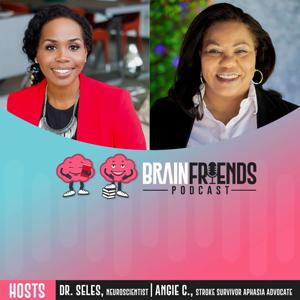
Brain Friends: The Podcast is a survivor-led show about stroke, brain health, aphasia, recovery, and health equity.
Hosted by Angie Cauthorn, a two-time stroke survivor and aphasia…
Brain Friends began with me and my friend and co-host, Dr. D. Seles Gadson, a neuroscientist, speech-language pathologist, and champion for equity in aphasia care. Dr. Seles’s work focused on health disparities, representation, and making science useful for real communities. Her voice still opens and closes every episode, and her legacy remains part of the show’s foundation.
Since launching in June 2022, Brain Friends has reached listeners in more than 100 countries, with conversations that center stroke recovery, aphasia, cognition, communication, prevention, brain health, and the real-life “now what?” after a neurological event.
Regular segments include:
The Breakdown: Clear explanations of stroke, aphasia, brain health, research, and recovery topics.
Smart Cookie: The thoughtful question Angie asks guests about brain health, recovery, equity, or what they wish more people understood.
OTC with the Commish: “On The Clock” style recovery talk, where Angie uses football draft energy to break down the moves, tools, and first-round picks that matter.
The Check-In: Short, honest reflections on life after stroke, recovery, advocacy, and what comes next.
Brain Friends is not here to give medical advice or empty inspiration. It is here to make the science clearer, the recovery road less lonely, and the next step easier to see.
Welcome to Brain Friends.