
Sign up to save your podcasts
Or



Send us Fan Mail
Neuroplasticity is the brain's ability to reorganize and rebuild after injury, and it is central to every aphasia recovery story. This episode goes beyond the basics, examining what the latest research reveals about how and when the brain changes, what conditions support recovery, and what that means for survivors in the long term. A follow-up to Season 1's neuroplasticity episode, built for listeners ready to go further.
Dr. Roy Hamilton, Professor of Neurology, Psychiatry, and Physical Medicine and Rehabilitation at the Perelman School of Medicine at the University of Pennsylvania and Director of Penn’s Laboratory for Cognition and Neural Stimulation (LCNS), for a part 2 discussion on Neuroplasticity.
We begin with the fundamental concept that brains are plastic and designed to change based on experience. Dr. Roy shares how the quality of care in recovery will help language get stronger or activities become easier because the brain reorganizes and adapts also known as "neuroplasticity".
Angie shares analogies that translate brain injury to neuroplasticity like “water on the motherboard”. Dr. Seles seeks tips on how practitioners can help with neuroplasticity in neurorehabilitation.
Finally, we discuss the importance of diversity and inclusion in research, research staff, and publications.
Dr. Roy Hamilton, link to the LCNS website and the email associated with the LCNS.
https://www.med.upenn.edu/lcns/
Aphasia Resources
https://aphasiaresource.org/
https://www.cognitiverecoverylab.com/seles
https://aphasia.org/stories/announcing-the-davetrina-seles-gadson-health-equity-grant-program/
Our beloved colleague, Dr. Davetrina Seles Gadson, passed away January 11, 2025. Dr. Gadson was an extraordinary speech-language pathologist and neuroscience researcher who devoted her energy to studying health disparities in aphasia recovery. She was a fierce advocate for improving services for individuals with aphasia, particularly Black Americans. Her research transformed our understanding of these health disparities and shed light on how we can address them. We were privileged to have Dr. Gadson as a cherished member of our lab community for four years, first as a postdoctoral fellow and then as an Instructor of Rehabilitation Medicine. She was still a close collaborator and friend to many of us at the time of her passing. Dr. Gadson was an incredible person—compassionate, inspiring, and full of life. Her dedication to advancing equity in aphasia recovery and her profound impact on our community will never be forgotten. We are committed to honoring her memory by continuing to push our field forward and fight for equitable services for all people with aphasia.
Send us Fan Mail
Aphasia treatment is more than speech therapy exercises. This episode breaks down the full landscape of aphasia rehabilitation, from automatic speech tasks to errorless learning, and examines how treatment settings shape what survivors actually receive. Dr. Seles addresses health equity in aphasia care and the role implicit bias plays in clinical decision-making. Angie shares her own treatment journey and makes the case for the Life Participation Approach to Aphasia, a framework that centers the survivor's goals, not just the clinician's checklist. The episode also confronts how insurance demands drive treatment tasks and how speech-language pathologists can write goals that align with real-world function. For SLPs, survivors, care partners, and students who need to understand what good aphasia treatment actually looks like and why, as this episode makes clear, the client does not plateau. The clinician does. In this episode of Brain Friends, we discuss aphasia treatment and ways Speech Language Pathologists support recovery.
Treatment settings and strategies from automatic speech tasks to errorless learning are explained with examples.
Dr. Seles discusses health equity in aphasia and how to avoid implicit bias. How insurance demands dictate treatment tasks and ways SLPs can write treatment goals to align with function.
Angie shares the importance of inclusion in research, treatment, and the use of patient-reported outcomes. She discusses her treatment journey and the importance of the Life Participation Approach in Aphasia.
Together we recognize that in aphasia treatment “the client doesn’t plateau, the clinician does”.
For more information on the Resource Orientation for Stroke and Aphasia conference:
https://aphasiaresource.org/
https://www.cognitiverecoverylab.com/seles
https://aphasia.org/stories/announcing-the-davetrina-seles-gadson-health-equity-grant-program/
Our beloved colleague, Dr. Davetrina Seles Gadson, passed away January 11, 2025. Dr. Gadson was an extraordinary speech-language pathologist and neuroscience researcher who devoted her energy to studying health disparities in aphasia recovery. She was a fierce advocate for improving services for individuals with aphasia, particularly Black Americans. Her research transformed our understanding of these health disparities and shed light on how we can address them. We were privileged to have Dr. Gadson as a cherished member of our lab community for four years, first as a postdoctoral fellow and then as an Instructor of Rehabilitation Medicine. She was still a close collaborator and friend to many of us at the time of her passing. Dr. Gadson was an incredible person—compassionate, inspiring, and full of life. Her dedication to advancing equity in aphasia recovery and her profound impact on our community will never be forgotten. We are committed to honoring her memory by continuing to push our field forward and fight for equitable services for all people with aphasia.
Send us Fan Mail
Brain Friends Season 2 kicked off with Angie interviewing Dr. Seles on Aphasia Research.
We discuss sampling biases and how to make sure research is demographically representative. Dr. Seles shares 3 tips on how to recruit a diverse sample in research and the role stakeholders have in health equity.
Finally, we confirm that research is told by who holds the pen and the importance of interdisciplinary collaboration.
https://www.cognitiverecoverylab.com/seles
https://aphasia.org/stories/announcing-the-davetrina-seles-gadson-health-equity-grant-program/
Our beloved colleague, Dr. Davetrina Seles Gadson, passed away January 11, 2025. Dr. Gadson was an extraordinary speech-language pathologist and neuroscience researcher who devoted her energy to studying health disparities in aphasia recovery. She was a fierce advocate for improving services for individuals with aphasia, particularly Black Americans. Her research transformed our understanding of these health disparities and shed light on how we can address them. We were privileged to have Dr. Gadson as a cherished member of our lab community for four years, first as a postdoctoral fellow and then as an Instructor of Rehabilitation Medicine. She was still a close collaborator and friend to many of us at the time of her passing. Dr. Gadson was an incredible person—compassionate, inspiring, and full of life. Her dedication to advancing equity in aphasia recovery and her profound impact on our community will never be forgotten. We are committed to honoring her memory by continuing to push our field forward and fight for equitable services for all people with aphasia.
Send us Fan Mail
Season Finale. Episode 11 is full of humor as we discuss the importance of sleep and the brain.
Angie shares her fear around sleeping after her stroke and how she communicated fatigue "I feel like I have on two mink coats".
Dr. Seles discusses the link between sleep loss and poor brain health. We share tips for healthy aging and sleep hygiene.
Finally, Brain Friends goes on the road to the Clinical Aphasiology Conference. We want to hear your feedback . Please leave us a review or a topic you want us to cover in Season 2.
https://www.cognitiverecoverylab.com/seles
https://aphasia.org/stories/announcing-the-davetrina-seles-gadson-health-equity-grant-program/
Our beloved colleague, Dr. Davetrina Seles Gadson, passed away January 11, 2025. Dr. Gadson was an extraordinary speech-language pathologist and neuroscience researcher who devoted her energy to studying health disparities in aphasia recovery. She was a fierce advocate for improving services for individuals with aphasia, particularly Black Americans. Her research transformed our understanding of these health disparities and shed light on how we can address them. We were privileged to have Dr. Gadson as a cherished member of our lab community for four years, first as a postdoctoral fellow and then as an Instructor of Rehabilitation Medicine. She was still a close collaborator and friend to many of us at the time of her passing. Dr. Gadson was an incredible person—compassionate, inspiring, and full of life. Her dedication to advancing equity in aphasia recovery and her profound impact on our community will never be forgotten. We are committed to honoring her memory by continuing to push our field forward and fight for equitable services for all people with aphasia.
Send us Fan Mail
What do stroke survivors with aphasia and elite professional athletes have in common? More than you think. Angie Cauthorn and Dr. Seles apply five performance principles from professional sports ,training consistency, mental resilience, rest and recovery, nutrition, and coaching directly to aphasia rehabilitation after stroke. The result is a practical, evidence-informed framework for survivors who want to approach recovery with the same intention a professional athlete brings to their training. For PWA, care partners, and SLPs looking for new ways to motivate long-term rehabilitation engagement , this episode reframes what recovery can look like.
https://www.cognitiverecoverylab.com/seles
https://aphasia.org/stories/announcing-the-davetrina-seles-gadson-health-equity-grant-program/
Our beloved colleague, Dr. Davetrina Seles Gadson, passed away January 11, 2025. Dr. Gadson was an extraordinary speech-language pathologist and neuroscience researcher who devoted her energy to studying health disparities in aphasia recovery. She was a fierce advocate for improving services for individuals with aphasia, particularly Black Americans. Her research transformed our understanding of these health disparities and shed light on how we can address them. We were privileged to have Dr. Gadson as a cherished member of our lab community for four years, first as a postdoctoral fellow and then as an Instructor of Rehabilitation Medicine. She was still a close collaborator and friend to many of us at the time of her passing. Dr. Gadson was an incredible person—compassionate, inspiring, and full of life. Her dedication to advancing equity in aphasia recovery and her profound impact on our community will never be forgotten. We are committed to honoring her memory by continuing to push our field forward and fight for equitable services for all people with aphasia.
Send us Fan Mail
Broca's aphasia. Wernicke's aphasia. Global aphasia. Conduction aphasia. The clinical labels matter — but what do they actually mean for the person living inside them? Dr. Davetrina Seles Gadson breaks down the hallmark features of each major aphasia type, explains the difference between left and right hemisphere stroke presentations, and clarifies what the research says about recovery trajectories.
Angie Cauthorn shares which celebrity diagnosis mirrors her own experience with aphasia. For survivors trying to understand their diagnosis, caregivers navigating treatment decisions, and students preparing for clinical practice — this is the clearest breakdown you will find.
https://www.cognitiverecoverylab.com/seles
https://aphasia.org/stories/announcing-the-davetrina-seles-gadson-health-equity-grant-program/
Our beloved colleague, Dr. Davetrina Seles Gadson, passed away January 11, 2025. Dr. Gadson was an extraordinary speech-language pathologist and neuroscience researcher who devoted her energy to studying health disparities in aphasia recovery. She was a fierce advocate for improving services for individuals with aphasia, particularly Black Americans. Her research transformed our understanding of these health disparities and shed light on how we can address them. We were privileged to have Dr. Gadson as a cherished member of our lab community for four years, first as a postdoctoral fellow and then as an Instructor of Rehabilitation Medicine. She was still a close collaborator and friend to many of us at the time of her passing. Dr. Gadson was an incredible person—compassionate, inspiring, and full of life. Her dedication to advancing equity in aphasia recovery and her profound impact on our community will never be forgotten. We are committed to honoring her memory by continuing to push our field forward and fight for equitable services for all people with aphasia.
Send us Fan Mail
Neuroplasticity — the brain's ability to rewire itself after injury is the scientific foundation of aphasia recovery after stroke. But most survivors never hear the word explained in plain language. Angie breaks down what neuroplasticity actually feels like from the inside, using real-life analogies from her own stroke recovery. Dr. Seles translates the neuroscience: how repetition, novel activity, and structured therapy drive the brain changes that support language recovery. For stroke survivors rebuilding communication skills and for SLPs designing evidence-based treatment plans this episode makes the science usable.
Angie shares the analogy of what aphasia feels like and how doing repetitive or new activities helped her stroke recovery. Dr. Seles shares the importance of Use It or Lose It and how your daily routine can strengthen neural connections in the aging brain.
Finally, because neuroplasticity is activity driven, we do exercises that may leave Brain Friends with new connections....or not
Show Notes: Brain Games
6 Brain Exercises for NEUROPLASTICITY | Step 2 of Brain Education
https://www.cognitiverecoverylab.com/seles
https://aphasia.org/stories/announcing-the-davetrina-seles-gadson-health-equity-grant-program/
Our beloved colleague, Dr. Davetrina Seles Gadson, passed away January 11, 2025. Dr. Gadson was an extraordinary speech-language pathologist and neuroscience researcher who devoted her energy to studying health disparities in aphasia recovery. She was a fierce advocate for improving services for individuals with aphasia, particularly Black Americans. Her research transformed our understanding of these health disparities and shed light on how we can address them. We were privileged to have Dr. Gadson as a cherished member of our lab community for four years, first as a postdoctoral fellow and then as an Instructor of Rehabilitation Medicine. She was still a close collaborator and friend to many of us at the time of her passing. Dr. Gadson was an incredible person—compassionate, inspiring, and full of life. Her dedication to advancing equity in aphasia recovery and her profound impact on our community will never be forgotten. We are committed to honoring her memory by continuing to push our field forward and fight for equitable services for all people with aphasia.
Send us Fan Mail
Episode Title Suggestion: The First ROSA: How One Idea Became a Movement for Aphasia Awareness
Episode Description:
Before it had a name, it had a vision.
What is now known as ROSA (Resource Orientation for Stroke and Aphasia) started here, with this day, in Philadelphia, PA. ARCH hosted the first Aphasia Awareness Fair in partnership with Temple University, bringing together 160 stroke survivors, aphasia caregivers, clinicians, and researchers under one roof for the first time.
This episode of Brain Friends recaps that landmark event and the conversations it sparked.
Angie Cauthorn and Dr. Seles, meeting in person for the first time, reflect on what made this day significant, not just as a celebration, but as a blueprint for community-centered aphasia care.
In this episode:
This episode is for stroke survivors, aphasia caregivers, speech-language pathologists, healthcare advocates, and anyone who believes community is a clinical strategy.
Keywords: aphasia awareness, stroke recovery, aphasia caregivers, neuroplasticity, invisible disability, patient-reported outcomes, aphasia conference Philadelphia, ARCH, ROSA, speech therapy after stroke, aphasia research, Brain Friends podcast, community aphasia support, aphasia resources, stroke survivors
https://www.cognitiverecoverylab.com/seles
https://aphasia.org/stories/announcing-the-davetrina-seles-gadson-health-equity-grant-program/
Our beloved colleague, Dr. Davetrina Seles Gadson, passed away January 11, 2025. Dr. Gadson was an extraordinary speech-language pathologist and neuroscience researcher who devoted her energy to studying health disparities in aphasia recovery. She was a fierce advocate for improving services for individuals with aphasia, particularly Black Americans. Her research transformed our understanding of these health disparities and shed light on how we can address them. We were privileged to have Dr. Gadson as a cherished member of our lab community for four years, first as a postdoctoral fellow and then as an Instructor of Rehabilitation Medicine. She was still a close collaborator and friend to many of us at the time of her passing. Dr. Gadson was an incredible person—compassionate, inspiring, and full of life. Her dedication to advancing equity in aphasia recovery and her profound impact on our community will never be forgotten. We are committed to honoring her memory by continuing to push our field forward and fight for equitable services for all people with aphasia.
Send us Fan Mail
Stroke survivors with aphasia often experience depression or grief related to loss of social roles and communication. Speech-language pathologists play a role in helping clients navigate emotion when it shows up during therapy.
Dr. Seles discusses the importance of Speech-Language Pathologists (SLP) taking a helping skills class to learn how to support mental health in rehabilitation. Helping skills include how to validate emotion, reflect back a feeling, and show empathy.
Angie shares how emotional moments in aphasia recovery often presented during speech therapy sessions. She discusses her decision process around medication and asks Dr. Lauren for concrete steps survivors can take to navigate mental health.
Dr. Lauren gives advice on how to navigate grief and dispels myths about mental health. She shares tips health care providers can do to support their clients through emotional moments.
Tips for the provider.
1. Don’t panic. "They don’t need you to fix them they need you to hear them."
2. Validate the emotion and expression of the emotion.
3. Focus on listening and asking clarifying questions.
4. Reflect back the emotion. “I am hearing you say or “I am hearing that you feel”. "Did I get that right"?
6. Cultural humility - Affect matching with words.
7. Take action or co-collaborate on the next action. “Do you have/want a mental health therapist"?
https://www.cognitiverecoverylab.com/seles
https://aphasia.org/stories/announcing-the-davetrina-seles-gadson-health-equity-grant-program/
Our beloved colleague, Dr. Davetrina Seles Gadson, passed away January 11, 2025. Dr. Gadson was an extraordinary speech-language pathologist and neuroscience researcher who devoted her energy to studying health disparities in aphasia recovery. She was a fierce advocate for improving services for individuals with aphasia, particularly Black Americans. Her research transformed our understanding of these health disparities and shed light on how we can address them. We were privileged to have Dr. Gadson as a cherished member of our lab community for four years, first as a postdoctoral fellow and then as an Instructor of Rehabilitation Medicine. She was still a close collaborator and friend to many of us at the time of her passing. Dr. Gadson was an incredible person—compassionate, inspiring, and full of life. Her dedication to advancing equity in aphasia recovery and her profound impact on our community will never be forgotten. We are committed to honoring her memory by continuing to push our field forward and fight for equitable services for all people with aphasia.
Send us Fan Mail
Black stroke survivors are more likely to develop aphasia, less likely to receive equitable care, and nearly invisible in the research that is supposed to help them. Angie Cauthorn and Dr. Seles go deep on health equity in speech-language pathology. The disparities in diagnosis, treatment access, and clinical representation that shape outcomes for underserved communities. Dr. Seles addresses what the research says about race, aphasia severity, and systemic bias in neurorehabilitation. For SLPs, researchers, and survivors who have felt the gap first hand his episode names what most clinical settings will not.
https://www.cognitiverecoverylab.com/seles
https://aphasia.org/stories/announcing-the-davetrina-seles-gadson-health-equity-grant-program/
Our beloved colleague, Dr. Davetrina Seles Gadson, passed away January 11, 2025. Dr. Gadson was an extraordinary speech-language pathologist and neuroscience researcher who devoted her energy to studying health disparities in aphasia recovery. She was a fierce advocate for improving services for individuals with aphasia, particularly Black Americans. Her research transformed our understanding of these health disparities and shed light on how we can address them. We were privileged to have Dr. Gadson as a cherished member of our lab community for four years, first as a postdoctoral fellow and then as an Instructor of Rehabilitation Medicine. She was still a close collaborator and friend to many of us at the time of her passing. Dr. Gadson was an incredible person—compassionate, inspiring, and full of life. Her dedication to advancing equity in aphasia recovery and her profound impact on our community will never be forgotten. We are committed to honoring her memory by continuing to push our field forward and fight for equitable services for all people with aphasia.
From the publisher's feed
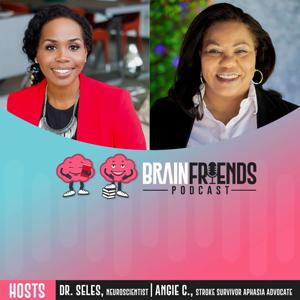
Brain Friends: The Podcast is a survivor-led show about stroke, brain health, aphasia, recovery, and health equity.
Hosted by Angie Cauthorn, a two-time stroke survivor and aphasia…
Brain Friends began with me and my friend and co-host, Dr. D. Seles Gadson, a neuroscientist, speech-language pathologist, and champion for equity in aphasia care. Dr. Seles’s work focused on health disparities, representation, and making science useful for real communities. Her voice still opens and closes every episode, and her legacy remains part of the show’s foundation.
Since launching in June 2022, Brain Friends has reached listeners in more than 100 countries, with conversations that center stroke recovery, aphasia, cognition, communication, prevention, brain health, and the real-life “now what?” after a neurological event.
Regular segments include:
The Breakdown: Clear explanations of stroke, aphasia, brain health, research, and recovery topics.
Smart Cookie: The thoughtful question Angie asks guests about brain health, recovery, equity, or what they wish more people understood.
OTC with the Commish: “On The Clock” style recovery talk, where Angie uses football draft energy to break down the moves, tools, and first-round picks that matter.
The Check-In: Short, honest reflections on life after stroke, recovery, advocacy, and what comes next.
Brain Friends is not here to give medical advice or empty inspiration. It is here to make the science clearer, the recovery road less lonely, and the next step easier to see.
Welcome to Brain Friends.