
Sign up to save your podcasts
Or



Send us Fan Mail
Self-Social isolation after stroke is one of the most underreported barriers to aphasia recovery and one of the most damaging. Angie shares the reality of maintaining friendships when communication is compromised, and the specific ways aphasia changes social relationships for stroke survivors. Dr. Seles brings the research: what neuroscience tells us about the link between social connection, neuroplasticity, and language recovery outcomes. For survivors, care partners, and SLPs designing community-based treatment goals. This episode addresses what the discharge paperwork never does.
https://www.cognitiverecoverylab.com/seles
https://aphasia.org/stories/announcing-the-davetrina-seles-gadson-health-equity-grant-program/
Our beloved colleague, Dr. Davetrina Seles Gadson, passed away January 11, 2025. Dr. Gadson was an extraordinary speech-language pathologist and neuroscience researcher who devoted her energy to studying health disparities in aphasia recovery. She was a fierce advocate for improving services for individuals with aphasia, particularly Black Americans. Her research transformed our understanding of these health disparities and shed light on how we can address them. We were privileged to have Dr. Gadson as a cherished member of our lab community for four years, first as a postdoctoral fellow and then as an Instructor of Rehabilitation Medicine. She was still a close collaborator and friend to many of us at the time of her passing. Dr. Gadson was an incredible person—compassionate, inspiring, and full of life. Her dedication to advancing equity in aphasia recovery and her profound impact on our community will never be forgotten. We are committed to honoring her memory by continuing to push our field forward and fight for equitable services for all people with aphasia.
Send us Fan Mail
Speech-language pathologists are the most important professionals in stroke and aphasia recovery — and most survivors do not know what they actually do until they are sitting in a session. Angie Cauthorn and Dr. Davetrina Seles Gadson break down the full scope of SLP practice: what SLPs assess, how they treat aphasia and acquired communication disorders after stroke, and what survivors should expect from the therapeutic relationship. For anyone navigating post-stroke care, choosing a provider, or entering the field — this is the episode that answers the questions most people are too afraid to ask.
Speech-language pathologists (SLP) work with adults with aphasia to restore communication and quality of life. Are you making your clients feel uncomfortable or more emotional? Dr. Seles provides master clinician tips for seasoned and early career SLPs. Angie shares challenges with post-stroke aphasia including information overload. You'll hear what makes a good SLP and what Angie wishes SLPs would stop doing.
Is there an insurance influence on receiving speech therapy services? We settle the debate on which rehabilitation therapy is the most important and call attention to the way SLPs are treated in the rehabilitation world.
Finally, we address the melanin in the room. Dr. Seles is the first Black SLP Angie met. Does physician-race concordance impact therapy?
https://www.cognitiverecoverylab.com/seles
https://aphasia.org/stories/announcing-the-davetrina-seles-gadson-health-equity-grant-program/
Our beloved colleague, Dr. Davetrina Seles Gadson, passed away January 11, 2025. Dr. Gadson was an extraordinary speech-language pathologist and neuroscience researcher who devoted her energy to studying health disparities in aphasia recovery. She was a fierce advocate for improving services for individuals with aphasia, particularly Black Americans. Her research transformed our understanding of these health disparities and shed light on how we can address them. We were privileged to have Dr. Gadson as a cherished member of our lab community for four years, first as a postdoctoral fellow and then as an Instructor of Rehabilitation Medicine. She was still a close collaborator and friend to many of us at the time of her passing. Dr. Gadson was an incredible person—compassionate, inspiring, and full of life. Her dedication to advancing equity in aphasia recovery and her profound impact on our community will never be forgotten. We are committed to honoring her memory by continuing to push our field forward and fight for equitable services for all people with aphasia.
Send us Fan Mail
Aphasia became a headline when a celebrity diagnosis put it in front of millions but stroke survivors have been living with it in silence for years. In this episode, Angie Cauthorn and Dr. Seles break down what the moment meant for aphasia awareness, what the public still gets wrong about the condition, and why representation in the conversation matters for recovery. For stroke survivors, caregivers, and SLPs looking to help clients feel less alone . this episode is the starting point.
https://www.cognitiverecoverylab.com/seles
https://aphasia.org/stories/announcing-the-davetrina-seles-gadson-health-equity-grant-program/
Our beloved colleague, Dr. Davetrina Seles Gadson, passed away January 11, 2025. Dr. Gadson was an extraordinary speech-language pathologist and neuroscience researcher who devoted her energy to studying health disparities in aphasia recovery. She was a fierce advocate for improving services for individuals with aphasia, particularly Black Americans. Her research transformed our understanding of these health disparities and shed light on how we can address them. We were privileged to have Dr. Gadson as a cherished member of our lab community for four years, first as a postdoctoral fellow and then as an Instructor of Rehabilitation Medicine. She was still a close collaborator and friend to many of us at the time of her passing. Dr. Gadson was an incredible person—compassionate, inspiring, and full of life. Her dedication to advancing equity in aphasia recovery and her profound impact on our community will never be forgotten. We are committed to honoring her memory by continuing to push our field forward and fight for equitable services for all people with aphasia.
Send us Fan Mail
Aphasia is one of the most isolating consequences of stroke — and one of the least talked about. In this first episode of Brain Friends: The Podcast, stroke survivor and aphasia advocate Angie Cauthorn and neuroscientist Dr. Davetrina Seles Gadson introduce themselves, explain how they met, and lay out why this podcast exists. What does aphasia actually feel like from the inside? What does the research say? Two stakeholders. Two perspectives. Two Neuro Nerds One mission: make the science accessible to the people who need it most. If you are a stroke survivor, someone with aphasia, a caregiver, or an SLP — you found the right show.
https://www.cognitiverecoverylab.com/seles
https://aphasia.org/stories/announcing-the-davetrina-seles-gadson-health-equity-grant-program/
Our beloved colleague, Dr. Davetrina Seles Gadson, passed away January 11, 2025. Dr. Gadson was an extraordinary speech-language pathologist and neuroscience researcher who devoted her energy to studying health disparities in aphasia recovery. She was a fierce advocate for improving services for individuals with aphasia, particularly Black Americans. Her research transformed our understanding of these health disparities and shed light on how we can address them. We were privileged to have Dr. Gadson as a cherished member of our lab community for four years, first as a postdoctoral fellow and then as an Instructor of Rehabilitation Medicine. She was still a close collaborator and friend to many of us at the time of her passing. Dr. Gadson was an incredible person—compassionate, inspiring, and full of life. Her dedication to advancing equity in aphasia recovery and her profound impact on our community will never be forgotten. We are committed to honoring her memory by continuing to push our field forward and fight for equitable services for all people with aphasia.
From the publisher's feed
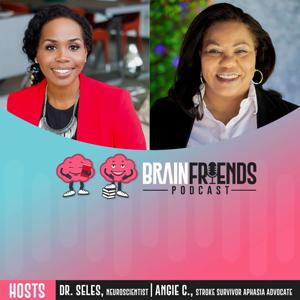
Brain Friends: The Podcast is a survivor-led show about stroke, brain health, aphasia, recovery, and health equity.
Hosted by Angie Cauthorn, a two-time stroke survivor and aphasia…
Brain Friends began with me and my friend and co-host, Dr. D. Seles Gadson, a neuroscientist, speech-language pathologist, and champion for equity in aphasia care. Dr. Seles’s work focused on health disparities, representation, and making science useful for real communities. Her voice still opens and closes every episode, and her legacy remains part of the show’s foundation.
Since launching in June 2022, Brain Friends has reached listeners in more than 100 countries, with conversations that center stroke recovery, aphasia, cognition, communication, prevention, brain health, and the real-life “now what?” after a neurological event.
Regular segments include:
The Breakdown: Clear explanations of stroke, aphasia, brain health, research, and recovery topics.
Smart Cookie: The thoughtful question Angie asks guests about brain health, recovery, equity, or what they wish more people understood.
OTC with the Commish: “On The Clock” style recovery talk, where Angie uses football draft energy to break down the moves, tools, and first-round picks that matter.
The Check-In: Short, honest reflections on life after stroke, recovery, advocacy, and what comes next.
Brain Friends is not here to give medical advice or empty inspiration. It is here to make the science clearer, the recovery road less lonely, and the next step easier to see.
Welcome to Brain Friends.