
Sign up to save your podcasts
Or



W.B Yeats' "Purgatory" is a grim representation of generational guilt and spiritual entrapment, as a father confronts the ghosts of his family’s past in the ruins of a once-noble home, where memory and violence echo years afterwards.
Meanwhile, in "The Cat and the Moon," two beggars—one blind, one lame—make their way to a holy well where Saint Colman resides in the hopes of curing their respective ailments. But when given the opportunity of being healed or being blessed, both beggars are forced to reassess their convictions. Will they use their newfound gifts for justice, or will they accept placement in the hereafter?
Follow me on other platforms:
https://bemuse.bandcamp.com
https://www.instagram.com/talentunlimited1/?hl=en
https://open.spotify.com/artist/0wiNjFbd6rluEHZF4Qffcv
https://www.facebook.com/profile.php?id=100070481824821&locale=hi_IN
https://www.patreon.com/bemuse
Website: https://bemusearts.com
*This Season's Album Art by Illuvisual*
William Butler Yeats (13 June 1865 – 28 January 1939) was an Irish poet, dramatist and writer, and one of the foremost figures of 20th-century literature. He was a driving force behind the Irish Literary Revival, and along with John Millington Synge and Lady Gregory, he founded the Abbey Theatre, serving as its chief during its early years. He was awarded the 1923 Nobel Prize in Literature, and later served two terms as a Senator of the Irish Free State.
His earliest volume of verse was published in 1889, and its slow-paced, modernist and lyrical poems display debts to Edmund Spenser, Percy Bysshe Shelley and the poets of the Pre-Raphaelite Brotherhood. From 1900 his poetry grew more physical, realistic and politicised. He moved away from the transcendental beliefs of his youth, though he remained preoccupied with some elements including cyclical theories of life. He had become the chief playwright for the Irish Literary Theatre in 1897, and early on promoted younger poets such as Ezra Pound. His major works include The Land of Heart's Desire (1894), Cathleen ni Houlihan (1902), Deirdre (1907), The Wild Swans at Coole (1919), The Tower (1928) and Last Poems and Plays (1940).
*Any views/ideas expressed in these plays are not my own, and I do not believe in the censoring of anything controversial or problematic that the playwright/poet/author has written which will impact the way in which the story is told. The integrity of these works is much more important to me than any triggering content, and therefore I would ask that you have the same maturity and mental framework to listen to these pieces and appreciate them in their proper historical context.*
Brimming with charm and mischief, "The Pot of Broth" is a delightful one-act comedy co-written with Lady Gregory in which a clever wanderer, armed with nothing but an empty pot and a silver tongue, convinces a wary country couple that he can brew a magical broth from a simple stone. As tall tales bubble up alongside the imaginary soup, the ordinary kitchen becomes a stage for trickery, laughter, and the quiet magic of believing in just a little more than what’s in front of you. Come into the Irish countryside, where even the poorest pot can cook up a most entertaining story.
Follow me on other platforms:
https://bemuse.bandcamp.com
https://www.instagram.com/talentunlimited1/?hl=en
https://open.spotify.com/artist/0wiNjFbd6rluEHZF4Qffcv
https://www.facebook.com/profile.php?id=100070481824821&locale=hi_IN
https://www.patreon.com/bemuse
Website: https://bemusearts.com
*This Season's Album Art by Illuvisual*
William Butler Yeats (13 June 1865 – 28 January 1939) was an Irish poet, dramatist and writer, and one of the foremost figures of 20th-century literature. He was a driving force behind the Irish Literary Revival, and along with John Millington Synge and Lady Gregory, he founded the Abbey Theatre, serving as its chief during its early years. He was awarded the 1923 Nobel Prize in Literature, and later served two terms as a Senator of the Irish Free State.
His earliest volume of verse was published in 1889, and its slow-paced, modernist and lyrical poems display debts to Edmund Spenser, Percy Bysshe Shelley and the poets of the Pre-Raphaelite Brotherhood. From 1900 his poetry grew more physical, realistic and politicised. He moved away from the transcendental beliefs of his youth, though he remained preoccupied with some elements including cyclical theories of life. He had become the chief playwright for the Irish Literary Theatre in 1897, and early on promoted younger poets such as Ezra Pound. His major works include The Land of Heart's Desire (1894), Cathleen ni Houlihan (1902), Deirdre (1907), The Wild Swans at Coole (1919), The Tower (1928) and Last Poems and Plays (1940).
*Any views/ideas expressed in these plays are not my own, and I do not believe in the censoring of anything controversial or problematic that the playwright/poet/author has written which will impact the way in which the story is told. The integrity of these works is much more important to me than any triggering content, and therefore I would ask that you have the same maturity and mental framework to listen to these pieces and appreciate them in their proper historical context.*
Set against the backdrop of Ireland’s struggle for freedom, "Cathleen Ní Houlihan" unfolds with quiet intensity as a young man’s ordinary life is gradually overtaken by a strange and irresistible call to something greater. In the presence of a beguiling visitor whose words seem to shimmer with myth and longing, dreams of marriage and home give way to visions of sacrifice and national pride. W.B. Yeats weaves a lyrical, otherworldly tale that blurs the line between reality and enchantment, capturing the powerful sway of idealism, identity, and the mysterious forces that drive people to give everything for a cause--the cause for Ireland's freedom.
Follow me on other platforms:
https://bemuse.bandcamp.com
https://www.instagram.com/talentunlimited1/?hl=en
https://open.spotify.com/artist/0wiNjFbd6rluEHZF4Qffcv
https://www.facebook.com/profile.php?id=100070481824821&locale=hi_IN
https://www.patreon.com/bemuse
Website: https://bemusearts.com
*This Season's Album Art by Illuvisual*
William Butler Yeats (13 June 1865 – 28 January 1939) was an Irish poet, dramatist and writer, and one of the foremost figures of 20th-century literature. He was a driving force behind the Irish Literary Revival, and along with John Millington Synge and Lady Gregory, he founded the Abbey Theatre, serving as its chief during its early years. He was awarded the 1923 Nobel Prize in Literature, and later served two terms as a Senator of the Irish Free State.
His earliest volume of verse was published in 1889, and its slow-paced, modernist and lyrical poems display debts to Edmund Spenser, Percy Bysshe Shelley and the poets of the Pre-Raphaelite Brotherhood. From 1900 his poetry grew more physical, realistic and politicised. He moved away from the transcendental beliefs of his youth, though he remained preoccupied with some elements including cyclical theories of life. He had become the chief playwright for the Irish Literary Theatre in 1897, and early on promoted younger poets such as Ezra Pound. His major works include The Land of Heart's Desire (1894), Cathleen ni Houlihan (1902), Deirdre (1907), The Wild Swans at Coole (1919), The Tower (1928) and Last Poems and Plays (1940).
*Any views/ideas expressed in these plays are not my own, and I do not believe in the censoring of anything controversial or problematic that the playwright/poet/author has written which will impact the way in which the story is told. The integrity of these works is much more important to me than any triggering content, and therefore I would ask that you have the same maturity and mental framework to listen to these pieces and appreciate them in their proper historical context.*
Life, a fleeting shadow, a whisper in the wind,
We wander lost, adrift in the void,
Seeking solace in the darkness,
Yet finding only echoes of our own despair.
What is truth? What is meaning?
These questions haunt me, torment me,
As I tread the great highway of existence,
Alone, and yet surrounded by the clamor of life.
Oh, to find redemption in this wilderness,
To glimpse the light amidst the shadows,
But alas, it eludes me still,
A distant dream, a fading hope.
And so I wander on, a pilgrim of the soul,
Seeking answers in the silence,
Hoping against hope for a glimpse of truth,
In this vast expanse of nothingness.
Follow me on other platforms:
https://bemuse.bandcamp.com
https://www.instagram.com/talentunlimited1/?hl=en
https://open.spotify.com/artist/0wiNjFbd6rluEHZF4Qffcv
https://www.facebook.com/profile.php?id=100070481824821&locale=hi_IN
https://www.patreon.com/bemuse
https://www.youtube.com/channel/UCLZ_sUa8kfdu3qa6GSzbDiw
Website: https://bemusearts.com
*This Season's Album Art by Breanna Rose*
Johan August Strindberg (1849 – 1912) was a Swedish playwright, novelist, poet, essayist and painter. A prolific writer who often drew directly on his personal experience, Strindberg wrote more than sixty plays and more than thirty works of fiction, autobiography, history, cultural analysis, and politics during his career, which spanned four decades.A bold experimenter and iconoclast throughout, he explored a wide range of dramatic methods and purposes, from naturalistic tragedy, monodrama, and history plays, to his anticipations of expressionist and surrealist dramatic techniques. From his earliest work, Strindberg developed innovative forms of dramatic action, language, and visual composition. He is considered the "father" of modern Swedish literature and his The Red Room (1879) has frequently been described as the first modern Swedish novel.In Sweden, Strindberg is known as an essayist, painter, poet, and especially as a novelist and playwright, but in other countries he is known mostly as a playwright.
*Any views/ideas expressed in these plays are not my own, and I do not believe in the censoring of anything controversial or problematic that the playwright/poet/author has written which will impact the way in which the story is told. The integrity of these works is much more important to me than any triggering content, and therefore I would ask that you have the same maturity and mental framework to listen to these pieces and appreciate them in their proper historical context.*
"Life, a fleeting shadow, a whisper in the wind,
We wander lost, adrift in the void,
Seeking solace in the darkness,
Yet finding only echoes of our own despair.
What is truth? What is meaning?
These questions haunt me, torment me,
As I tread the great highway of existence,
Alone, and yet surrounded by the clamor of life.
Oh, to find redemption in this wilderness,
To glimpse the light amidst the shadows,
But alas, it eludes me still,
A distant dream, a fading hope.
And so I wander on, a pilgrim of the soul,
Seeking answers in the silence,
Hoping against hope for a glimpse of truth,
In this vast expanse of nothingness."
Follow me on other platforms:
https://bemuse.bandcamp.com
https://www.instagram.com/talentunlimited1/?hl=en
https://open.spotify.com/artist/0wiNjFbd6rluEHZF4Qffcv
https://www.facebook.com/profile.php?id=100070481824821&locale=hi_IN
https://www.patreon.com/bemuse
https://www.youtube.com/channel/UCLZ_sUa8kfdu3qa6GSzbDiw
Website: https://bemusearts.com
*This Season's Album Art by Breanna Rose*
Johan August Strindberg (1849 – 1912) was a Swedish playwright, novelist, poet, essayist and painter. A prolific writer who often drew directly on his personal experience, Strindberg wrote more than sixty plays and more than thirty works of fiction, autobiography, history, cultural analysis, and politics during his career, which spanned four decades.A bold experimenter and iconoclast throughout, he explored a wide range of dramatic methods and purposes, from naturalistic tragedy, monodrama, and history plays, to his anticipations of expressionist and surrealist dramatic techniques. From his earliest work, Strindberg developed innovative forms of dramatic action, language, and visual composition. He is considered the "father" of modern Swedish literature and his The Red Room (1879) has frequently been described as the first modern Swedish novel.In Sweden, Strindberg is known as an essayist, painter, poet, and especially as a novelist and playwright, but in other countries he is known mostly as a playwright.
*Any views/ideas expressed in these plays are not my own, and I do not believe in the censoring of anything controversial or problematic that the playwright/poet/author has written which will impact the way in which the story is told. The integrity of these works is much more important to me than any triggering content, and therefore I would ask that you have the same maturity and mental framework to listen to these pieces and appreciate them in their proper historical context.*
Enter the surreal world of August Strindberg's "The Ghost Sonata," where a young student becomes entangled in the mysterious affairs of a haunted mansion. As he navigates its labyrinthine corridors, he encounters a cast of eccentric characters, including a mysterious old man who seems to have blackmail over everyone in the house, a woman who has begun to resemble a mummy after being locked away in a closet for years, a young girl who can't leave her hyacinth room, and an ethereal milk maid who seems to hold the future of everyone involved delicately in her hands. This truly is one of the most bizarre and nihilistic works to ever come out of Strindberg's catalog, but also helped lay down the correct foundation for his final play, the Great Highway.
Follow me on other platforms:
https://bemuse.bandcamp.com
https://www.instagram.com/talentunlimited1/?hl=en
https://open.spotify.com/artist/0wiNjFbd6rluEHZF4Qffcv
https://www.facebook.com/profile.php?id=100070481824821&locale=hi_IN
https://www.patreon.com/bemuse
https://www.youtube.com/channel/UCLZ_sUa8kfdu3qa6GSzbDiw
Website: https://bemusearts.com
*This Season's Album Art by Breanna Rose*
Johan August Strindberg (1849 – 1912) was a Swedish playwright, novelist, poet, essayist and painter. A prolific writer who often drew directly on his personal experience, Strindberg wrote more than sixty plays and more than thirty works of fiction, autobiography, history, cultural analysis, and politics during his career, which spanned four decades.A bold experimenter and iconoclast throughout, he explored a wide range of dramatic methods and purposes, from naturalistic tragedy, monodrama, and history plays, to his anticipations of expressionist and surrealist dramatic techniques. From his earliest work, Strindberg developed innovative forms of dramatic action, language, and visual composition. He is considered the "father" of modern Swedish literature and his The Red Room (1879) has frequently been described as the first modern Swedish novel.In Sweden, Strindberg is known as an essayist, painter, poet, and especially as a novelist and playwright, but in other countries he is known mostly as a playwright.
*Any views/ideas expressed in these plays are not my own, and I do not believe in the censoring of anything controversial or problematic that the playwright/poet/author has written which will impact the way in which the story is told. The integrity of these works is much more important to me than any triggering content, and therefore I would ask that you have the same maturity and mental framework to listen to these pieces and appreciate them in their proper historical context.*
"Grimm Tales Made Gay" is a hilarious reinterpretation of classic Grimm fairy tales infused with humor and irreverence. In this collection, each Brother's Grimm tale is transformed into a witty and whimsical narrative, featuring absurd situations, clever wordplay, and unexpected plot developments. From Cinderella's sassy stepsisters to Little Red Riding Hood's encounter with a cunning wolf, Carryl's reinterpretations offer a fresh and entertaining take on beloved childhood favorites. With its charm, wit, and laugh-out-loud humor, "Grimm Tales Made Gay" is sure to delight readers of all ages!
Follow me on other platforms:
https://bemuse.bandcamp.com
https://www.instagram.com/talentunlimited1/?hl=en
https://open.spotify.com/artist/0wiNjFbd6rluEHZF4Qffcv
https://www.facebook.com/profile.php?id=100070481824821&locale=hi_IN
https://www.patreon.com/bemuse
https://www.youtube.com/channel/UCLZ_sUa8kfdu3qa6GSzbDiw
Website: https://bemusearts.com
*This Season's Album Art by Breanna Rose*
Guy Wetmore Carryl was born in New York City, the first-born of writer Charles Edward Carryl and Mary R. Wetmore.
He had his first article published in The New York Times when he was 20 years old. In 1895, at the age of 22, Carryl graduated from Columbia University. During his college years he had written plays for amateur performances, including the very first Varsity Show. One of his professors was Harry Thurston Peck, who was scandalized by Carryl's famous statement, "It takes two bodies to make one seduction", which was somewhat risqué for those times.
Some of Carryl's better-known works were his humorous poems that were parodies of Aesop's Fables, such as "The Sycophantic Fox and the Gullible Raven" and of Mother Goose nursery rhymes, such as "The Embarrassing Episode of Little Miss Muffet", poems which are still popular today. He also wrote a number of humorous parodies of Grimm's Fairy Tales, such as "How Little Red Riding Hood Came To Be Eaten" and "How Fair Cinderella Disposed of Her Shoe". His humorous poems usually ended with a pun on the words used in the moral of the story.
Guy Carryl died in 1904 at age 31 at Roosevelt Hospital in New York City. His death was thought to be a result of illness contracted from exposure while fighting a fire at his house a month earlier.
*Any views/ideas expressed in these plays are not my own, and I do not believe in the censoring of anything controversial or problematic that the playwright/poet/author has written which will impact the way in which the story is told. The integrity of these works is much more important to me than any triggering content, and therefore I would ask that you have the same maturity and mental framework to listen to these pieces and appreciate them in their proper historical context.*
From the publisher's feed
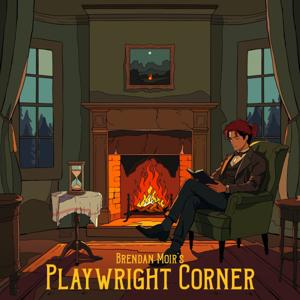
Welcome to Brendan Moir's Playwright Corner, where I read plays, poems, or whatever's currently striking my fancy in the classic audio book format. Prepare to be filled with joy, hope, rage, envy,…