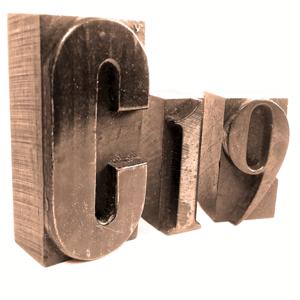
C19: America in the 19th Century

C19: America in the 19th Century

By Society of Nineteenth-Century AmericanistsSociety & Culture
Download on the App Store

C19: America in the 19th Century episodes

  • S10E08 | Lusting for Submission in Jane Talbot; or, How to Talk about Kink and Why We Should
    In this episode of the C19 Podcast, Helen Hunt, Professor of English at Tennessee Tech University, asks what kink and BDSM studies can show us about women's sexuality in the late eighteenth and long nineteenth centuries. Hunt starts by setting out the terms, showing how kink is a broad umbrella for non-normative sexual practices and identities, and BDSM is a large part of it centered on power play and intense sensation. She traces this vocabulary back to the sexology of the late 1800s, which treated these desires as disorders. Used critically, she argues, BDSM theory is especially useful for the first half of the nineteenth century, before sexuality hardened into the identity categories we inherited. Hunt then turns to Charles Brockden Brown's Jane Talbot (1801), which critics have long read as a conflict between love and duty. She rereads it as a charged love triangle. Jane's adoptive mother, Mrs. Fielder, competes with the suitor Henry Colden for Jane's absolute devotion, and Mrs. Fielder wins. Jane, for her part, finds a paradoxical pleasure in submitting. The novel ends with an inheritance instead of a marriage. Hunt reads this as a queer family structure that secures succession without heterosexual union, and as proof that a mother's authority can be as erotically charged as a father's. The episode closes with a case for close reading that takes seriously women's perverse desires as sources of agency and pleasure. Hunt also argues for bringing that openness into classrooms, where many students already know far more about kink and diverse sexualities than earlier generations did.
    Link to Transcript: https://bit.ly/4dVzCTZ.
    40 min
  • S10E07 | BIGOTRY EXPOSED: The Tolerance of American Freethinkers
    Andrew Thibaudeau (College of Coastal Georgia) discusses the pseudoscience of mesmerism using a fascinating archival discovery in the form of a letter, self-published in 1847 and titled, “BIGOTRY EXPOSED.” This letter details a half-decade-long discussion between a member of the public, Luther Stebbins, and the editor of the Boston Investigator, Horace Seaver, in which Stebbins claims to expose the “superstition, bigotry, and fanaticism” of the Seaver, who ostensibly supports the claims of mesmerism. Thibaudeau follows the discussion between Stebbins and Seaver through their published, and often humorous, correspondence in the Boston Investigator not only to examine the veracity of Stebbins’ claims in his self-published letter but also to present Stebbins’ letter as a model for resistance to the infection of pseudoscience in popular culture. This episode was produced by Kassie Jo Baron. Link to Transcript: https://bit.ly/4yB3HQz.
    43 min
  • S10E06 | Protectionism and Exceptionalism: What We Can Learn From Nineteenth-Century Art Tariffs
    This episode uses current debates over art protectionism to connect us back to the late-nineteenth-century debates over tariffs on foreign art. Miranda Knofczynski focuses on how the surprising claims of two artists involved in this debate reverse the usual expectations and alignments. Boston-born, but Italian-trained expatriate sculptor William Wetmore Story argued that he was an American artist by birth and character, and that his sculptures should be free from the tariff. Italian-born and trained sculptor Pompeo Luigi Coppini, who immigrated to Texas, was protected by the tariff on Story’s “Italian” art.
    The episode was produced by Stefan Schöberlein. Transcript available at bit.ly/S10E06-Transcript.
    43 min
  • S10ESUM | "Whitman on the Case," Episode 1 (Summer Feature)
    For summer break, the C19 Podcast is hosting its first guest feature episode! It is part one of a two-part miniseries called “Whitman on the Case,” in which a team of student researchers investigates Walt Whitman’s coverage of one of the most notorious murders of the nineteenth century: the slaying of Harvey Burdell in 1857.
    The episode was produced by Stefan Schöberlein. Transcript available at bit.ly/S10ESUM-Transcript. You can subscribe to the “Whitman on the Case” podcast to listen to the second episode on Spotify (https://open.spotify.com/episode/4KYNeUNIfQJIzAxrzf9mkW), YouTube (youtube.com/watch?v=1y534Jcdr3U), Apple Podcasts (https://podcasts.apple.com/is/podcast/whitman-on-the-case/id1776708857), and many other streaming platforms.
    "Whitman on the Case” was written by Logan Kurz, Maria Pakutka, Saul Resendis Jr., Stefan Schöberlein, and Sequoya Johnston, all affiliated with Texas A&M University—Central Texas, located in the beautiful Texas hill country.

    32 min
  • S10E05 | "It’s a Outrage!": Touring Theater, Settler-Colonialism, and American Mythmaking
    This episode investigates two incidents from America’s dramatic past: the 1831 touring performance of the melodrama Metamora starring Edwin Forrest and the 2021-2022 national tour of Rodgers & Hammerstein’s Oklahoma! By putting the historical context of their creation and the various receptions to their performance in conversation, Lauren Bellatti and I. B. Hopkins explore the ways these plays respond to attempts at American self-fashioning, particularly at moments when “Americanness” was contested. These plays, they argue, give audiences a chance to understand the messiness of American identity formation, even, or maybe especially, when that kind of reflection is uncomfortable.
    The episode was produced by Kassie Jo Baron. Transcript available at https://bit.ly/S10E05-Transcript
    44 min
  • S10 E04 | Live from the Conference: C19 and the Public
    For this episode, Sarah Buchmeier (Visiting Lecturer at the University of Illinois at Chicago) and Karah Mitchell (Visiting Assistant Professor at the University of Missouri at Columbia) moderated a live recorded conversation at C19’s 2026 conference in Cincinnati, OH with four experts whose work actively engages various publics: Nan Wolverton, Vice President for Academic and Public Programs at the American Antiquarian Society; Sarah Mesle, Teaching Professor of Writing at the University of Southern California; Ashley Glassburn, President’s Indigenous Peoples Scholar and Associate Professor at the University of Windsor; and Christy Pottroff, Assistant Professor of English at Boston College. For this episode, Sarah and Karah asked our experts questions about the possibilities and challenges of engaging in public humanities work and fielded questions from audience members as well. This episode presents listeners with a wide-ranging, lively, and wisdom-filled conversation about the public humanities and C19 studies, how to get involved in public-facing work, and how to meet current and future challenges to doing this work. This episode was produced by Sarah Buchmeier and Karah Mitchell. Transcript available here - https://bit.ly/4eIurI8.
    1 hr 9 min
  • S10 E03 | Part 2: The Hour and the Man: Robert & Catharine Morris's Gifts to Boston College
    Welcome to a 2-part series on Robert Morris, who was a force for justice in nineteenth-century Boston. He championed school desegregation, defended fugitives from slavery, supported equal rights for women, and advocated for Irish immigrants. Morris, his wife Catherine, and their son Robert Jr. were also early major donors and multifaceted supporters of Boston College in its earliest most fledgling years. Christy Pottroff and Justin Brown-Ramsey explore the story of the Morris family who transformed their institution, Boston’s abolitionist movement, and the struggle for civil rights more broadly. The cohosts share a portrait of the Morris family and their historical impact by engaging recent scholarship by Jacqueline Jones, Ilyon Woo, & Kabria Baumgartner. They also interview library staff at Boston College who have worked directly with the Morris family collection in the archives (Laurel Davis and Andrew Isidoro), and writing from undergraduates who read from these books and helped recover the Morris family legacy. This podcast tells the story of ongoing efforts to preserve and reconstitute the Morris Family Collection, donated to BC at the end of the nineteenth century. Along the way, the pair discuss how Robert and Catherine Morris worked individually and as a pair to shape the political and educational landscape of their city, doing so in a way that set them apart as trailblazers in the nineteenth century’s multifaceted civil rights movements. Post-production support by Jess Van Gilder (Georgia Tech). Transcript and link to full size cover art [bit.ly/S10E02E03Transcript].
    30 min
  • S10 E02 | Part 1: The Hour and the Man: Robert Morris's Legal Legacy
    Welcome to a 2-part series on Robert Morris, who was a force for justice in nineteenth-century Boston. He championed school desegregation, defended fugitives from slavery, supported equal rights for women, and advocated for Irish immigrants. Morris, his wife Catherine, and their son Robert Jr. were also early major donors and multifaceted supporters of Boston College in its earliest most fledgling years. Christy Pottroff and Justin Brown-Ramsey explore the story of the Morris family who transformed their institution, Boston’s abolitionist movement, and the struggle for civil rights more broadly. The cohosts share a portrait of the Morris family and their historical impact by engaging recent scholarship by Jacqueline Jones, Ilyon Woo, & Kabria Baumgartner. They also interview library staff at Boston College who have worked directly with the Morris family collection in the archives (Laurel Davis and Andrew Isidoro), and writing from undergraduates who read from these books and helped recover the Morris family legacy. This podcast tells the story of ongoing efforts to preserve and reconstitute the Morris Family Collection, donated to BC at the end of the nineteenth century. Along the way, the pair discuss how Robert and Catherine Morris worked individually and as a pair to shape the political and educational landscape of their city, doing so in a way that set them apart as trailblazers in the nineteenth century’s multifaceted civil rights movements. Post-production support by Jess Van Gilder (Georgia Tech). Transcript and link to full size cover art [https://bit.ly/S10E02E03Transcript].
    27 min
  • S10E01 | Welcome to Cincinnati!
    In this episode, podcast co-chairs Stefan Schöberlein and Jess Van Gilder talk with guests about the upcoming C19 Conference in Cincinnati (2026). The episode features historical spotlights, tips for attendees, and background on Cincinnati provided by Martha Schoolman, RJ Boutelle, Christina Hartlieb, Dan Farbman, Anne Delano Steinert, Ashley Glassburn, Eric Gardner, Courtney Murray Ross, Jack Love, Michael Soriano, and Kassie Jo Baron.
    The episode was produced by Stefan Schöberlein and Jess Van Gilder, with additional post-production support by Sarah Buchmeier. Transcript available at https://bit.ly/S10E01-Transcript.
    40 min
  • S09 E05 | Animals in 19th-Century African American Literature
    This episode features a conversation between Alex Alston, Assistant Professor of Literatures in English at Bryn Mawr College, and Maurice O. Wallace, Professor of English at Rutgers University, New Brunswick, revolving primarily around the presence of nonhuman animals in nineteenth-century Antebellum slave narratives and related literature. The discussants explore the evolution of Frederick Douglass’s rhetoric and thinking around nonhuman animal life throughout his career as an editor, activist, and intellectual. They focus on The Heroic Slave, Douglass’s fictional account of a historical revolt aboard the Creole, wherein the fictional protagonist, Madison Washington, is inspired by birds and a snake to escape bondage. From Douglass’s oeuvre Alston and Wallace think out toward how the narratives of other enslaved persons and Black authors of the 19th century contemplated the condition of nonhuman animals alongside their own in a range of asymmetrical and conflicting ways. Other narratives discussed include those of Mary Prince, Moses Roper, Henry Bibb, and Jacob D. Green. The conversation also delves into relevant and recent criticism on questions of race, gender, species, etc. in 19th century texts. Post-production support by Jess Van Gilder (Georgia Tech). Transcript and bibliography available at https://bit.ly/S09E05Transcript
    50 min

About C19: America in the 19th Century

From the publisher's feed

The C19 Podcast is a production by scholars from across the world exploring the past, present, and future through an examination of the United States in the long nineteenth century.

More shows like C19: America in the 19th Century

Fresh Air by NPR

Fresh Air

37,750 Listeners

The New Yorker Radio Hour by WNYC Studios and The New Yorker

The New Yorker Radio Hour

6,823 Listeners

The New Yorker: Poetry by The New Yorker

The New Yorker: Poetry

519 Listeners

The Tennis Podcast by The Tennis Podcast

The Tennis Podcast

1,375 Listeners

The History of Literature by Jacke Wilson / The Podglomerate

The History of Literature

1,112 Listeners

The TLS Podcast by The TLS

The TLS Podcast

179 Listeners

Pod Save America by Pod Save America

Pod Save America

87,921 Listeners

The Daily by The New York Times

The Daily

112,234 Listeners

Why Theory by Why Theory

Why Theory

584 Listeners

Interesting Times by New York Times Opinion

Interesting Times

7,114 Listeners

5-4 by Prologue Projects

5-4

3,546 Listeners

The Ezra Klein Show by New York Times Opinion

The Ezra Klein Show

16,209 Listeners

The American Vandal by Matt Seybold, Center For Mark Twain Studies

The American Vandal

37 Listeners

In Bed With The Right by Adrian Daub and Moira Donegan

In Bed With The Right

572 Listeners

The Opinions by The New York Times Opinion

The Opinions

598 Listeners