
Sign up to save your podcasts
Or

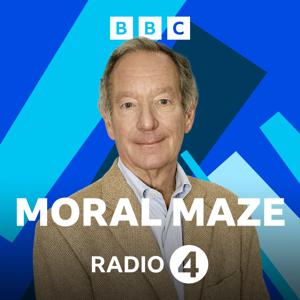

For the first time, fewer than half of people in England and Wales describe themselves as Christian. For centuries in the West, Judeo-Christian values have underpinned moral reasoning and grounded our ethics. While ticking “no religion” on the census doesn’t necessarily mean having no religious belief, should it concern us that this central story of our culture is fragmenting?
Implicit in utilitarianism is the idea that we can do ethics without metaphysics. The Enlightenment hailed the triumph of scientific rationality over sacred revelation. Whereas, the French sociologist Emile Durkheim argued that in any society in a state of ‘anomie’ – that is, lacking a shared moral code – there would be a rise in suicide.
Secularists argue that the greatest examples of social progress of the last century have come about as a result of a loss of deference to religious moral authority. Religious leaders believe that it is precisely this moral authority that makes a society cohesive. Others think it doesn’t matter where you get your moral guide from as long as you’re looking for it.
We live in an era of rapid social change, facing a new technological revolution, and all the ethical questions it poses. Does a religious-based ethics have the answers?
Can ethics survive the death of religion?
Producer: Dan Tierney.
 View all episodes
 By BBC Radio 4

4.6
5151 ratings
For the first time, fewer than half of people in England and Wales describe themselves as Christian. For centuries in the West, Judeo-Christian values have underpinned moral reasoning and grounded our ethics. While ticking “no religion” on the census doesn’t necessarily mean having no religious belief, should it concern us that this central story of our culture is fragmenting?
Implicit in utilitarianism is the idea that we can do ethics without metaphysics. The Enlightenment hailed the triumph of scientific rationality over sacred revelation. Whereas, the French sociologist Emile Durkheim argued that in any society in a state of ‘anomie’ – that is, lacking a shared moral code – there would be a rise in suicide.
Secularists argue that the greatest examples of social progress of the last century have come about as a result of a loss of deference to religious moral authority. Religious leaders believe that it is precisely this moral authority that makes a society cohesive. Others think it doesn’t matter where you get your moral guide from as long as you’re looking for it.
We live in an era of rapid social change, facing a new technological revolution, and all the ethical questions it poses. Does a religious-based ethics have the answers?
Can ethics survive the death of religion?
Producer: Dan Tierney.

7,913 Listeners

863 Listeners

1,067 Listeners
159 Listeners

5,576 Listeners

1,808 Listeners

1,729 Listeners

1,018 Listeners

2,113 Listeners

1,952 Listeners
32 Listeners
38 Listeners

428 Listeners

159 Listeners
43 Listeners
75 Listeners
108 Listeners
745 Listeners

3,245 Listeners

779 Listeners

1,010 Listeners

3,858 Listeners

1,314 Listeners
851 Listeners
48 Listeners