
Sign up to save your podcasts
Or

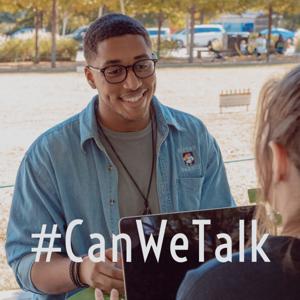


This first episode explains how interpersonal skills should not be taken for granted. Rather, we can develop these skills to become more effective communicators, enriching our daily social interactions in all areas of life.
Non-verbal and verbal attending skills such as one’s eye contact, gestures, and tone of voice, can make or break the beginning of an interpersonal encounter by immediately engaging or hindering a conversation. The authors discuss the value of mastering these skills in order to build a successful interpersonal interaction.
The authors introduce the skills of focusing, paraphrasing, reflecting feelings, and confronting. These skills build off the non-verbal and verbal attending skills by providing building blocks to help the listener gain knowledge, communicate understanding, and convey empathy to the person speaking. They are important skills for building connections and fostering trust between the speaker and the listener.
Clarifying and summarizing are essential sills to master in order to help the speaker and the listener conclude a conversation. Clarifying is important for making sure that the speaker feels heard and that the listener has the correct information. Summarizing provides a recap of the conversation. Both skills work together to being a conversation to a satisfactory conclusion for both the speaker and the listener.
During one’s lifetime, people can expect to give and receive feedback, of both a positive and corrective nature, at work and in family and social settings. Feedback is not easy to do and many people avoid feedback altogether. The authors present their rationale for using active listening and responding skills to build a relationship between the feedback giver and the feedback receiver in order to strengthen the chances that feedback will be successful. This process, referred to as preplanning for feedback, helps to build a relationship that will support the exchange of both positive and corrective feedback.
Attending and facilitating meetings are a reality for most people at some point in time. Most people dread meetings in part, because they view meetings as unproductive and a waste of their time. The authors discuss how the use of active listening and responding skills combined with an understanding of basic group dynamics can help facilitators and members alike improve the outcomes and reputation of meetings and other task groups by taking time for people to get to know one another and to establish a climate of trust and purpose.
From the publisher's feed