
Sign up to save your podcasts
Or



In 1988, one of the most important television programmes in history was shown. Titled River Elegy, it was watched by perhaps 100 million Chinese viewers. Despite its stirring music and dramatic imagery, it wasn't a drama, or documentary - but an argument onscreen that China had been inward-looking and backward for too long, and had to turn to the west for renewal. It rejected the legacy of Mao's Cultural Revolution and daringly embraced the idea of learning from the empire across the "blue ocean" - the US. After Tiananmen Square in 1989, the show was banned and its makers went into exile. Yet it remains one of the rare examples of a broadcast that started a national conversation about modernisation and democracy - a dialogue abruptly cut off but perhaps not yet ended.
Li Qingzhao, who lived (1084-1151) during the late Song dynasty, is recognised as one of China's greatest poets. She grew up within China's culture of highly regulated court bureaucracy. While her husband was a senior official, she became a brilliant and renowned poet But the Song dynasty was also a time of great political turmoil. In 1127, the dynasty fled its capital in the city of Kaifeng after an invasion. Li was forced to wander for years, trying to preserve as much as possible of her family's collection of books and precious artefacts. Eventually she settled down in the new capital of Hangzho and wrote a series of broadsides condemning the Song rulers for succumbing to the invaders. She established a reputation as a true patriot that has lasted to the present day in China.
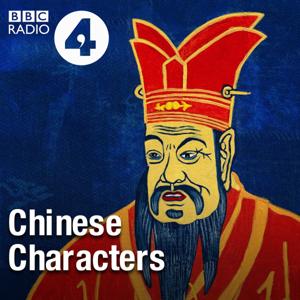
If there were a competition for most famous Chinese in history, Confucius (551-479 BCE) would surely come out on top. He was the philosopher and ethicist who has given China a significant part of its cultural DNA. Confucius lived during a period of immense political turmoil, and turned his mind to thinking about how the country could be made calmer and more prosperous. Instead of advocating force, Confucius stressed the importance of rituals and ethical behaviour. It was important to behave in an ordered way; subjects should obey rulers, wives their husbands, children their parents. In his own time, Confucius didn't have much luck in propagating his thought in his lifetime. But over the next few centuries, respect for his work grew. For two thousand years, Confucian thought would dominate Chinese statecraft. Even today, with the Communist Party in charge, there are frequent references in contemporary China to Confucian ideas such as harmony.
He was the man with the pleasure dome, according to Coleridge, but in reality Kublai Khan didn't have so much time for pleasure. He was too busy running one of the most complex and cosmopolitan empires on earth. Kublai was ruler of the medieval Mongol empire, which became an example of how Chinese culture could be absorbed by a very different people. Kublai was a conqueror, who destroyed the previous Chinese dynasty, the Song. Yet he also ran China on highly ecumenical lines, appointing Muslims as provincial governors, while his subjects continued to practice Buddhism and Daoism. Not everyone loved him; an alienated elite excluded from government turned their hand to drama, producing a great era of Chinese playwriting - much of it aimed at the Mongol rulers. Kublai was a paradox: a great Chinese leader who wasn't actually Chinese.
He wasn't quite the man who invented history in China, but he certainly shaped it for thousands of years. Author of the Shi Ji (Records of the Grand Historian), Sima Qian told the history of China in the 2nd century BC in way nobody had done before; interviewing participants, influencing views on who was good and bad. History has always been political in China, and Sima Qian was one of the first writers to show how that politics worked, whether the powerful liked it or not. His objectivity got him into big trouble at court - when he confronted the emperor, he was subjected to a horrific and humiliating punishment. For Sima Qian, writing history came at a price.
In 1927, China's literary scene was struck by a sensational new character. Her name was Sophie, and she was tormented by sexual longing, unashamedly self-centred about her desires and dreams, and determined to carry out mental torture on her nice, reliable and rather dull boyfriend while lusting after a tall, handsome man she couldn't have. Sophie was the creation of Jiang Bingzhi, who became known under her pen name of Ding Ling (1904-1986). She became popular during a brief flowering of liberalism in China's cities, known as the New Culture movement, when ideas of political nationalism combined with daring new thought about feminism and social change. After Mao's victory in 1949, Ding Ling found herself in internal exile, forced to live in the remote countryside for decades because her views were considered "bourgeois" and "rightist." Yet in her last years, she was finally rehabilitated, and is remembered today as one of China's most important feminist authors.
Better living through geometry. That was one of the lessons shared with the Chinese emperor by the Jesuit priest Matteo Ricci. He was part of an enterprising group of Jesuits priests who brought their faith to China, along with new ideas drawn from the scientific revolution changing early modern Europe. A collaboration rather than a conquest, Ricci worked with Chinese colleagues to develop ideas in astronomy, mathematics and even music - giving a favourable impression of the west to the elites of the Chinese court. And he even made a few Catholic converts, his life a demonstration that western religion in China didn't have to be about invasion, gunboats and opium trading.
Millions of Chinese speak the words of Kumarajiva (334-413) every day. Far fewer have any idea of who he is. He was perhaps China's most influential translator: in medieval China, he translated some of the most important Buddhist texts from Sanskrit into Chinese. Kumarajiva settled down for a life of contemplation as a Buddhist priest, but a series of invasions and occupations from the east saw him kidnapped, finally ending up at the great Chinese city of Chang'an (modern Xi'an). There he was given the task of rendering some of the key Buddhist teachings, such as the Diamond Sutra, into a form that Chinese worshippers could understand and use. In today's China, there are immense numbers of Buddhists who use Kumarajiva's texts. Even if his name has faded, Professor Rana Mitter says his achievement is very much part of the contemporary Chinese religious scene.
Rana Mitter argues that we can think about Chinese Nationalist leader Chiang Kai-shek and his wife Soong Meiling (Madame Chiang) as Asia's first power couple. They dominated politics in China and were two of the most prominent non-westerners on the world scene for much of the early twentieth century. Their greatest test would come in the years 1937 to 1945, when Chiang Kai-shek led China's phase of World War II, in which over ten million Chinese were killed. During these years, Chiang sat alongside FDR and Winston Churchill. But by Chiang's side was Soong Meiling, her husband's interpreter to the outside world, who spoke to both houses of Congress in Washington DC, only the second woman ever to do so. Chiang's army was defeated by Mao's Communists in 1949. But during the war years, Chiang and Soong Meiling were more visible than any other Asian politicians on the globe.
Rana Mitter tells the story of Wu Zetian, the only woman ever to rule as China's emperor in her own right, in two thousand years of dynastic history. Even more remarkably,, she did it during one of the finest moments of China's cultural history - the medieval Tang dynasty. Wu Zetian grew up as a humble lady of the court, but threw off her humility to plan her way to the top with strategic precision, leaving a trail of elite corpses along the way. Once on the throne, she secured China's borders and promoted Buddhism as a powerful new religious force. Later history has condemned her as a dreadful anomaly , as women were never supposed to rule in traditional China. But she's had the last laugh - now regarded as a feminist icon in China with a 74-part TV soap opera dedicated to her rise and rule.
From the publisher's feed
Series of essays exploring Chinese history through the life stories of key personalities.

7,585 Listeners

3,466 Listeners

1,042 Listeners

4,343 Listeners

1,971 Listeners

5,486 Listeners

1,789 Listeners

1,835 Listeners

1,042 Listeners

1,937 Listeners

2,010 Listeners

357 Listeners

4,758 Listeners

24,714 Listeners
1,275 Listeners

4,182 Listeners

3,206 Listeners

15,577 Listeners

15,893 Listeners

6,163 Listeners