
Sign up to save your podcasts
Or

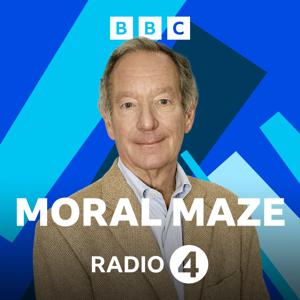

As NATO meets this week, the US is seeking to calm its critics over sending cluster bombs to Ukraine. Cluster munitions are banned by many countries – including the UK and most EU members. They are more indiscriminate and can leave unexploded bomblets scattered over a wide area, posing a lethal threat to civilians years after a conflict has ended. The US, which is not a signatory to the 2008 Convention on Cluster Munitions, argues that supplying these weapons is justified in the defence of Ukraine, that civilian areas would be avoided and that records would be kept to facilitate a clean-up operation after the war.
While some see this as a clear concession of the moral high ground, others disagree. As one US congressman put it, “the only way it erodes the moral high ground is if either you're an idiot, or you're rooting for Russia in this conflict."
What should be the ethical rules of conduct in warfare, when the goal of opposing armies is to perpetrate, and sometimes maximise, death and destruction? For some, the tragedy of war is the suspension of ethical norms. And yet, certain fundamental principles, such as proportionality of violence and discrimination between enemy combatants and non-combatants, have existed for centuries to prevent the ends being justified by any means necessary in battle. But what if the enemy has no regard for these rules? How should they be interpreted outside a philosophy seminar and in the chaos of war?
Producer: Dan Tierney.
 View all episodes
 By BBC Radio 4

4.6
5151 ratings
As NATO meets this week, the US is seeking to calm its critics over sending cluster bombs to Ukraine. Cluster munitions are banned by many countries – including the UK and most EU members. They are more indiscriminate and can leave unexploded bomblets scattered over a wide area, posing a lethal threat to civilians years after a conflict has ended. The US, which is not a signatory to the 2008 Convention on Cluster Munitions, argues that supplying these weapons is justified in the defence of Ukraine, that civilian areas would be avoided and that records would be kept to facilitate a clean-up operation after the war.
While some see this as a clear concession of the moral high ground, others disagree. As one US congressman put it, “the only way it erodes the moral high ground is if either you're an idiot, or you're rooting for Russia in this conflict."
What should be the ethical rules of conduct in warfare, when the goal of opposing armies is to perpetrate, and sometimes maximise, death and destruction? For some, the tragedy of war is the suspension of ethical norms. And yet, certain fundamental principles, such as proportionality of violence and discrimination between enemy combatants and non-combatants, have existed for centuries to prevent the ends being justified by any means necessary in battle. But what if the enemy has no regard for these rules? How should they be interpreted outside a philosophy seminar and in the chaos of war?
Producer: Dan Tierney.

7,913 Listeners

863 Listeners

1,067 Listeners
159 Listeners

5,576 Listeners

1,808 Listeners

1,729 Listeners

1,018 Listeners
2,113 Listeners

1,952 Listeners
32 Listeners
38 Listeners

428 Listeners
159 Listeners
43 Listeners
75 Listeners
108 Listeners
745 Listeners

3,245 Listeners
779 Listeners
1,010 Listeners
3,858 Listeners

1,314 Listeners
851 Listeners
48 Listeners