
Sign up to save your podcasts
Or

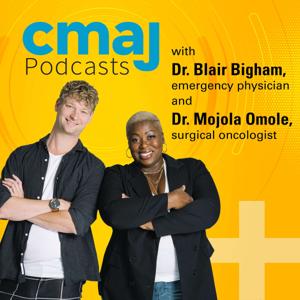


On this encore episode, we revisit and update one of the most-read articles on the CMAJ website.
The article is titled, “Smartphones, social media use, and youth mental health.” It reviews the extensive literature linking poor mental health in adolescents with smartphone and social media use. The article details a variety of studies that implicate smartphone and social media use in increased mental distress, self-injurious behaviour, and suicidality among youth. It also indicates that there's a dose-response relationship, with the effects appearing to be most pronounced among girls.
The lead author of the paper is Dr. Elia Abi-Jaoude. He is a psychiatrist and researcher at The Hospital for Sick Children in Toronto. He delves into recent research exploring how social media and smartphone use negatively impact the mental health of young individuals.
Later in the episode, Dr. Michelle Ponti offers practical tips that physicians can provide parents to effectively manage their children's smartphone and social media use. Dr. Ponti is a paediatrician in London, Ontario, and Chair of the Digital Health Task Force for the Canadian Paediatric Society.
Comments or questions? Text us.
Join us as we explore medical solutions that address the urgent need to change healthcare. Reach out to us about this or any episode you hear. Or tell us about something you'd like to hear on the leading Canadian medical podcast.
You can find Blair and Mojola on X @BlairBigham and @Drmojolaomole
X (in English): @CMAJ
X (en français): @JAMC
Facebook
Instagram: @CMAJ.ca
The CMAJ Podcast is produced by PodCraft Productions
== This is an encore presentation of an episode originally published on Jan 30, 2023 ==
Migraine is a common condition that affects around 12% of adults, with a higher prevalence in women (18%) than men (6%). Global burden of disease estimates in 2019 found migraine to be the leading cause of disability in women aged 15-49 years and the second leading cause of disability overall.
On this episode, Drs. Mojole and Bigham interview three authors of two review articles on the topic published in CMAJ, which focus on diagnosis, acute treatment and prevention of migraine.
Dr. Velina Tzankova is a neurology resident at the University of Toronto; Dr. Werner Becker is a neurologist and the founding director of the Calgary Headache Assessment and Management Program, and currently professor emeritus in the Department of Clinical Neurosciences at the University of Calgary; and Dr. Tommy Chan is a neurologist and director of John H. Kreeft Headache Clinic at University Hospital in London, Ontario.
As well, Drs. Bigham and Omole interview two women who have battled severe migraine since childhood: psychologist, Dr. Shanthy Edward, and med student, Zikra Awosanmi. They discuss the impact migraine headaches have had on their lives, the challenges they have faced accessing adequate treatment, and their thoughts on what physicians could better understand about this disabling condition.
Comments or questions? Text us.
Join us as we explore medical solutions that address the urgent need to change healthcare. Reach out to us about this or any episode you hear. Or tell us about something you'd like to hear on the leading Canadian medical podcast.
You can find Blair and Mojola on X @BlairBigham and @Drmojolaomole
X (in English): @CMAJ
X (en français): @JAMC
Facebook
Instagram: @CMAJ.ca
The CMAJ Podcast is produced by PodCraft Productions
The award-winning essay in the CMAJ, "Sometimes, often," beautifully showcases the power of narrative to forge a deep connection between physicians and patients. The article clearly resonated with our readers, as it was the most-read humanities piece this year. On this episode, the author, Dr. Simran Sandhu, delivers a powerful reading of her article. She then speaks with Drs. Blair Bigham and Mojola Omole about what inspired her to write the essay and how storytelling enables her to build deeper connections with her patients, and in turn, find meaning in her practice.
Next, Dr. Indu Voruganti joins the conversation. She is a radiation oncologist and instructor in the Narrative-Based Medicine Program at the University of Toronto. Dr. Voruganti describes narrative medicine as a tool for combating burnout and promoting empathy in medical practice. She advocates for creating space for reflection and vulnerability, and argues that narrative medicine has the potential to enhance both patient care and physician well-being.
Comments or questions? Text us.
Join us as we explore medical solutions that address the urgent need to change healthcare. Reach out to us about this or any episode you hear. Or tell us about something you'd like to hear on the leading Canadian medical podcast.
You can find Blair and Mojola on X @BlairBigham and @Drmojolaomole
X (in English): @CMAJ
X (en français): @JAMC
Facebook
Instagram: @CMAJ.ca
The CMAJ Podcast is produced by PodCraft Productions
Radon gas exposure is the leading cause of lung cancer in non-smokers, accounting for approximately 3,000 cases annually in Canada. A “Five things to know about…” paper in CMAJ entitled “Radon and lung cancer risk" encourages physicians to ask patients to test their home and workplace for the invisible gas.
Dr. Silvina Mema and Greg Baytalan are co-authors of the article, and on this episode, they detail the significant public health risk radon poses, the relative ease of testing, and the cost of successful mitigation. They argue that family doctors and specialists play a critical role in creating awareness about radon gas and reducing its impact on patient health and the public healthcare system.
Next, Dr. Aaron Goodarzi advocates for changes to cancer screening guidelines to include individuals with elevated lifetime radon exposure. Dr. Goodarzi is the Scientific Director of the Evict Radon national study. He points out that 40% of people who experience lung cancer will never be eligible for current screening programs because they don't use enough tobacco.
Dr. Goodarzi goes on to describe the many ways public policy can be used to reduce the risk of radon exposure, from updated building codes to mandatory testing of public spaces like daycares, and financial assistance for radon gas mitigation.
Comments or questions? Text us.
Join us as we explore medical solutions that address the urgent need to change healthcare. Reach out to us about this or any episode you hear. Or tell us about something you'd like to hear on the leading Canadian medical podcast.
You can find Blair and Mojola on X @BlairBigham and @Drmojolaomole
X (in English): @CMAJ
X (en français): @JAMC
Facebook
Instagram: @CMAJ.ca
The CMAJ Podcast is produced by PodCraft Productions
Major hemorrhage is life-threatening and can occur in a variety of clinical settings. A review paper in CMAJ, entitled "Nonsurgical management of major hemorrhage," advocates for the implementation of massive hemorrhage protocols across all types of hospitals to optimize patient care.
Dr. Jeannie Callum, the article's lead author and the Director of Transfusion Medicine at Kingston's Health Sciences Centre speaks with Drs. Blair Bigham and Mojola Omole about her work standardizing massive hemorrhage protocols throughout Ontario. Dr. Callum shares the transformative moment that inspired her to develop a province-wide protocol, starting from the point of roadside patient care.
She then details the critical need for precision in managing major hemorrhage, emphasizing a rapid response within the "golden hour." Dr. Callum outlines key components of care such as swift administration of tranexamic acid and the detection of coagulopathy. She then simplifies the main elements of a massive hemorrhage protocol into what she calls "the seven 'T’s."
In rural settings, Dr. Callum identifies the need for a simplified protocol due to constraints like smaller medical teams and a lack of comprehensive laboratory tests. Despite these challenges, she recommends innovative solutions like the immediate administration of tranexamic acid and encourages physicians to educate themselves about novel point-of-care testing technologies such as viscoelastic testing.
Comments or questions? Text us.
Join us as we explore medical solutions that address the urgent need to change healthcare. Reach out to us about this or any episode you hear. Or tell us about something you'd like to hear on the leading Canadian medical podcast.
You can find Blair and Mojola on X @BlairBigham and @Drmojolaomole
X (in English): @CMAJ
X (en français): @JAMC
Facebook
Instagram: @CMAJ.ca
The CMAJ Podcast is produced by PodCraft Productions
Many women complain that physicians are reluctant to treat menopause with the full range of available therapies, often dismissing symptoms as 'natural' and something to be endured. A review article in CMAJ finds that physician fears around menopausal hormone therapy and lack of knowledge regarding treatment options often impede patients from receiving treatment.
On this episode, Drs. Mojola Omole and Blair Bigham speak with Dr. Iliana Lega, the lead author of the review entitled "A pragmatic approach to the management of menopause." Dr. Lega is a Clinician Scientist and Endocrinologist at Women’s College Hospital in Toronto. She encourages physicians to update their therapeutic understanding of menopause and to initiate conversations with women about the symptoms of perimenopause as they enter their forties.
Drs. Omole and Bigham also hear from Janet Ko, the co-founder and president of the Menopause Foundation of Canada. She shares her personal experience of receiving a delayed diagnosis of perimenopause and the impact of hormone replacement therapy on her well-being. Ms. Ko also shares the results of the foundation's study on women's experience receiving care for menopause, and reports that 72 percent of women found medical advice to be unhelpful or only somewhat helpful.
Comments or questions? Text us.
Join us as we explore medical solutions that address the urgent need to change healthcare. Reach out to us about this or any episode you hear. Or tell us about something you'd like to hear on the leading Canadian medical podcast.
You can find Blair and Mojola on X @BlairBigham and @Drmojolaomole
X (in English): @CMAJ
X (en français): @JAMC
Facebook
Instagram: @CMAJ.ca
The CMAJ Podcast is produced by PodCraft Productions
On this episode, Dr. Greg Hundemar, co-author of the practice paper in CMAJ “Screening for primary aldosteronism in primary care” discusses primary aldosteronism, its implications and the need to expand screening guidelines.
Primary aldosteronism, also known as primary hyperaldosteronism or Conn's syndrome, is an endocrine disorder where the adrenal glands secrete too much aldosterone, leading to hypertension. This condition was once thought to be a rare cause of hypertension, but recent research shows that it may account for 10-20% of cases.
Classic symptoms of primary aldosteronism include hypertension, low potassium, and metabolic alkalosis. Patients with this condition are at a disproportionately high risk for cardiovascular disease, rapid decline in kidney function, and higher mortality, independent of blood pressure. Early diagnosis and targeted treatments can significantly improve outcomes.
Dr. Hundemar stresses the importance of screening more people with hypertension for primary aldosteronism to diagnose and treat the condition earlier. Current guidelines recommend screening for those with severe or resistant hypertension, hypertension with low potassium, or hypertension with an adrenal nodule. However, Dr. Hundemar advocates for expanding screening for primary aldosteronism in patients with hypertension, as doing so can potentially identify a large number of undiagnosed cases.
Comments or questions? Text us.
Join us as we explore medical solutions that address the urgent need to change healthcare. Reach out to us about this or any episode you hear. Or tell us about something you'd like to hear on the leading Canadian medical podcast.
You can find Blair and Mojola on X @BlairBigham and @Drmojolaomole
X (in English): @CMAJ
X (en français): @JAMC
Facebook
Instagram: @CMAJ.ca
The CMAJ Podcast is produced by PodCraft Productions
Allopurinol hypersensitivity syndrome (AHS) affects approximately 1 in 1,000 patients prescribed allopurinol, with reported mortality rates between 20% and 25%. The risk of AHS is nearly 100 times higher in carriers of the HLA-B*58:01 allele than in noncarriers. Populations with a high allele frequency include Han Chinese (6%-8%), Korean (12%), and Thai (6%-8%) people.
In this episode, Drs. Wid Yaseen and Jonathan Zipursky discuss their paper published in CMAJ, titled "Five things to know about…allopurinol hypersensitivity syndrome". Dr. Jonathan Zipursky is a general internist, clinical pharmacologist, and clinician scientist at Sunnybrook Health Sciences Centre. Dr. Yaseen is a second-year internal medicine resident physician at the University of Toronto. They argue that the syndrome's frequency is often underestimated and emphasize the importance of genetic testing in susceptible populations.
Next, Dr. David Juurlink broadens the discussion beyond allopurinol to describe other common medications whose effectiveness and safety are significantly influenced by genetic predispositions. Dr. Juurlnk is a staff internist and head of division of clinical pharmacology and toxicology at Sunnybrook Health Sciences Centre in Toronto. He is also a medical toxicologist at the Ontario Poison Centre. He explores the need for expanded genetic testing to protect patients and ensure proper dosing.
Comments or questions? Text us.
Join us as we explore medical solutions that address the urgent need to change healthcare. Reach out to us about this or any episode you hear. Or tell us about something you'd like to hear on the leading Canadian medical podcast.
You can find Blair and Mojola on X @BlairBigham and @Drmojolaomole
X (in English): @CMAJ
X (en français): @JAMC
Facebook
Instagram: @CMAJ.ca
The CMAJ Podcast is produced by PodCraft Productions
Fragility fractures are a major health concern for older adults and can result in disability, admission to hospital and long-term care, and reduced quality of life.
The Canadian Task Force on Preventive Health Care guideline published in CMAJ provides evidence-based recommendations on screening for primary prevention of fragility fractures.
In this special episode of the CMAJ podcast, CMAJ editor-in-chief Dr. Kirsten Patrick speaks to Dr. Roland Grad, a family physician and an author of the new guideline, about the evidence reviews conducted by the task force, the main points of the new guideline, and how family doctors can use it in practice.
The guideline recommends screening females over 65 using the FRAX tool without bone mineral density (BMD) as a risk assessment first strategy. Dr. Grad emphasizes the importance of shared decision making, which can be facilitated using the Fragility Fracture Decision Aid, which incorporates the FRAX tool. This online, interactive tool helps guide discussions with patients about their fracture risk and potential benefits of preventive treatment.
Links to resources mentioned in the interview:
Canadian Task Force on Preventive Healthcare guideline
Fragility Fractures Clinician Infographic
Fragility Fracture Decision Aid
Article in Journal of Systematic Reviews
Comments or questions? Text us.
Join us as we explore medical solutions that address the urgent need to change healthcare. Reach out to us about this or any episode you hear. Or tell us about something you'd like to hear on the leading Canadian medical podcast.
You can find Blair and Mojola on X @BlairBigham and @Drmojolaomole
X (in English): @CMAJ
X (en français): @JAMC
Facebook
Instagram: @CMAJ.ca
The CMAJ Podcast is produced by PodCraft Productions
An estimated 23%-45% of patients undergoing major surgery have anemia, with the most common causes being iron deficiency anemia and anemia of inflammation or chronic disease.
In this episode, Drs. Mojola Omole and Blair Bigham speak with Dr. Clarissa Skorupski and Dr. Yulia Lin, two authors of the practice paper in CMAJ, "Five things to know about preoperative anemia in major elective surgery." Dr. Skorupski is a third-year internal medicine resident at the University of Toronto, and Dr. Yulia Lin is the division head of transfusion medicine and tissue bank at Sunnybrook Health Sciences in Toronto. They highlight the high prevalence of preoperative anemia, its adverse outcomes, and the importance of targeting a preoperative hemoglobin level of 130 g/L for both sexes.
Next, Drs. Bigham and Omole take a critical look at the WHO guideline which sets a lower hemoglobin threshold of 120 g/L for female bodies. They speak with Dr. Michelle Sholzberg, the head of hematology-oncology and the director of the Hematology Oncology Clinical Research Group at St. Michael's Hospital in Toronto. Dr. Sholzberg argues that the WHO's sex-based hemoglobin thresholds for diagnosing anemia perpetuate structural discrimination in medicine, as they normalize anemia in females and are based on outdated data with a high risk of bias. Dr. Sholzberg describes how the policies and clinical practices following the biased thresholds may impact health-related quality of life, cognitive function, and the health of pregnant individuals and their babies.
Comments or questions? Text us.
Join us as we explore medical solutions that address the urgent need to change healthcare. Reach out to us about this or any episode you hear. Or tell us about something you'd like to hear on the leading Canadian medical podcast.
You can find Blair and Mojola on X @BlairBigham and @Drmojolaomole
X (in English): @CMAJ
X (en français): @JAMC
Facebook
Instagram: @CMAJ.ca
The CMAJ Podcast is produced by PodCraft Productions
From the publisher's feed
CMAJ Podcasts: Exploring the latest in Canadian medicine from coast to coast to coast with your hosts, Drs. Mojola Omole and Blair Bigham. CMAJ Podcasts delves into the scientific and social health…

1,864 Listeners

700 Listeners
501 Listeners

111 Listeners

805 Listeners

292 Listeners
264 Listeners

3,345 Listeners
272 Listeners

1,157 Listeners

197 Listeners

523 Listeners

371 Listeners

80 Listeners
270 Listeners