
Sign up to save your podcasts
Or

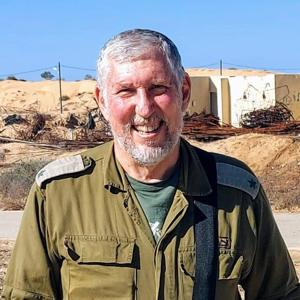


Most people misunderstand the story behind October 7 not because they lack intelligence, but because they are looking in the wrong place. The roots of the failure run far deeper than a single day, a single decision, or a single intelligence breakdown. In this episode, Elliot Chodoff and Zev Uslan examine the organizational culture, military assumptions, and historical patterns that helped set the stage for one of the most devastating failures in Israeli history.
The conversation traces these problems back to the pre-state period, exploring how the legacy of the Palmach and the early militia culture shaped Israel’s military identity. What began as a survival-driven ethos of improvisation, boldness, and ideological commitment also carried hidden costs. Over time, those strengths hardened into institutional habits, myths, and blind spots that continued to influence the IDF long after the state was established.
Elliot and Zev challenge simplistic explanations, including conspiracy-driven claims that October 7 resulted from a deliberate stand-down or secret orders. They argue that the real story is both more troubling and more instructive: large human systems fail not because of cinematic plots, but because of culture, assumptions, fragmentation, overconfidence, and the slow accumulation of unresolved weaknesses.
In this episode, they explore the gap between the myth and reality of Israeli military readiness, the long shadow cast by early military culture, and the difficulty of preparing any nation or army for the chaos of modern conflict. The result is not just a discussion about October 7, but a broader look at how institutions drift, how warnings get missed, and how deeply embedded habits can shape battlefield outcomes.
This episode is essential listening for anyone trying to understand Israel’s military failures beyond slogans, espionage theories, or partisan talking points. The road to October 7 did not begin on October 7. It began decades earlier.
In this episode of Conflict Uncovered, Eliot Chodoff sits down with Zev Uslan to examine one of the most misunderstood dimensions of the Israel-Palestine conflict: the land itself, and the narratives attached to it. While many outsiders frame the conflict as a straightforward dispute over territory, resources, or borders, Eliot and Zev argue that the deeper drivers are historical memory, identity, religion, language, and competing national stories.
The conversation explores the long arc of Jewish connection to the land of Israel, going back thousands of years, and challenges modern claims that reduce the conflict to colonialism or simple territorial expansion. Eliot and Zev discuss the historical use of terms such as Judea and Palestine, the political significance of those names, and how shifting empires, migrations, and wars have shaped the modern debate.
They also examine the widespread assumption that Israel is an expanding colonial project, contrasting that narrative with the historical record, the region’s changing borders, and the reality that the land itself lacks the kind of natural wealth many assume lies at the heart of the conflict. Along the way, the episode addresses Zionism, Ottoman and British rule, the role of Hebrew and archaeology, and the ways myth, history, and politics are constantly blended in public discourse.
This episode is not just about historical claims. It is about how those claims are used today, how language shapes political understanding, and why simplistic narratives about “stolen land” or colonial conquest often obscure more than they reveal. For anyone trying to better understand the roots of the Israel-Palestine conflict, this conversation offers a deeper look at the land, the history, and the contested ideas that continue to shape the region.
00:36 – Introduction to the episode and guest Zev Uslan
This episode examines highly contested historical and political questions surrounding Israel, Palestine, and competing claims to land and identity. Rather than repeating familiar slogans, Eliot Chodoff and Zev Uslan dig into the deeper historical frameworks that continue to shape how the conflict is understood today.
Episode Companion: https://gamma.app/docs/Israel-Land-History-and-the-Narratives-Behind-the-Conflict-u3vtgz3pmnbjjxl
Episode Summary
The conversation explores whether the public understanding of “proportionality” matches its actual meaning in military ethics and international law, and how Hamas’s use of civilian infrastructure complicates military decision-making. Eliot and Zev also discuss the distinction between punitive retaliation and full-scale war, the role of civilian casualties in urban warfare, and how political support, governance, and ideology shape perceptions of innocence and responsibility in Gaza.
Drawing on history, military doctrine, and legal frameworks, this episode offers a serious examination of some of the hardest questions surrounding the Israel-Gaza conflict, including the laws of armed conflict, the morality of targeting decisions, and the broader debate over how democracies fight enemies embedded within civilian populations.
This episode is essential listening for anyone seeking a deeper understanding of war ethics, Gaza, Hamas, Israel, civilian harm, and the legal and moral dilemmas of modern warfare.
00:38 – Introduction and framing the Gaza conflict
In this episode, Elliot Chodoff and Zev Uslan explore the sociological, psychological, and ideological roots fueling radical Islamism and violent cultures. They discuss historical parallels, the influence of Western thought, and the religious narratives that drive violent behaviors today.
Timestamps:00:00 - Introduction to the episode’s focus on sociological issues behind current conflicts
In this episode, Elliot Chodoff and Don Uslan explore the complex history and ongoing conflict between Iran, Israel, and the United States, unraveling the roots of recent hostilities and strategic intentions behind Iran's long-term actions.
S. Embassies and Marine barracks in Lebanon
Elliot Chodoff and Don Uslan discuss the complexities of the ongoing conflict with Iran, media perceptions, missile technology, and Israel's defense systems. They analyze the strategic and technical aspects of missile defense, media bias, and the broader war context.
In this conversation, Elliot discusses the ongoing conflict between Israel and Hamas, analyzing the military successes and failures of the IDF, the nature of the war as one of existence, and the implications of the hostage situation. He emphasizes the importance of understanding the historical context of the conflict and the future strategies Israel must adopt to deal with Hamas and ensure its security.
Takeaways
From the publisher's feed