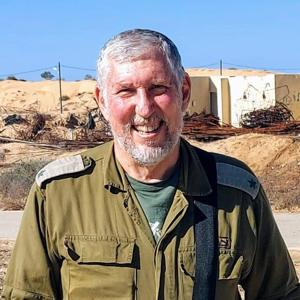
Conflict Uncovered with Elliot Chodoff (Another Rough Day in the Middle East)

Conflict Uncovered with Elliot Chodoff (Another Rough Day in the Middle East)

By Eitan RosenfeldNewsPolitics
Download on the App Store

Conflict Uncovered with Elliot Chodoff (Another Rough Day in the Middle East) episodes

  • Ep. 41: April 30, 2025, Israeli Memorial Day

    Elliot reflects on the significance of Memorial Day and the transition to Independence Day in Israel, particularly in the context of ongoing conflict and the recent war. He discusses the emotional weight of commemorating those lost while also celebrating independence, addressing calls from some families of hostages to refrain from celebration. We emphasize the historical and existential importance of the state of Israel, arguing that despite failures, the state remains a vital refuge and a fulfillment of a long-held dream for the Jewish people. 

    14 min
  • Ep 40: March 30, 2025: The Gaza's Protests
    Elliot discusses the recent protests in Gaza, analyzing the motivations behind them and the implications for Hamas and Israel. He explores the possibility of a genuine opposition to Hamas, the role of public opinion, and the potential for an uprising against the regime. Chodoff emphasizes the complexities of the situation, including the fear of Hamas and the desire to prevent further Israeli military action.
    takeaways
    • The protests in Gaza may not signify a true opposition to Hamas.
    • Hamas's tolerance of protests raises questions about their authenticity.
    • Demonstrators are primarily concerned about Israeli military actions.
    • The lack of armed uprising suggests fear of Hamas's retaliation.
    • Public opinion in Gaza is complex and not straightforwardly anti-Hamas.
    • Demonstrations may be aimed at garnering international sympathy against Israel.
    • The protests could be a strategy to delay Israeli military operations.
    • Historical analogies highlight the nuances of opposition movements.
    • The willingness to suffer casualties is crucial for any uprising's success.
    • The situation in Gaza remains fluid and uncertain.
    • 14 min
    • Ep 39: March 20, 2025: Ceasefire Broken
      In this conversation, Elliot discusses the recent escalation of conflict between Israel and Hamas, focusing on the misinterpretation of the ceasefire, the rebuilding of Hamas's military capabilities, and the political dynamics surrounding hostage negotiations. He emphasizes the complexities of U.S.-Israel relations and the implications of military strategies in the ongoing conflict.
      takeaways
      • The ceasefire officially ended on March 1st, not recently.
      • Hamas has refused to negotiate for the release of hostages.
      • U.S. involvement in negotiations has complicated the situation.
      • Hamas has rebuilt its military capabilities during the ceasefire.
      • Israeli airstrikes targeted key Hamas leaders and infrastructure.
      • Political dynamics in Israel influence military decisions.
      • Netanyahu's actions are supported by a broader political consensus.
      • Hamas's offers have been inadequate and non-starters.
      • Airstrikes provide flexibility in military strategy.
      • The future of negotiations remains uncertain amidst ongoing conflict.
      • 17 min
      • Ep. 38 March 5, 2025: Ceasefire Insights

        Elliot discusses the recent ceasefire in Israel, focusing on Hamas's violations, the hostage situation, and the implications of US support for Israel. He highlights the ongoing tensions and the potential for future military operations as both sides prepare for a possible escalation in conflict.


        Key Takeaways:

        • Hamas violated the ceasefire agreement almost immediately.
        • Hostages were abused and tortured during their captivity.
        • Hamas is holding onto hostages as their last assets.
        • Israel is willing to negotiate for the release of hostages.
        • The US administration's approach to Israel has changed significantly.
        • Hamas's demands include an end to Israeli military operations.
        • Israel is not willing to return to pre-October 7th conditions.
        • The Biden administration has supported Israel's military actions.
        • Both sides are preparing for potential military escalation.
        • The situation remains volatile with ongoing negotiations.
        • 18 min
        • Ep 37: Feb 13, 2025: Trump and the Gaza Plan

          Elliot discusses the current situation in Israel, focusing on President Trump's relocation plan for the residents of Gaza. He explores the historical context of Gaza, the challenges of the relocation plan, and the implications for the Palestinian population and Hamas. Chodoff emphasizes the ideological barriers to relocation and the practical difficulties of moving a large population, ultimately questioning the feasibility of the plan.

          18 min
        • Ep 35: Jan 19, 2025. The Hostage Deal

          Elliot discusses the complex dynamics surrounding the hostage deal between Israel and Hamas. He explores the ethical implications, the political pressures involved, and the potential consequences of the deal on Israel's security. Chodoff emphasizes the importance of understanding the broader regional context and the current state of the IDF as they navigate these negotiations. He concludes with a cautionary note about the future and the need for vigilance in preventing Hamas from regaining strength.

          18 min
        • Ep: 34- Dec 31, 2024: The Houthi Front
          Elliot discusses the recent Houthi missile attacks on Israel, exploring the ideological roots of the Houthis, their geopolitical significance, and the implications of their actions for regional stability. He emphasizes the psychological impact of these attacks on Israeli society and critiques the international response to the Houthi threat. We also examines the complexities of the relationship between the Houthis and Iran, highlighting the independent nature of the Houthi organization despite Iranian support.
           
          takeaways
          • The Houthis' ideology includes slogans like 'death to America' and 'death to Israel'.
          • Their hatred of Israel is rooted in anti-Jewish sentiment, not just political issues.
          • The Houthis are a Yemeni Shiite tribe that has radicalized over time.
          • Iran supports the Houthis with weapons and strategic guidance.
          • Yemen's geographical position is crucial for global shipping routes.
          • Houthi actions have led to increased shipping costs worldwide.
          • Every Houthi attack on Israel is a significant violation of sovereignty.
          • The psychological impact of Houthi attacks on Israeli citizens is profound.
          • Israeli military responses aim to deter Houthi attacks but may not be effective.
          • The Houthis operate independently of Iran, despite being a proxy force.
          • 18 min
          • Ep 33: December 12, 2024
            Elliot discusses the current situation in Syria, focusing on the recent Israeli airstrikes and the implications of the collapse of Assad's regime. He analyzes the dynamics of power in Syria, the role of various factions, and Israel's strategic positioning in response to the evolving conflict. Chodoff emphasizes the need for careful observation of the situation as it develops, highlighting the complexities of the geopolitical landscape.
             
            Takeaways 
            • The Israeli Air Force has targeted 350 sites in Syria.
            • The collapse of Assad's regime could lead to a more stable Syria.
            • Assad's army was surprisingly weak and disintegrated quickly.
            • The new leadership in Damascus is not firmly in control.
            • Israel's military strategy is evolving based on past lessons.
            • Chemical weapons in the hands of rebels pose a significant threat.
            • Israel is not expanding its territory in Syria.
            • The situation in Syria remains highly dynamic and unpredictable.
            • Future developments in Syria will be closely monitored by Israel.
            • Engagement and safety are crucial in this volatile environment.
            • 16 min
            • Ep. 32- Dec 5, 2024: The Syrian Game
              Elliot Chodoff discusses the ongoing conflict in Syria, focusing on the recent offensive by Syrian rebels, the role of various key players including Israel, Hezbollah, and Turkey, and the implications for the region. He highlights the complexities of the situation, where opposing forces may not necessarily be the 'good guys', and examines Israel's strategic position in relation to the conflict.
               
              Takeaways
              • The Syrian conflict is a long-standing imperial struggle involving multiple powers.
              • HTS, formerly al-Nusra, is a significant player in the Syrian opposition.
              • Israel is closely monitoring the situation in Syria without a clear ally.
              • Hezbollah's weakening has opened opportunities for Syrian rebels.
              • The civil war in Syria has resulted in a humanitarian crisis with massive casualties.
              • Turkey's involvement complicates the dynamics of the conflict.
              • The future of the Syrian rebels is uncertain against the Assad regime.
              • Israel faces a dilemma in choosing between Assad and radical groups.
              • The situation in Syria reflects broader geopolitical tensions in the region.
              • The potential rise of radical groups poses a long-term threat to stability.
              • 16 min

              About Conflict Uncovered with Elliot Chodoff (Another Rough Day in the Middle East)

              From the publisher's feed

              Welcome to ”Conflict Uncovered,” hosted by renowned military and strategic analyst Elliot Chodoff. This podcast delves deep into the complex and often misunderstood conflicts in the Middle East, providing listeners with a comprehensive understanding of the region’s current events and historical contexts.