
Sign up to save your podcasts
Or



Based on Podcast App listening data
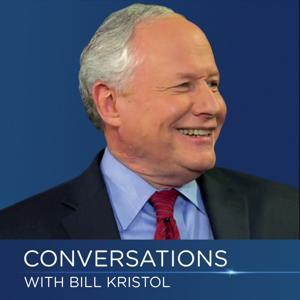
In his second conversation with Bill Kristol, Harvard President Emeritus and former Treasury Secretary Larry Summers reflects on the current climate of political correctness on campuses and its effects on freedom of thought and the pursuit of knowledge. Summers also discusses significant controversies from his tenure as president of Harvard, including his opposition to boycotts of Israel, his battle against grade inflation, and his interest in bringing ROTC back to campus. Finally, Kristol and Summers consider how technological developments might shape the future of higher education.
A best-selling author and fellow at Harvard’s Kennedy School and the American Enterprise Institute, Ayaan Hirsi Ali is a brave, impassioned, and provocative analyst of the problems in Islam, today, including the dangers of what she calls “Islamic totalitarianism.” In this conversation, Hirsi Ali narrates her own experiences as a young woman in Kenya attracted by radical Islam and explains the dangerous allure of Islamism to youth all over the world. She calls on Westerners to assert the superiority of liberal societies to political Islam—and argues that our current obsession with multiculturalism and political correctness has rendered us ill-equipped to do so.
Leon R. Kass, M.D., is Professor Emeritus at the University of Chicago, the Madden-Jewett Chair at the American Enterprise Institute, and one of the nation’s most distinguished bioethicists. In this conversation, Kass recounts how he turned from the study of medicine to an examination of the moral questions and problems that modern science and technology pose for human life. Kass suggests that science, for all of the benefits it has brought to us, may not offer an adequate account of life as we experience it. Kristol and Kass also discuss the Bible as a source of wisdom and the similarities and differences between the Biblical view of man and the one found in Greek philosophy.
In the sixth conversation in our series, Mansfield explains why we should consider Machiavelli not only the founder of modern politics but also a founder of modern science and economics. What was the character of Machiavelli’s critique of Christian morality? Why did he reject the political teaching of the ancient political philosophers like Plato and Aristotle? Harvey Mansfield addresses these and other questions in this provocative discussion of one of the most famous political thinkers of all time.
Larry Summers describes key moments from his time in government, including responses to the Mexican Peso Crisis of 1994 and the financial crisis of 2008. He also explains how he got involved in public policy and government, and offers some thoughts on tensions between the world of theoretical policy-making and the practice of politics. Finally, Summers gives his take on differences between the two presidents he has served, Bill Clinton and Barack Obama.
From the publisher's feed
Ranked by our users in the last 21 days

6,276 Listeners

20 Listeners

12,505 Listeners

4,600 Listeners

8,087 Listeners
1,330 Listeners

3,986 Listeners

4,623 Listeners

2,620 Listeners

492 Listeners

2,238 Listeners

3,186 Listeners

3,454 Listeners

1,091 Listeners
774 Listeners