
Sign up to save your podcasts
Or

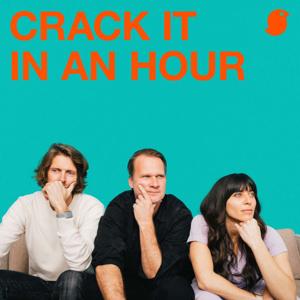


The Crack It team is back, welcoming the newest member of the Significant team, Loie Greenwood!
His challenge to the group: how do we bring back sleepovers for adults?
What follows is a mix of nostalgia, cultural analysis, and pure strategy. Jesse immediately claims the crown as the ultimate champion of adult sleepovers, while Loui reflects on a recent post-wedding Airbnb trip with friends that sparked the whole conversation.
Simon questions if adult sleepovers ever truly existed or if we just grew out of them, Roman digs into why social barriers and the need for autonomy make hosting overnight stays tricky as we get older, and the group ponders whether the lack of good social skills is creating a "bad hang" epidemic.
Plus: Mario Kart drinking games (aka "Berio Kart"), the 40x40 Alaskan King bed, "tiny adventures" as a counter to expensive vacations, and how a fantasy football draft turned into an accidental boy-hang. Did they crack it? It's a solid first hour toward a 100% crackable problem — check it out!
This week on Crack It in an Hour: Simon brings the team a problem that's near and dear to his heart—how do we fix modern day messaging?
The average Microsoft worker receives 117 emails and 153 Teams messages daily—not including personal texts. We're drowning in communication, yet we're still missing context, misunderstanding tone, and dealing with unspoken rules nobody agreed to.
In this episode, Simon, Jesse, and Romain explore:
- Why email, Slack, and text are all fundamentally broken
- The psychology behind "telepressure" and the addiction to checking messages
- Why digital detox and "brick phones" aren't realistic solutions
- How work-from-home exacerbated the communication crisis
- AI and intelligent assistants as potential fixes
- Building a code of good messaging etiquette
- Why emojis are surprisingly complicated 🙌🙏😬
- And whether we can actually "crack" nonverbal messaging
Spoiler alert: The answer might just be "be a grown-up about it."
Can Taste Be Taught? Crack It in an Hour
What makes someone have "good taste"? Is it something you're born with, or can it actually be learned?
In this episode, Simon, Jesse, and Roman are joined by special guest Owen Williams to tackle one of the most elusive questions in creative culture: Can Taste Be Taught?
They explore what "taste" even means—is it personal preference, aesthetic judgment, or something deeper? They debate whether taste comes from exposure, environment, confidence, or lived experience. And they wrestle with some genuinely complicated ideas:
• The difference between taste, expertise, and craft
• Why the story behind a creative decision matters more than the output itself
• How AI is redefining why human discernment will be our greatest differentiator
• Whether teaching taste is actually teaching a process rather than a result • Why exposure to diverse experiences—not just "high art"—builds better taste
Did they Crack It? Listen to find out!
This week on Crack It in an Hour, Jesse brings Roman and Simon a challenge that hits close to home: how do we make the US a cool place to visit again?
International tourism to the US is down, global perception has taken a hit, and traditional travel campaigns feel disconnected from what travelers actually want to experience. But when international visitors do come, they leave loving the local quirks, hidden regional cultures, and unapologetic American scale that don't make it into traditional travel ads.
So how do you separate politics from the actual tourist experience? Can you market regional pockets, roadside quirks, and "the mostest most" without sounding defensive or tone-deaf? And what happens when you let expats reframe the myth of America on their own terms?
It’s a massive problem, but did we crack it? Check it out!
This week on Crack It in an Hour, Simon brings us a problem: how do we add more danger back into our lives?
Here's the paradox: we're safer than ever—traffic deaths down 63%, workplace injuries plummeting, violent crime down 72%. Yet anxiety is up 84%, teen distress is soaring, and people are more anxious than ever. So what's missing?
The team explores whether small, chosen doses of danger actually build the resilience we need to live better lives. They debate what danger really means, why it's been monopolized by extreme sports, and how to make accessible danger desirable again.
Did we crack it? Check it out!
Make sure to buckle up for this weeks episode where special guest Ben Majoy brings a very unconventional problem to Jesse, Simon, and Romain.
Majoy argues cigarettes deserve a more nuanced conversation—one that accounts for social connection, spontaneity, and joy alongside physical health.
Did they Crack it? Find out on this weeks episode!
This week on Crack It in an Hour, special guest, and friend of the pod Biff Butler brings Simon, Maria, and Jesse a hefty question: how do we get people to aspire to less?
In a culture built around bigger, better, faster, and more, what would it actually look like to find enough? The team explores how social comparison, consumerism, convenience, and even the way we spend money have shaped what we think we need—and whether a little more friction could help us appreciate what we already have.
From vinyl and movie theaters to digital payments, hustle culture, and the dopamine of constant consumption, they unpack the difference between aspiration that brings fulfillment and aspiration that simply keeps us wanting more.
So… can we learn to want less without giving up the things that make life exciting?
Did they crack it in an hour? Check it out.
This week on Crack It in an Hour, Romain brings a deceptively simple question: how do we get more people to go thrifting? With Gen Z embracing secondhand while adoption drops among older generations, what’s holding people back?
From fear of judgment and hygiene concerns to confusing shopping experiences, the team explores what’s keeping people from the thrill of the hunt—and how we could make thrifting feel more accessible, social, and exciting.
Did they crack it? Check it out!
When did saying “hi” to the person next door get so weird?Maria brings Jesse and Simon a deceptively simple problem: people are talking to their neighbors less. Has technology disrupted the little interactions that used to build relationships? Are we too distracted—or just afraid of being vulnerable?What’s really stopping us from saying hello? And can we fix it? Did they crack it in an hour? Check it out.
This week on Crack It in an Hour, Brooke Lonegan, Head of Creative Strategy at Audible, brings Simon and Jesse a challenge hiding in plain sight: how do we make people care about libraries again? Libraries have evolved far beyond books, offering maker spaces, digital media labs, creative classes, and resources for entrepreneurs and creators. So why do so many people still think of them as outdated?
The team explores whether libraries have a branding problem, how they can compete in the age of YouTube and creator culture, and whether they should reposition themselves as spaces for creativity, independence, and community. If libraries are one of our most valuable public resources, what would it take to make people see them that way? Did we crack it? Check it out!
From the publisher's feed
9,616 Listeners

38 Listeners

30,177 Listeners

111,799 Listeners
57,598 Listeners

22 Listeners

27 Listeners

1,448 Listeners

749 Listeners
12,486 Listeners