
Sign up to save your podcasts
Or

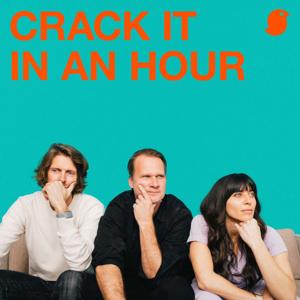


“Everyone agrees learning a second language is valuable. Almost no one actually does it.”
In this episode of Crack It In An Hour, Romain speaks with Jesse and Biz to unpack a question that feels obvious on the surface and surprisingly broken underneath: why aren’t more people learning another language?
They get into the real barriers: the illusion that it’s too late, the dominance of English, the way education systems strip the joy out of language, and the lack of real-world necessity. But they also challenge the premise: what if the benefits go far beyond utility? Identity, empathy, access to culture, even how you think.
At some point, the conversation turns inward with a personal “taste audit”: what languages do we wish we spoke, and what’s actually stopping us?
From there, it shifts into solutions. Not the usual apps and streaks but more radical ideas. What would it take to force people into learning? Should we design more friction, not less? What would a product or system look like that actually changes behavior?
This one goes beyond language and into how we choose to stay comfortable vs. expand our world.
Did they crack it? Listen and find out.
What makes great TV… great? Is it art? Is it comfort food? Is it something in between? In this episode, Jesse brings a deceptively simple question to Simon and Biz: how do we make great TV today? What follows is a wide-ranging, nuanced conversation about the current state of television, the pressures of the modern landscape, and whether “greatness” is even something we can all agree on anymore. From prestige dramas to easy rewatches, the gang digs into what audiences actually want, what creators are up against, and what it might take to truly stand out. It’s a big one with no easy answers. Did they crack it? Give it a listen.
Most of us are stuck. Stuck in the same playlist, the same three artists, the same songs we discovered in high school. And the algorithm isn't helping, 70% of music consumption comes from titles older than 18 months. So Romain brings the question to the table: how do you actually get people to leave their taste bubble? Joined by friend and digital creator Luke Yun, the crew digs into why taste is so hard to shake — comfort, identity, social pressure, and the three-second skip culture that's rewiring how we even listen. They get into mood-based playlists, listening rooms, "normal people" music reviews, and whether the sociology of taste formation is the real thing nobody's cracking. Spoiler: they don't crack it. But they get close enough to make you want to go listen to something you've never heard before.
Creating a new sports league sounds easy…until you actually try to do it. In this episode Simon brings a big swing to the table: can they invent the next great American sports league? Alongside Jesse and Romain, the group dives headfirst into what modern audiences actually want. From rethinking gender in sport, to dialing in the right level of physicality, to dissecting what past leagues got right (and very, very wrong), the conversation quickly turns into a chaotic, hilarious, and surprisingly thoughtful attempt at building something people would actually watch. It’s part sports, part media strategy, part cultural commentary. Did they crack it? No. No they did not.
Only about 3% of eligible Americans donate blood. THREE PERCENT. For something that quite literally saves lives, that number feels…insane. In this episode Jesse brings the problem to the table and tasks Romain and Simon with figuring out how to change it. Is it awareness? Is it fear? Or is it something deeper about how we form habits and what actually motivates people to do things that don’t immediately benefit them? The gang digs into the psychology of behavior change, emotional incentives, and what it would take to make donating blood feel less like a chore and more like something you want to do.
Somewhere along the way, “community” became one of the most overused words in marketing. Every brand wants one, every founder claims to build one, but what does it actually mean? In this episode, Jesse, Biz, and Romain are joined by brand strategist and creative director Nourhan Wahdan to unpack the buzzword and get closer to a real definition. Is community about scale or intimacy? Is it built around shared ideology, mutual support, or simply a sense of belonging?
The conversation explores why community has become such a powerful aspiration for brands and people alike, and whether the term has started to lose its meaning through overuse. They introduce the idea that real community often requires friction. Instead of frictionless convenience, you sometimes need effort, exposure to new perspectives, and moments of discomfort to create the conditions for deeper connection.
From belonging and shared values to the tension between access and intimacy, the group debates what actually holds communities together and what brands consistently get wrong when they try to manufacture them. Did they crack it? Check it out!
Award shows used to feel like cultural events. Now? Ratings are down, attention is split, and they just don’t seem to matter the way they once did. So Romain brings the question: how do we make award shows important again? The crew digs into what made them great at their best — shared moments, unpredictability, star power — and what it means to recreate that in a world without monoculture. We get tactical on format tweaks, audience engagement, and how to make them feel bigger than just trophies. It’s an energetic one full of real ideas and real excitement. Are award shows done…or just ready for a reinvention? Check it out.
Rejection. We all hate it. We all face it. So this week Simon brings a tough one to the table: how do we actually get better at dealing with it? We’re joined by the fantastic actor Kathleen Munroe, to break down how to deal with “no” better. From auditions to everyday life, we unpack what rejection really is, the ingredients that make someone resilient, and practical techniques to reframe it from personal failure to simple mismatch. We even brainstorm product ideas to help destigmatize rejection in public. It’s deep, honest, and surprisingly fun. Check it out!
In a world where we scroll more than we sit, skim more than we study, and get our information in 30-second bursts, reading books feels…harder than it used to. So in this episode Jesse asks how we get people to read more books and whats stopping us? Sure, the obvious culprits are there. Endless notifications. Streaming everything. Social feeds engineered to hijack our attention. But the conversation doesn’t stop at “phones bad, books good.” The gang goes deeper on what reading actually does for us, how it shapes empathy, sharpens thinking, expands imagination, and forces a kind of mental endurance that’s getting rarer by the day. Check it out!
There was a study where people would rather shock themselves than sit alone with their own thoughts. Not a metaphor. Actually shock themselves. And yet doing absolutely nothing has massive benefits for our brains, from creativity to emotional regulation to long-term mental health. So what gives? In this episode Simon brings Jesse and Romain a deceptively simple challenge: how do we help people do more nothing? In a culture built on distraction, productivity hacks and infinite scroll, “doing nothing” might be the hardest sell of all. The gang digs into distraction culture, the fear of boredom, the business of attention and whether the only way to market nothing…is to show the results of it. It’s quiet. It’s uncomfortable. It’s kind of a big one. Check it out.
From the publisher's feed

9,646 Listeners

38 Listeners

30,108 Listeners

111,727 Listeners

57,766 Listeners
25 Listeners
33 Listeners

1,439 Listeners

735 Listeners

12,510 Listeners