
Sign up to save your podcasts
Or



Based on Podcast App listening data
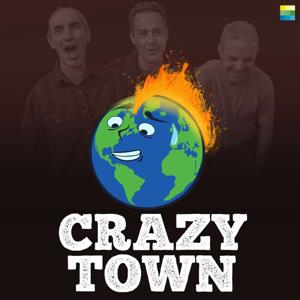
How can the climate disaster and humanity’s overall sustainability crisis be explained by 80s sitcom characters, birdbrained hats from the late 1800s, and a dubious new use for scratch-and-sniff technology? Go for a ride to discover the hidden driver of status-seeking behavior. You can always expect a topsy-turvy, twisty-turny journey when Jason, Rob, and Asher dissect the downsides of human nature. Along the way, they tour status-signaling show-offs, the historic meeting between the Yankton Sioux and the Lewis and Clark expedition, and the reptilian brain we’re all stuck with. In the Do-the-Opposite segment, they unpack how to tamp down the penchant for status competition and talk with Sandra Goldmark, author of Fixation: How to Have Good Stuff without Breaking the Planet. For episode notes and more information, please visit our website.
Support the show
If only we were as rational as we think we are! It turns out that we’re all subject to cognitive biases, those errors in thinking that influence how we process the complex information we encounter in daily life. Jason, Rob, and Asher take a tour of ice cream shops, Scandanavian DMVs, and the chess team to explain such cognitive biases as the Dunning-Kruger effect, confirmation bias, default effect, and sunk cost bias. Listen as your hosts try to overcome their own biases and uncover how human irrationality has driven us into a sustainability crisis where climate change meets overshoot. Super-brainy brain scientist Dr. Peter Whybrow joins the program to shed light on why we behave the way we do and to propose ways to work with our reflexive side, restructure some of our institutions, and act with an eye toward the long term. For episode notes and more information, please visit our website.
Support the show
Climate change, collapse, sarcasm, and silliness are still on the menu, but we've got a special theme for the third season of Crazy Town: hidden drivers that have pushed humanity into overshoot. Catch up with Jason, Rob, and Asher as they explain the architecture of the upcoming season, and look for new episodes to drop in March.
Support the show
Kamea Chayne is the host of Green Dreamer, an excellent podcast that features interviews with thought leaders about ecology, sustainability, and wellbeing. In this episode, Kamea's thought leader is our very own Jason Bradford, cohost of Crazy Town and author of the report The Future Is Rural. Jason explains his systemic perspective on energy, food systems, resilience, and the future of human society.
Support the show
Simon Drew is the host of The Practical Stoic, an outstanding podcast that explores philosophy and the human predicament. In this episode, Simon invites Richard Heinberg, senior fellow at the Post Carbon Institute, for a lively and wide-ranging conversation about consumerism, sustainability, and the coming corrections across society.
Support the show
PCI Executive Director Asher Miller speaks with Sherri Mitchell (Weh'na Ha'mu Kwasset) on the long history of colonization and conquest -- upon which our legal, religious, and educational structures continue to be based -- and how the coronavirus pandemic and the growing recognition of white privilege present a unique opportunity to decolonize our society, minds, and hearts. Sherri Mitchell is a lawyer, educator, writer, speaker, and organizer who has been actively involved with Indigenous rights and environmental justice work for more than 25 years.
Support the show
You know you're in for a bumpy ride when societal institutions start behaving like the Black Knight from Monty Python and the Holy Grail. In one of the most famous comedic movie scenes of all time, the delusional knight believes he can keep fighting ("It's just a flesh wound.") as geysers of blood spurt from his severed limbs. Similarly communities, corporations, and entire nations are clamoring for a return to normal after months of corona-induced quarantines, even though business as usual was already chopping the limbs off of planetary life-support systems and unjustly drawing blood from people in need all over the world. In the season finale of Crazy Town during this upside down year of 2020, it's only fitting that a return to "normal" actually means a return to "crazy." For episode notes and more information, please visit our website and sign up for our newsletter.
Support the show
We had planned to record and release our season finale this week, but felt compelled to address the unfolding battle over police violence and systemic racism in our country which has come to a boil with the murder of George Floyd. Is there anything crazier than the people in our towns, who are sworn to protect and serve, instead coldly taking the lives of our neighbors? Given this moment in American history marked by outrage, sadness, and massive protest, we discuss the need to address institutional racism and white privilege. This is a short episode, because, although it's important to speak up, it's also important for white people to shut up and listen. As is customary in Crazy Town, we consider inequality and racism using the lenses of systems thinking and resilience science. For episode notes and more information, please visit our website and sign up for our newsletter.
Support the show
Heathens, kooks, and fertilizer for corn and bean fields: these are a few of the names applied to your humble hosts here in Crazy Town. We set ourselves up for abuse in this special mailbag episode, and our listeners didn't disappoint. Despite the occasional (and well deserved) insult, we love our listeners and find them to be some of the most intelligent, caring, and committed people in the world. Learn how they're working toward sustainable transportation, healthy farms, infrastructure repurposing, and community resilience, all while keeping a good sense of humor. For episode notes and more information, please visit our website and sign up for our newsletter.
Support the show
Besides lessons in ethics (and in Asher's case, lessons in the English language), the Brady Bunch offers up a metaphor about the fault lines in American politics -- fault lines that include the undermining of government, extreme individualism, race and class divides, and capitalist and corporate excesses. Blood pressures soar, especially when Jason contemplates the Dunning-Kruger effect, but your intrepid hosts release the tension by suggesting some pathways out of political malaise. For episode notes and more information, please visit our website and sign up for our newsletter.
Support the show
From the publisher's feed
466 Listeners
138 Listeners

568 Listeners
1,161 Listeners
376 Listeners
508 Listeners

927 Listeners
458 Listeners

1,036 Listeners

152 Listeners
87 Listeners

73 Listeners
430 Listeners
364 Listeners
48 Listeners