
Sign up to save your podcasts
Or



Based on Podcast App listening data
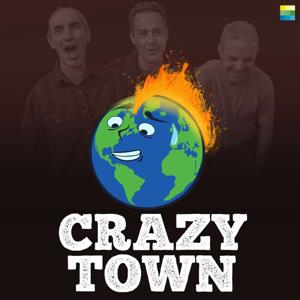
Mainstream economists and environmentalists share something in common. Both tend to tout efficiency -- think better light bulbs -- as the solution to climate change and all our other environmental problems. But the little-understood Jevons Paradox intervenes to overwhelm any progress that comes from improved efficiency. We skewer the efficiency gains of electric vehicles, lighting, and plenty of other sectors, and we cover ideas for avoiding the efficiency trap, including unveiling our new political platform, which is sure to take the country by storm.
Sources/Links/Notes:
Related episode(s) of Crazy Town:
Picture the future 100 years from now. What do you imagine? Flying cars? Space colonies? AI talking toasters?
But if we can’t sustain an endlessly growing economy - even with a transition to green energy - what does a realistic and positive future look like?
Alex Leff of the Human Nature Odyssey podcast joins Jason, Rob, and Asher to imagine life in the 22nd century: walking from our family farms into communal villages, living off the land in a low-energy lifestyle, taming our pet donkeys, and resisting our local warlords.
It’s not the future the movies told us to expect. But it might be a future we enjoy living in.
Sources/Links/Notes:
What does a livable future look like 100 years from now? If we unlocked unlimited green energy, what would we actually do with it? And are our dreams of a renewable-energy utopia sometimes just as delusional as the old fossil-fueled, drill-baby-drill mentality?
Alex Leff of the Human Nature Odyssey podcast hosts this special Crazy Town highlights compilation. Alex revisits some of the most thought-provoking moments from Crazy Town, weaving in new commentary and context. Together, we explore energy literacy, the promises and pitfalls of a renewable-energy transition, and why toasting a simple slice of bread is much harder than you might think.
Along the way, we meet an Olympic athlete trying to toast bread with nothing but a bicycle. We also step inside a billionaire’s latest invention—a time-travel device designed to fling us one hundred years into the future.
Stay tuned for Part 2, where we take the full leap into the time machine and imagine what life a century from now could really look like in a post high-energy future.
Sources/Links/Notes:
Related episode(s) of Crazy Town:
Episode 3 "1.21 Jigawatts: Energy Literacy and the Real Scoop on Fossil Fuels"
Episode 5 "Solar Freakin' Roadways: How Technological Optimism Undermines Sustainability"
Episode 106 "Blinded by the Light - Facing Reality with Renewable Energy"
ADDITIONAL MUSIC
Modified version of "Also sprach Zarathustra, Op. 30" by Strauss, from classicals.de — licensed under CC BY 4.0
There’s the book club, the Rotary Club, the Mickey Mouse Club, and the club sandwich. Whatever your preference, you might want to think about joining a club. Social clubs, fraternal orders, and the like have had a storied and critical role in public life. That is, until government programs and technology gave us an out from having to deal with each other. But with modernity failing, will clubs and community organizations make a huge comeback? In this episode we explore club life – past, present, and future, if there is one. Originally recorded on 11/6/25.
Sources/Links/Notes:
Related episode(s) of Crazy Town:
Episode 65, "Why the Polycrisis Is a Statistical Anomaly: The Willful Delusions of the World’s Leading Pseudointellectual"
Frog and Toad Are Friends, at least according to a venerable children’s book. And so are Jason (Crazy Town’s resident biology nerd) and conservationist brothers, Kyle and Trevor Ritland, authors of The Golden Toad: An Ecological Mystery and the Search for a Lost Species. The three eco-explorers connect over wondrous habitats and critters in Costa Rica's cloud forest and swap stories that cover Lazarus species, global pandemics, self-taught naturalists, birding, and even pregnancy tests. Spliced into the nostalgia and stories are reflections on how to cope in a world where biodiversity is declining and how to regain the connections that modernity has severed between humanity and wild nature. Originally recorded on 10/9/25.
Sources/Links/Notes:
Related episode(s) of Crazy Town:
Some key understandings in Crazy Town: the Earth is finite; the economy cannot grow forever; people can harm ecosystems and cause global warming; physics, chemistry, and biology are real; inequality hurts everyone; healthy humans need community, and it’s more fun to laugh than to cry. But where did principles like these originate? In this episode, Jason, Asher, and Rob use the format of a fantasy football draft to pick the pundits who most influenced their thinking on sustainability, resilience, community, science, economics, and politics. Like starry-eyed fanboys (but hopefully a bit more articulate) they gush over their heroes and tell behind-the-scenes stories about how they came to be influenced. And they ask listeners to share their top picks for influencers (in the best sense of the term).
Originally recorded on 9/29/25. Visit Crazy Town on the web.
Billionaires. They should be objects of scorn rather than envy. While they ride around in their super-yachts and private jets, producing the climate-damaging pollution of entire nations, they’re doing things to extract even more wealth, harm your health, diminish democracy, and rig the whole system in their favor. How did this happen? Why do we tolerate it? How can we stop the billionaires? And can we get a hold of our own super-yacht for Crazy Town pleasure cruises? Chuck Collins returns to Crazy Town to offer insights from his new book, Burned by Billionaires: How Concentrated Wealth and Power Are Ruining Our Lives and Planet. Originally recorded on 10/3/25.
Sources/Links/Notes:The “maximum power principle” may sound like the doctrine of an evil supervillain, but it actually applies to all living creatures. The principle states that biological systems organize to increase power whenever constraints allow. Given the way humans adhere to this principle, especially by overexploiting fossil fuels, we often do behave like supervillains, wielding power in wildly irresponsible ways and triggering climate change, biodiversity loss, and other aspects of our sustainability predicament. Sometimes it seems like we’re using a backhoe to dig our own grave. Fortunately, once you understand efficiency and its different flavors, you can see opportunities to optimize power rather than maximize it. While considering the outlook for humanity, the Crazy Townies ponder a weird question: are we smarter than reindeer? Richard Heinberg, author of Power: Limits and Prospects for Human Survival, joins the team to share his research on how people can optimize power. Originally recorded on May 6, 2021.
Sources/Links/Notes:
Support the show
Maximize profits, exploit nature, hoard money, and, like Buzz Lightyear, grow the economy to infinity and beyond! That’s the modern economic playbook. But for decades, one renegade country has taken a contrarian stance that actually cares about people’s wellbeing and environmental health: the Himalayan nation of Bhutan. When Bhutan embraced “Gross National Happiness” and a sane notion of progress, environmentalists and social reformers rejoiced. They spotlighted Bhutan as an example of how we can build a better economy. But now it seems that no one can escape the gravity field of techno-capitalism’s black hole of cryptocurrency and bullshit investments. In today’s episode, we explore Bhutan’s dark turn and go on the hunt for other examples of nations doing things to curb overexploitation of people and the planet.
Originally recorded on 7/21/25. Visit Crazy Town on the web.
Sources/Links/Notes:
Related episode(s) of Crazy Town:
Support the show
In this episode we travel in time to the year 2125, to visit the Crazy Town museum, which showcases today’s world of wanton consumption and profligate waste. How will humans in 2125 – if there are any of us left – judge the things everyone sees as normal today? Jason, Rob, and Asher take turns serving as expert curators of this future museum, nominating items that best encapsulate how foolish and environmentally ruinous our priorities are. At the end we call on you, dear listener, to share what you would include in the museum.
Originally recorded on 7/11/25. Visit Crazy Town on the web.
(Spoiler Alert) View Artifacts in the Museum:
Support the show
From the publisher's feed
466 Listeners
138 Listeners

568 Listeners
1,161 Listeners
377 Listeners
508 Listeners

927 Listeners
458 Listeners
1,037 Listeners
152 Listeners
87 Listeners
73 Listeners
428 Listeners
363 Listeners
48 Listeners