
Sign up to save your podcasts
Or



Based on Podcast App listening data
The disappearance of Kris Kremers and Lisanne Froon in April 2014 is one of the most haunting and hotly debated mysteries of the modern age, and more than a decade later, no one agrees on what really happened. The two young Dutch women, best friends near the end of the trip of a lifetime, set out on a popular jungle trail near Boquete, Panama, on a bright afternoon. They photographed themselves smiling at the foot of the trail at 11 in the morning. They never came back. Six hours later, one of their phones dialled the emergency number. It did not connect, and for the next ten days the phones kept trying, again and again, and never once reached a soul. Then, one week in, in the dead of night, their camera took ninety photographs in near-total darkness: rocks, jungle, running water, and images no one has ever been able to fully explain. Ten weeks later, a backpack was found by a remote river, dry and neatly packed, far from where the two women should ever have been. In this episode of Mysteries at Bedtime, we tell the full story of Kris Kremers and Lisanne Froon: the ten days of calls into the void, the ninety flashes in the dark, the strange condition of the backpack and the remains, and the two competing explanations that still divide everyone who studies the case. Settle in, get comfortable, and let us tell you the story of the ninety flashes in the dark.
SIGNAL AWARDS 2026 VOTE HERE
Become a Patreon or Apple + subscriber now for ealry and ad free access from as little as $1.69 a week. All the details here
Subscribe to Crime at Bedtimes Youtube channel HERE
Hosted on Acast. See acast.com/privacy for more information.
The murder of Brett Bowyer in February 2002 is one of the most harrowing crimes in Alabama's history, and it produced one of the most extraordinary acts of survival ever recorded. On a cold night in Russell County, two men posing as narcotics officers talked their way into the home of a car dealer named Forrest "Butch" Bowyer, presented a fake search warrant, and handcuffed Butch and his 12-year-old son, Brett. It was not an arrest. It was a robbery, and it would end in a shallow grave in the rural darkness. The two men took Butch's money, drove father and son to a remote site, cut Butch's throat, murdered young Brett, and buried them both, laughing as they covered the grave. But Butch Bowyer was not dead. With his throat cut, he played dead until his killers left, then clawed his way up out of the earth and walked a quarter of a mile to a road, not to save himself, but to make sure his son's killers were caught and his boy was brought home. In this episode of Crime at Bedtime, we tell the full story of the murder of Brett Bowyer: the fake officers, the fatal robbery, the almost unbelievable survival of a mortally wounded father, the dashcam footage that captured him at the roadside, the swift arrests, and the two death sentences that followed. We have told it with care, and we have kept a 12-year-old boy, not the men who killed him, at its heart. Settle in, get comfortable, and let us tell you the story of the man who would not die.
SIGNAL AWARDS 2026 VOTE HERE
Become a Patreon or Apple + subscriber now for ealry and ad free access from as little as $1.69 a week. All the details here
Subscribe to Crime at Bedtimes Youtube channel HERE
Hosted on Acast. See acast.com/privacy for more information.
The Acid Bath Murders are one of the most infamous cases in British criminal history, and the man behind them, John George Haigh, believed he had discovered the secret of the perfect crime. A charming, softly spoken fraudster who presented himself as a gentleman and an engineer, Haigh murdered at least six people in 1940s England for their money, and then dissolved their bodies in drums of concentrated sulphuric acid. He did it because he was convinced of one thing: that without a body, there could be no conviction for murder. He had misunderstood the law, catastrophically. And he had also overestimated his acid. When his final victim, a wealthy widow named Olive Durand-Deacon, vanished after a visit to his Sussex workshop, a brilliant Home Office pathologist named Keith Simpson was called in, bent down in the yard outside, and picked up what looked like an ordinary pebble. It was a human gallstone. In this episode of Crime at Bedtime, we tell the full story of the Acid Bath Murders: the six victims, the charming killer who thought he was untouchable, the fatal misunderstanding at the heart of his method, the gallstone and the set of dentures that the acid could not destroy, the transparent vampire performance he gave to try to escape the gallows, and the swift justice that followed. Settle in, get comfortable, and let us tell you the story of the pebble in the yard.
SIGNAL AWARDS 2026 VOTE HERE
Become a Patreon or Apple + subscriber now for ealry and ad free access from as little as $1.69 a week. All the details here
Subscribe to Crime at Bedtimes Youtube channel HERE
Hosted on Acast. See acast.com/privacy for more information.
The mystery of Kaspar Hauser has haunted Europe for nearly 200 years, and it began on a spring afternoon in 1828 when a bewildered teenage boy appeared in the streets of Nuremberg, barely able to speak. He carried two letters and a single strange request: he wanted to be a cavalryman, like his father. He could not use a candle without burning himself. He recoiled from meat and drank only water. And when he could finally tell his own story, it was almost unbelievable: he claimed to have spent his entire life imprisoned alone in a darkened cell, never seeing another human face. Kaspar Hauser became a sensation across Europe, and a theory soon took hold that he was a stolen prince, the true heir to a German throne, hidden away by a ruthless plot. Five years later he was stabbed to death in circumstances that have never been explained. In this episode of Mysteries at Bedtime, we tell the full story of Kaspar Hauser: the boy who came from nowhere, the letters that may have been forged in his own hand, the lost-prince theory, the mirror-writing note found beside his dying body, the question of whether he was murdered or died by his own hand, and the remarkable DNA analysis of 2024 that finally answered one question about him while leaving the deepest mystery exactly as it was. Settle in, get comfortable, and let us tell you the story of the riddle of his time.
SIGNAL AWARDS 2026 VOTE HERE
Become a Patreon or Apple + subscriber now for ealry and ad free access from as little as $1.69 a week. All the details here
Subscribe to Crime at Bedtimes Youtube channel HERE
Hosted on Acast. See acast.com/privacy for more information.
The murder of Kim Wall in August 2017 was one of the most shocking crimes in modern Scandinavian history, and it began with an interview. Kim Wall was a brilliant and fearless 30-year-old journalist, a Swedish reporter who had filed award-winning stories from North Korea, Cuba, Haiti, and the nuclear-scarred atolls of the Pacific. On the evening of the 10th of August 2017, she boarded a homemade submarine in Copenhagen harbour to interview its inventor, a celebrated Danish engineer named Peter Madsen. She sent her boyfriend a photograph of herself smiling aboard the vessel. It is very probably the last photograph ever taken of her. The submarine did not return that night, and what followed was a case that gripped the world: a sunken submarine, a shifting series of lies, and one of the most painstaking forensic recoveries in Danish history. In this episode of Crime at Bedtime, we tell the full story of the murder of Kim Wall: who she was and the extraordinary journalism she left behind, the inventor who lured her aboard, the three contradictory stories he told as the evidence closed in, the trial that saw through every one of them, the confession he finally gave three years later, and the memorial fund her family created so that her voice would not be silenced after all. Settle in, get comfortable, and let us tell you the story of the last assignment of Kim Wall.
SIGNAL AWARDS 2026 VOTE HERE
Become a Patreon or Apple + subscriber now for ealry and ad free access from as little as $1.69 a week. All the details here
Subscribe to Crime at Bedtimes Youtube channel HERE
Hosted on Acast. See acast.com/privacy for more information.
The case of Brian Mwenda captivated Kenya and much of the world in 2023: the story of a confident young man in a well-cut suit who stood up in the High Court of Kenya, argued cases against trained lawyers, and, according to the viral legend, won every one, despite, the Law Society of Kenya alleges, never having been a lawyer at all. It is a story of two men with almost the same name. One, Brian Mwenda Ntwiga, was a genuine, fully qualified advocate whose professional identity sat dormant in an online database. The other, Brian Mwenda Njagi, allegedly hijacked that identity, took over the account, and walked into the highest courts in the land. When the Law Society of Kenya publicly declared him a masquerader, the nation split in two: lawyers were outraged, but much of the public celebrated him as a folk hero who had exposed the emptiness of professional gatekeeping. In this episode of Crime at Bedtime, we tell the full story of the Brian Mwenda case: the alleged scheme, the viral claim of twenty-six courtroom victories that the Law Society itself disputed, the real lawyer whose identity was stolen, the arrest, the not-guilty plea, and the genuinely uncomfortable questions the whole affair raised about credentials, competence, and who really gets to call themselves a professional. This is a case that, at the time of recording, remains unresolved, and we have told it as fairly as we can. Settle in, get comfortable, and let us tell you the story of the advocate who wasn't.
SIGNAL AWARDS 2026 VOTE HERE
Become a Patreon or Apple + subscriber now for ealry and ad free access from as little as $1.69 a week. All the details here
Subscribe to Crime at Bedtimes Youtube channel HERE
Hosted on Acast. See acast.com/privacy for more information.
The Zodiac Killer ciphers are among the most famous unsolved codes in the world, and after more than fifty years, two of them have still never been cracked. Between 1969 and 1970, the unidentified serial killer who called himself the Zodiac sent four coded messages to San Francisco newspapers, each a block of strange symbols mixing letters, numbers, and astrological signs. He promised that his codes would reveal his identity. The first cipher, 408 characters long, was solved in about a week by a schoolteacher and his wife at their kitchen table, but it revealed only a chilling boast, not a name. The second, known as Z340, defeated the FBI, the NSA, and the world's best codebreakers for 51 years, until an international team of three amateurs finally cracked it in December 2020, one of them working through Melbourne's COVID lockdown on the far side of the world. And two ciphers remain unsolved to this day, including a 13-character message that the Zodiac introduced with the words "My name is". In this episode of Mysteries at Bedtime, we tell the full story of the Zodiac ciphers: how the codes worked, who solved them, why the last two may be impossible to crack, and the genuinely haunting possibility that the name of a killer who was never caught has been sitting in plain sight, printed on a newspaper page, for more than half a century, in a code that no one has ever been able to read. Settle in, get comfortable, and let us tell you the story of the unread message.
SIGNAL AWARDS 2026 VOTE HERE
Become a Patreon or Apple + subscriber now for ealry and ad free access from as little as $1.69 a week. All the details here
Subscribe to Crime at Bedtimes Youtube channel HERE
Hosted on Acast. See acast.com/privacy for more information.
The assassination of Judge John Wood on the 29th of May 1979 was the first killing of a sitting United States federal judge in the 20th century, and the man who pulled the trigger was a Texas contract killer named Charles Harrelson. On that spring morning in San Antonio, Texas, the 63-year-old federal judge known to defence lawyers as "Maximum John", for the harsh sentences he handed drug traffickers, walked out of his home to drive to work and was shot once in the back with a high-powered rifle. Behind the killing was a quarter-of-a-million-dollar contract, paid by an El Paso drug kingpin named Jamiel Chagra who was about to be tried in Judge Wood's courtroom. And behind the trigger was Charles Harrelson, a charming, remorseless hitman who had already killed before, and who would, during a cocaine-fuelled six-hour highway standoff a year later, confess not only to killing the judge but to the assassination of President John F. Kennedy, a claim he later retracted and which the FBI dismissed entirely. In this episode of Crime at Bedtime, we tell the full story of the Charles Harrelson case: the murder of Judge John Wood, the three-year FBI investigation, the drug kingpin who ordered the hit, the wild false confession, and the strange twist that the killer's own son, Woody Harrelson, would grow up to become one of the most famous actors in Hollywood while his father spent the rest of his life in a Supermax cell. Settle in, get comfortable, and let us tell you the story of Maximum John.
SIGNAL AWARDS 2026 VOTE HERE
Become a Patreon or Apple + subscriber now for ealry and ad free access from as little as $1.69 a week. All the details here
Subscribe to Crime at Bedtimes Youtube channel HERE
Hosted on Acast. See acast.com/privacy for more information.
The assassination of Gianni Versace on the 15th of July 1997 was the shocking end of one of the deadliest killing sprees in modern American history. On that summer morning, the world-famous Italian fashion designer walked home from a café to his Miami Beach mansion, Casa Casuarina, and was shot dead on his own front steps by a 27-year-old man named Andrew Cunanan. But Gianni Versace was not Andrew Cunanan's first victim. He was his fifth. Over the previous three months, Cunanan had murdered four other people across four American states: Jeffrey Trail, a decorated Navy veteran; David Madson, an interior designer and Cunanan's former boyfriend; Lee Miglin, a 72-year-old Chicago real estate tycoon; and William Reese, a New Jersey cemetery caretaker killed for nothing more than his pickup truck. By the time Cunanan killed Versace, he had already been on the FBI's Ten Most Wanted list for over a month, and he had been hiding in plain sight in Miami Beach, just four miles from the designer's mansion. In this episode of Crime at Bedtime, we tell the complete story of the Versace murder and the Andrew Cunanan spree: the five victims, the nationwide manhunt, the funeral in Milan attended by Princess Diana and Elton John, the houseboat where the manhunt finally ended eight days later, and the questions about Cunanan's motive that have never been answered. This episode honours all five of the people who died, not only the most famous of them. Settle in, get comfortable, and let us tell you the story of the steps of Casa Casuarina.
SIGNAL AWARDS 2026 VOTE HERE
Become a Patreon or Apple + subscriber now for ealry and ad free access from as little as $1.69 a week. All the details here
Subscribe to Crime at Bedtimes Youtube channel HERE
Hosted on Acast. See acast.com/privacy for more information.
The attack on Nancy Kerrigan on the 6th of January 1994 became one of the most notorious scandals in the history of the Olympic Games, and it involved one of the most famous rivalries in sport: Nancy Kerrigan and Tonya Harding. On that afternoon, at the United States Figure Skating Championships in Detroit, the reigning American champion Nancy Kerrigan finished a practice session and walked down a corridor toward her dressing room. A man stepped out from behind a television cameraman, swung a police baton at her right knee, and ran. The footage of Kerrigan sitting on the floor, clutching her leg and crying "Why? Why? Why me?", was broadcast around the world and has never been forgotten. Within days, the FBI had uncovered an extraordinary conspiracy. The attack had been planned and paid for by the ex-husband of Kerrigan's rival, the figure skater Tonya Harding, in an attempt to eliminate Kerrigan from the competition and clear Harding's path to the 1994 Winter Olympics. In this episode of Crime at Bedtime, we tell the full story of the Nancy Kerrigan attack and the Tonya Harding scandal: the four men who carried it out, the FBI investigation, the astonishing Olympic showdown at Lillehammer watched by 110 million Americans, the broken shoelace, the guilty pleas, the lifetime ban, and what became of both women in the decades since. Settle in, get comfortable, and let us tell you the story of the whack heard round the world.
SIGNAL AWARDS 2026 VOTE HERE
Become a Patreon or Apple + subscriber now for ealry and ad free access from as little as $1.69 a week. All the details here
Subscribe to Crime at Bedtimes Youtube channel HERE
Hosted on Acast. See acast.com/privacy for more information.
From the publisher's feed
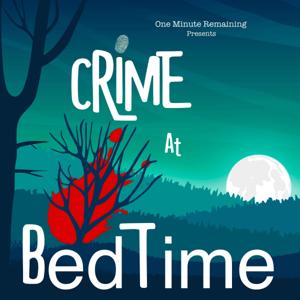
Crime at Bedtime is a true crime podcast for listeners who love fascinating murder cases, unsolved mysteries, disappearances, strange crimes and extraordinary stories — told in a calm,…
Each episode explores a different true crime story, from notorious murders and mysterious disappearances to unsolved cases, historical crimes and some of the strangest cases from around the world.
There are no loud sound effects or over-the-top dramatics. Just compelling true crime storytelling delivered in a slower, relaxed style for those who like to unwind with a fascinating story at the end of the day.
So get comfortable, take a minute, unwind and let me tell you a story.
Crime at Bedtime is written and hosted by Australian podcaster Jack Laurence.
Hosted on Acast. See acast.com/privacy for more information.
Ranked by our users in the last 21 days
37,555 Listeners
1,193 Listeners
402 Listeners

493 Listeners

40 Listeners

530 Listeners
356 Listeners

189 Listeners
91 Listeners

106 Listeners

23 Listeners

86 Listeners

61 Listeners

7 Listeners

5 Listeners

22 Listeners