
Sign up to save your podcasts
Or



Based on Podcast App listening data
At approximately 12 minutes past midnight on the morning of Monday the 13th of June 1994, in the leafy Los Angeles neighbourhood of Brentwood, a group of residents on South Bundy Drive were woken by the barking of a distressed Akita dog. The dog was wandering the street. It had blood on its paws. It had blood on its coat. The dog belonged, as the neighbours knew, to a 35-year-old woman named Nicole Brown Simpson. She lived, with her two young children, in a Mediterranean-style condominium at 875 South Bundy Drive. She was the ex-wife of one of the most famous men in the United States: the retired football player and Hertz rental car spokesperson Orenthal James Simpson, known to everyone in America as O.J. The neighbours followed the dog back to Nicole Brown Simpson's home. What they found in the small, gated walkway leading up to her front door has become, in the 32 years since it was discovered, one of the most examined crime scenes in modern American history. Nicole Brown Simpson lay face down and barefoot at the bottom of the stone stairs leading to her front door. She had been stabbed multiple times. Her throat had been cut with such force that she had been very nearly decapitated. Approximately 15 feet away from her, in the small ornamental garden by the walkway's gate, lay the body of a second person. He was young, athletic, dark-haired. He was wearing jeans, boots, and a white shirt. He had been stabbed more than 30 times. His arms and hands bore extensive defensive wounds. He had, in the last minutes of his life, fought his attacker. His name was Ronald Lyle Goldman. He was 25 years old. He was a waiter at Mezzaluna, a nearby Brentwood restaurant where Nicole had eaten dinner with her family a few hours earlier. He had come to her door that evening to return a pair of eyeglasses her mother had left at the restaurant. He was, by every account of the people who had known him, an ordinary young man from an ordinary American family. He had made, on the last evening of his life, an ordinary kind gesture. The story of the trial that followed, watched by hundreds of millions of people around the world. Of the civil verdict that came two years later, which found what the criminal jury had not. Of the book, published in 2007, that is widely regarded as an effective confession. And of the death, in April 2024, of the man who had been at the centre of the case, without his ever having been criminally convicted of the killings.
SIGNAL AWARDS 2026 VOTE HERE
Become a Patreon or Apple + subscriber now for ealry and ad free access from as little as $1.69 a week. All the details here
Subscribe to Crime at Bedtimes Youtube channel HERE
Hosted on Acast. See acast.com/privacy for more information.
Shortly after midnight on the morning of Tuesday the 15th of November 1966, in the small Ohio River town of Point Pleasant, West Virginia, in the county of Mason, two young married couples in a black 1957 Chevrolet drove out along State Route 62 to see what there was to see at the abandoned munitions plant seven miles north of town. The plant had been decommissioned since the end of the Second World War. It was known, to everyone in Mason County, as the TNT Area. It consisted of several hundred acres of overgrown vegetation, crumbling concrete storage bunkers, and an abandoned power plant building. The four young people in the car were Roger Scarberry and his wife Linda, and Steve Mallette and his wife Mary. Roger was driving. It was a Monday night rolling over into a Tuesday morning. They had been out. On the drive back into town, they had decided to take the long way home, past the TNT Area. As they approached the abandoned power plant building at approximately five minutes past midnight, their headlights fell on what appeared to be two red points of light standing beside the road. Roger slowed the car. The four of them looked out through the windscreen. The two red points of light, they realised as they got closer, were not lights. They were eyes. The eyes belonged to a figure that was standing perfectly still at the side of the road, watching them. The figure was, in Roger Scarberry's later description to police, shaped like a man, but bigger. Approximately six or seven feet tall. It was covered in a dark grey substance that might have been feathers, or might have been skin, or might have been something else entirely. Behind its back, folded, were what appeared to be a pair of very large wings. For a moment, the four young people in the car sat and looked at it. Then the figure moved. The story of the 13 months that followed, in which more than 100 people across Mason County reported sightings of the same creature. Of the extraordinary investigation conducted by American paranormal researcher John Keel. Of the disturbing dreams that spread through Point Pleasant in the autumn of 1967. And of the terrible event that occurred, in the darkness of the early evening of Friday the 15th of December 1967, exactly 13 months and one day after the first sighting, that killed 46 people and, in a strange coincidence that has never been explained, ended the Mothman sightings entirely.
SIGNAL AWARDS 2026 VOTE HERE
Become a Patreon or Apple + subscriber now for ealry and ad free access from as little as $1.69 a week. All the details here
Subscribe to Crime at Bedtimes Youtube channel HERE
Hosted on Acast. See acast.com/privacy for more information.
At approximately 12:35 in the morning on Wednesday the 29th of April 2015, in a small clearing in the jungle of a prison island called Nusa Kambangan, off the southern coast of Central Java in Indonesia, a group of eight men and one woman stood in a line, facing a 13-member firing squad. Two of them were Australians. The younger of the two was 31 years old. His name was Andrew Chan. He had been born in Sydney to Chinese immigrant parents. He had, ten years earlier, at the age of 21, been the ringleader of an operation to smuggle 8.3 kilograms of heroin from the Indonesian island of Bali into Australia. The older was 34. His name was Myuran Sukumaran. He had been born in London to Sri Lankan Tamil refugees and had moved to Australia as a young child. He had, ten years earlier, at the age of 24, been Chan's co-ringleader in the same operation. He had, in a peculiar and unhappy coincidence of dates, been arrested on his 24th birthday. Twelve days after his 34th birthday, he was going to die. What no one who met them in the early days of their imprisonment could have predicted was what the two men would become in the ten years between their conviction and their execution. Andrew Chan would find Christianity, become a prison pastor, and lead the English-language church congregation of Kerobokan Prison in Bali. He would marry his fiancee in the prison chapel on the last night of his life. Myuran Sukumaran, under the mentorship of one of Australia's most celebrated contemporary artists, would become an accomplished painter, producing more than 100 works during his years in prison, and completing his final canvas, a painting of the Indonesian flag with red paint dripping down the canvas like blood, in the hours before he walked out to the firing squad. The story of two young Australians whose serious crime was, in the end, met with a punishment their country considered barbaric, of the seven other Australians who were arrested with them and who spent between 14 and 19 years in Indonesian prisons, of the Australian Federal Police's controversial decision to tip off Indonesian authorities knowing what the consequences would be, and of the extraordinary hymn that eight condemned prisoners sang together in the darkness of a jungle clearing at 12:35 in the morning on the 29th of April 2015.
SIGNAL AWARDS 2026 VOTE HERE
Become a Patreon or Apple + subscriber now for ealry and ad free access from as little as $1.69 a week. All the details here
Subscribe to Crime at Bedtimes Youtube channel HERE
Hosted on Acast. See acast.com/privacy for more information.
On the morning of Tuesday the 13th of December 2016, a video began to circulate on Mexican social media that would, within 48 hours, be seen by millions of people around the world. It had been recorded in the small town of San Miguel Totolapan, in the state of Guerrero, in the Tierra Caliente region of south-western Mexico. It showed a middle-aged woman speaking directly into the camera, in Spanish, with a controlled and quiet fury that no one who watched the video would ever forget. Her name was Yadira Guillermo García. Two days earlier, her husband, a local engineer named Isauro de Paz Duque, had been kidnapped by a cartel known as Los Tequileros, led by a man known as El Tequilero, the Tequila Drinker. The gang had terrorised the town for years. They had killed her neighbours. They had kidnapped her friends. They had ransomed her fellow citizens for money the community did not have. Yadira Guillermo García had not, in the two days that followed her husband's kidnapping, gone to the police. She had not gone to the state government. She had not gone to the federal authorities. She had, instead, done something no one in Guerrero had ever seen a kidnap victim's wife do before. She had raised the townspeople. She had led them into the streets. And with them, on the Monday morning after her husband was taken, she had helped detain approximately 20 people believed to be members and allies of Los Tequileros. Among them was El Tequilero's own mother. And when Yadira Guillermo García sat down in front of the camera the following morning and looked into the lens, she said to the cartel boss who had taken her husband: I have your mother here. I want an exchange. The story of one woman's extraordinary act of defiance against one of the most feared criminal organisations in southern Mexico, of the town that armed itself to fight back, and of the terrible price the community would eventually pay for its moment of resistance when the cartel returned, six years later, and slaughtered 20 people including the mayor.
SIGNAL AWARDS 2026 VOTE HERE
Become a Patreon or Apple + subscriber now for ealry and ad free access from as little as $1.69 a week. All the details here
Subscribe to Crime at Bedtimes Youtube channel HERE
Hosted on Acast. See acast.com/privacy for more information.
At approximately 11 o'clock on the evening of Thursday the 11th of October 1973, two men walked into the Jackson County Sheriff's Office in the small Gulf Coast city of Pascagoula, Mississippi, and told the sheriff on duty that a few hours earlier, on the west bank of the Pascagoula River, they had been abducted by aliens. The older of the two men was Charles Hickson. He was 42 years old. He was a former military man. He was a shipyard fitter at the local Walker Shipyard. The younger was Calvin Parker. He was 19 years old. He was Hickson's co-worker. Neither of them, prior to that Thursday evening, had ever given a moment's thought to flying saucers. They had brought with them, to the sheriff's office, two catfish. They had, they explained, been fishing on the river when it happened. They had brought the catfish as evidence that the fishing part of their story, at least, was true. The sheriff, a man named Fred Diamond, listened to them describe a piercing sound in the air, blue lights on the water, an oval-shaped craft hovering silently at the edge of the river, and three creatures with grey folded skin, no visible eyes, and pincer-like claws for hands, who had paralysed them, floated them aboard the craft, and subjected them to a medical examination before returning them to the pier. Sheriff Diamond assumed, as any sheriff in Mississippi in 1973 would have assumed, that it was a hoax. He then, in the way that experienced law enforcement officers deal with suspected hoaxes, decided to test it. He put both men in an interview room. He ran a hidden tape recorder. He left them alone, expecting to catch them laughing. What he captured, on that tape, was two men, believing themselves to be unobserved, still absolutely terrified. Fifty-three years later, that tape has been recovered from a lost archive, listened to by researchers, and analysed alongside polygraph results, radiation testing, multiple corroborating witnesses, and the testimony of an American astronomer who had spent his career debunking UFO claims and who described this one, in careful language, as credible and deeply puzzling. The story of a night on the Pascagoula River in October 1973, of two ordinary men who reported an extraordinary experience, and of a mystery that has, in the 52 years since it happened, never been explained.
SIGNAL AWARDS 2026 VOTE HERE
Become a Patreon or Apple + subscriber now for ealry and ad free access from as little as $1.69 a week. All the details here
Subscribe to Crime at Bedtimes Youtube channel HERE
Hosted on Acast. See acast.com/privacy for more information.
At approximately 10 o'clock on the evening of Saturday the 27th of July 2019, a 23-year-old man in the Toronto suburb of Markham, Ontario, logged in to a private chat server on the messaging app Discord and began, in real time, to type a message that would be seen, over the course of the following 18 hours, by dozens of video gamers scattered across the world. His name was Menhaz Zaman. His username was Menhaz. His avatar, in the online video game he had played for years, was an elf cleric. The message he began to type read, in the plain lowercase style he typically used: "I killed mom and granny so far, waiting for sister in 5 minutes and dad in 1 hour." The other players initially assumed it was a joke. Then he sent a photograph. Over the following 18 hours, he would post a running commentary of a quadruple homicide, along with an explanation of why he was doing it. For three years, he had been telling his parents he was studying mechanical engineering at York University. He was not. He had dropped out of a lesser college after two semesters. He had told them his graduation was scheduled for Sunday the 28th of July 2019. As the deadline approached, and the lie became impossible to sustain, he decided instead to kill his mother, his grandmother, his 21-year-old sister, and his 59-year-old taxi-driving father, so that they would never have to discover the truth about who their son had become. The story of a three-year deception, a quadruple homicide committed over nine hours, an extraordinary international manhunt conducted by video gamers on a Discord server, and a Tunisian stranger who picked up the phone to Toronto Police to try to save two lives.
SIGNAL AWARDS 2026 VOTE HERE
Become a Patreon or Apple + subscriber now for ealry and ad free access from as little as $1.69 a week. All the details here
Subscribe to Crime at Bedtimes Youtube channel HERE
Hosted on Acast. See acast.com/privacy for more information.
On the morning of Wednesday the 29th of July 2015, New South Wales Police homicide detectives arrested a 68-year-old retired firefighter at his home in the south-western Sydney suburb of Campbelltown. His name was Leonard John Warwick. The charges laid against him ran to 32 offences, including four counts of murder, one count of attempted murder, and thirteen counts of causing bodily harm or property damage with an explosive substance. The offences dated back to a five-year period between February 1980 and July 1985. For 35 years, the state of New South Wales had known who it thought was responsible for one of the most sustained campaigns of politically motivated violence in modern Australian history. For 35 years, it had not been able to prove it. Over those five years in the early 1980s, a sitting judge of the newly established Family Court of Australia had been shot to death at his own front door. A judge's wife had been killed by a bomb on the doorstep of her home. A Jehovah's Witness minister had been killed, along with thirteen others injured, by a bomb detonated at a Kingdom Hall in south-western Sydney. And a young Family Court judge, along with his wife and two children, had narrowly survived a bomb that exploded outside their bedroom in the middle of the night. At the centre of every one of the incidents, in police files as thick as any built on a single individual outside the organised crime bureau, was the same name. A firefighter. An aggrieved former husband. A man who had been given visitation rights instead of custody of his infant daughter by a Family Court judge in 1979, and who had spent the following five years answering the court's decisions with bombs. The story of how one man's disappointment in a Sydney courtroom on a summer afternoon in 1979 led to the deaths of four people, the injury of dozens, and a 35-year manhunt that finally ended with three life sentences and the last decade of his life spent in prison.
SIGNAL AWARDS 2026 VOTE HERE
Become a Patreon or Apple + subscriber now for ealry and ad free access from as little as $1.69 a week. All the details here
Subscribe to Crime at Bedtimes Youtube channel HERE
Hosted on Acast. See acast.com/privacy for more information.
On the evening of Monday the 15th of August 1977, in a field outside the small town of Delaware, Ohio, a radio telescope the size of three football fields was listening to the sky. There were no astronomers present. The telescope could not be steered. It sat on the ground, pointed straight up, and let the rotation of the Earth do its work for it. As the planet turned, patches of the night sky drifted, slowly, across its stationary field of view. At approximately 22:16 that evening, the telescope was scanning a patch of sky in the constellation Sagittarius. At that moment, a signal reached it. It was narrow. It was strong. It was almost exactly at 1420 megahertz, which is the natural emission frequency of neutral hydrogen. The hydrogen line. The frequency that in 1959, two physicists at Cornell University had predicted, in the pages of the journal Nature, would be the exact frequency that any alien civilisation trying to contact humanity would logically choose. The signal rose in intensity over 36 seconds. It peaked at approximately 30 times the background noise of the surrounding cosmos. Then it fell in intensity over the following 36 seconds. And then, at 22:17, it was gone. Three days later, a former physics professor named Jerry Ehman, working at the observatory as an unpaid volunteer, sat down at his desk to review the printouts. He found a vertical column of numbers and letters that made him take his red ballpoint pen, circle the sequence, and write, in the margin, a single word. Wow! It is, as of 2026, the closest thing that any radio telescope on Earth has ever recorded to the exact kind of signal that scientists have, since 1959, expected an alien civilisation to send. It has never, in the 48 years since it was detected, been observed again.
SIGNAL AWARDS 2026 VOTE HERE
Become a Patreon or Apple + subscriber now for ealry and ad free access from as little as $1.69 a week. All the details here
Subscribe to Crime at Bedtimes Youtube channel HERE
Hosted on Acast. See acast.com/privacy for more information.
On the afternoon of Tuesday the 1st of January 2019, a group of beachcombers walking along Jetty Island, a small sandy island in the estuary off Everett, Washington, found a black Timberland work boot half-buried in the sand. It had been in the water for some time. The leather was waterlogged, the laces crusted with silt. Inside the boot was a human foot. Within days, DNA testing had matched the foot to a 22-year-old man from Everett who had been missing for exactly 25 months. His name was Antonio Jordan Neill. On the evening of the 12th of December 2016, Antonio had been picked up from his mother's house by a friend, and taken to an address in the 2400 block of Cedar Street. His mother, Jenny, watched him leave. It was the last time she would ever see him alive. According to the friend, there had been a physical altercation. According to the friend, Antonio had fled the house. Investigators later found blood in multiple locations in the friend's bedroom - on the carpet, on a wall, on the mattress, on the window sill. The blood, when it was tested, did not match Antonio. The friend passed a polygraph. No charges were ever filed. And for two years, until the boot washed ashore on New Year's Day 2019, no one knew what had happened to Antonio Neill. The story of a young man who left his mother's house one December evening in Everett, Washington, and never came home. Of the two years his mother spent putting his face on fliers, on billboards, and in front of any reporter who would listen. And of the black Timberland boot that washed up on a beach on New Year's Day 2019, and finally gave her the terrible answer she had been waiting for.
SIGNAL AWARDS 2026 VOTE HERE
Become a Patreon or Apple + subscriber now for ealry and ad free access from as little as $1.69 a week. All the details here
Subscribe to Crime at Bedtimes Youtube channel HERE
Hosted on Acast. See acast.com/privacy for more information.
On the evening of Thursday the 3rd of May 2007, a British couple on holiday in the resort of Praia da Luz on Portugal's Algarve coast finished dinner with friends at a tapas restaurant, roughly 50 metres from the ground-floor apartment where their three children were sleeping. Kate and Gerry McCann had, over the course of the evening, taken turns checking on the children at approximately half-hour intervals. Their eldest daughter, three-year-old Madeleine, was in the front bedroom with her two-year-old twin siblings. At approximately 10:00 pm, Kate McCann returned to Apartment 5A of the Ocean Club resort for her turn to check. She walked through the unlocked patio door. She looked into the children's bedroom. The twins were still asleep. Madeleine's bed was empty. The window in the room was open. Nineteen years later, Madeleine McCann has never been found. Portuguese police initially treated the case as an abduction, then as a homicide, then closed it, then reopened it. Kate and Gerry McCann were themselves named as formal suspects, then cleared. Multiple men have been investigated over the years, including a German convicted paedophile named Christian Brueckner, who remains the primary suspect of German prosecutors. The case has generated more media coverage than any missing child case in modern European history. The story of the little girl who vanished from Apartment 5A, of the parents whose lives were destroyed by the search for her, and of a mystery that, at the time of this recording, has still never been solved.
SIGNAL AWARDS 2026 VOTE HERE
Become a Patreon or Apple + subscriber now for ealry and ad free access from as little as $1.69 a week. All the details here
Subscribe to Crime at Bedtimes Youtube channel HERE
Hosted on Acast. See acast.com/privacy for more information.
From the publisher's feed
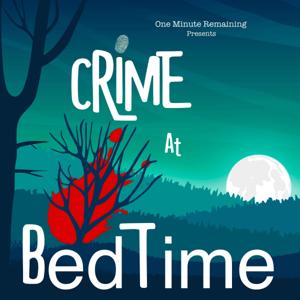
Crime at Bedtime is a true crime podcast for listeners who love fascinating murder cases, unsolved mysteries, disappearances, strange crimes and extraordinary stories — told in a calm,…
Each episode explores a different true crime story, from notorious murders and mysterious disappearances to unsolved cases, historical crimes and some of the strangest cases from around the world.
There are no loud sound effects or over-the-top dramatics. Just compelling true crime storytelling delivered in a slower, relaxed style for those who like to unwind with a fascinating story at the end of the day.
So get comfortable, take a minute, unwind and let me tell you a story.
Crime at Bedtime is written and hosted by Australian podcaster Jack Laurence.
Hosted on Acast. See acast.com/privacy for more information.
Ranked by our users in the last 21 days

37,555 Listeners

1,193 Listeners
402 Listeners

493 Listeners

40 Listeners

530 Listeners
356 Listeners

189 Listeners
91 Listeners

106 Listeners

23 Listeners

86 Listeners

61 Listeners

7 Listeners

5 Listeners

22 Listeners