
Sign up to save your podcasts
Or



Based on Podcast App listening data
The common sailor was a crucial engine of British prosperity and expansion up until the Industrial Revolution. From exploring the South Seas with Cook to establishing the East India Company as a global corporation; from the sea battles that made Britain a superpower to the crisis of the 1797 mutinies; these "sons of the waves" affected the nation's prosperity with their calloused hand. Yet, while British maritime history in the age of sail is full of the deeds of officers like Nelson, little attention has been paid to plain, "illiterate" seamen. Stephen Taylor, writer of maritime history and travel, challenges the perception of these sailors as a brutally punished, press ganged, anonymous group and reassesses a rich set of historical sources to illuminate their experiences. Dan and Stephen discuss ordinary seamen, far from the hapless sufferers of the press gangs, who were proud and spirited, learned in their own fashion. They demonstrated robust opinions and the courage to challenge overweening authority, and stood out from their less adventurous compatriots.
Subscribe to History Hit and you'll get access to hundreds of history documentaries, as well as every single episode of this podcast from the beginning (400 extra episodes). We're running live podcasts on Zoom, we've got weekly quizzes where you can win prizes, and exclusive subscriber only articles. It's the ultimate history package. Just go to historyhit.tv to subscribe. Use code 'pod1' at checkout for your first month free and the following month for just £/€/$1.
See acast.com/privacy for privacy and opt-out information.
This week in 1914 saw the outbreak of the First World War. In this special episode from the archive, Margaret MacMillan talks to her nephew Dan about her seminal book 'The War That Ended Peace: The Road To 1914'. They discuss the importance of Storytelling to the historian's process, the ways in which political actors at the time viewed the relation between fate and choice, the role that masculine insecurity played in the build up to the war and also examine the construct of and myths surrounding nationalistic feeling in the pre-war years. They even consider the possibility of an alternate course of events that involved Britain not entering the war at all.
Subscribe to History Hit and you'll get access to hundreds of history documentaries, as well as every single episode of this podcast from the beginning (400 extra episodes). We're running live podcasts on Zoom, we've got weekly quizzes where you can win prizes, and exclusive subscriber only articles. It's the ultimate history package. Just go to historyhit.tv to subscribe. Use code 'pod1' at checkout for your first month free and the following month for just £/€/$1.
Hosted on Acast. See acast.com/privacy for more information.
This week in 1914 saw the outbreak of the First World War. In this special episode from the archive, Margaret MacMillan talks to her nephew Dan about her seminal book 'The War That Ended Peace: The Road To 1914'. They discuss the importance of Storytelling to the historian's process, the ways in which political actors at the time viewed the relation between fate and choice, the role that masculine insecurity played in the build up to the war and also examine the construct of and myths surrounding nationalistic feeling in the pre-war years. They even consider the possibility of an alternate course of events that involved Britain not entering the war at all.
Subscribe to History Hit and you'll get access to hundreds of history documentaries, as well as every single episode of this podcast from the beginning (400 extra episodes). We're running live podcasts on Zoom, we've got weekly quizzes where you can win prizes, and exclusive subscriber only articles. It's the ultimate history package. Just go to historyhit.tv to subscribe. Use code 'pod1' at checkout for your first month free and the following month for just £/€/$1.
See acast.com/privacy for privacy and opt-out information.
In December 1915, some 135,000 allied troops, nearly 400 guns and 15,000 horses were collectively trapped in the bridgeheads at Anzac, Suvla and Helles. It was clear that the operation to seize control of Dardanelles and the Bosporus straits and capture Constantinople (now Istanbul) from the Turks, and thereby open a Black Sea supply route to Russia, had failed. With every day that passed the Turks moved up more guns, threatening to blast to pieces the flimsy piers, breakwaters and blockships that acted as makeshift harbours to feed and supply tens of thousands of men. And winter was coming. The evacuation plans were brilliant, but it was still a close-run thing. A spell of bad weather in the final days might have destroyed the flimsy piers, leaving thousands trapped helpless should the Turkish guns open up and their infantry swarm over No Man's Land.
Dan and historian Peter Hart discuss how the Gallipoli garrison escaped to fight another day. Peter Hart was an oral historian at the Imperial War Museum for almost 40 years, during that time he interviewed thousands of veterans. An internationally acknowledged expert on Gallipoli, he is uniquely well placed to tell this remarkable story.
Subscribe to History Hit and you'll get access to hundreds of history documentaries, as well as every single episode of this podcast from the beginning (400 extra episodes). We're running live podcasts on Zoom, we've got weekly quizzes where you can win prizes, and exclusive subscriber only articles. It's the ultimate history package. Just go to historyhit.tv to subscribe. Use code 'pod1' at checkout for your first month free and the following month for just £/€/$1.
Hosted on Acast. See acast.com/privacy for more information.
In December 1915, some 135,000 allied troops, nearly 400 guns and 15,000 horses were collectively trapped in the bridgeheads at Anzac, Suvla and Helles. It was clear that the operation to seize control of Dardanelles and the Bosporus straits and capture Constantinople (now Istanbul) from the Turks, and thereby open a Black Sea supply route to Russia, had failed. With every day that passed the Turks moved up more guns, threatening to blast to pieces the flimsy piers, breakwaters and blockships that acted as makeshift harbours to feed and supply tens of thousands of men. And winter was coming. The evacuation plans were brilliant, but it was still a close-run thing. A spell of bad weather in the final days might have destroyed the flimsy piers, leaving thousands trapped helpless should the Turkish guns open up and their infantry swarm over No Man's Land.
Dan and historian Peter Hart discuss how the Gallipoli garrison escaped to fight another day. Peter Hart was an oral historian at the Imperial War Museum for almost 40 years, during that time he interviewed thousands of veterans. An internationally acknowledged expert on Gallipoli, he is uniquely well placed to tell this remarkable story.
Subscribe to History Hit and you'll get access to hundreds of history documentaries, as well as every single episode of this podcast from the beginning (400 extra episodes). We're running live podcasts on Zoom, we've got weekly quizzes where you can win prizes, and exclusive subscriber only articles. It's the ultimate history package. Just go to historyhit.tv to subscribe. Use code 'pod1' at checkout for your first month free and the following month for just £/€/$1.
See acast.com/privacy for privacy and opt-out information.
In early 1900, Rudyard Kipling, Mary Kingsley and Arthur Conan Doyle crossed paths in South Africa during the Anglo-Boer War. Motivated in various ways by notions of duty, service, patriotism and jingoism, they were each shaped by the theatre of war. Sarah LeFanu joined me on the podcast to explore the cultural legacies, controversial reputations and influence on colonial policy of these three British writers.
Subscribe to History Hit and you'll get access to hundreds of history documentaries, as well as every single episode of this podcast from the beginning (400 extra episodes). We're running live podcasts on Zoom, we've got weekly quizzes where you can win prizes, and exclusive subscriber only articles. It's the ultimate history package. Just go to historyhit.tv to subscribe. Use code 'pod1' at checkout for your first month free and the following month for just £/€/$1.
Hosted on Acast. See acast.com/privacy for more information.
In early 1900, Rudyard Kipling, Mary Kingsley and Arthur Conan Doyle crossed paths in South Africa during the Anglo-Boer War. Motivated in various ways by notions of duty, service, patriotism and jingoism, they were each shaped by the theatre of war. Sarah LeFanu joined me on the podcast to explore the cultural legacies, controversial reputations and influence on colonial policy of these three British writers.
Subscribe to History Hit and you'll get access to hundreds of history documentaries, as well as every single episode of this podcast from the beginning (400 extra episodes). We're running live podcasts on Zoom, we've got weekly quizzes where you can win prizes, and exclusive subscriber only articles. It's the ultimate history package. Just go to historyhit.tv to subscribe. Use code 'pod1' at checkout for your first month free and the following month for just £/€/$1.
See acast.com/privacy for privacy and opt-out information.
Norman Ohler joined me on the pod to discuss two remarkable lovers who led Germany's resistance against the Nazis. Harro Schulze-Boysen and Libertas Haas-Heye led a complex network of antifascists, which operated across Berlin's bohemian underworld. They infiltrated German intelligence leaked Nazi battle plans to the Allies, including the details of Hitler's surprise attack on the Soviet Union. But in a world where friend could be indistinguishable from foe, nothing could prepare Libertas and Harro for the ultimate betrayals they would suffer.
Subscribe to History Hit and you'll get access to hundreds of history documentaries, as well as every single episode of this podcast from the beginning (400 extra episodes). We're running live podcasts on Zoom, we've got weekly quizzes where you can win prizes, and exclusive subscriber only articles. It's the ultimate history package. Just go to historyhit.tv to subscribe. Use code 'pod1' at checkout for your first month free and the following month for just £/€/$1.
Hosted on Acast. See acast.com/privacy for more information.
Norman Ohler joined me on the pod to discuss two remarkable lovers who led Germany's resistance against the Nazis. Harro Schulze-Boysen and Libertas Haas-Heye led a complex network of antifascists, which operated across Berlin's bohemian underworld. They infiltrated German intelligence leaked Nazi battle plans to the Allies, including the details of Hitler's surprise attack on the Soviet Union. But in a world where friend could be indistinguishable from foe, nothing could prepare Libertas and Harro for the ultimate betrayals they would suffer.
Subscribe to History Hit and you'll get access to hundreds of history documentaries, as well as every single episode of this podcast from the beginning (400 extra episodes). We're running live podcasts on Zoom, we've got weekly quizzes where you can win prizes, and exclusive subscriber only articles. It's the ultimate history package. Just go to historyhit.tv to subscribe. Use code 'pod1' at checkout for your first month free and the following month for just £/€/$1.
See acast.com/privacy for privacy and opt-out information.
Hosted on Acast. See acast.com/privacy for more information.
From the publisher's feed
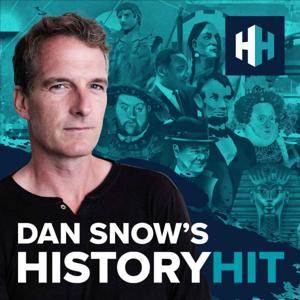
Historian Dan Snow journeys across the globe to tell the stories of history's defining moments. From the Colosseum in Rome to the Great Wall of China, the battlefields of Waterloo to the Tomb of Tutankhamun, join Dan as he explores the how and why of the greatest monuments, battles, heroes, villains and events that have shaped our world.
New episodes on Mondays and Thursdays with bonus subscriber only episodes every other Friday.
You can get in touch with us at [email protected]
A podcast by History Hit, the world's best history channel and creators of award-winning podcasts The Ancients, Gone Medieval, and Betwixt the Sheets.
History Hit is part of Little Dot Studios, a Certified B Corp™
Sign up to History Hit for hundreds of hours of original documentaries, with a new release every week and ad-free podcasts. Sign up at https://www.historyhit.com/subscribe.
Hosted on Acast. See acast.com/privacy for more information.
Ranked by our users in the last 21 days

3,197 Listeners

737 Listeners

1,431 Listeners

3,211 Listeners
113 Listeners

3,372 Listeners

531 Listeners

15,618 Listeners

1,896 Listeners

2,046 Listeners

2,826 Listeners

179 Listeners

1,387 Listeners

2,461 Listeners

1,592 Listeners
1,142 Listeners

1,120 Listeners

182 Listeners